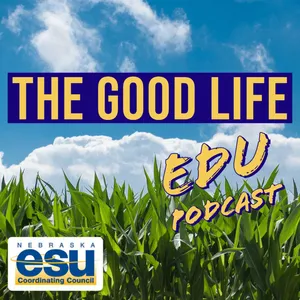
Free Daily Podcast Summary
The Good Life EDU Podcast: Daily Summaries Delivered
by Andrew Easton
Get key takeaways, quotes, and insights from The Good Life EDU Podcast in a 5-minute read. Delivered straight to your inbox.
Latest Episodes
The most recent episodes — sign up to get AI-powered summaries of each one.
- Today38 min
What to Stop Doing to Move Forward: De-Implementation in Education
In this episode of The Good Life EDU Podcast, Andrew Easton welcomes Dr. Kanyon Chism, Chief of Staff and Administrator at ESU 19/Omaha Public Schools (OPS), for a thoughtful conversation about de-implementation and the importance of creating space for the work that matters most in education. Dr. Chism shares how OPS began exploring de-implementation as part of its broader strategic work connected to the district’s moonshot goal of having all students reading on grade level by 2030. Inspired in part by Leidy Klotz’s book Subtract: The Untapped Science of Less, Dr. Chism explains how the district began thinking not only about what to add or implement, but also what to refine, reduce, replace, or stop doing altogether. This episode offers a valuable look at how school systems can move beyond initiative overload and begin building intentional processes for subtraction. For any educator or leader working to create coherence, protect time, and focus energy on the highest-impact work, this conversation provides both practical insight and a powerful mindset shift. Resources: Subtract: The Untapped Science of Less by Leidy Klotz. This book helped frame the episode’s conversation around why individuals and organizations often default to adding more, even when subtraction may be the better path forward. https://leidyklotz.com/subtract/ “De-implementation: Creating the Space to Focus on What Works” by Peter DeWitt. This article offers a helpful education-specific overview of de-implementation, including the distinction between informal and formal de-implementation processes. https://corwin-connect.com/2022/05/de-implementation-creating-the-space-to-focus-on-what-works/
- 1 weeks ago37 min
The Breakthrough Coach: Reclaiming Time for Instructional Leadership
In this episode of The Good Life EDU Podcast, we welcome Jill Pancoast, President of The Breakthrough Coach, for a conversation about how school leaders can reclaim time, strengthen office systems, and focus more fully on the instructional leadership work they were hired to do. Jill shares the history of The Breakthrough Coach, a management training and coaching firm that has supported school administrators and their secretaries since 1998. The conversation explores how principals, superintendents, and central office leaders can shift away from the “administrivia” of the front office and toward the work that most directly impacts teaching and learning. Throughout the episode, Andrew reflects on his own experience participating in The Breakthrough Coach Foundations Course and highlights the program’s practical focus on role clarity, delegation, executive support, and sustainable leadership practices. Jill also explains why the administrator-secretary partnership is central to the model and how strong systems can help leaders spend significantly more time in classrooms, coaching teachers, supporting staff, and improving student outcomes. This conversation is especially relevant for school leaders who feel stretched thin, overwhelmed by daily tasks, or pulled away from the instructional leadership work they value most. It is also a timely reminder that taking care of systems, roles, and personal sustainability is not separate from leadership; it is foundational to leading well. For more information about The Breakthrough Coach Program, visit https://www.the-breakthrough-coach.com/
- 2 weeks ago38 min
From Siloed to Systemic: Elevating Digital Citizenship in the AI Era
In this episode of The Good Life EDU Podcast, Kristen Mattson—author, educator, and co-creator of the Edvolve Framework—returns for a deep and timely conversation on digital citizenship in today’s rapidly evolving, AI-driven world. Together, Kristen and Andrew explore how Nebraska is moving from fragmented, siloed efforts toward a coherent, statewide approach to digital citizenship, grounded in shared language and practical application. Kristen breaks down the four strands of the Edvolve Framework—Digital Safety, Media & Information Literacy, Digital Wellbeing, and Social Responsibility—and explains how these elements overlap in real-world learning experiences. This episode challenges the idea that digital citizenship is a one-off lesson or compliance task. Instead, it reframes the work as ongoing, inquiry-based learning that can be embedded across content areas—from elementary author studies to high school social studies discussions on AI and society. Kristen also shares a powerful reminder: educators don’t need to have all the answers—they need to create the conditions for students to ask better questions and think more deeply. Whether you're a classroom teacher, school leader, or parent, this episode offers both big-picture clarity and practical entry points for supporting students as thoughtful, responsible participants in digital spaces.
- 3 weeks ago35 min
Inside the Work with Nebraska’s Regional Literacy Coaches (RLCs)
In this episode of The Good Life EDU Podcast, we sit down with Nebraska ESU regional literacy coaches (RLCs) Claudine Kennicutt (ESU 10) and Caryn Ziettlow (ESU 2) to explore the evolving work of Nebraska’s statewide literacy initiative. Together, they unpack the foundation of the Nebraska Literacy Project, including the role of high-quality instructional materials, the science of reading, and the intentional development of a statewide coaching system designed to support educators and leaders alike. Claudine and Caryn share insights from the first year of implementation—highlighting the roadshow approach to building leadership capacity, aligning with systems like Nebraska MTSS, and creating coherence across districts of all sizes. The conversation also dives into the power of coaching as a lever for meaningful instructional change and how a collaborative, statewide network is driving both educator growth and student outcomes. Looking ahead, the episode offers a hopeful vision for year two and beyond, as the team expands its reach, deepens coaching practices, and works toward sustainable, system-level impact. This is a must-listen for anyone interested in literacy, leadership, and building effective educational systems at scale.
- Apr 14, 202645 min
Back to the Classroom: Tisha Richmond on Rediscovering Joy, Authenticity, and AI-Powered Creativity in CTE
In this episode of The Good Life EDU Podcast, Andrew Easton reconnects with educator, author, and speaker Tisha Richmond to explore her unexpected return to the classroom and the powerful insights that have come with it. After years of supporting educators at a systems level and working globally, Tisha shares what it’s been like to step back into a Career & Technical Education (CTE) classroom, rediscover the intensity and joy of teaching, and reconnect with students in deeply meaningful ways. Tisha also shares insights from her new book, The Magical CTE Classroom, offering actionable ideas for both new and experienced teachers—whether in CTE or beyond. This episode is a reminder that while teaching is complex and demanding, it is also deeply human, creative, and full of opportunity for meaningful, magical connections. Resources The Magical CTE Classroom by Tisha Richmond Make Learning Magical by Tisha Richmond Brisk Teaching (for its AI podcast feature) Canva Code (for its AI-powered interactive creation) Register Today for the Nebraska Career Education (NCE) Conference
- Mar 7, 202640 min
Beyond the AI Inflection Point: Preparing Education for What Comes Next
Artificial intelligence continues to evolve at a pace that challenges educators and leaders to think not only about what AI means today, but where it may take us in the years ahead. In this episode of The Good Life EDU Podcast, host Andrew Easton sits down with Matt Winters, Artificial Intelligence Specialist at the Utah State Board of Education, to explore how futures thinking can help education systems prepare for the opportunities and risks emerging alongside AI. Their conversation spans everything from the rapid evolution of generative AI tools to the deeper questions about learning, assessment, and the balance between process and product in the classroom. Matt also shares insights from national collaborations examining how AI may shape education over the next three to five years—and why thoughtful leadership, collaboration, and policy work will be essential as schools navigate both the promise and the “big scary” implications of this technology. Whether you're a classroom educator, school leader, or policymaker, this episode offers a thoughtful look at how we can work together to navigate the changing landscape of AI in education. Resources & Links Referenced in the Episode AI 2027 Future Scenario: ai-2027.com (opens the site in a new window) Beyond the Inflection Point Report: https://www.beyondtheaiinflectionpoint.com/ (opens the site in a new window) AI for Education: https://aiforeducation.io (opens the site in a new window) Future Ready Nebraska Conference – June 1–2: nefutureready.com (opens the site in a new window)
- Feb 20, 202633 min
Differentiation at Scale: How AI Can Strengthen MTSS and Student Engagement
In this episode of The Good Life EDU Podcast, we welcome back Nebraska native Trevor Goertzen, Regional Vice President at SchoolAI and former teacher and principal, for an honest and practical conversation about artificial intelligence in schools. Two years after our first discussion, Andrew and Trevor reconnect to explore how the national conversation around screen time, technology rollback, and AI integration has evolved and what that means for educators today. Rather than chasing headlines or hype, this conversation focuses on: What intentional technology use actually looks like in classrooms Why AI should be viewed as a tool to get to the thing, not the thing itself How AI can support differentiation, MTSS, and Tier 2 interventions The importance of teacher-designed, teacher-controlled AI learning environments Why good pedagogy still matters more than any platform How leaders can thoughtfully introduce AI into their districts The power of AI as a thought partner for administrators and educators Trevor shares practical classroom examples — from structured learning “agenda steps” to multilingual support and small-group differentiation — demonstrating how AI can expand what’s possible without replacing the human relationships at the heart of teaching.
- Feb 6, 202645 min
AI With Intention: What Teaching, Learning, and Integrity Require Next
In this episode of The Good Life EDU Podcast, Andrew Easton is joined by Tony Frontier, author of AI With Intention and director of the AI Center for Effective Teaching and Learning. Rather than approaching artificial intelligence as a technical problem to solve, this conversation grounds AI in what educators already know to be true about effective teaching and learning. Tony shares why AI represents an inflection point for the profession—and why this moment demands greater intentionality, not abandonment of core instructional practices. Together, Andrew and Tony explore how AI can either undermine or strengthen learning depending on how it’s used, the importance of productive struggle, and what it means to prepare students to use AI as a thinking partner rather than a shortcut. The episode also digs into practical guidance for schools and districts around transparency, explainability, integrity, and creating shared expectations for both teachers and students. Referenced Links & Resources Access Tony's book, AI With Intention: https://www.amazon.com/AI-Intention-Principles-Teachers-Leaders/dp/1416633626 Contact Tony Frontier: tonyfrontier@gmail.com Access the AI Center for Effective Teaching and Learning https://firsteducation-us.com/ai-center
Get The Good Life EDU Podcast summaries in your inbox
Free AI-powered daily recaps. Key takeaways, quotes, and mentions — in a 5-minute read.
Get Free Summaries →Free forever for up to 3 podcasts. No credit card required.
You Might Also Like
Listeners also like.
My EdTech Life
Dr. Fonz Mendoza
Edutainment Learning
Ralph Krauss
edWebcasts
edWeb
Digital Learning Today
Jeffrey Bradbury - TeacherCast Educational Network
SEL in EDU
Powered by Resonance Education

Trending In Ed with Mike Palmer
Palmer Media
EdTech Bites Podcast
Gabriel Carrillo
Improving Education Today: The Deep Dive
Project ACHIEVE Educational Solutions
Artificial Intelligence: Real Talk
Eli Davis
Teachers on Fire
voicEd Radio
Simon Says: Educate!
Simon Robot
Educate & Rejuvenate: The Podcast
Kelsey Sorenson, Elementary Teacher, Homeschool Mom, and Life Coach
About The Good Life EDU Podcast
The Good Life EDU Podcast is dedicated to discussing all things education in the state of Nebraska and across the US. This program is presented by the Nebraska Educational Service Unit's Coordinating Council.
Customized Recaps
AI-powered recaps with compact key takeaways, quotes, and insights.
Straight to Your Inbox
Get key takeaways from The Good Life EDU Podcast in a 5-minute read.
Save Hours Every Week
Stay current on your favorite podcasts without falling behind.
Frequently Asked Questions
What is Podzilla's The Good Life EDU Podcast daily summary?
It's a free AI-powered email that summarizes new episodes of The Good Life EDU Podcast as soon as they're published. You get the key takeaways, notable quotes, and links & mentions — all in a quick read.
How does the The Good Life EDU Podcast podcast summary work?
When a new episode drops, our AI transcribes and analyzes it, then generates a personalized summary tailored to your interests and profession. It's delivered to your inbox every morning.
Is this an official The Good Life EDU Podcast product?
No. Podzilla is an independent service that summarizes publicly available podcast content. We're not affiliated with or endorsed by Andrew Easton.
Can I get summaries of other podcasts too?
Absolutely! The free plan covers up to 3 podcasts. Upgrade to Pro for 15, or Premium for 50. Browse our full catalog at /podcasts.
How often does The Good Life EDU Podcast release new episodes?
The Good Life EDU Podcast publishes biweekly. Our AI generates a summary within hours of each new episode.
What topics does The Good Life EDU Podcast cover?
The Good Life EDU Podcast covers topics including Education, How To, Self-Improvement. Our AI identifies the specific themes in each episode and highlights what matters most to you.
Start getting The Good Life EDU Podcast summaries tomorrow morning.
Free forever for up to 3 podcasts. No credit card required.
Free forever for up to 3 podcasts. No credit card required.