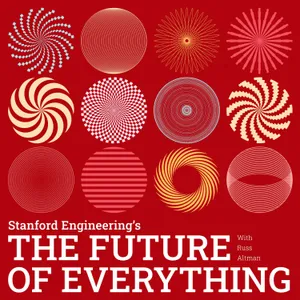
Free Daily Podcast Summary
The Future of Everything: Daily Summaries Delivered
by Stanford Engineering
Host Russ Altman, a professor of bioengineering, genetics, and medicine at Stanford, is your guide to the latest science and engineering breakthroughs. Join Russ and his guests as they explore cutting-edge advances that are shaping the future of everything from AI to health and renewable energy. Along the way, “The Future of Everything” delves into ethical implications to give listeners a well-rounded understanding of how new technologies and discoveries will impact society. Whether you’re a researcher, a student, or simply curious about what’s on the horizon, stay up-to-date on the latest developments that are transforming our world.
Latest Episodes
The most recent episodes — sign up to get AI-powered summaries of each one.
- 2 days ago25 min
Special episode: Think Fast, Talk Smart
Hi everyone, it's your host Russ. As summer winds down and everyone heads into a new season, I wanted to share something a little different. Recently, I sat down with Matt Abrahams, host of the podcast Think Fast, Talk Smart and a lecturer at Stanford's Graduate School of Business. We traded seats and I took the guest chair while Matt interviewed me about the future of communication in the age of AI. We’re excited to re-run this episode today and whether you're writing a pitch, prepping for a tough conversation, or just curious how AI is changing the way we talk to each other, this one's a great listen.Have a question for Russ? Send it our way in writing or via voice memo, and it might be featured on an upcoming episode. Please introduce yourself, let us know where you're listening from, and share your question. You can send questions to thefutureofeverything@stanford.edu.Episode Reference Links:Stanford Profile: Russ Altman | Matt AbrahamsLearn more about Think Fast Talk SmartConnect With Us:Episode Transcripts >>> The Future of Everything WebsiteConnect with Russ >>> Threads / Bluesky / MastodonConnect with School of Engineering >>> Twitter/X / Instagram / LinkedIn / FacebookChapters: IntroductionRuss Altman introduces this feed-drop episode from Think Fast, Talk Smart, where he joins Matt Abrahams to discuss communication in the age of AI. The Future of CommunicationWhy AI may amplify strong communication rather than replace authentic human messages. Using AI as a Communication ToolHow AI can help adjust language for different audiences, flag jargon, and improve clarity. AI as a Pre-EditorHow Russ uses large language models to critique and strengthen his writing before sharing it with colleagues. Structuring a Strong ProposalHow to align with your audience’s mission, define the problem, and clearly show the path forward. Making Complex Ideas AccessibleWhy stories, analogies, and audience awareness help make technical information easier to understand. Preparing for Tough MomentsWhy anticipating difficult concepts, questions, and conversations can make communication more effective. Asking Better QuestionsWhy specificity and strong follow-up questions can guide more meaningful conversations. Questions as OpportunitiesHow questions can communicate curiosity, engagement, and respect rather than criticism. Building Effective TeamsHow shared goals, relationships, diversity, and clear roles support collaboration. Productive ConflictHow leaders can encourage rigorous disagreement without damaging trust. Finding People’s PassionWhat hosting The Future of Everything taught Russ about understanding what motivates people. Looking to the FutureWhy young people give Russ hope about what comes next. A Communicator to AdmireWhy Russ credits his father with shaping his own approach to communication. Three Ingredients for Better CommunicationKnow your audience, be specific, and bring a sense of joy to the conversation. Conclusion Connect With Us:Episode Transcripts >>>
- 1 weeks ago33 min
The future of gut health
Microbiologist Justin Sonnenburg wants you to know that you – and all humans, really – are not alone. Inside each of us live uncountable bacteria without whom we could not survive. Nowhere is this symbiosis more vital, Sonnenburg says, than in the digestive tract – the gut – where trillions of bacterial collaborators help digest the foods that nourish us. Sonnenburg studies what makes this complex relationship work and how modern life is altering this important chemistry. He says the gut microbiome should be thought of as another organ. When it drifts out of balance, the effects ripple through our metabolism, our immune systems, and our nervous systems. Sonnenburg goes on to explain how dietary choices – like eating more fermented foods and fiber – can rebuild the microbiome, and why the field’s next frontier could help alleviate chronic disease. “It really is a full-body impact that our microbes are having,” Sonnenburg tells host Russ Altman on this episode of Stanford Engineering’s The Future of Everything podcast.Have a question for Russ? Send it our way in writing or via voice memo, and it might be featured on an upcoming episode. Please introduce yourself, let us know where you're listening from, and share your question. You can send questions to thefutureofeverything@stanford.edu.Episode Reference Links:Stanford Profile: Justin SonnenburgLearn more about the Sonnenburg LabConnect With Us:Episode Transcripts >>> The Future of Everything WebsiteConnect with Russ >>> Threads / Bluesky / MastodonConnect with School of Engineering >>> Twitter/X / Instagram / LinkedIn / FacebookChapters: IntroductionRuss Altman introduces guest Justin Sonnenburg, a professor of microbiology and immunology at Stanford University. Path into Microbiome ResearchHow Sonnenburg became interested in the friendly microbes that live in and on the body. Bacteria as PartnersWhat are gut bacteria and how do they function in our bodies? Full-Body EffectsHow gut microbes affect metabolism, immunity, and the brain. Industrialized MicrobiomesWhat does it mean that the gut microbiome has been “industrialized”? Feeding the MicrobiomeWhy is fiber important for gut health? Fiber ResponseStudy results from Stanford reflecting individual responses to fiber. Fermented FoodsHow foods like yogurt, kimchi, sauerkraut, and kombucha can support microbiome diversity. Microbiome TherapeuticsHow diet and microbial interventions could improve health. Food, Equity, and AccessWhy microbiome health may require practical tools that work beyond major diet changes. Sharing MicrobesHow social environments, diet, and exposure may influence the microbes people acquire. Precision HealthHow the microbiome could help tune immunity, metabolism, and disease treatment. Women’s HealthWhy reproductive health and women’s health are promising areas for microbiome research. Stanford Microbiome ResearchHow Stanford researchers are building interdisciplinary tools, tests, and therapies for microbiome science. Future I
- 2 weeks ago31 min
Best of: The future of language learning
As kids head back to school this month, we're re-releasing a conversation with cognitive scientist Michael Frank on the future of language learning. Michael studies the similarities and differences in how children and AI systems learn language. He’s working to understand what accounts for the “data gap” between how efficiently children learn language from relatively little input, compared to how much data AI systems need. His goal is to build better scientific models of human language acquisition and to inform how AI systems might learn in more human-like ways. Whether you’re parenting an infant or toddler who is learning to talk or you're simply curious about how language learning unfolds for people across languages and cultures, this one's a great listen. Have a question for Russ? Send it our way in writing or via voice memo, and it might be featured on an upcoming episode. Please introduce yourself, let us know where you're listening from, and share your question. You can send questions to thefutureofeverything@stanford.edu. Episode Reference Links: Stanford Profile: Michael Frank Connect With Us: Episode Transcripts >>> The Future of Everything Website Connect with Russ >>> Threads / Bluesky / Mastodon Connect with School of Engineering >>> Twitter/X / Instagram / LinkedIn / Facebook Chapters: Introduction Russ Altman introduces this episode with Michael Frank, a professor of biology, psychology and linguistics at Stanford University. AI and Child Language Learning How AI language learning and child language learning differ. WordBank and Big Data How large language databases are helping researchers study child language development across cultures. Learning Across Languages How children learn many different languages through broadly similar developmental processes. Babbling and Early Speech How babies begin exploring the sounds and signs of their language. Multimodal Learning How SAYCam & BabyView capture multimodal language learning Language as a Social Tool How social cues help children break the code of language. Learning from Others How children track uncertainty and seek help from social partners. ManyBabies How a global research consortium studies child development across cultures and communities. Global Development Research Why large-scale international collaboration is valuable but difficult to fund. Pragmatics How children learn to infer meaning beyond the literal words people say. AI, Intent, and Common Sense Why pragmatics matters for building AI systems that understand human intent. Reading to Children Why books can support language learning through shared attention and rich social interaction. Early Language Exposure Why it is never too early to interact with babies through language. Multilingual Children How children can learn multiple languages with few negative consequences. Conclusion Connect With Us:Episode Transcripts >>> The Future of Everything WebsiteConnect with Russ >>> Threads / Bl
- 3 weeks ago30 min
The future of cities
Jackelyn Hwang is an expert on the social dynamics of cities. In one line of research, she combines AI and Google Street View to measure quality-of-life factors – such as trash, blight, new construction, and the pace of recovery from climate disasters – to analyze gentrification, racial equity, and overall resident well-being. Her work has shown, for instance, that predominantly Black neighborhoods are last and slowest to gentrify and that displaced Black residents often end up in worse neighborhoods. She recently worked with policymakers at the housing department of Oakland, California, on anti-displacement and anti-homelessness programs and is now working with policymakers across the Bay Area to strengthen neighborhoods. We are clearing a path to more stable communities for everyone, Hwang tells host Russ Altman on this episode of Stanford Engineering’s The Future of Everything podcast. Have a question for Russ? Send it our way in writing or via voice memo, and it might be featured on an upcoming episode. Please introduce yourself, let us know where you're listening from, and share your question. You can send questions to thefutureofeverything@stanford.edu. Episode Reference Links: Stanford Profile: Jackelyn Hwang Learn more about Jackie's work on housing instability in Oakland Connect With Us: Episode Transcripts >>> The Future of Everything Website Connect with Russ >>> Threads / Bluesky / Mastodon Connect with School of Engineering >>> Twitter/X / Instagram / LinkedIn / Facebook Chapters: Introduction Russ Altman introduces guest Jackie Hwang, a professor of sociology at Stanford University. Path into Urban Sociology How Hwang’s experiences near Philadelphia shaped her interest in cities, inequality, and neighborhood change. The 21st-Century American City How gentrification, immigration, crime, education, housing, and climate change are reshaping cities. Defining Gentrification How sociologists understand gentrification as a class-based transformation of neighborhoods. Studying Gentrification Why race, segregation, and neighborhood inequality complicate simple stories of urban renewal. Displacement and Instability Why gentrification does not always increase moving rates, but still affects where people end up. Policy and Anti-Displacement How Hwang’s research informs local policy, housing strategy, and homelessness prevention. Measuring Neighborhood Change How technology can help researchers study changing neighborhoods at scale. Google Street View and Cities How Street View opened new ways to observe gentrification and neighborhood conditions. Computer Vision for Urban Research How AI and computer vision are being used to analyze neighborhood conditions. What Neighborhoods Reveal How visible signs like trash, blight, vacant lots, and construction signal neighborhood change. Eye Tracking and Perception How researchers study what people notice in neighborhoods and how those cues affect stress. Climate Change and Recovery How disasters can widen neighborhood inequality through uneven rebuilding and abandonment. Neighborhoods a
- Aug 21, 202630 min
Best of: The future of addiction
Today, we're re-releasing my conversation with psychiatrist Anna Lembke on the future of addiction. Whether its substances, screens, or work itself, addiction in some form touches nearly all of our lives either directly or through someone we care about. Anna breaks down the dopamine mechanisms behind addiction of all kinds, from opioids to social media to, in her own case, romance novels, and shares what actually works in recovery, including exercise and structured abstinence. Whether you're thinking about screen habits, substance use, or just how to build healthier routines, this one's well worth another listen. Have a question for Russ? Send it our way in writing or via voice memo, and it might be featured on an upcoming episode. Please introduce yourself, let us know where you're listening from, and share your question. You can send questions to thefutureofeverything@stanford.edu. Episode Reference Links: Stanford Profile: Anna Lembke Connect With Us: Episode Transcripts >>> The Future of Everything Website Connect with Russ >>> Threads / Bluesky / Mastodon Connect with School of Engineering >>> Twitter/X / Instagram / LinkedIn / Facebook Chapters: Introduction Russ Altman introduces Anna Lembke, a professor of psychiatry and behavioral sciences at Stanford University. Defining Addiction Why addiction involves compulsive use despite harm, even when the behavior seems ordinary. Romance Novels and Harm How Lembke’s own reading habit became a case study in subtle addiction. Dopamine and the Addicted Brain What repeated dopamine spikes do to reward pathways and withdrawal symptoms. Seeing the Problem How naming a compulsive habit can make it visible and open the door to change. Addiction Medicine Today How the opioid epidemic changed medical training and addiction awareness. Russ Altman’s “Addictions” Russ details his own dopamine habits for the audience. Exercise and Hormesis Why movement, effort, and discomfort can help restore healthier dopamine patterns. Dopamine Fasting The self-intervention Dr. Lembke used & her potential cross-addictions. Vulnerability to Addiction Why genetic risk, family history, and drug of choice shape addiction vulnerability. The Opioid Epidemic How prescription opioids, heroin, and fentanyl shaped three waves of crisis. Fentanyl and Overdose Risk Why counterfeit pills and fentanyl exposure can be lethal even for new users. Treating Opioid Addiction Why medications like methadone and buprenorphine help restore stability. The Future of Addiction Why Lembke sees addiction as a long-term challenge across drugs, media, and food. Conclusion Connect With Us:Episode Transcripts >>> The Future of Everything WebsiteConnect with Russ >>> Threads / Bluesky / MastodonConnect with School of Engineering >>>Twitter/X / Instagram / LinkedIn / <a href="https://www.fac
- Aug 14, 202634 min
The future of neuroimaging
Psychologist Russ Poldrack is a mind reader of sorts, but not in the traditional sense of the word. Instead, he makes movies of blood flow in the brain using functional MRI to draw insights into the function of specific regions of the brain to decipher how they control behavior. In one example, Poldrack has shown how people with obsessive-compulsive disorder have enhanced “salience networks” that turn on when surprising things happen. This finding could have “very profound” outcomes in diagnosis and treatment, Poldrack tells host Russ Altman in this wide-ranging exploration of the implications and the ethics of functional neuroimaging on Stanford Engineering’s The Future of Everything podcast. Have a question for Russ? Send it our way in writing or via voice memo, and it might be featured on an upcoming episode. Please introduce yourself, let us know where you're listening from, and share your question. You can send questions to thefutureofeverything@stanford.edu. Episode Reference Links: Stanford Profile: Russ Poldrack Poldrack Lab website: http://poldracklab.org The MyConnectome project: https://www.myconnectome.org/ Stanford Center for Open and Reproducible Science: https://datascience.stanford.edu/cores Connect With Us: Episode Transcripts >>> The Future of Everything Website Connect with Russ >>> Threads / Bluesky / Mastodon Connect with School of Engineering >>> Twitter/X / Instagram / LinkedIn / Facebook Chapters: Introduction Russ Altman introduces guest Russ Poldrack, a professor of psychology and of psychiatry and behavioral science at Stanford University. Path into Neuroimaging How Poldrack moved from cognitive psychology into functional MRI research. Functional MRI How MRI can be used to track brain activity. Mapping Brain Activity How tasks and behaviors are linked to patterns of brain activation. Resting Functional MRI How resting scans revealed large-scale brain networks. Brain Networks and Behavior How the brain controls stopping, switching, and habits. Layers of Brain Organization Why neuroimaging studies the brain across multiple scales. Individual Brain Differences How shared brain networks vary across individuals. Scanning Himself Why Poldrack repeatedly scanned his own brain. Mapping One Brain Deeply How repeated scans revealed reliable individual brain patterns. Neuroimaging and Mental Health How brain network differences may relate to depression and OCD. Reproducibility in Brain Imaging How larger and deeper data sets improve reliability. Analytic Variability Why the same data can produce different conclusions. Multiverse Analysis How testing many analyses helps identify stable findings. Open Science How data sharing and standards improve transparency. Privacy and Brain Data How researchers protect participants when sharing neuroimaging data. Future In a Minute Rapid-fire Q&A: neuroimaging, reproducibility, and AI in science. Conclusion Connect With Us:Episode Transcripts >>> <a href="https://engineering.stanford.edu/magazine/col
- Aug 7, 202636 min
The future of clinical bioethics
Prior to becoming an anesthesiologist, Alyssa Burgart trained in bioethics. She now counts herself among a growing number of certified clinical bioethicists who help doctors, nurses, patients, and their families handle ethically complex medical decisions at the bedside. Bioethicists are critical to care, Burgart argues, helping patients facing difficult choices to clarify personal values and weigh a complex array of risks and benefits, as well as emotions and familial, cultural, and religious norms. While much of her work is in pediatrics and maternal-fetal cases, she also studies how moral distress and moral injury impact clinicians, contributing to burnout among doctors and nurses. Having a strong ethical community brings resilience to these challenging environments, Burgart tells host Russ Altman in this episode of Stanford Engineering’s The Future of Everything podcast. Have a question for Russ? Send it our way in writing or via voice memo, and it might be featured on an upcoming episode. Please introduce yourself, let us know where you're listening from, and share your question. You can send questions to thefutureofeverything@stanford.edu. Episode Reference Links: Stanford Profile: Alyssa Burgart Connect With Us: Episode Transcripts >>> The Future of Everything Website Connect with Russ >>> Threads / Bluesky / Mastodon Connect with School of Engineering >>> Twitter/X / Instagram / LinkedIn / Facebook Chapters: Introduction Russ Altman introduces guest Alyssa Burgart, a professor of anesthesiology and perioperative pain at Stanford University. Path into Bioethics & Anesthesiology How Burgart became a bioethicist and then chose anesthesiology. What Bioethics Means How bioethics helps connect medical decisions to values, risks, and benefits. Making Hard Decisions Manageable How ethics consultation helps clinicians act with integrity. Ethics Consults A detailed explanation of hospital ethics services Pediatric Ethics Examples of Dr. Burgart’s work with children, families, and clinicians Culture, Faith, and Trust Navigating cultural and religious differences as a bioethicist. Family Decision-Making How ethics consultants help families and care teams honor a patient’s voice. Moral Injury What is moral injury and how do clinicians specifically experience it? Institutional Betrayal Why barriers like policies, laws, and denied approvals can create moral strain. Moral Distress What is moral distress and how does it manifest itself in healthcare. Moral Residue When clinicians experience repeated moral strain and cannot recover between incidents. Treating Moral Injury & Distress Strategies for helping clinicians manage these parts of their work. Future In a Minute Rapid-fire Q&A: clinical bioethics, human dignity, and moral resilience. Conclusion Connect With Us:Episode Transcripts >>> The Future of Everything WebsiteConnect with Russ >>> Threads / Bluesky / MastodonConnect with School of Engineering >>>Twitter/X / <a href="
- Jul 31, 202634 min
Best of: The future of AI and the law
These days, AI is everywhere, and it’s increasingly hard to separate the gains from the slop. With that in mind, we're re-releasing my conversation with Stanford Law professor Daniel Ho on the future of AI and the law. When we look for applications where AI can deliver measurable benefit, the legal profession stands out, both for its potential gains in efficiency and equity, and for how much is at stake if we get it wrong. Dan's research — from using AI to identify racist property covenants buried in county deed records, to mapping obsolete regulations that waste thousands of hours of government time — shows what's possible when the technology is applied with rigor and purpose. If you’re curious about how AI can serve both justice and good governance, this one is well worth another listen. Have a question for Russ? Send it our way in writing or via voice memo, and it might be featured on an upcoming episode. Please introduce yourself, let us know where you're listening from, and share your question. You can send questions to thefutureofeverything@stanford.edu. Episode Reference Links: Stanford Profile: Dan Ho Connect With Us: Episode Transcripts >>> The Future of Everything Website Connect with Russ >>> Threads / Bluesky / Mastodon Connect with School of Engineering >>> Twitter/X / Instagram / LinkedIn / Facebook Chapters: Introduction Russ Altman introduces guest Dan Ho, a professor of law, political science, and computer science at Stanford University. Path into Legal AI How Ho’s background shaped his interest in law, and technology. What Lawyers Do What makes law a complex domain for AI. Legal Hallucinations When AI performs well and when it fails. Searching Legal Records in California How AI can help identify outdated, harmful, or legally important material. Scaling Redaction How a model accelerated a process that overwhelmed county recorder offices. Legal Reform at Scale How AI has supported legal reform by scanning massive bodies of law. STARA & The City of San Francisco How AI was used to go through San Francisco’s code and clean up reporting. Outdated Obligations How “regulatory sludge” takes the time & resources of the public service Open vs. Closed AI The differences and associated risks of the different AI systems. Legal Chatbots Why legal chatbots are promising but risky. Conclusion Connect With Us:Episode Transcripts >>> The Future of Everything WebsiteConnect with Russ >>> Threads / Bluesky / MastodonConnect with School of Engineering >>>Twitter/X / Instagram / LinkedIn / Facebook Hosted by Simplecast, an AdsWizz company. See pcm.adswizz.com for information about our collection and use of personal data for advertising.
Get The Future of Everything summaries in your inbox
Free AI-powered daily recaps. Key takeaways, quotes, and mentions — in a 5-minute read.
Get Free Summaries →Free forever for up to 3 podcasts. No credit card required.
You Might Also Like
Listeners also like.
The Future Tools Podcast
Explores AI, machine learning, and future tech advancements, simplifying complex topics while covering practical uses, ethics, and history.
Unf*cking the Future
A scientist explores environmental crises and practical solutions to secure a sustainable future.

TED Tech
Experts examine how technology reshapes society, science, design, and business through ethical, cultural, and human lenses.
The World, the Universe and Us
Explores big scientific questions about life, consciousness, climate, and the cosmos with expert scientists and New Scientist journalists.

Possible
Explores optimistic, realistic futures through in-depth conversations with innovators in AI, science, health, and global affairs.
Brave New Planet
Explores the societal and ethical impacts of emerging technologies like AI and genetic engineering through expert conversations.
What Future with Joshua Topolsky
Explores modern culture through reflective monologues and eclectic conversations with thinkers, experts, and outliers.
Inquiring Minds
Explores the intersection of science and society through critical thinking and in-depth analysis.

Tomorrow, Today
Explores the societal and personal impacts of emerging technologies through conversations with experts and cultural thinkers.

What Next: TBD | Tech, power, and the future
A clear-eyed exploration of how technology and power are shaping the future, from algorithms to artificial intelligence and beyond.

The End Of The World with Josh Clark
A 10-episode exploration of humanity's future, examining existential threats and the challenges of surviving the next 200 years.

The Digital Executive
A daily tech podcast exploring emerging technologies through interviews with Silicon Valley CEOs, influencers, and celebrities.
About The Future of Everything
Host Russ Altman, a professor of bioengineering, genetics, and medicine at Stanford, is your guide to the latest science and engineering breakthroughs. Join Russ and his guests as they explore cutting-edge advances that are shaping the future of everything from AI to health and renewable energy. Along the way, “The Future of Everything” delves into ethical implications to give listeners a well-rounded understanding of how new technologies and discoveries will impact society. Whether you’re a researcher, a student, or simply curious about what’s on the horizon, stay up-to-date on the latest developments that are transforming our world.
Customized Recaps
AI-powered recaps with compact key takeaways, quotes, and insights.
Straight to Your Inbox
Get key takeaways from The Future of Everything in a 5-minute read.
Save Hours Every Week
Stay current on your favorite podcasts without falling behind.
Frequently Asked Questions
What is Podzilla's The Future of Everything daily summary?
It's a free AI-powered email that summarizes new episodes of The Future of Everything as soon as they're published. You get the key takeaways, notable quotes, and links & mentions — all in a quick read.
How does the The Future of Everything podcast summary work?
When a new episode drops, our AI transcribes and analyzes it, then generates a personalized summary tailored to your interests and profession. It's delivered to your inbox every morning.
Is this an official The Future of Everything product?
No. Podzilla is an independent service that summarizes publicly available podcast content. We're not affiliated with or endorsed by Stanford Engineering.
Can I get summaries of other podcasts too?
Absolutely! The free plan covers up to 3 podcasts. Upgrade to Pro for 15, or Premium for 50. Browse our full catalog at /podcasts.
How often does The Future of Everything release new episodes?
The Future of Everything publishes weekly. Our AI generates a summary within hours of each new episode.
What topics does The Future of Everything cover?
The Future of Everything covers topics including Science, Technology, Medicine, Fitness, Health & Fitness. Our AI identifies the specific themes in each episode and highlights what matters most to you.
Start getting The Future of Everything summaries tomorrow morning.
Free forever for up to 3 podcasts. No credit card required.
Free forever for up to 3 podcasts. No credit card required.