Free Daily Podcast Summary
The Full Plate Podcast with Abbie Attwood, MS: Daily Summaries Delivered
by Full Plate by Abbie Attwood
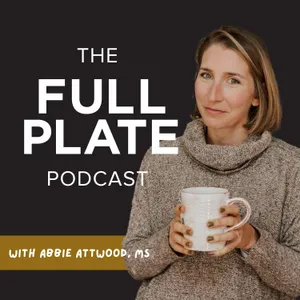
Full Plate is a podcast about healing from diet culture, creating peace with food, reclaiming body autonomy and trust, and taking a weight-inclusive approach to our well-being. Each week, Abbie interviews guests or answers listener questions that explore our relationship to food and our bodies. Abbie is an anti-diet nutritionist with a master’s in nutrition and integrative health. She is also the founder and owner of Abbie Attwood Wellness, a virtual private practice dedicated to weight-inclusive care, food freedom, body image healing, and dismantling diet culture.
Latest Episodes
The most recent episodes — sign up to get AI-powered summaries of each one.
- 1 weeks ago9 min
Macro Tracking: When Does “Healthy Eating” Become Disordered?
This is a free preview of a paid episode. To hear more, visit abbieattwoodwellness.substack.comThis is a bonus episode for our paid subscribers! To listen, you can upgrade to paid right here.Or go to https://abbieattwoodwellness.substack.com/subscribeBased on something I saw recently on social media, I'm unpacking the culture of macro tracking, protein goals, the difference between physical and psychological restriction, and why eating a variety of foods doesn't necessarily mean we have freedom in our relationship with food.I'm also sharing my own experience with macro tracking a few years into recovery from disordered eating, when I turned to counting macros during a difficult period of chronic illness because I wanted to make sure I was "eating enough." But some sneaky old thoughts and patterns started taking hold.In this episode, we explore:* Why macro tracking has earned a reputation as a healthier, more flexible version of dieting.* How under-eating can exist even when no foods are technically off limits.* The difference between physical and psychological restriction, and why eating a variety of foods doesn’t necessarily mean having freedom with food.* The clinical overlap between macro tracking and disordered eating, including food preoccupation, rigidity, anxiety, and compensatory behaviors.* Why good intentions don’t always mean a behavior is supporting our well-being.* How health and fitness culture can normalize behaviors that might otherwise raise concern.* The influence of family environments and social media on our relationships with food and bodies.Support the show on Substack for bonus episodes, community engagement, and access to "Ask Abbie" at abbieattwoodwellness.substack.com/subscribeApply for Abbie’s Group Membership for live sessions every other week and a community of support from healing from diet culture:https://www.abbieattwoodwellness.com/circle-monthly-groupSocial media:Find the show on Instagram: @fullplate.podcastFind Abbie on Instagram: @abbieattwoodwellness
- 2 weeks ago1h 5m
What We Get Wrong About Eating Disorders (and How to Actually Help) with Therapist Alli Spotts-De Lazzer
We live in a culture where some of the warning signs of an eating disorder are the very behaviors we’re taught to celebrate.So how do we recognize when someone is struggling, especially when their behaviors look like what we’ve been told is “healthy”? And how can we support the people we love when we don’t always understand what they’re going through?Today I’m joined by Alli Spotts-De Lazzer for a conversation about what eating disorders actually feel like, why they’re so often misunderstood, and what it means to offer meaningful support.This conversation is for anyone who has struggled with an eating disorder, loved someone who has, or wants to better understand the complicated relationship between food, fear, and recovery.In this episode, we talk about:* Why eating disorders can be so difficult to recognize, especially when disordered behaviors are praised as “healthy.”* What living with an eating disorder actually feels like, including a powerful exercise Alli walks me through about food fear.* Why you cannot tell whether someone has an eating disorder by looking at their body.* How to recognize early warning signs and approach concerns with curiosity rather than judgment.* What to say (and what to avoid saying) when you’re worried about someone you love.* The complicated emotions caregivers experience, including fear, guilt, frustration, and the pressure to get everything right.* Why supporting someone doesn’t mean accommodating their eating disorder, and why getting it wrong doesn’t mean you’ve failed.* What recovery makes possible beyond food, including the parts of ourselves and our relationships we get to reclaim.Alli Spotts-De Lazzer, LMFT, CEDS-C, is a licensed psychotherapist, Certified Eating Disorders Specialist and Approved Consultant, author, and educator with extensive experience treating eating disorders and supporting individuals and families through recovery. She is the lead author, alongside Jenny Mullaney, of My Child Has an Eating Disorder: An Essential Guide for Parents of Kids, Teens, and Adults, a resource that answers 80 common questions from parents and caregivers, combining clinical knowledge, research, and lived experience to help families navigate eating disorder recovery.Support the show on Substack for bonus episodes, community engagement, and access to "Ask Abbie" at abbieattwoodwellness.substack.com/subscribeApply for Abbie’s Group Membership for live sessions every other week and a community of support from healing from diet culture:https://www.abbieattwoodwellness.com/circle-monthly-groupSocial media:Find the show on Instagram: @fullplate.podcastFind Abbie on Instagram: @abbieattwoodwellness This is a public episode. If you'd like to discuss this with other subscribers or get access to bonus episodes, visit abbieattwoodwellness.substack.com/subscribe
- 3 weeks ago1h 2m
Is Diet Culture a Cult? Beauty, Patriarchy, and the Worship of Thinness with Paula Atkinson
Today’s episode is free for everyone. Full Plate is made possible by paid subscribers. To receive bonus posts and support the pod, consider upgrading to paid. It really means the world, so, thank you!Paula Atkinson is a psychotherapist and Licensed Independent Clinical Social Worker who has spent decades working with people around trauma, disordered eating, body image, internalized weight stigma, anxiety, grief, and relationships. For ten years, she was also a professor of Weight & Society at George Washington University, where she taught about our culture’s obsession with thinness, the history and politics of body ideals, and the oppression of larger bodies.Listen for more on:Paula’s experience growing up in a fat body, developing an eating disorder, and discovering how differently people treated her when her body became smallerWhy Paula thinks of thinness as a cult, and what makes its promises so difficult to walk away fromThe relationship between beauty, patriarchy, white supremacy, and the policing of bodiesHow attractiveness became tied to women’s survival, and why beauty standards shift alongside social and political powerThinness as a moral hierarchy, and the promises of purity, superiority, and belongingGLP-1s, starvation, and the normalization of suppressing our bodies’ most basic needsWhy understanding body hatred as a systemic issue can change the way we approach recoveryThe grief of letting go of the promises attached to thinness, even when we know they aren't realWhat to do when you know the body hierarchy is b******t but still struggle with your own body (hint: seething feminist rage)Find more about Paula here. Follow her on Instagram here. And if you’re not following Full Plate on Instagram, make sure to do that here!Support the show on Substack for bonus episodes, community engagement, and access to "Ask Abbie" at abbieattwoodwellness.substack.com/subscribeApply for Abbie’s Group Membership for live sessions every other week and a community of support from healing from diet culture:https://www.abbieattwoodwellness.com/circle-monthly-groupSocial media:Find the show on Instagram: @fullplate.podcastFind Abbie on Instagram: @abbieattwoodwellness This is a public episode. If you'd like to discuss this with other subscribers or get access to bonus episodes, visit abbieattwoodwellness.substack.com/subscribe
- 4 weeks ago34 min
Hungry for Connection: On Loneliness, Body Image, and Disordered Eating with Dr. Vanessa Scaringi and Kate Garland, LCSW
This is a free preview of a paid episode. To hear more, visit abbieattwoodwellness.substack.comWhat if our struggles with food and body image have as much to do with our need for safety and connection as they do with food itself?Upgrade to paid to hear the second half of the conversation right HERE.Today I'm welcoming back Dr. Vanessa Scaringi and Kate Garland, therapists, eating disorder specialists, and authors of Hungry for Connection: Heal Your Relationships with Food and People in an Insecurely Attached World.In our first conversation, we explored attachment theory and how our relationships with other people can shape our relationships with food and our bodies. This time, we're taking that conversation further, looking at how diet culture, weight-loss messaging, and the world we're living in can make it difficult to trust ourselves and feel like we belong.Part One: Free for everyoneIn the first part of our conversation, we explore:*How attachment theory helps us understand our relationships with food and other people*Why fitting in and genuinely belonging are two very different things*The connection between loneliness, disordered eating, and our need for safety*How our relationships can influence our ability to trust ourselves*Why so much of diet culture recovery involves more than talking about food or bodiesPart Two: For paid subscribersUpgrade right here to get access to part two.In the second half, we get into:*The GLP-1 era and how increased weight-loss pressure is impacting people trying to make peace with food and their bodies*Why diet culture is so good at selling us belonging and acceptance*The exhausting pressure to optimize ourselves and how that disrupts our connection with self and others*How to learn to trust yourself again, and why it doesn’t mean always making the “right” decision*How we can loosen our dependence on external rules and reassurance*Why disordered eating isn’t an individual failure, and who gets let off the hook when we treat it like one.I hope you enjoy this conversation!Connect with today's guests:Hungry for Connection: Heal Your Relationships with Food and People in an Insecurely Attached WorldCALM Counseling — Austin, TexasKate & Vanessa on InstagramSupport the show on Substack for bonus episodes, community engagement, and access to "Ask Abbie" at abbieattwoodwellness.substack.com/subscribeApply for Abbie’s Group Membership for live sessions every other week and a community of support from healing from diet culture:https://www.abbieattwoodwellness.com/circle-monthly-groupSocial media:Find the show on Instagram: @fullplate.podcastFind Abbie on Instagram: @abbieattwoodwellness
- Oct 20, 20261h 16m
“I Refuse to Be Good”: The Politics of Thinness and the Cost of Obedience with Savala Nolan, Author of “Good Woman: A Reckoning”
I’ve been thinking a lot lately about what it means to be a good woman. Particularly in light of what’s been happening at Cornell, the actions of this administration, and the ways we’re watching people and institutions respond to injustice, violence, and abuses of power.And I keep coming back to this conversation with Savala Nolan.Savala Nolan is an essayist, speaker, and teacher whose work explores race, gender, power, and the body. She is the author of Good Woman: A Reckoning, which is the book at the center of our conversation. It’s a beautiful, challenging examination of what it means to be raised to be “good” in a culture that has very specific ideas about what goodness looks like for women.Tune in for more on:* The myth that being “good” (thin, quiet, agreeable) will keep women safe* The connection between dieting, thinness, patriarchy, and social control* Why the endless pursuit of body improvement can keep us from fully participating in our own lives.* What happens when we stop performing the familiar rituals of body shame and food guilt.* The discomfort and freedom of becoming a woman who no longer follows the expected rules.* Raising girls who feel empowered to question authority and resist harmful expectations.* Race, white supremacy, and the particular ways white women are rewarded for maintaining the status quo.* Midlife as rupture: dieting, divorce, and the unraveling of social conditioning* Body liberation as a daily practice — especially in the age of GLP-1s* What it means to become “illegible” to misogynistic culture* Savala's powerful question: Where am I being asked not to bear witness?This conversation is about so much more than food or body image. It's about the price of belonging, what we're taught to ignore in order to remain acceptable, and the difference between being perceived as good and actually living according to our values.Whether you're hearing it for the first time or revisiting it with me, I hope it gives you something to think about long after the episode ends.Find Savala on IG: https://www.instagram.com/savalanolan/Order "Good Woman" here: https://www.harpercollins.com/products/good-woman-savala-nolan?variant=43871718604834Savala's Substack: https://savala.substack.com/Support the show on Substack for bonus episodes, community engagement, and access to "Ask Abbie" at abbieattwoodwellness.substack.com/subscribeSupport the show: Enjoying this podcast? Please support the show on Substack for bonus episodes, community engagement, and access to "Ask Abbie" at abbieattwoodwellness.substack.com/subscribeApply for Abbie's monthly membership: https://www.abbieattwoodwellness.com/circle-monthly-group This is a public episode. If you'd like to discuss this with other subscribers or get access to bonus episodes, visit abbieattwoodwellness.substack.com/subscribe
- Oct 6, 202626 min
“You’re Here for a Reason”: Living Fully When Eating Disorder Recovery is Still Unfinished with Johanna Scoglio
This is a free preview of a paid episode. To hear more, visit abbieattwoodwellness.substack.comWhat if you’ve been working on your relationship with food and your body for years…and you’re still struggling? Does that mean you’re doing recovery wrong?This is at the heart of today’s bonus episode of Full Plate, and I think it’s a conversation we desperately need more of.(To hear the full conversation, become a paid subscriber right here.)Eating disorder stories are often told from one of two places: from the absolute depths of the struggle, or from the other side, where everything gets wrapped up into a neat recovery story. But most healing happens somewhere in between.Johanna Scoglio, author and mental health educator, joins me to talk about living with and healing from an eating disorder that has been part of her life for more than 25 years—and what changed when she stopped measuring recovery by whether she could make every thought, urge, or struggle disappear.Johanna shares honestly about rigid definitions of recovery, weight-centered care, all-or-nothing approaches to food and exercise, and the feeling that struggling meant she was failing.But we also get into something I think will resonate deeply with anyone who has been doing this work for a long time: the sheer exhaustion of always working on recovery, and figuring out how much of your life to devote to healing.Listen for more on:* Why eating disorders are so often about much more than food or body image* The difference between being “high functioning” and actually being okay* How perfectionism can follow us straight into recovery* What Johanna wishes had been different about eating disorder treatment* Weight stigma and the issues with using weight as a marker of illness or recovery* Why an all-or-nothing approach to movement can create its own harm* Harm reduction as an alternative to shame, compliance, and perfection* Including exercise without an all-or-nothing approach*The exhaustion that can come from working on recovery for years* What Johanna believes is the real thing she's healing from (and it has nothing to do with food)* Learning to trust yourself, your emotions, and your own inner wisdom* What it means to create a meaningful life while you’re still “in the water”🎧 To hear the full conversation, become a paid subscriber right here.Paid subscriptions directly support Full Plate and make it possible for me to continue having long, nuanced, independent, sponsor-free conversations like this one.If you’ve ever wondered, Why am I still struggling with this?, I really hope this one meets you where you are and offers a way forward.Johanna Scoglio is an author, educator, and mental health advocate dedicated to reducing stigma and creating compassionate spaces for those navigating eating disorders. She lives in North Carolina with her husband, four bonus children, and their puppy, Copa. Her memoir is called: When the Water Still Holds Me: Letters Through the Tides of a Long-Term Eating Disorder.Support the show on Substack for bonus episodes, community engagement, and access to "Ask Abbie" at abbieattwoodwellness.substack.com/subscribeApply for Abbie’s Group Membership for live sessions every other week and a community of support from healing from diet culture:https://www.abbieattwoodwellness.com/circle-monthly-groupSocial media:Find the show on Instagram: @fullplate.podcastFind Abbie on Instagram: @abbieattwoodwellness
- Sep 29, 202647 min
You Understand Diet Culture, So Why Do You Still Hate Your Body? with Stephanie Dodier
Today I’m speaking with Stephanie Dodier, a non-diet nutritionist, certified Intuitive Eating counselor, and cognitive behavior coach. Our conversation covers a lot of ground, but constantly circles this question:What happens when you understand all of this diet culture stuff intellectually…but it still doesn’t quite feel true for you and your body?We get into:* The difference between eating something because you genuinely enjoy it and eating it because diet culture told you to* Why satisfaction and pleasure matter in having a calm, compassionate relationship with food* How gender, body size, and other identities affect who is “allowed” pleasure with food* Why Intuitive Eating can feel like it “isn’t sticking”* The connection between food, body control, self-worth, and belonging* How patriarchy and cultural conditioning shape our beliefs about our bodies* Why understanding diet culture intellectually is different from embodying new beliefs* Why body image work can feel less straightforward than healing our relationship with food* What embodiment can actually look like in everyday life* Stephanie’s experience learning to wear short sleeves after years of hiding her arms* How community helps us grow stronger roots outside of diet culture* A practical exercise for separating facts from the thoughts and beliefs we’ve attached to themStephanie's work is focused on behavioral science, human psychology and body image. Her podcast is called It's Beyond the Food, and you can find her on Instagram at @stephdodier.Apply for Abbie’s Group Membership for live sessions every other week and a community of support from healing from diet culture:https://www.abbieattwoodwellness.com/circle-monthly-groupSupport the show on Substack for bonus episodes, community engagement, and access to "Ask Abbie" at abbieattwoodwellness.substack.com/subscribeSocial media:Find the show on Instagram: @fullplate.podcastFind Abbie on Instagram: @abbieattwoodwellness This is a public episode. If you'd like to discuss this with other subscribers or get access to bonus episodes, visit abbieattwoodwellness.substack.com/subscribe
- Sep 22, 20266 min
Beyond GLP-1 Weight Loss: Weight Regain, Long-Term Use, and Pharma Influence with Ragen Chastain (Part Two)
This is a free preview of a paid episode. To hear more, visit abbieattwoodwellness.substack.comThis is part two of my conversation with Ragen Chastain. We pick up with the question of what happens when people stop taking GLP-1 medications, and whether “taking them for life” is actually supported by the research.From there, Ragen takes us deeper into the research on weight regain, body composition changes, and the increasingly broad claims that GLP-1 medications can treat everything from cardiovascular disease to mental health concerns. We also talk about pharmaceutical influence on healthcare providers, what happens when doctors are working from incomplete or biased information, and how patients can advocate for themselves when / if their doctor presents a GLP-1 as the answer.This is a bonus episode for paid subscribers. To join us, upgrade here.And if you’re already a paid subscriber: thank you for making this possible. I genuinely mean that.In this episode, you’ll hear:* What the research actually tells us about weight regain after stopping GLP-1 medications* The idea that GLP-1 medications need to be taken for life* Weight regain, muscle loss, and changes in body composition* How researchers define “maintaining” weight loss and why those definitions matter* The way GLP-1 research is presented in headlines, abstracts, and public conversations* Claims that GLP-1 medications may benefit conditions beyond type 2 diabetes and weight loss* Why the dose being studied matters when we’re trying to understand health outcomes* How pharmaceutical companies influence healthcare providers through research, education, and financial relationships* The difference between a doctor being malicious and a doctor being misinformed* What happens when GLP-1 medications are presented as a solution to almost every health concern* How weight stigma can shape which treatments are offered to higher-weight patients* BMI-based denials of care and the way weight loss can become a prerequisite for receiving healthcare* Questions patients can ask when a provider recommends a GLP-1* How to advocate for weight-inclusive care, even when there is a power imbalance between doctors and patients* Why informed consent requires more than simply being told that a medication “works”* What Ragen hopes people take away from the larger conversation about weight, health, and healthcareRagen Chastain is a researcher, writer, speaker, and board-certified patient advocate who has spent more than 20 years examining the intersections of weight science, weight stigma, and healthcare. She brings a research- and statistics-informed perspective to a conversation that is often dominated by pharmaceutical marketing, influencer anecdotes, and very simplified claims about what these medications do.Find Ragen at weightandhealthcare.substack.com and on instagram at @ragenchastainSupport the show on Substack for bonus episodes, community engagement, and access to "Ask Abbie" at abbieattwoodwellness.substack.com/subscribeApply for Abbie’s Group Membership for live sessions every other week and a community of support from healing from diet culture:https://www.abbieattwoodwellness.com/circle-monthly-groupSocial media:Find the show on Instagram: @fullplate.podcastFind Abbie on Instagram: @abbieattwoodwellness
Get The Full Plate Podcast with Abbie Attwood, MS summaries in your inbox
Free AI-powered daily recaps. Key takeaways, quotes, and mentions — in a 5-minute read.
Get Free Summaries →Free forever for up to 3 podcasts. No credit card required.
You Might Also Like
Listeners also like.
Bite Back with Abbey Sharp
A registered dietitian debunks nutrition myths and shares science-based, enjoyable approaches to food and healthy living.
Quiet the Diet
A dietitian shares her experience and knowledge to help people heal their relationship with food and make health choices based on self-awareness.

Heart Led Wellness
Teaches women to heal their relationship with food through nervous system regulation and somatic practices.
Seems Like Diet Culture
Mallory Page, RD
Live Like a Girl with Dr. Mindy Pelz
Dr. Mindy Pelz explores women's health through hormone science and wellness conversations to help women live in rhythm with their bodies.
Fast. Feast. Repeat. Intermittent Fasting For Life
Two women share practical advice and personal experiences to help others maintain an intermittent fasting lifestyle.

High Vibe & Healthy: Gut Health | Functional Nutrition | Whole Foods
A functional nutritionist explores gut health and whole foods to help simplify wellness and boost energy.
Culture Apothecary with Alex Clark
Experts share holistic remedies to heal cultural wounds through candid conversations on wellness, identity, and systemic change.

Red Pill Your Healthcast
Two healthcare providers discuss overlooked health issues and empower listeners to make informed decisions for their families.
The Food Medic
Dr. Hazel Wallace
The Balanced, Beautiful and Abundant Show - Rebecca Whitman
A coach helps high-achieving women overcome burnout using a framework centered on spiritual, emotional, physical, and financial well-being.
The NANP Nourishing You Podcast
National Association of Nutrition Professionals (NANP)
About The Full Plate Podcast with Abbie Attwood, MS
Full Plate is a podcast about healing from diet culture, creating peace with food, reclaiming body autonomy and trust, and taking a weight-inclusive approach to our well-being. Each week, Abbie interviews guests or answers listener questions that explore our relationship to food and our bodies. Abbie is an anti-diet nutritionist with a master’s in nutrition and integrative health. She is also the founder and owner of Abbie Attwood Wellness, a virtual private practice dedicated to weight-inclusive care, food freedom, body image healing, and dismantling diet culture.
Customized Recaps
AI-powered recaps with compact key takeaways, quotes, and insights.
Straight to Your Inbox
Get key takeaways from The Full Plate Podcast with Abbie Attwood, MS in a 5-minute read.
Save Hours Every Week
Stay current on your favorite podcasts without falling behind.
Frequently Asked Questions
What is Podzilla's The Full Plate Podcast with Abbie Attwood, MS daily summary?
It's a free AI-powered email that summarizes new episodes of The Full Plate Podcast with Abbie Attwood, MS as soon as they're published. You get the key takeaways, notable quotes, and links & mentions — all in a quick read.
How does the The Full Plate Podcast with Abbie Attwood, MS podcast summary work?
When a new episode drops, our AI transcribes and analyzes it, then generates a personalized summary tailored to your interests and profession. It's delivered to your inbox every morning.
Is this an official The Full Plate Podcast with Abbie Attwood, MS product?
No. Podzilla is an independent service that summarizes publicly available podcast content. We're not affiliated with or endorsed by Full Plate by Abbie Attwood.
Can I get summaries of other podcasts too?
Absolutely! The free plan covers up to 3 podcasts, any in the catalog. Basic raises that to 15, Pro to 40 and Max to 100. Browse our full catalog at /podcasts.
How often does The Full Plate Podcast with Abbie Attwood, MS release new episodes?
The Full Plate Podcast with Abbie Attwood, MS publishes weekly. Our AI generates a summary within hours of each new episode.
What topics does The Full Plate Podcast with Abbie Attwood, MS cover?
The Full Plate Podcast with Abbie Attwood, MS covers topics including Nutrition, Fitness, Health & Fitness, Mental Health. Our AI identifies the specific themes in each episode and highlights what matters most to you.
Start getting The Full Plate Podcast with Abbie Attwood, MS summaries tomorrow morning.
Free forever for up to 3 podcasts. No credit card required.
Free forever for up to 3 podcasts. No credit card required.