Free Daily Podcast Summary
The Fuel Run Recover Podcast: Daily Summaries Delivered
by Stephanie Hnatiuk
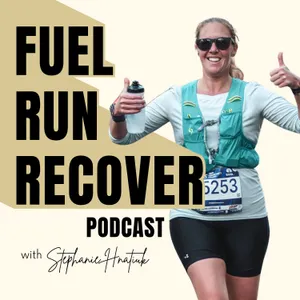
Fuel Run Recover is a podcast for everyday runners who want to learn how to fuel better, run smarter, and recover faster. We'll be doing deep dives on the nutrition and training strategies you need to improve your running performance, body composition, and develop a healthier relationship with food and exercise.
Latest Episodes
The most recent episodes — sign up to get AI-powered summaries of each one.
- 6 days ago33 min
Should You Run Less to Run a Faster Marathon?
Should you be running less?The “3 runs per week” debate is making the rounds again, with runners sharing stories about how cutting back their running helped them get faster, stay injury-free, and finally hit a big PR.But there’s an important piece of context that often gets left out.A runner with 10–15 years and thousands of miles under their belt can thrive on three runs per week for very different reasons than a newer runner training for their first half or full marathon.In this episode, we’re breaking down why there isn’t one “ideal” running frequency, and why copying someone else’s training schedule without considering their running history can backfire.We discuss:Why running frequency and total running volume aren’t the same thingHow years of easy mileage build an aerobic foundation you can’t shortcutWhy an experienced runner might get faster by temporarily running lessWhy a newer runner may actually need MORE running to improveThe relationship between training volume, intensity, recovery, and performanceHow strength training and cross-training fit into the equationWhy marathon “durability” matters, and what your training has to do with falling apart late in a raceWhen focusing on your 5K speed could eventually make you a better marathonerHow to decide whether 3, 4, 5, or 6 runs per week makes sense for YOUThe goal isn’t to run as much—or as little—as possible. It’s to find the amount of running that gives your body the stimulus it needs while still allowing you to recover, stay consistent, and actually get better.Looking for the resources mentioned in today's episode?Get your free fueling audit here!And if you’re ready for more support, I’ve got options—whether it’s my nutrition ebook Fuel Smarter, Run Stronger, my online coaching programs The Fueled Runner or The Fuel Train Recover Club, or apply for limited spots in my personalized 1:1 coaching programs.
- 1 weeks ago42 min
Why Running Makes You So Hungry (And What to Do About It)
If marathon or half marathon training suddenly has you feeling like you could eat everything in sight, this episode is for you.An increase in hunger when your training volume goes up is normal—but feeling constantly ravenous, thinking about food all day, or reaching the end of the day completely starving can also be a sign that something about your fueling strategy needs to change.In this episode, we’re revisiting one of our most popular conversations about runner hunger and breaking down some of the most common reasons your appetite might feel out of control during training.We discuss:Why simply eating “healthy” foods doesn’t necessarily mean you’re eating enough for your trainingHow meal size and eating frequency can impact hunger later in the dayWhy skipping meals or doing a lot of fasted training can leave you playing catch-up with your nutritionThe importance of including carbohydrates, protein, fibre, and fats in your everyday mealsWhy big salads, protein shakes, and other seemingly filling meals might not actually keep a runner satisfiedHow drinking too many of your calories can affect fullnessWhy your hunger cues aren't always a perfect indicator of whether you're fueling enoughWhat it can mean if you’re experiencing the opposite problem and rarely feel hungry at allIf you’ve ever wondered, “Why am I SO hungry when I’m running more?”—or felt frustrated that race training seems to send your appetite through the roof—this episode will help you understand what might actually be going on and how to fuel in a way that better supports your training, recovery, and performance.Ready to take the next step with your fueling?Not sure what's working (or what's missing) in your current nutrition strategy? Start with my FREE Runner's Fueling Audit. In just 5 minutes, you'll identify the biggest gaps in your fueling and what to focus on next.Take the free Runner's Fueling AuditReady to stop piecing together nutrition advice and build a fueling strategy that actually works for you?The Fueled Runner is my 8-week nutrition program designed to help runners fuel better for their training, performance, recovery, and body composition goals—with the education, tools, and support to put it all into practice.Learn more about The Fueled Runner
- 2 weeks ago25 min
The Realities of Running and Weight Loss
What if your nutrition and training plan is working… just not as quickly as you expected?In this episode of The Fuel Run Recover Podcast, we’re continuing the conversation about expectations—this time when it comes to weight loss and body composition for runners.If you’re trying to improve your body composition while also getting faster, stronger, and better fueled, it can feel like those goals are constantly competing with each other. But they don’t have to be.We’re talking about why sustainable progress often happens much more slowly than diet culture has taught us to expect, and why that doesn’t mean your approach isn’t working. I’m also sharing the stories of two runners with very similar goals and results—but very different perspectives on their progress—to show just how much our expectations can influence whether we feel successful or frustrated.In this episode, we cover:Why runners don’t have to choose between fueling well and improving body compositionWhy quick-fix weight loss strategies often clash with the demands of training for a raceHow realistic timelines can completely change how you view your progressWhy consistency matters more than constantly starting over with a “better” planHow to recognize progress beyond the number on the scaleWhy the strategies you can sustain for months (and years!) are often the ones that create the biggest transformationIf you’ve ever thought, “I’m doing everything right… so why isn’t this happening faster?” this episode will help you zoom out, reset your expectations, and see your progress a little differently.Ready to take the next step with your fueling?Not sure what's working (or what's missing) in your current nutrition strategy? Start with my FREE Runner's Fueling Audit. In just 5 minutes, you'll identify the biggest gaps in your fueling and what to focus on next.Take the free Runner's Fueling AuditReady to stop piecing together nutrition advice and build a fueling strategy that actually works for you?The Fueled Runner is my 8-week nutrition program designed to help runners fuel better for their training, performance, recovery, and body composition goals—with the education, tools, and support to put it all into practice.Learn more about The Fueled Runner
- 4 weeks ago32 min
A Birthday Q&A: Running, Fueling, Twin Mom Life + My Biggest Running Goals
It's my 38th birthday! 🎉So we're doing something a little different on The Fuel Run Recover Podcast this week.I asked you to send me your questions about running, fueling, business, motherhood, and life behind the scenes—and today, I'm answering them.In this episode, we're chatting about:My most memorable finish line (and why it wasn't at an official race!)The fuel I personally reach for most often during long runsWhether runners actually need to use gelsWhat returning to running after having twins really looked like for meMy favorite race distance and the races still sitting on my bucket listThe BIG running goal I'd love to accomplish somedayWhy I wasn't always a runner—and how I spent five years making the same training mistakes before finally having a breakthroughMy favorite (and hardest!) parts of being a twin momThis one's a little more personal, a little behind-the-scenes, and hopefully a fun way to celebrate another trip around the sun together.Thanks for being here and being part of The Fuel Run Recover Podcast!Ready to take the next step with your fueling?Not sure what's working (or what's missing) in your current nutrition strategy? Start with my FREE Runner's Fueling Audit. In just 5 minutes, you'll identify the biggest gaps in your fueling and what to focus on next.Take the free Runner's Fueling AuditReady to stop piecing together nutrition advice and build a fueling strategy that actually works for you?The Fueled Runner is my 8-week nutrition program designed to help runners fuel better for their training, performance, recovery, and body composition goals—with the education, tools, and support to put it all into practice.Learn more about The Fueled Runner
- Aug 18, 202621 min
You Did Everything Right… So Why Did Your Run Still Feel Hard?
Sometimes the thing ruining your run isn’t your fitness, your fueling, or your training plan.It’s your expectations.In this episode, we’re talking about how the gap between what you expect a workout or race to feel like and what actually happens can completely change your experience — and even impact how well you perform.We discuss:Why even a well-fueled, well-trained run can still feel hardHow unrealistic expectations can turn a perfectly normal workout into a “bad” oneWhy better fueling or hydration may not feel as dramatic as you expected right awayHow exceeding your expectations can give you a huge mental boostThe difference between an actual problem and simply having your expectations unmetHow to set more realistic expectations before long runs, hard workouts, and racesWhy “feeling good” and “working hard” can absolutely coexistIf you’ve ever finished a run thinking, “Why did that feel so hard? I did everything right,” this episode will help you look at your training from a completely different perspective.Because sometimes, nothing is actually going wrong.The experience just didn’t match the picture you had in your head.Ready to take the next step with your fueling?Not sure what's working (or what's missing) in your current nutrition strategy? Start with my FREE Runner's Fueling Audit. In just 5 minutes, you'll identify the biggest gaps in your fueling and what to focus on next. Take the free Runner's Fueling AuditReady to stop piecing together nutrition advice and build a fueling strategy that actually works for you?The Fueled Runner is my 8-week nutrition program designed to help runners fuel better for their training, performance, recovery, and body composition goals—with the education, tools, and support to put it all into practice.Learn more about The Fueled Runner
- Aug 11, 202626 min
Why Tracking Your Calories Isn't Working For You (pt 2)
If you've ever adjusted your meals because your watch said you "earned" more calories, or wondered why you're tracking everything but still not seeing the results you want, this episode is for you.In Part 2 of this calorie tracking series, we dive into three more common mistakes that can hold runners back from improving their performance, body composition, and relationship with food.In this episode, we discuss:Why eating back your exercise calories can work against your training and weight loss goalsThe problem with relying too heavily on calorie burn estimates from your watchWhy calorie tracking isn't nearly as accurate as many people thinkHow to fuel before your hardest workouts instead of trying to "earn" your food afterwardWhy meal timing matters just as much as total caloriesTwo simple strategies to transition away from calorie tracking while still eating with confidenceWhether you're currently tracking every bite or looking for a more sustainable way to fuel your running, this episode will help you spend less time obsessing over numbers and more time building habits that actually support better performance and long-term results.
- Aug 4, 202623 min
Why Tracking Your Calories Isn't Working For You (pt 1)
Are you tracking calories... but still not seeing the results you want?In part one of this two-part series, we break down three of the biggest mistakes runners make when tracking calories—and why simply logging your food isn't enough to improve your nutrition or body composition.We discuss why calorie tracking should be used as a short-term assessment tool rather than a lifelong habit, how tracking without analyzing your data wastes time, and why using calorie targets as the "diet" often leads to an unhealthy cycle of restriction and overeating.If you've ever felt like you're "good" when you're tracking but lose control as soon as you stop, this episode is for you.In this episode, we cover:When calorie tracking can actually be helpfulWhy simply collecting data isn't enoughThe difference between using tracking as a tool versus using it as the dietHow overly restrictive calorie targets can backfireWhy incomplete food logs make it harder to improve your nutritionHow to use tracking to build habits you can maintain without logging every mealIf you're tired of tracking everything you eat but still want to fuel your running well, this episode will help you build a more sustainable approach.Looking for the resources mentioned in today's episode?Get your free fueling audit here!And if you’re ready for more support, I’ve got options—whether it’s my nutrition ebook Fuel Smarter, Run Stronger, my online coaching programs The Fueled Runner or The Fuel Train Recover Club, or apply for limited spots in my personalized 1:1 coaching programs.
- Jul 28, 202625 min
Why You're Not Getting Faster (it might be your fueling)
Want to get faster? Your nutrition might be the missing piece.If you're showing up for your workouts but your race times aren't improving, it might not be your training plan, it could be how you're fueling it.In this episode, we break down the nutrition strategies that help runners maximize the quality of their workouts, recover better, and ultimately run faster. From daily meal timing to carb loading, hydration, and fueling during long runs, you'll learn how to support your training so you can get more from every mile.Whether you're chasing a new 5K PR or training for your next half or full marathon, these fueling strategies can help you unlock your performance potential.In this episode, we discuss:Why your nutrition should change based on your training scheduleHow daily fueling impacts workout quality, recovery, and injury riskThe importance of meal timing before and after runsWhy carbohydrates are essential for speed workouts and higher-intensity trainingHow to fuel long runs for stronger finishesThe biggest mistakes runners make with carb loadingWhy practicing your race fueling strategy during training mattersHow hydration impacts performance—and why it may be the real cause of late-run stomach issuesIf your goal this season is to run faster, this episode will help you build a nutrition strategy that supports stronger training sessions, faster recovery, and more confident race-day performances.Looking for the resources mentioned in today's episode?Get your free fueling audit here!And if you’re ready for more support, I’ve got options—whether it’s my nutrition ebook Fuel Smarter, Run Stronger, my online coaching programs The Fueled Runner or The Fuel Train Recover Club, or apply for limited spots in my personalized 1:1 coaching programs.
About The Fuel Run Recover Podcast
Fuel Run Recover is a podcast for everyday runners who want to learn how to fuel better, run smarter, and recover faster. We'll be doing deep dives on the nutrition and training strategies you need to improve your running performance, body composition, and develop a healthier relationship with food and exercise.
Customized Recaps
AI-powered recaps with compact key takeaways, quotes, and insights.
Straight to Your Inbox
Get key takeaways from The Fuel Run Recover Podcast in a 5-minute read.
Save Hours Every Week
Stay current on your favorite podcasts without falling behind.
Frequently Asked Questions
What is Podzilla's The Fuel Run Recover Podcast daily summary?
It's a free AI-powered email that summarizes new episodes of The Fuel Run Recover Podcast as soon as they're published. You get the key takeaways, notable quotes, and links & mentions — all in a quick read.
How does the The Fuel Run Recover Podcast podcast summary work?
When a new episode drops, our AI transcribes and analyzes it, then generates a personalized summary tailored to your interests and profession. It's delivered to your inbox every morning.
Is this an official The Fuel Run Recover Podcast product?
No. Podzilla is an independent service that summarizes publicly available podcast content. We're not affiliated with or endorsed by Stephanie Hnatiuk.
Can I get summaries of other podcasts too?
Absolutely! The free plan covers up to 3 podcasts. Upgrade to Pro for 15, or Premium for 50. Browse our full catalog at /podcasts.
How often does The Fuel Run Recover Podcast release new episodes?
The Fuel Run Recover Podcast publishes weekly. Our AI generates a summary within hours of each new episode.
What topics does The Fuel Run Recover Podcast cover?
The Fuel Run Recover Podcast covers topics including Sports, Running. Our AI identifies the specific themes in each episode and highlights what matters most to you.
Start getting The Fuel Run Recover Podcast summaries tomorrow morning.
Free forever for up to 3 podcasts. No credit card required.
Free forever for up to 3 podcasts. No credit card required.