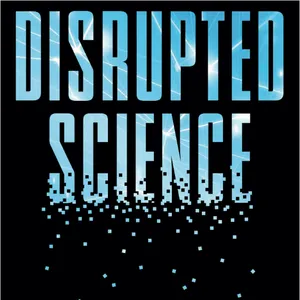
Free Daily Podcast Summary
The DISRUPTED SCIENCE Podcast: Daily Summaries Delivered
by Caldera Information Solutions LLC
From the authors of the forthcoming book ”How the Internet Disrupted Science” comes this view of science from where the action is — the scientific claims and publishing space. Hosted by Kent Anderson and Joy Moore, listeners receive analyses of current events, updates about the book, and opinions on various topics of interest. Book pre-sales available now. https://www.simonandschuster.com/books/How-the-Internet-Disrupted-Science/Kent-Anderson/9781493094400
Latest Episodes
The most recent episodes — sign up to get AI-powered summaries of each one.
- 4 days ago42 min
September 16, 2026 — Negligent Experiments: The Old Normal
Various ideologies have captured the handful of leaders atop the major AI firms currently calling for a slowdown in development — effective altruism, long-termism, Singularitarianism. The way these firms are whipsawing society is notable, and the superficiality of the leadership at these firms alarming. The utopian/dystopian fantasy world their ideologies has created — high hopes, disassociation from reality, groupthink, and more — may be fun for bros in their 20s to discuss over their THC infusers and ketamine drips, but it may also be more familiar to scientific and scholarly publishers than many think. After all, it was scientific publisher who underwent an ideological conversion decades ago with the high hopes and utopian beliefs of open access (OA) publishing foisted on us by a few strong and relentless voices. AI and OA have some key similarities — the belief that technology can and will solve problems simply through scaled deployment, the blindness to obvious problems created by the pursuit of the ideological goals because stopping is not an option, and the cult-like status of the ideas where dissent or critique is not allowed. For a profession that at its root has the idea of taking a breath, evaluating claims, and making careful judgments of those, scientific publishing’s headlong rush into OA is now being matched by a headlong rush into AI — one that seems even more likely to end in tears given how things are unfolding overall and the lack of a culture of caution and considered choices. Scientific publishing at least still has that going for it . . . In this episode, we discuss these topics, leaderboardism, and the latent backlash for both OA and AI. We end by discussing why it’s time for us to go out and make new observations at the following upcoming events: Peer review week webinar this week STAT Conference Publication Ethics Week Charleston We also share our “Discoveries of the Week.” Subscribe to our podcast Subscribe on Apple Podcasts Subscribe on Spotify Subscribe on Amazon Music/Audible Subscribe on YouTube Music provided by Provoke the Truth — https://provokethetruth.net/
- 1 weeks ago1h 4m
September 9, 2026 — A Lack of Consumer Protection
A recent press release from Springer Nature — gussied up to pretend it was a “white paper” representing “findings” and pushed right out through Research Information, where press releases go for release — provided a litany of incentives being pursued by the author-pays Gold OA publishers these days: Citations Downloads Attention However, these are not reliable incentives. Some work against OA publisher finances. Each one has been hacked to death. All three are meaningless to whether the scientific claims being made are important or reliable. Worse, they reveal a rejection of the duty of care the scientific enterprise has in relationship with the public. Today, we talk about the lack of consumer protection in scientific publishing and its negative effects, why editorial and peer review done right protect both fellow scientists and the public by engaging communities of experts, and why something unbiased and unhackable might make sense as a priority for those who care. We also share our “Discoveries of the Week.” Subscribe to our podcast Subscribe on Apple Podcasts Subscribe on Spotify Subscribe on Amazon Music/Audible Subscribe on YouTube Music provided by Provoke the Truth — https://provokethetruth.net/
- 3 weeks ago48 min
August 26, 2026 — Starting Your Journal’s Digital Detox
We have a chapter in our book (“Trapped in the Tech Shrine”) about how scientific publishers became habituated to taking publishing and business advice from technology vendors. It became so entrenched that some might wonder who’s in charge. Today, we find ourselves in the midst of a palpable tech backlash against: Big Tech oligarchs Data centers Techno-authoritarians Lawsuits are everywhere as extraction and exploitation are challenged, as the energy and economic disruptions of data centers are sparking increasingly organized protests to thwart them, and AI and tech valuations and futures are in flux. Through their embrace of digital tech, publishers became accustomed to platforms and templates, which were developed in large extent to spread the higher costs of digital publishing. As a result, today we have code bases full of business risks, incentives to set it and forget it for as long as possible, and distractions built in a decade ago that too often go unquestioned. It seems time to say that tech often distracts from substance, is too quickly elevated for no good reason, and can easily mislead us about what matters to our audiences. Is it time to question assumptions? To begin a digital detox? Is it all vaporware, selling us on a future that will never come? As automakers replace massive touchscreens with knobs and dials, do we need to do our own program of digital detox? We finish with our “Discoveries of the Week.” Subscribe to our podcast Subscribe on Apple Podcasts Subscribe on Spotify Subscribe on Amazon Music/Audible Subscribe on YouTube Music provided by Provoke the Truth — https://provokethetruth.net/
- Aug 19, 202639 min
August 19, 2026 — Scientific Publishing’s Fauci Reckoning
Today, we want to talk about Anthony Fauci, and our role in making life difficult for him — and, beyond his current travails, for society at large. In 2021, healthcare expert Paul Keckley noted five flaws in the response to Covid-19, three of which ended up at our doorstep: Covid-19 science has been compromised by political self-interests The influence of social media has been underestimated The scientific community has confused the public The scientific publishing system was at the heart of what some called an “infodemic,” with hundreds of papers posted or published per day, most from inexpert research teams and nearly all from inexpert authors, part of the “more information will solve this faster” mentality. When speed was prioritized over quality or relevance or even sound public health messaging, misinformation purveyors had a field day. Preprints dominated the news and were seen at the White House. The My Pillow guy started a Covid-19 grift with a preprint. The myocarditis myth was started with a bad preprint. Steve Bannon catalyzed the lab leak conspiracy with two preprints he funded. Fake information from anti-vaxxers and others went mainstream. And, worse, the seeds of MAHA were planted, created a beanstalk that RFK, Jr., and Jay Bhattacharya among others would climb to positions of power. All of this — and more — undermined what could have been a good pandemic response if messaging had been consistent, uniform, and science-based and delivered mainly by trained public health leaders. Instead, our eagerness to chase attention undermined these efforts while helping to make MAHA and empowering the very people who attacked Anthony Fauci recently. It’s time to have this uncomfortable conversation — our Fauci reckoning. We can’t make things better if we don’t accept that scientific publishing played a role in public health’s struggles to do right by us during a pandemic, in Fauci’s woes during that time and subsequently, and in society’s science-addressable problems ever since. We end on a more cheerful note with our “Discoveries of the Week.” Subscribe to our podcast Subscribe on Apple Podcasts Subscribe on Spotify Subscribe on Amazon Music/Audible Subscribe on YouTube Music provided by Provoke the Truth — https://provokethetruth.net/
- Aug 7, 202635 min
August 7, 2026 — Interview with Colette Delawalla
Colette Delawalla is the Founder and CEO of Stand Up for Science (SUFS), an organization that has been at the heart of our national — and now international — defense of independent science as an independent truth-seeking pursuit. With the organization recently notching a win by getting the proposed OMB funding rules — which would have given political appointees discretion over spending decisions, among other affronts — potentially delayed, Colette and her team are now working to ensure these proposals are shut down entirely while activating a larger coalition to reinvent science in ways that will auger well for the future. But we get to let her explain . . . You can donate and support SUFS in many ways. They and others are fighting the good fight. We are extremely grateful that Colette took the time to speak with us. Along with Beth Jacobs, who we interviewed last December, and many others, science is being defended by some great people and well-aligned teams. Please do your part whenever you can! We also share our “Discoveries of the Week.” Subscribe to our podcast Subscribe on Apple Podcasts Subscribe on Spotify Subscribe on Amazon Music/Audible Subscribe on YouTube Music provided by Provoke the Truth — https://provokethetruth.net/
- Aug 5, 202641 min
August 5, 2006 — Shopify Your Pseudoscience
OA publishing and social media gave pseudoscience information a business model, but how do those people actually sell and fulfill products? The media keep missing this story, focusing on the products and not the businesses, as we found with a recent WIRED story about “natural” alternatives to Adderall. It’s not that they’re pushing these as much as how easily they’re able to push them in the first place. Shopify is a central operator, with templates, stock photos, profitability calculators, e-commerce, and fulfillment services. Just pick your poison, so to speak, and watch the money start to flow. The family behind Shopify, based in Canada, is also trying to build a media empire called True North. And, since their politics tilt to the right, it’s no surprise their stock price also responds to the political winds of their most lucrative market, the US. From “slopfluencer” grandmas to AI monks, it seems no taboo is off-limits when it comes to scamming people. There are retail competitors, including Amazon and TikTok, but one in particular seems focused on undercutting Shopify — another platform that feels even griftier called Swell. We’ll walk you through what we’ve found. It’s not definitive, and we can only speculate about some things, but it’s worth knowing about. Of course, we share our “Discoveries of the Week.” Subscribe to our podcast Subscribe on Apple Podcasts Subscribe on Spotify Subscribe on Amazon Music/Audible Subscribe on YouTube Music provided by Provoke the Truth — https://provokethetruth.net/
- Jul 29, 202628 min
July 29, 2026 — Tales From the Bookstores
We’re back from our first signings, and we have a few stories to share. The signings occurred prior to the book’s official publication date, creating some extra interest but also some challenges the bookstores helped us navigate. Overall, it was a great experience, getting better and better as we settled in and got used to the format. The people we met were all fantastic and interesting. The stores we visited (and our helpful hosts): Porter Square Books in Cambridge, MA: Tuesday, July 21st Host: Taylor Jabberwocky Books in Newburyport, MA: Friday, July 24th Hosts: Shauna, Grace, and Sue (and Chaucer) Northshire Books in Manchester, VT: Saturday, July 25th Host: Kendall In addition to some highlights from the signings, we also discuss recent and upcoming podcast interviews, and why we’re excited for people to finally read our book. Finally, we share our “Discoveries of the Week.” Subscribe to our podcast Subscribe on Apple Podcasts Subscribe on Spotify Subscribe on Amazon Music/Audible Subscribe on YouTube Music provided by Provoke the Truth — https://provokethetruth.net/
- Jul 8, 20261h 23m
July 8, 2026 — Eugenics: Our Interview with Anita Chan Revisited
In 2025, Anita Say Chan’s book, Predatory Data: Eugenics in Big Tech and Our Fight for an Independent Future, was published by the University of California Press. This led to a review here, and we became immediate fans of her insights and research trajectory. We also conducted an email interview with Chan back in June 2025, before we were any good at podcasting. That interview is absolutely riveting, with dozens of insights that will give you pause. Then, in September 2025, we had the chance to do a podcast interview with Chan, where we discussed: the path from Big Data to eugenics to the surveillance economy the role academia has played in enabling much of this our lurch toward tech-led authoritarianism our confusion of metrics with merit Big Tech’s monoculture and paranoia It’s a great interview. Given renewed attention on both “soft eugenics” and eugenics in scientific publications — preprints and otherwise — we thought it would be a good idea to revisit this. We’d also like to mention a recent paper by Helen Burn about Galton and the history of eugenics in statistics and at University College London (UCL). Chan references the history, as well. Discoveries of the Week (also revisited) Sniffing out the platypus [video] Subscribe today Subscribe on Apple Podcasts Subscribe on Spotify Subscribe on Amazon Music/Audible Subscribe on YouTube Music provided by Provoke the Truth — https://provokethetruth.net/
About The DISRUPTED SCIENCE Podcast
From the authors of the forthcoming book ”How the Internet Disrupted Science” comes this view of science from where the action is — the scientific claims and publishing space. Hosted by Kent Anderson and Joy Moore, listeners receive analyses of current events, updates about the book, and opinions on various topics of interest. Book pre-sales available now. https://www.simonandschuster.com/books/How-the-Internet-Disrupted-Science/Kent-Anderson/9781493094400
Customized Recaps
AI-powered recaps with compact key takeaways, quotes, and insights.
Straight to Your Inbox
Get key takeaways from The DISRUPTED SCIENCE Podcast in a 5-minute read.
Save Hours Every Week
Stay current on your favorite podcasts without falling behind.
Frequently Asked Questions
What is Podzilla's The DISRUPTED SCIENCE Podcast daily summary?
It's a free AI-powered email that summarizes new episodes of The DISRUPTED SCIENCE Podcast as soon as they're published. You get the key takeaways, notable quotes, and links & mentions — all in a quick read.
How does the The DISRUPTED SCIENCE Podcast podcast summary work?
When a new episode drops, our AI transcribes and analyzes it, then generates a personalized summary tailored to your interests and profession. It's delivered to your inbox every morning.
Is this an official The DISRUPTED SCIENCE Podcast product?
No. Podzilla is an independent service that summarizes publicly available podcast content. We're not affiliated with or endorsed by Caldera Information Solutions LLC.
Can I get summaries of other podcasts too?
Absolutely! The free plan covers up to 3 podcasts. Upgrade to Pro for 15, or Premium for 50. Browse our full catalog at /podcasts.
How often does The DISRUPTED SCIENCE Podcast release new episodes?
The DISRUPTED SCIENCE Podcast publishes weekly. Our AI generates a summary within hours of each new episode.
What topics does The DISRUPTED SCIENCE Podcast cover?
The DISRUPTED SCIENCE Podcast covers topics including Science, Technology, Business. Our AI identifies the specific themes in each episode and highlights what matters most to you.
Start getting The DISRUPTED SCIENCE Podcast summaries tomorrow morning.
Free forever for up to 3 podcasts. No credit card required.
Free forever for up to 3 podcasts. No credit card required.