Free Daily Podcast Summary
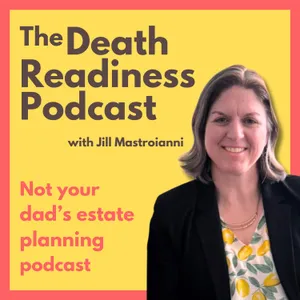
The Death Readiness Podcast: Not your dad’s estate planning podcast: Daily Summaries Delivered
by Jill Mastroianni - Estate Planning & Probate Consultant for Women
You’re the one prepping for your child’s IEP meeting while trying to talk your aging dad out of getting a puppy. You’re booking medical appointments, managing the money, juggling work emails during school pickup and still expected to keep the fridge stocked and know who has practice, rehearsal, or a field trip tomorrow. Your parents are struggling, but they still insist they’re fine. You see the mobility issues, the memory slips, the unopened mail, but every offer to help feels like an argument. You’re scared to push. You’re scared to wait. And there’s no clear roadmap for how to do any of this without losing your mind or your family. Hosted by Jill Mastroianni, a former estate planning attorney turned trusted guide for women holding it all together, this podcast is your space to untangle the mess. With more than a decade of legal experience, Jill brings clarity to the hardest conversations most families avoid until it’s too late. Each episode offers honest stories, practical tools, and actionable guidance to help you navigate aging parents, estate planning, and family dynamics with confidence and compassion.
Latest Episodes
The most recent episodes — sign up to get AI-powered summaries of each one.
- 5 days ago22 min
What to Expect When Hiring an Estate Planning Attorney
Hiring an estate planning attorney shouldn’t require you to figure out your estate plan before you walk through the door.You don’t need to know whether you need a Will or a trust. You don’t need to have every fiduciary selected or every beneficiary designation figured out. And you definitely don’t need to know what provisions should go into your documents. That’s part of what you’re hiring an attorney to help you determine.In this episode, Jill takes you behind the scenes of the estate planning process and explains three things you should understand before hiring an estate planning attorney: scope, cost, and process.She also walks through her own estate planning process, from the first conversation through drafting, document review, signing, implementation, and an optional Family Estate Planning Meeting—so you know what questions to ask when choosing an attorney and what a thoughtful estate planning process can look like.What You’ll Learn in This EpisodeThe three things to understand before hiring an estate planning attorney: scope, cost, and process.What “scope of representation” actually means. Before focusing only on the price, understand exactly what the attorney has agreed to do. Does the fee include a Will or trust? Powers of attorney? Revisions? Signing? Trust funding? Beneficiary designation assistance?What to ask about legal fees. Whether an attorney charges hourly, a flat fee, or some combination, you should understand how you’ll be charged, what is included, and when additional fees might apply.Why process matters almost as much as the documents. Ask what happens after you hire the attorney. How many meetings will you have? When will you receive drafts? Will the attorney explain them? Can you request changes? What happens after signing?Why you don’t need to arrive with all the answers. You don’t need to know whether you need a revocable trust or exactly what should happen in every possible scenario. Bring information about your family, assets, concerns, and goals. Your estate planning attorney can help you work through the legal solutions.What actually goes into drafting an estate plan. Jill explains why she doesn’t start every Will with a blank Word document and how forms developed, used, and revised over approximately 14 years of practice provide a vetted foundation that can then be customized for each client’s circumstances.Why understanding your documents matters. Receiving a stack of legal documents shouldn’t be the end goal. Jill explains how she reviews documents with clients so they understand what happens at death, who is in charge, what authority they’re giving someone under a power of attorney, and how any trusts will work.Why signing doesn’t necessarily mean you’re finished. An estate plan may also require changes to asset ownership, beneficiary designations, or trust funding. Beautifully drafted documents may not accomplish what you intended if the implementation is never completed.How much should your adult children know? Jill introduces her optional Family Estate Planning Meeting for estate planning clients, which can help adult children understand the big picture of their parents’ plan, where to find important information, who is in charge, and which professionals to contact, without requiring parents to disclose financial information they want to keep private.Remember that you’re evaluating the attorney, too. Do you feel comfortable asking questions? Does the attorney explain things in a way you understand? Do you know what you’re paying for and what happens next? Do you feel heard? Choosing an estate planning attorney is a two-way decision.Resources & LinksWatch this episode on YouTube: https://youtu.be/bwP_SrhrLJsTennessee estate planning services: https://www.deathreadiness.com/estate-planning-solutionStart the estate planning process: https://www.deathreadiness.com/get-the-estate-planning-solutionConnect with Jill:· Website: DeathReadiness.com· Email: jill@deathreadiness.com· Learn more about <a href="https://www.deathreadiness.com/services" rel
- 1 weeks ago25 min
What Divorced Parents Need to Know About Life Insurance
Your parenting plan may require you to maintain life insurance for your children. But does your beneficiary designation actually accomplish what the court order requires?In this episode of The Death Readiness Podcast, Jill looks at a life insurance provision in Tennessee’s form parenting plan and walks through what happens when you try to translate those instructions onto an actual life insurance beneficiary form. She explains why naming a minor child directly can create problems, the difference between a custodian and a trustee, and how thoughtful estate planning can help make sure the parenting plan, life insurance policy, and estate planning documents all work together.Having the life insurance policy is only part of the plan. The money also needs a clear path to the people you intended to protect.What You’ll Learn in This EpisodeWhy divorce should trigger an estate plan review. If your parenting plan or divorce agreement requires you or your former spouse to maintain life insurance, that requirement needs to be considered alongside your estate planning documents and beneficiary designations.Why a court order may not tell you everything you need to know. Tennessee’s form parenting plan can require a child to be named as the beneficiary of life insurance with an adult serving as “trustee,” but that language may be surprisingly difficult to translate onto an insurance company’s beneficiary designation form.What can happen when you name a minor directly. A life insurance company may not be able to simply hand a large death benefit to a child. Depending on the circumstances, payment could be delayed while a court appoints a guardian to manage the child’s assets.The difference between a custodian and a trustee. A custodian under the Uniform Transfers to Minors Act, or UTMA, can manage property for a minor without a separately drafted trust. But a custodian and a trustee are not the same thing, and that distinction matters when you’re also trying to comply with a court order.Why UTMA can be useful but may not be the ideal long-term solution. UTMA can provide a relatively simple way for an adult to manage money for a child, but the child eventually receives control of the property at the age specified by state law, usually age 21. That may not be what you want for a significant life insurance benefit.Why simply selecting “trust” on a beneficiary form may not solve the problem. If the insurance company asks for the trust’s name, date, and other identifying information, you need an actual trust, not simply language in a parenting plan referring to someone as a trustee.How a trust created under a Will can provide the missing instructions. A properly drafted Will can create a trust that identifies who manages the life insurance proceeds, what the money can be used for, how long the trust lasts, what happens to money that remains, and who steps in if the original trustee cannot serve.Why the beneficiary designation cannot be considered in isolation. The goal is for the parenting plan, estate planning documents, and life insurance beneficiary designation to all tell the same story.Why state law matters. In the Tennessee example discussed in the episode, Jill explains how she may coordinate the beneficiary designation with a trust created under the Will. But the treatment of life insurance proceeds is state-specific, so this is not a strategy to adopt without first considering the law where you live.Resources & LinksWatch this episode on YouTube: https://youtu.be/vmCCII-x5AUTennessee Permanent Parenting Plan Order. Review the Tennessee form discussed in this episode, including the life insurance provision in Part III, Section E. https://circuitclerk.nashville.gov/forms-permanent-parenting-plan/Estate Planning After Divorce. Listen to Jill’s earlier episode about estate planning changes to consider after a divorce. Episode 49: How to Keep Your Ex Out of Your Estate Plan: https://www.deathreadiness.com/podcast/49Revocable Trusts. Listen to Jill’s episode explaining what revocable trusts do, when they can be useful, and why having one doesn’t automatically mean your estate will avoid probate. Episode 19: Why You Need (or Don’t Need) a Trust: https://www.deathreadiness.com/podcast/episode-
- 2 weeks ago40 min
Why Your Responsible Child Might Be the Wrong Trustee
What actually happens after a professional trustee takes over a trust and a beneficiary asks for money? In this episode, Jill sits down with longtime friend and trust advisor Alex Fisher for a behind-the-scenes look at how professional trustees actually do the job. They walk through how distribution requests are evaluated, what happens when the answer is no, and why naming the “responsible child” as trustee may come with costs parents don't always consider. They also discuss what professional trustees look for before agreeing to serve, why flexibility matters when drafting a long-term trust, and how an estate plan can adapt when the family, the assets, or the world looks very different decades from now. What You’ll Learn in this Episode What a professional trustee actually does. Alex explains the different roles a trust advisor may play, from working with families on estate planning issues to administering long-term trusts and serving as executor or trustee after someone dies. What happens when a beneficiary asks for money. A request for tuition, a car, medical expenses, or home improvements isn't necessarily answered with a simple yes or no. The trustee may review invoices or estimates, the terms of the trust, its investments, previous distributions, and how long the trust is intended to last before making a decision. Why having discretion doesn't automatically mean making the distribution. A trustee has to consider not only whether the trust permits a distribution, but whether making it is consistent with the beneficiary's interests, the purpose of the trust, and its long-term financial health. How professional trustees make difficult decisions. Alex describes taking distribution requests to a trust committee and how she prepares beneficiaries when she thinks a request might not be approved. Why saying “no” can be easier for a professional trustee. When a sibling serves as trustee, a denied request can become personal. A professional trustee can make the same decision without years of family history entering the equation. The hidden cost of naming the “responsible child.” Your daughter may be willing to serve as trustee without charging a fee, but that doesn't make the job free. Serving can take significant time away from a career, family, sleep, exercise, and everything else that was already competing for that child's attention. It can also create an emotional cost when the trustee has to make unpopular decisions involving siblings. Why a professional trustee and family member can sometimes work together. A co-trustee arrangement may combine professional expertise with the knowledge and personal perspective of someone who knows the family well. Naming a professional trustee doesn't necessarily mean they'll agree to serve. The institution may review the trust, the family circumstances, and the assets before accepting the appointment. That's one reason it can be helpful to talk with a potential professional trustee while you're creating your estate plan rather than assuming they'll step in later. Not every trustee is equipped to manage every asset. Stocks and bonds may be relatively straightforward, while real estate, mineral interests, farmland, and other specialized or illiquid assets can require additional expertise and resources. Why your trust needs room for life to change. A beloved lake house may be the center of family life today. Decades from now, family members may live across the country, insurance may become prohibitively expensive, or the property may no longer serve the purpose you intended. Trust language that is too restrictive can leave a future trustee seeking court approval, and incurring significant expense, to solve a problem you never anticipated. What really matters when choosing a trustee. Technical expertise matters, but so do judgment, empathy, communication, and the ability to make difficult decisions while remembering that there are real people affected by them. Resources & Links Alex Fisher Trust Advisor, Regions Bank Alex shares her perspective and experiences in this episode in her personal capacity and is not speaking on behalf of Regions Bank. Phone: 615.365.5281 Alexandria.fisher@regions.com www.linkedin.com/in/alexandria-s-fisher Watch on YouTube: https://youtu.be/rNnZAZUNibU Related Death Readiness Podcast Episodes
- 3 weeks ago21 min
Why Your Pour-Over Will Won’t Avoid Probate
You created a revocable trust to avoid probate. So why did your attorney also give you a Will? That Will is a pour-over Will, designed to catch assets that are still in your individual name when you die and direct them into your trust. But there’s an important catch: those assets have to go through probate first. In this episode, Jill explains how pour-over Wills actually work, why creating a trust and funding a trust are two very different things, and how the way you own each individual asset determines whether it will avoid probate. The takeaway? If avoiding probate is your goal, don’t just ask, “Do I have a trust?” Ask, “What happens to each of my assets when I die?” What You’ll Learn in This Episode Why you may still need a Will even if you have a revocable trust. A pour-over Will acts as a backup for probate assets that never made it into your trust. Why a pour-over Will doesn’t avoid probate. It can direct an asset into your trust, but the asset first needs to pass through the probate process. The difference between creating and funding a trust. Signing a trust agreement creates the legal structure. Funding the trust means actually transferring assets into that structure. How a bank account can avoid probate. Depending on your circumstances and goals, you might retitle an account into your revocable trust or name the trust as a payable-on-death or transfer-on-death beneficiary. Why those options aren’t necessarily interchangeable. Having an account owned by your trust during your lifetime may make it easier for a successor trustee to manage it if you become incapacitated. A payable-on-death designation doesn’t take effect until death. What makes something a probate asset. An asset owned in your individual name at death with no surviving joint owner, beneficiary designation, POD/TOD designation, or other built-in method of transfer is a probate asset that needs probate to reach its next owner. Why I think of probate as a bridge. Probate gets an asset from its deceased owner to its next owner. Your pour-over Will can tell us where the asset should go after it crosses that bridge, but it doesn’t eliminate the bridge. Why one forgotten asset doesn’t necessarily mean your trust plan failed. A pour-over Will exists because financial lives change. You may open a new account, switch banks, or simply overlook something after creating and funding your trust. What could happen without a pour-over Will. If an asset is subject to probate and you don’t have a Will directing it into your trust, your state’s intestacy laws determine who receives it. The question to ask about every asset you own: What happens to this asset when I die? Resources & Links Watch this episode on YouTube: https://youtu.be/oeXWOkYpjoQ Tennessee estate planning services: https://www.deathreadiness.com/estate-planning-solution Episode 19: Why You Need or Don’t Need a Trust: https://www.deathreadiness.com/podcast/episode-19-how-to-know-if-you-need-a-trust Probate Infographic: https://www.deathreadiness.com/probate-infographic Episode 38: Why You Need or Don’t Need a Will: https://www.deathreadiness.com/podcast/why-you-need-or-dont-need-a-will Financial Power of Attorney podcasts: Episode 17: How Powers of Attorney Work, When to Use Them, and When It’s Too Late to Get One: https://www.deathreadiness.com/podcast/episode-17-how-powers-of-attorney-work-when-to-use-them-and-when-its-too-late-to-get-one Episode 68: Why Good Powers of Attorney Still Fail: https://www.deathreadiness.com/podcast/68 Connect with Jill: Website: DeathReadiness.com Email: jill@deathreadiness.com Learn more about <a href="https://www.deathreadiness.com/services" re
- Aug 18, 202616 min
Why Turning 18 Changes Everything in a Medical Crisis
What You’ll Learn in This Episode What really changes when your child turns 18. Being Mom or Dad no longer necessarily means you’re entitled to healthcare information or automatically have authority to make medical decisions. Why a HIPAA authorization matters. Once your child is an adult, their medical information belongs to them, even if they’re still on your health insurance and you’re paying the bills. A HIPAA authorization lets them decide who can receive that information. What a healthcare power of attorney actually does. Access to information and authority to make decisions are two different things. A healthcare POA lets your adult child choose who can make healthcare decisions if they’re unable to make those decisions themselves. Why naming an agent isn’t enough. Your child can give you authority to make a decision but would you know what they wanted you to decide? How a healthcare advance directive helps. An advance directive allows your child to document wishes involving serious illness and end-of-life care, including preferences about quality of life and treatments such as CPR, life support, and tube feeding. The conversation to have with your 18-year-old. Instead of saying, “Sign these so I can still help you,” start with whom they trust. And consider going first by sharing the decisions you’ve made in your own healthcare documents. What to consider when your child goes to college out of state. State laws vary, so consider whether completing forms for the state where your child attends school could make things easier for healthcare providers in an emergency. What happens if there’s no healthcare power of attorney. Some states have backup rules. In Tennessee, for example, a healthcare provider may have to identify a surrogate—and potentially sort through competing family relationships and opinions in the process. Why this is really about autonomy, not parental control. Turning 18 gives your child an opportunity to decide who receives their healthcare information, who speaks for them, and what that person should know about their wishes. Resources & Links Watch this episode on YouTube: https://youtu.be/YEW3jlgLoW0 Episode 22: What Every Parent Needs to Know When Their Child Turns 18: https://www.deathreadiness.com/podcast/episode-22-what-every-parent-needs-to-know-when-their-child-turns-18 Episode 23: What Happens When a Pregnant Woman is Declared Brain Dead?: https://www.deathreadiness.com/podcast/episode-23-what-happens-when-a-pregnant-woman-is-declared-brain-dead Tennessee advance directive: https://www.tn.gov/content/dam/tn/hfc/documents/Advance_Directive_for_Health_Care.pdf State-specific healthcare forms: https://www.caringinfo.org/planning/advance-directives/by-state/ Connect with Jill: Website: DeathReadiness.com Email: jill@deathreadiness.com Learn more about Jill’s solutions Subscribe to the Death Readiness Dispatch! Ask a question for Tuesday Triage Did you enjoy this episode? Share it with someone you care about. This podcast provides estate planning guidance for women and discusses real, practical issues, from caregiving, pre-planning a funeral, how to avoid probate using beneficiary designations, planning for individuals with special needs (and special needs trusts), whether you need a professional fiduciary (trustee or executor), how the estate tax works and how to preserve your legacy. Tuesday Triage episodes answer questions from listeners like you, from powers of attorney, healthcare advance directives (and whether they work when you’re pregnant), what a Last Will and Testament reall
- Aug 11, 202620 min
Why Reading the Will Looks Nothing Like in the Movies
You’ve seen the scene in movies: the family gathers in a lawyer’s office, the Will is dramatically read aloud, and everyone discovers who inherited what. Real life looks very different. In this episode, Jill Mastroianni explains what actually happens to a Will after someone dies, who receives a copy, why being an heir-at-law isn’t the same as being a beneficiary, and what it really means when a Will becomes “public record.” She also explains why reading someone’s Will may give you only part of the story of what happens to their assets after death. What You’ll Learn in this Episode Why there isn’t a formal “reading of the Will.” In real life, the Will is typically filed with the probate court and copies are mailed to beneficiaries and heirs-at-law. Why your Will doesn’t control everything you own. A Will controls probate assets, but assets with beneficiary designations or certain forms of ownership pass outside of the Will entirely. Why inheriting “everything” under a Will might not mean much. If most of someone’s assets pass through beneficiary, payable-on-death or transfer-on-death designations, very little may actually pass under the Will. What a probate asset is. Generally, a probate asset is an asset that does not automatically pass to someone else at death because of the way it is titled or because of a beneficiary designation. Why the original Will matters. In Tennessee, a missing original Will can create significant problems, including a presumption that the person destroyed the Will intending to revoke it. The difference between a beneficiary and an heir-at-law. A beneficiary inherits because the Will says they inherit. An heir-at-law is someone who would inherit under state law if there were no valid Will. What happens when probate begins. The attorney gathers information, prepares a petition, submits the Will to the probate court and asks the court to officially appoint the Executor. What Letters Testamentary actually do. Being named Executor in a Will does not automatically give someone authority to administer an estate. The court must appoint the Executor, who then receives documentation establishing that authority. How you might actually find out what a Will says. Instead of gathering in a lawyer’s conference room, you may simply receive an envelope containing a probate petition and a copy of the Will. What it means when a Will becomes public record. “Public” doesn’t mean the Will is broadcast to the world. It means someone may be able to obtain a copy from the probate court. Why Wills can be difficult to understand. Wills often contain precise legal language and standardized “boilerplate” provisions designed to address circumstances that may arise after death. Whether the estate’s assets become part of the public record. An inventory of probate assets may become part of the public court record if one is required and filed, but the requirement to file an inventory can sometimes be waived. Why communication matters while you’re alive. A Will is a legal document designed to accomplish legal objectives. It may not be the best place to explain your decisions, communicate your reasoning or leave one final message for the people you love. Resources and Links Watch this episode on YouTube: https://youtu.be/OM5nvNSixqQ How Assets Pass at Death Infographic Download the infographic referenced in this episode for a visual explanation of which assets are controlled by your Will and which pass outside of probate. https://www.deathreadiness.com/probate-infographic Episode 89: Why Your Original Will Matters More Than You Think Learn what can happen when your family can find a copy of your Will after your death but no one can locate the original. https://www.deathreadiness.com/podcast/89 Tennessee Estate Planning with Jill Mastroianni A Will is only one part of an estate plan. Jill works with Tennessee clients to consider how their Wills, beneficiary designations, asset ownership and other estate planning documents work together. https://www.deathreadiness.com/solutions Connect with Jill: Website: <a href="https://oversimplyllc.com" rel
- Aug 4, 202619 min
Why You Shouldn't Add Your Child to Your Deed or Bank Account
Should you add your child to your deed or bank account? It sounds like a simple way to avoid probate or make things easier if you need help later in life. But that estate planning shortcut can create risks you never intended, from exposing your home to your child's creditors to accidentally changing how your estate is distributed. In this episode, estate planning attorney Jill Mastroianni explains why the first question should never be, "What's the solution?" Instead, it should be, "What problem are you actually trying to solve?" Once you know the problem, you can choose the right estate planning tool. What You’ll Learn in This Episode Why adding your child to your deed or bank account can create unintended legal and financial risks The one question you should ask before making any estate planning decision When avoiding probate actually makes sense, and when it doesn't How revocable trusts help avoid probate while also planning for incapacity The advantages and limitations of ladybird or transfer-on-death (TOD) deeds in estate planning Why naming multiple TOD beneficiaries can produce surprising results How payable-on-death (POD) and transfer-on-death (TOD) bank account designations work Why your estate may still need liquid assets even if you've mostly avoided probate How financial powers of attorney differ from joint ownership in estate planning Why healthcare powers of attorney and advance directives are essential parts of a complete estate plan Resources & Links Watch this episode on YouTube: https://youtu.be/3tlGkQk1Sac Episode 19: Why You Need (or Don’t Need) a Trust: https://www.deathreadiness.com/podcast/episode-19-how-to-know-if-you-need-a-trust Episode 36: When Transfer-on-Death Deeds Promise to Avoid Probate but Create Chaos: https://www.deathreadiness.com/podcast/when-transferondeath-deeds-promise-to-avoid-probate-but-create-chaos Episode 68: Why Good Powers of Attorney Still Fail: https://www.deathreadiness.com/podcast/68 State-specific healthcare powers of attorney: https://www.caringinfo.org/planning/advance-directives/by-state/ Tennessee estate planning: https://www.deathreadiness.com/estate-planning-solution Connect with Jill: Website: DeathReadiness.com Email: jill@deathreadiness.com Learn more about Jill’s solutions Subscribe to the Death Readiness Dispatch! Ask a question for Tuesday Triage Did you enjoy this episode? Share it with someone you care about. This podcast provides estate planning guidance for women and discusses real, practical issues, from caregiving, pre-planning a funeral, how to avoid probate using beneficiary designations, planning for individuals with special needs (and special needs trusts), whether you need a professional fiduciary (trustee or executor), how the estate tax works and how to preserve your legacy. Tuesday Triage episodes answer questions from listeners like you, from powers of attorney, healthcare advance directives (and whether they work when you’re pregnant), what a Last Will and Testament really is, whether you need a trust, how Medicaid works and how to have senior and elder care conversations and how to care for aging parents. Disclaimer: This podcast and all related content are for educational purposes only and do not constitute legal advice. No attorney-client relationship is established here. Use of this information without careful analysis and review by your attorney, CPA, and/or financial advisor may cause serious adverse consequences. For legal guidance tailored to your unique situation, consult with a licensed attorney in your state.
- Jul 28, 202613 min
Why Your Original Will Matters More Than You Think
Have you ever wondered whether a photocopy of your Will is enough? In this episode of The Death Readiness Podcast, estate planning attorney Jill Mastroianni explains why the answer is often no. You'll learn what happens when an original Will can't be found, why courts may presume it was intentionally destroyed, and how that one missing document can completely change who inherits an estate. Along the way, Jill shares two real court cases, including a Tennessee probate dispute that became a true crime story, and explains the practical steps you can take to protect your own estate plan. What You’ll Learn in This Episode Why an original signed Will matters more than a photocopy or PDF. The legal presumption that can arise when an original Will is missing. What it means to die intestate and how state law determines who inherits. The difference between probate and non-probate assets. Why simply signing your Will isn't enough—you also need to make sure someone knows where the original is. A Tennessee probate case involving a missing Will, murder allegations, and the state's slayer statute. Why probate litigation often begins with one powerful emotion: the belief that something wasn't fair. A real client story demonstrating how honoring a loved one's wishes sometimes means receiving less, not more. Resources & Links Watch this episode on YouTube: https://youtu.be/RIdWNpQemLQ Free Probate vs. Non-Probate Assets Infographic Download the infographic referenced in this episode to understand which assets pass under your Will and which transfer automatically outside of probate. https://www.deathreadiness.com/probate-infographic Need help with your Tennessee probate or estate plan? Visit https://www.deathreadiness.com/solutions Connect with Jill: Website: DeathReadiness.com Email: jill@deathreadiness.com Learn more about Jill’s solutions Subscribe to the Death Readiness Dispatch! Ask a question for Tuesday Triage Did you enjoy this episode? Share it with someone you care about. This podcast provides estate planning guidance for women and discusses real, practical issues, from caregiving, pre-planning a funeral, how to avoid probate using beneficiary designations, planning for individuals with special needs (and special needs trusts), whether you need a professional fiduciary (trustee or executor), how the estate tax works and how to preserve your legacy. Tuesday Triage episodes answer questions from listeners like you, from powers of attorney, healthcare advance directives (and whether they work when you’re pregnant), what a Last Will and Testament really is, whether you need a trust, how Medicaid works and how to have senior and elder care conversations and how to care for aging parents. Disclaimer: This podcast and all related content are for educational purposes only and do not constitute legal advice. No attorney-client relationship is established here. Use of this information without careful analysis and review by your attorney, CPA, and/or financial advisor may cause serious adverse consequences. For legal guidance tailored to your unique situation, consult with a licensed attorney in your state.
Get The Death Readiness Podcast: Not your dad’s estate planning podcast summaries in your inbox
Free AI-powered daily recaps. Key takeaways, quotes, and mentions — in a 5-minute read.
Get Free Summaries →Free forever for up to 3 podcasts. No credit card required.
You Might Also Like
Listeners also like.

Entrepreneur Parents - Pretty & Punk Podcast | Family Success, Business Tactics, Relationship Goals
Entrepreneur Parents explores how ambitious founders balance thriving businesses with family life, marriage, and personal growth.

Two Parents & A Podcast
Two parents navigate raising kids, building a relationship, and tackling topics from entrepreneurship to dental industry critiques.

Ready For Retirement
Provides retirement planning advice on investing, taxes, Social Security, and insurance to help build financial security.

Good Life Project
Explores meaningful living through conversations with experts in science, culture, and the arts.

Jill on Money with Jill Schlesinger
A financial expert explains money and investing topics in plain language through guest interviews and listener questions.
Good Inside with Dr. Becky
A clinical psychologist provides practical guidance for handling common parenting challenges and improving parent-child relationships.

Working Hard with Grace Beverley
Conversations with diverse achievers reveal raw insights on redefining success, balancing ambition, and learning from failure.

Everything Happens with Kate Bowler
A professor explores life, suffering, and resilience through conversations with thoughtful and humorous guests.

NerdWallet's Smart Money Podcast
Personal finance experts break down budgeting, saving, investing, and credit to help listeners make informed money decisions.

The Rachel Hollis Podcast
A self-help podcast blending personal growth advice, humor, and real-life stories to help listeners build a fulfilling life.

Parenting is a Joke
Comedians share candid stories about parenting and childhood, exploring the chaos and humor of raising kids while questioning if they’re truly fine.

The Jamie Kern Lima Show
Jamie Kern Lima discusses self-belief, personal growth, and her journey from struggling waitress to entrepreneur.
About The Death Readiness Podcast: Not your dad’s estate planning podcast
You’re the one prepping for your child’s IEP meeting while trying to talk your aging dad out of getting a puppy. You’re booking medical appointments, managing the money, juggling work emails during school pickup and still expected to keep the fridge stocked and know who has practice, rehearsal, or a field trip tomorrow. Your parents are struggling, but they still insist they’re fine. You see the mobility issues, the memory slips, the unopened mail, but every offer to help feels like an argument. You’re scared to push. You’re scared to wait. And there’s no clear roadmap for how to do any of this without losing your mind or your family. Hosted by Jill Mastroianni, a former estate planning attorney turned trusted guide for women holding it all together, this podcast is your space to untangle the mess. With more than a decade of legal experience, Jill brings clarity to the hardest conversations most families avoid until it’s too late. Each episode offers honest stories, practical tools, and actionable guidance to help you navigate aging parents, estate planning, and family dynamics with confidence and compassion.
Customized Recaps
AI-powered recaps with compact key takeaways, quotes, and insights.
Straight to Your Inbox
Get key takeaways from The Death Readiness Podcast: Not your dad’s estate planning podcast in a 5-minute read.
Save Hours Every Week
Stay current on your favorite podcasts without falling behind.
Frequently Asked Questions
What is Podzilla's The Death Readiness Podcast: Not your dad’s estate planning podcast daily summary?
It's a free AI-powered email that summarizes new episodes of The Death Readiness Podcast: Not your dad’s estate planning podcast as soon as they're published. You get the key takeaways, notable quotes, and links & mentions — all in a quick read.
How does the The Death Readiness Podcast: Not your dad’s estate planning podcast podcast summary work?
When a new episode drops, our AI transcribes and analyzes it, then generates a personalized summary tailored to your interests and profession. It's delivered to your inbox every morning.
Is this an official The Death Readiness Podcast: Not your dad’s estate planning podcast product?
No. Podzilla is an independent service that summarizes publicly available podcast content. We're not affiliated with or endorsed by Jill Mastroianni - Estate Planning & Probate Consultant for Women.
Can I get summaries of other podcasts too?
Absolutely! The free plan covers up to 3 podcasts. Upgrade to Pro for 15, or Premium for 50. Browse our full catalog at /podcasts.
How often does The Death Readiness Podcast: Not your dad’s estate planning podcast release new episodes?
The Death Readiness Podcast: Not your dad’s estate planning podcast publishes weekly. Our AI generates a summary within hours of each new episode.
What topics does The Death Readiness Podcast: Not your dad’s estate planning podcast cover?
The Death Readiness Podcast: Not your dad’s estate planning podcast covers topics including Education, Business, Entrepreneurship, How To. Our AI identifies the specific themes in each episode and highlights what matters most to you.
Start getting The Death Readiness Podcast: Not your dad’s estate planning podcast summaries tomorrow morning.
Free forever for up to 3 podcasts. No credit card required.
Free forever for up to 3 podcasts. No credit card required.