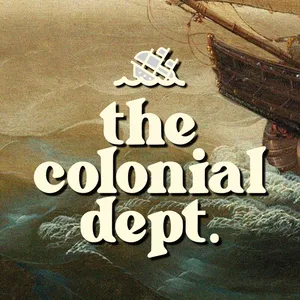
Free Daily Podcast Summary
The Colonial Department: Daily Summaries Delivered
by Lio Mangubat
Get key takeaways, quotes, and insights from The Colonial Department in a 5-minute read. Delivered straight to your inbox.
Latest Episodes
The most recent episodes — sign up to get AI-powered summaries of each one.
- 1 weeks ago15 min
S8E4: Edison’s Cameras, Manila’s Trenches
Yes, Edison as in Thomas Edison, the light bulb guy. At the turn of his century, the tech wizard of Menlo Park produced thousands of movies as a showcase for his company’s vitascopes. Among those movies are five films about the Philippine-American War, produced in a flurry all throughout June of 1899. It turns out that the boom of cinema dovetailed neatly with America’s growing imperial ambitions. But what made this faraway war so compelling for wide-eyed audiences captured by the magic of the silver screen?Support us on Patreon: patreon.com/thecolonialdeptFollow us on IG: @thecolonialdeptFollow us on TikTok: @thecolonialdeptEmail us: thecolonialdept@gmail.comReferences:Rafael, Vicente (2016). Motherless Tongues: The Insurgency of Language Amid Wars of Translation. Ateneo de Manila University Press.Palis, Joseph (2009). “The ethnographic spectacle of the ‘other’ Filipinos in early cinema.” GeoJournal, 74, pp. 227-234.Robbins, Dylon Lamar (13 July 2017). “War, Modernity, and Motion in the Edison Films of 1898.” Journal of Latin American Cultural Studies, 26(3). https://www.tandfonline.com/doi/full/10.1080/13569325.2017.1292222#d1e122Brewer, Susan A. (1 October 2013). “Selling Empire: American Propaganda and War in the Philippines.” Asian Pacific Journal, 11(40). https://apjjf.org/2013/11/40/susan-a-brewer/4002/articleWalker, Malea (6 February 2024). “The Spanish American War and the Yellow Press.” Library of Congress Blogs. https://blogs.loc.gov/headlinesandheroes/2024/02/the-spanish-american-war-and-the-yellow-press/“Advance of Kansas Volunteers at Caloocan.” Library of Congress“History of Edison Motion Pictures.” (undated) Library of Congress Blinkhorn, Martin (1980). “Spain: The ‘Spanish Problem’ and the Imperial Myth.” Journal of Contemporary History, 15(1), pp. 5-25.Paterson, Thomas G. (1996). “United States Intervention in Cuba, 1898: Interpretations of the Spanish-American-Cuban-Filipino War.” The History Teacher, 29(3), pp. 341-361.Ocampo, Ambeth (19 March 2013). “Treasure trove in thick books.” Philippine Daily Inquirer.Ocampo, Ambeth (21 March 2013). “An Igorot in the Philippine-American War.” Philippine Daily Inquirer.Legarda, Benito J., Jr. (2001). The Hills of Sampaloc: The Opening Actions of the Philippine-American War, February 4-5, 1899. The Bookmark, Inc.Angeles, Jose Amiel P. (2013). As Our Might Grows Less: The Philippine-American War in Context [Ph.D. dissertation]. Department of History, Graduate School of the History of Oregon.
- 3 weeks ago17 min
S8E3: Nobody Expects the Philippine Inquisition!
When you pulled up to the dock, they were there waiting for you, those holy men of God.But beyond inspecting ships that docked in the ports of Manila and Cavite for blasphemers and banned items, the Inquisition in the Philippines also investigated Protestants. Jews. Masons. Muslims. Non-Catholic Christian sects, like Armenian Christians or Jansenists. Its investigators monitored cases of heresy, blasphemy, apostasy, bigamy, and contempt. They kept tabs on witches, sorcerers, palm readers, fortune tellers, astrologers, and peddlers of superstition. And they dutifully recorded all their investigations and sent them to their head office in Mexico.What tales can we uncover from these inquisitorial files? And what do they say about the practice of faith in our archipelago?Support the podcast: patreon.com/thecolonialdeptFollow us on IG: @thecolonialdeptFollow us on TikTok: @thecolonialdeptEmail us: thecolonialdept@gmail.comReferences:Galleons and Social Control in the Spanish Empire: The Contrabandistas: Defenders of “Free Trade” on the Manila-Acapulco Galleons, Volume IV. (2025) National Historical Commission of the Philippines.Angeles, F. Delor (1980) "The Philippine Inquisition: A Survey." Philippine Studies: Historical and Ethnographic Viewpoints, (28)3, pp. 253-283.Cunningham, Charles H. (1918). “The Inquisition in the Philippines: The Salcedo Affair.” The Catholic Historical Review, 3(4), pp. 417-445.Bonilla & Santos Garcia (1583). “Instructions to the Commissary of the Inquisition.” In Blair, Emma Helen, and Robertson, James Alexander (eds.), The Philippine Islands, 1493-1898 (Vol. 40), Arthur H. Clark Company, 57.Mawson, Stephanie Joy (2023). “Folk magic in the Philippines, 1611-39.” Journal of Southeast Asian Studies, 54(2), pp. 1-25.
- Apr 10, 202617 min
S8E2: Riding a Tram in 1911 Manila
What kind of city was waiting for Dutch scholar Gerret Pieter Rouffaer when he got to Manila?After more than a decade of occupation, the Americans had given the colonial capital some thorough nips and tucks. Aside from the glimmering roads and shady plazas, the Americans also laid down more tramways. Trams were already up and running during the latter part of the Spanish occupation, but in 1905, the US rehabilitated the old system. Unlike the old Spanish versions, these new streetcars barrelled along on double-wheeled trucks and could fit fifty people. They also ran on electricity. When Rouffaer arrived in the Philippines, he took the tranvia everywhere, and wrote down his snarky observations in a diary. Let’s see what he had to say.Support the podcast: patreon.com/thecolonialdeptFollow us on IG: @thecolonialdeptFollow us on TikTok: @thecolonialdeptEmail us: thecolonialdept@gmail.comReferences:Muijzenberg, Otto Van Den (ed., trans.) (2016). Colonial Manila 1909-1912: Three Dutch Travel Accounts. Ateneo de Manila University Press.Rodell, Paul A. (1974). “Philippine ‘Seditious Plays.’” Asian Studies, 12(1), pp. 88-118.Pante, Michael D. (2016). “Urban Mobility and a Healthy City Intertwined Transport and Public Health Policies in American-Colonial Manila.” Philippine Studies: Historical & Ethnographic Viewpoints, 64(1), pp. 73-101.Morley, Ian (2016). “Modern Urban Designing in the Philippines, 1898–1916.” Philippine Studies: Historical & Ethnographic Viewpoints, 64(1), pp. 3-42.Gardini, Ashley (8 July 2025). “Daniel Burnham in the Philippines.” JSTOR Daily. Cubeiro, Didac (2017). “Modernizing the Colony: Ports in Colonial Philippines, 1880-1908.” World History Connected.RailwaysPh. “Tranvías de Manila y Corregidor: Notable Heritage Tram Systems” (15 November 2020). Renacimiento Manila.Sison, Norman (21 April 2015). “LRT expansions remind of tranvia days.” Vera Files. Scott, William Henry (1984). Prehispanic Source Materials for the Study of Philippine History (revised edition). New Day Publishers.
- Apr 4, 202637 min
INTERVIEW: Exploring the food history of the Philippines
“There’s a message to it: It’s our responsibility to keep Filipino food popular!”At the launch for her book What Recipes Don’t Tell: Philippine Food History in Fifty Words, author and historian Felice Prudente Sta. Maria talked to a rapt audience at the Philippine Book Festival about a long career of writing about food. What new things can food tell us about our own history? How did we adapt techniques and ingredients from abroad… while still preserving our own? And how should we nurture this knowledge for future generations?Joining her in this panel were publisher and editor Karina Bolasco, graphic designer and fellow food scholar Ige Ramos, and printmaker Marz Aglipay. Through their shared history with Felice, they deepened the conversation with their own perspectives on creativity, design, and the space for food in the publishing landscape. Special thanks to the Ateneo de Manila University Press for inviting me to moderate this panel, and for letting me record this conversation.Support the podcast: patreon.com/thecolonialdeptFollow us on IG: @thecolonialdeptFollow us on TikTok: @thecolonialdeptEmail us: thecolonialdept@gmail.comThe Colonial Dept. Interview is a series where I talk to researchers and authors shining a light on our past.
- Mar 21, 202617 min
S8E1: The Philippine Sour-chipelago
Sourness, according to Doreen Fernandez, “is a favored Philippine flavor.” Just how sour is sour? “Sour enough to savor, to make the lips pucker and the eyes squint slightly, and yet not too sour—just at the point of perfection.”In the spectrum of sensation, sourness can be both sharp and sudden, an acetic shudder down the spine. Asim, the Tagalogs call it. From the earliest written records about the Philippines, it is this taste that has come to define our cooking. “Spanish colonials from the 1500s through the 1800s described indio food as primarily salty and sour,” writes food historian Felice Prudente Sta. Maria. “Both tastes can induce sweat in hot climates and remind the body to keep hydrated and its electrolytes balanced.” Let us trace the pathways of this taste as it evolved in three key dishes: sinigang, kinilaw, and adobo.Follow us on IG: @thecolonialdeptFollow us on TikTok: @thecolonialdeptEmail us: thecolonialdept@gmail.comReferences:Sta. Maria, Felice Prudente (2025). What Recipes Don't Tell: Philippine Food History in Fifty Words. Ateneo de Manila University Press.Fernandez, Doreen G. (1988). “Culture Ingested: Notes on the Indigenization of Philippine Food.” Philippine Studies, 36(2), pp. 219-232.Fernandez, Doreen G. (1994). Tikim: Essays on Philippine Food and Culture. Anvil Publishing.Frank, Hannah E. R.; Amato, Katie; Trautwein, Michelle; Maia, Paula; Liman, Emily R.; Nichols; Lauren M.; Schwenk, Kurt; Breslin, Paul A. S.; Dunn, Robert R. (2022) “The evolution of sour taste.” Proceedings of the Royal Society B: Biological Sciences, 289(1968). https://royalsocietypublishing.org/rspb/article/289/1968/20211918/79292/The-evolution-of-sour-tasteEvolution-of-Sour-TasteShaw, Sterling V. Herrera (30 August 2024). “Adobo is ‘paksiw,’ and other terms in Filipino food history.” Philippine Daily Inquirer. Ladrido, R.C. (1 July 2022). “Tapayan, Gusi, or Martaban: Tales of Stoneware Jars in the Philippines.” VERA Files.Newman, Yasmin (11 May 2023). “Kinilaw, the age-old dish of the Philippines (and why it's not ceviche).” SBS Food. https://www.sbs.com.au/food/article/kinilaw-the-age-old-dish-of-the-philippines-and-why-its-not-ceviche/4alb6pswaTrinidad, Bea. (16 August 2025). “Say ‘kilawin’ instead of ‘Filipino ceviche’, okay?” The Philippine Star. https://www.philstar.com/lifestyle/2025/08/16/2465728/say-kilawin-instead-filipino-ceviche-okayBanez, George (31 August 2025). “Sinigang Through Time: The Filipino Sour Soup with Many Faces, One Soul.” Pressenza PhilippinesPigafetta, Antonio (ca. 1525). “Primo viaggio intorno al mondo.” In Blair, Emma Helen, and Robertson, James Alexander (eds.), The Philippine Islands, 1493-1898 (Vol. 33), Arthur H. Clark Company.Wertz, S.K. (2013). “The Elements of Taste: How Many Are There?” The Journal of Aesthetic Education,47(1), pp. 46-57 https://www.jstor.org/stable/10.5406/jaesteduc.47.1.0046Ferguson, Priscilla Parkhurst (2011). “The Senses of Taste.” American Historical Review, 116(2), pp. 371-384. https://www.jstor.org/stable/23307701
- Feb 27, 20266 min
An important announcement about the future of The Colonial Dept.
Before we start Season 8, I have an important announcement about this little podcast. For more info, check out this Instagram post.
- Feb 7, 202637 min
INTERVIEW: Twin timelines, entangled histories
“What does it take for a culture that has caused a lot of pain and suffering to have any chance at redemption… or any sense of justice?”Tom Sykes’ riotous new book—a collision of a neon-powered 1980s Manila and a disaster-stricken barangay in the 1570s—attempts to answer the question… with many seedy side quests in between. How did he attempt to write his wild, genre-bending vision of the Philippines? And how does Back to the Future figure into it?The Colonial Dept. Interview is a bonus show where I talk to researchers and authors who are shining a light on our past.
- Jan 28, 202645 min
INTERVIEW: Sungka as a wargame?
What a folk game can tell us about how a datu waged war. An interview with Micah Perez of the UP Diliman Department of History. The Colonial Dept. Interview is a bonus show where I talk to researchers and authors shining a light on our past. Know a historian or author I should talk to? Email me at thecolonialdept@gmail.com.Thumbnail image: Usernameko/Wikimedia Commons
Get The Colonial Department summaries in your inbox
Free AI-powered daily recaps. Key takeaways, quotes, and mentions — in a 5-minute read.
Get Free Summaries →Free forever for up to 3 podcasts. No credit card required.
You Might Also Like
Listeners also like.
Stories Philippines Podcast - Pinoy Horror Stories
HustleStudios
This Filipino American Life
This Filipino American Life
The China History Podcast
Laszlo Montgomery
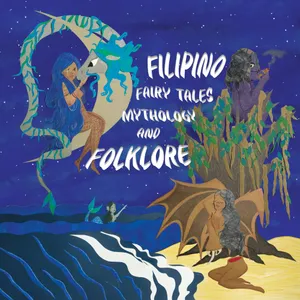
Filipino Fairy Tales, Mythology and Folklore
Nathalie De Los Santos

Howie Severino Presents
GMA Integrated News
Tides of History
Audible / Patrick Wyman
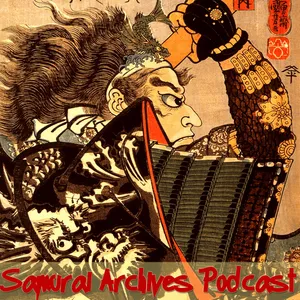
Samurai Archives Japanese History Podcast
The Samurai Archives Japanese History Page
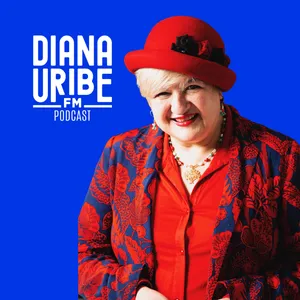
DianaUribe.fm
Diana Uribe
Historia en Podcast
Lucas Botta

Our Numinous Nature
Philippe G. Willis
Loco Listens Podcast
Loco Listens Podcast
ArchaeoEd Podcast
Dr. Ed Barnhart
About The Colonial Department
Lost stories from 🇵🇭 history🔊 Narrative nonfiction pod📖 Book version published by @factionpress📻 Written, produced, engineered by @liomangubat
Customized Recaps
AI-powered recaps with compact key takeaways, quotes, and insights.
Straight to Your Inbox
Get key takeaways from The Colonial Department in a 5-minute read.
Save Hours Every Week
Stay current on your favorite podcasts without falling behind.
Frequently Asked Questions
What is Podzilla's The Colonial Department daily summary?
It's a free AI-powered email that summarizes new episodes of The Colonial Department as soon as they're published. You get the key takeaways, notable quotes, and links & mentions — all in a quick read.
How does the The Colonial Department podcast summary work?
When a new episode drops, our AI transcribes and analyzes it, then generates a personalized summary tailored to your interests and profession. It's delivered to your inbox every morning.
Is this an official The Colonial Department product?
No. Podzilla is an independent service that summarizes publicly available podcast content. We're not affiliated with or endorsed by Lio Mangubat.
Can I get summaries of other podcasts too?
Absolutely! The free plan covers up to 3 podcasts. Upgrade to Pro for 15, or Premium for 50. Browse our full catalog at /podcasts.
How often does The Colonial Department release new episodes?
The Colonial Department publishes biweekly. Our AI generates a summary within hours of each new episode.
What topics does The Colonial Department cover?
The Colonial Department covers topics including History. Our AI identifies the specific themes in each episode and highlights what matters most to you.
Start getting The Colonial Department summaries tomorrow morning.
Free forever for up to 3 podcasts. No credit card required.
Free forever for up to 3 podcasts. No credit card required.