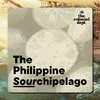
Sourness, according to Doreen Fernandez, “is a favored Philippine flavor.” Just how sour is sour? “Sour enough to savor, to make the lips pucker and the eyes squint slightly, and yet not too sour—just at the point of perfection.”In the spectrum of sensation, sourness can be both sharp and sudden, an acetic shudder down the spine. Asim, the Tagalogs call it. From the earliest written records about the Philippines, it is this taste that has come to define our cooking. “Spanish colonials from the 1500s through the 1800s described indio food as primarily salty and sour,” writes food historian Felice Prudente Sta. Maria. “Both tastes can induce sweat in hot climates and remind the body to keep hydrated and its electrolytes balanced.” Let us trace the pathways of this taste as it evolved in three key dishes: sinigang, kinilaw, and adobo.Follow us on IG: @thecolonialdeptFollow us on TikTok: @thecolonialdeptEmail us: thecolonialdept@gmail.comReferences:Sta. Maria, Felice Prudente (2025). What Recipes Don't Tell: Philippine Food History in Fifty Words. Ateneo de Manila University Press.Fernandez, Doreen G. (1988). “Culture Ingested: Notes on the Indigenization of Philippine Food.” Philippine Studies, 36(2), pp. 219-232.Fernandez, Doreen G. (1994). Tikim: Essays on Philippine Food and Culture. Anvil Publishing.Frank, Hannah E. R.; Amato, Katie; Trautwein, Michelle; Maia, Paula; Liman, Emily R.; Nichols; Lauren M.; Schwenk, Kurt; Breslin, Paul A. S.; Dunn, Robert R. (2022) “The evolution of sour taste.” Proceedings of the Royal Society B: Biological Sciences, 289(1968). https://royalsocietypublishing.org/rspb/article/289/1968/20211918/79292/The-evolution-of-sour-tasteEvolution-of-Sour-TasteShaw, Sterling V. Herrera (30 August 2024). “Adobo is ‘paksiw,’ and other terms in Filipino food history.” Philippine Daily Inquirer. Ladrido, R.C. (1 July 2022). “Tapayan, Gusi, or Martaban: Tales of Stoneware Jars in the Philippines.” VERA Files.Newman, Yasmin (11 May 2023). “Kinilaw, the age-old dish of the Philippines (and why it's not ceviche).” SBS Food. https://www.sbs.com.au/food/article/kinilaw-the-age-old-dish-of-the-philippines-and-why-its-not-ceviche/4alb6pswaTrinidad, Bea. (16 August 2025). “Say ‘kilawin’ instead of ‘Filipino ceviche’, okay?” The Philippine Star. https://www.philstar.com/lifestyle/2025/08/16/2465728/say-kilawin-instead-filipino-ceviche-okayBanez, George (31 August 2025). “Sinigang Through Time: The Filipino Sour Soup with Many Faces, One Soul.” Pressenza PhilippinesPigafetta, Antonio (ca. 1525). “Primo viaggio intorno al mondo.” In Blair, Emma Helen, and Robertson, James Alexander (eds.), The Philippine Islands, 1493-1898 (Vol. 33), Arthur H. Clark Company.Wertz, S.K. (2013). “The Elements of Taste: How Many Are There?” The Journal of Aesthetic Education,47(1), pp. 46-57 https://www.jstor.org/stable/10.5406/jaesteduc.47.1.0046Ferguson, Priscilla Parkhurst (2011). “The Senses of Taste.” American Historical Review, 116(2), pp. 371-384. https://www.jstor.org/stable/23307701
Podzilla Summary coming soon
Sign up to get notified when the full AI-powered summary is ready.
Free forever for up to 3 podcasts. No credit card required.
Listen to This Episode
More from The Colonial Department
S8E4: Edison’s Cameras, Manila’s Trenches
S8E3: Nobody Expects the Philippine Inquisition!
S8E2: Riding a Tram in 1911 Manila
INTERVIEW: Exploring the food history of the Philippines
Get summaries like this every morning.
Free AI-powered recaps of The Colonial Department and your other favorite podcasts, delivered to your inbox.
Free forever for up to 3 podcasts. No credit card required.