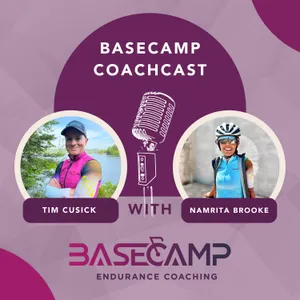
Free Daily Podcast Summary
The BaseCamp Community Podcast: Daily Summaries Delivered
by BaseCamp Endurance Coaching
BaseCamp Endurance Lab is where training science meets real-world coaching.Hosted by BaseCamp Head Coaches Tim Cusick and Dr. Namrita Brooke, each episode explores the ideas, research, and practical decisions that help endurance athletes train smarter and perform better.From physiology, nutrition, recovery, and strength to data, race preparation, and long-term athlete development, Tim and Namrita break down complex topics and turn them into clear, useful strategies you can apply to your own training.Whether you are an experienced racer, a developing athlete, or simply looking to better u
Latest Episodes
The most recent episodes — sign up to get AI-powered summaries of each one.
- 1 weeks ago59 min
Looking Ahead: The Training Trends That Could Shape 2027
More data, more technology, more recommendations, but how do you decide what will actually help you improve.In this episode of the BaseCamp Endurance Lab, Tim Cusick and Dr. Namrita Brooke explore the coaching and training trends that could shape 2027. From AI recommendations and adaptive training to heat training, bloodwork, strength, and durability, we discuss the opportunities, limitations, and practical questions athletes should consider.Throughout the conversation, we come back to one question: How do we turn new information into better decisions? Join us for a coach’s perspective on what deserves your attention, when to adjust your approach, and why consistently executing the fundamentals still matters.
- Oct 16, 20261h 1m
Stop Planning Workouts. Start Planning Performance.
Most cyclists approach a new season by setting goals, choosing events, and building a training schedule. But a successful season requires more than a calendar full of workouts. It starts with understanding the athlete, identifying the specific demands of their target events, and building a plan that connects the two. In this episode of the BaseCamp Endurance Lab, head coaches Tim Cusick and Dr. Namrita Brooke explore a smarter approach to season planning. From building a complete picture of the athlete through physiology, power, and skills to identifying the demands that determine success, they break down how to turn a season review into an actionable training strategy. Learn why the best plans aren't simply about doing more training, but about developing the right abilities at the right time to maximize performance.
- Oct 2, 202658 min
Looking Back to Move Forward: Using This Season’s Data to Plan Next Year
What did your training actually produce this season, and what should you change next year? Join BaseCamp Head Coaches Dr. Namrita Brooke and Tim Cusick as they explain how to use the Performance Management Chart (PMC) to connect training load, recovery, and real-world performance.We look beyond peak Chronic Training Load (CTL) to explore how you built fitness, what rate of progression you successfully absorbed, and where training may have stalled. You’ll learn why a flat CTL doesn’t always mean a lack of progress, how to identify your sustainable training range, and what your best performances can reveal about your preparation and freshness.By combining the PMC with testing, race results, and athlete feedback, you can turn this season’s data into practical decisions for next year. The goal is to understand which training helped you improve and use that knowledge to build a better plan.
- Sep 11, 20261h 5m
Transition for the Ages: Why Restoration Should Change as Cyclists Get Older
The cycling season may be over, but that does not mean training should stop completely; especially as we get older.In this episode, Head Coaches Tim Cusick and Dr. Namrita Brooke explore how the transition period should evolve with age. They explain why younger cyclists may benefit from a longer break, while mature athletes often need a more deliberate shift toward recovery, strength, mobility, and aerobic maintenance.You’ll learn how to reduce fatigue without unnecessary detraining, which physical qualities become more expensive to rebuild with age, and how to use a simple three-phase approach. Unload, Restore, and Rebuild Readiness to arrive at your next training cycle recovered, motivated, and ready to perform.
- Aug 28, 202658 min
Stop Chasing Recovery, Build a Bigger Adaptive Reserve
Athletes are constantly told to recover better. Sleep more. Monitor HRV. Take more rest. Avoid carrying too much fatigue.But what if the real goal is not simply to recover from training? What if it is to build a body capable of absorbing more productive training?Join BaseCamp Head Coaches Tim Cusick and Dr. Namrita Brooke as they introduce the concept of adaptive reserve: the physical, nutritional, and psychological capacity you bring into training that determines how much stress you can tolerate, how effectively you adapt, and how quickly you can train productively again.They explore why recovery and readiness tell only part of the story, how aerobic fitness and consistent fueling can accelerate adaptation, and how to recognize whether your reserve is growing—or quietly being depleted.It is time to stop chasing perfect recovery and start building a bigger adaptive reserve.
- Aug 14, 20261h 9m
Race the Moment: The Art and Science of Dynamic Gravel Pacing
Gravel racing cannot be reduced to one power target or a perfectly paced plan. Success requires a dynamic, multifaceted approach, continually balancing effort, terrain, wind, group position, fueling, durability, and how your body is responding.In this episode, BaseCamp Head Coaches Tim Cusick and Dr. Namrita Brooke explore how to race the field without abandoning your plan. They explain when it makes sense to spend energy to stay with a group, when discipline matters more than tactics, and how to recognize the early signals that it is time to adjust.Whatever grave race you are preparing for, you will learn why the best gravel racers do not simply follow a number, they read the race, manage the moment, and make better decisions before fatigue makes those decisions for them.
- Aug 3, 20261h 11m
Rethinking Masters Training: Age, History, and Untapped Potential
Training after 50 is often defined by the bell curve.We look at what normally happens to athletes as they age, identify the average decline, and begin building expectations around it. Lower aerobic capacity. Slower recovery. Reduced strength. Less performance.Those changes are real, but the average is a poor way to understand the individual athlete standing in front of us.Athletes over 50 may actually be harder to profile than younger athletes because aging magnifies their history. It reveals the accumulated impact of decades of training, inactivity, strength work, injuries, fueling, recovery, stress, and lifestyle choices.We often think age makes athletes more alike because they are all experiencing the effects of aging. What is really happening is that age makes their accumulated differences more visible.Two athletes can both be 55, but one may have 25 years of consistent aerobic development, while the other has only recently begun structured training. One may have protected muscle and strength for decades. The other may never have lifted. One may be carrying old injuries and years of accumulated fatigue, while the other still has a large amount of untapped potential.That is why this episode takes a different look at training after 50.Hosted by BaseCamp Head Coaches Dr. Namrita Brooke and Tim Cusick, we explore why chronological age should not define the program, why training history may tell us more than the birth certificate, and how to identify the runway an athlete still has ahead of them.The goal is not to ignore aging. It is to stop treating the average aging curve as an individual athlete’s destiny.
- Jul 17, 202654 min
Rethinking AI Coaching: Smarter Systems, Missing Context, and the Human Edge
Hosted by Dr. Namrita Brooke and Tim Cusick, this episode explores how artificial intelligence is changing endurance coaching. We look at what AI and AI coaching software already do well, including analyzing data, identifying patterns, evaluating training, and helping design or adjust plans. We also examine the limitations—especially what happens when information is incomplete, context is missing, or AI fills in the gaps with assumptions. Most importantly, we discuss why the future of coaching is not simply human versus artificial intelligence, but expert human coaching made stronger by better tools.Listen to the episode, then leave us a review below and let us know where you think AI fits into the future of endurance coaching.
Get The BaseCamp Community Podcast summaries in your inbox
Free AI-powered daily recaps. Key takeaways, quotes, and mentions — in a 5-minute read.
Get Free Summaries →Free forever for up to 3 podcasts. No credit card required.
You Might Also Like
Listeners also like.

The Endurance Lab Podcast
Discusses running science with coaches, Olympians, and researchers to improve training understanding and performance.

KoopCast
Jason Koop discusses ultramarathon training, nutrition, and current events in the sport.
Train Smart Run Strong
Victoria and Emily

The RunDot Running Podcast
RunDot Training
The Ultramarathon Mindset: Trail Talk
Eric Deeter
TRAINED
Discusses fitness and wellness through interviews with athletes, scientists, and health experts on mindset, nutrition, movement, recovery, and sleep.

The Health Continuum
High-performing professionals learn science-based health strategies to sustain energy, focus, and resilience in demanding careers.
The Fitness League
Alessandra and Josh Scutnik, Joelle Cavagnaro

Dissecting High Performance In Tennis
A deep dive into the coaching philosophies and methods that shape elite tennis players’ development and performance.

The Stronger By Science Podcast
A science-focused fitness podcast that breaks down research, trends, and practical strategies for strength and health.

Between The Laps with Coach Chris
A swim coach shares strategies and insights for developing young athletes, focusing on communication, training, and character building.

Sam Miller Science
Sam Miller
About The BaseCamp Community Podcast
BaseCamp Endurance Lab is where training science meets real-world coaching.Hosted by BaseCamp Head Coaches Tim Cusick and Dr. Namrita Brooke, each episode explores the ideas, research, and practical decisions that help endurance athletes train smarter and perform better.From physiology, nutrition, recovery, and strength to data, race preparation, and long-term athlete development, Tim and Namrita break down complex topics and turn them into clear, useful strategies you can apply to your own training.Whether you are an experienced racer, a developing athlete, or simply looking to better u
Customized Recaps
AI-powered recaps with compact key takeaways, quotes, and insights.
Straight to Your Inbox
Get key takeaways from The BaseCamp Community Podcast in a 5-minute read.
Save Hours Every Week
Stay current on your favorite podcasts without falling behind.
Frequently Asked Questions
What is Podzilla's The BaseCamp Community Podcast daily summary?
It's a free AI-powered email that summarizes new episodes of The BaseCamp Community Podcast as soon as they're published. You get the key takeaways, notable quotes, and links & mentions — all in a quick read.
How does the The BaseCamp Community Podcast podcast summary work?
When a new episode drops, our AI transcribes and analyzes it, then generates a personalized summary tailored to your interests and profession. It's delivered to your inbox every morning.
Is this an official The BaseCamp Community Podcast product?
No. Podzilla is an independent service that summarizes publicly available podcast content. We're not affiliated with or endorsed by BaseCamp Endurance Coaching.
Can I get summaries of other podcasts too?
Absolutely! The free plan covers up to 3 podcasts, any in the catalog. Basic raises that to 15, Pro to 40 and Max to 100. Browse our full catalog at /podcasts.
How often does The BaseCamp Community Podcast release new episodes?
The BaseCamp Community Podcast publishes monthly. Our AI generates a summary within hours of each new episode.
What topics does The BaseCamp Community Podcast cover?
The BaseCamp Community Podcast covers topics including Sports. Our AI identifies the specific themes in each episode and highlights what matters most to you.
Start getting The BaseCamp Community Podcast summaries tomorrow morning.
Free forever for up to 3 podcasts. No credit card required.
Free forever for up to 3 podcasts. No credit card required.