Free Daily Podcast Summary
Stories from a Stranger: Daily Summaries Delivered
by Higher Ground
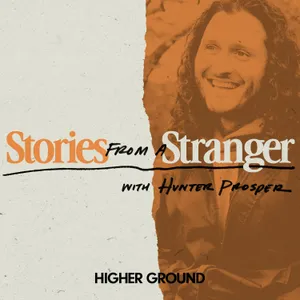
“Every stranger has a story.” This is what Hunter Prosper realized when he began posting man-on-the-street interviews with real-life strangers to his social media accounts. Hunter’s genuine connection with strangers and emotional interview moments quickly captured viewers' hearts across multiple platforms and a New York Times Best Selling book. Now, Hunter is expanding his social media series into a weekly video and audio podcast, Stories from a Stranger, featuring portraits of multiple strangers connected by themes of love, loss, regret, inspiration, illness, family connections, and more. In each episode, Hunter brings his innate warmth, curiosity, and charm, interviewing people from all walks of life and sharing anonymously submitted confessions. Interviews start with a question and then grow in unexpected ways as strangers open up and share their most defining moments. From the deaths of loved ones to using their most painful moments as inspiration to finding their greatest loves, no subject is off-limits. Their stories are raw, intimate, and bursting with humanity. Right now, it is easy to feel like the world is irrevocably divided. Stories from a Stranger is a warm reminder that we are all human and more connected than we realize. It’s an invitation to empathy. Every stranger has a story. Let’s start listening.
Latest Episodes
The most recent episodes — sign up to get AI-powered summaries of each one.
- Today41 min
S E22: Invisible Battles: Living with Chronic Illness
This week Hunter speaks with three strangers who are struggling with chronic illness.Lulu is a young woman who battled Lyme disease beginning at age 11. Her background includes years of misdiagnosis, during which doctors attributed her symptoms to POTS, fibromyalgia, and chronic fatigue syndrome, none of which addressed the root cause. A key contribution of her story is the advocacy role her mother played, described as "the reason I'm alive," who argued with doctors and ultimately suspected Lyme disease after years of searching. Lulu underwent a hyperthermia treatment at Clinic St. George in Germany, where her body temperature was raised to 107.24 degrees to break down biofilms protecting Lyme disease cells, allowing antibiotics to penetrate and kill the bacteria. She now lives with deep gratitude, waking each day thankful for her independence and ability to show up for the people she loves. Christi is a young woman who developed intense, chronic health problems during the fall semester of her junior year of college, eventually forcing her to drop out of school. Her primary debilitating symptom was severe nausea that could last hours on end, leaving her incapacitated and at times walking around her apartment complex from 2:00 AM to 10:00 AM just to cope. She pursued a wide range of treatments including homeopathic, acupuncture, nutrition, and Western medicine. A turning point came when a highly regarded doctor in Scottsdale identified parasitical infections, viruses, and bacteria and showed initial progress, only for the inflammation markers to completely regress approximately six months in. Christie connects much of her illness to growing up in a controlling, "borderline cultish" religious group that enforced constant self-abandonment, which she believes contributed to how her body reacted to stress and trauma. She credits her sister as her most supportive person throughout her journey and has come to view her body's physical responses as a compass for living in alignment with her true self. Madelyn has lived with atopic dermatitis, a chronic and severe form of eczema, since she was a baby. At around age seven or eight, a prominent dermatologist told her mother, in front of Madelyn, that they had never seen a case as bad as hers in either an adult or a child, leaving her feeling hopeless. Growing up, she regularly wore knee-high socks to cover flares in joint areas including her elbows, behind her knees, and ankles, and faced questions from classmates asking if her skin was contagious. She was also told by adults in her religious school environment that her condition was a result of sin or punishment, which she describes as deeply damaging to her mental health. In 2019, at age 19, she began taking Dupixent, a biologic injection taken every other week, which she describes as completely changing her life.Chapters:00:00:00 Living with the hidden burden of chronic illness00:03:39 Experiencing early symptoms and physical limitations00:06:56 Navigating painful medical treatments and persistent flare-ups00:10:21 Reclaiming independence and finding gratitude in everyday00:13:31 Severe eczema and childhood mental health struggles00:16:55 Facing public scrutiny and internal discomfort00:20:16 Unpacking medical trauma and the mental health toll00:23:52 Building self-worth and creating safe spaces for others00:27:14 Dealing with sudden debilitating symptoms with no diagnosis00:30:38 Eastern medicine, treatment setbacks, and mind-body connection00:34:17 Uncovering the impact of trauma on physical health00:37:34 Finding healing through self-trust and genuine human connectionTopics: Living with chronic illness strugglesNavigating medical dismissal and careNavigating the search for a diagnosisThe impact of illness on identityFacing the mental health toll of painThe power of family and patient advocacyUnconventional paths to recoveryProcessing religious trauma and healthLiving in the space between sick and wellRebuilding self-worth and resilienceFOLLOW THE SHOW►Instagram: https://www.instagram.com/storiesfromastrangerpod ►Threads: https://www.threads.com/@storiesfromastrangerpod ►Facebook: https://www.facebook.com/storiesfromastrangerpodcast FOLLOW HUNTER PROSPER►Instagram: <a href="https://www.instagram.com/hunter_prosper/" rel="noopener noreferrer"
- 1 weeks ago40 min
S E21: Chosen: Stories of Adoption, Identity, and the Search for Belonging
Hunter speaks to three strangers with one thing in common: they’re adopted.Alyssa is a Black woman who grew up in a predominantly white community as an adopted child of an Italian-American family, making her adoption visually apparent from an early age. Her biological brother found her and reached out via Facebook after their biological father drunkenly revealed her existence to him. Upon reconnecting with her biological family, her biological mother denied her and called her a catfish, which Alyssa describes as one of the most painful things she ever experienced. Despite this, she does not regret the reunion, stating she would have wondered for the rest of her life otherwise. Charley always knew she was adopted and initially viewed it positively, describing it as a gift. However, she experienced recurring feelings of loneliness throughout her life, particularly at night as a young girl. She had no desire to find her biological mother well into her 20s and even threw away research a college friend compiled about her possible birth mother. At age 46, she submitted a 23andMe test for medical background information, and at 47 received a message from a biological relative identifying a possible match to her birth mother. She met her birth mother, but found the relationship one-sided and stressful, as her birth mother never asked Charley anything about herself. After working with a therapist, Charley ended the relationship in a phone call from a parking lot, expressing both love and the need to set a boundary.Sean was adopted from the south side of Chicago, with his adoptive mother spending two years visiting him and his birth mother before taking him home. Sean does not feel anger toward his biological parents but describes living with constant uncertainty and unanswered questions for 25 years. He describes the feeling as "free falling," with a core piece of information missing from his life. He learned that substances were found in his birth mother at the time of his birth, which he describes as one of the most painful pieces of information he received. Sean credits a very supportive family and open conversations for helping him stay afloat, but still feels like a piece of himself is missing.Chapters:00:00:00 Navigating identity and non-traditional family bonds00:03:32 Processing rejection from a biological mother00:06:54 Reconnecting with a biological brother through Facebook00:10:05 Finding closure and setting boundaries after adoption00:13:33 Expressing gratitude to supportive adoptive parents00:16:15 Discovering biological relatives through DNA testing00:19:20 Breaking up with a birth mother for self-preservation00:22:48 Healing from past heartbreak and finding personal growth00:26:07 Reading real letters about adoption and loss00:29:18 Learning the truth about an early adoption process00:32:45 Uncovering biological origins and facing uncertainty00:36:10 Understanding birth parents through empathy and acceptanceTopics:Navigating identity as an adopteeReconnecting with biological familyFacing rejection from a birth motherSetting boundaries with biological parentsGratitude for loving adoptive parentsFinding family matches through DNA testingDealing with unanswerable adoption questionsOvercoming childhood feelings of isolationLearning the truth behind early adoptionEmbracing empathy and self-acceptanceFOLLOW THE SHOW►Instagram: https://www.instagram.com/storiesfromastrangerpod ►Threads: https://www.threads.com/@storiesfromastrangerpod ►Facebook: https://www.facebook.com/storiesfromastrangerpodcast FOLLOW HUNTER PROSPER ►Instagram: https://www.instagram.com/hunter_prosper/ ►TikTok: https://www.tiktok.com/@hunterprosper See Privacy Policy at https://art19.com/privacy and California Privacy Notice at https://art19.com/privacy#do-not-sell-my-info.
- 2 weeks ago41 min
S E20: Fill the Space: How Heartbreak Becomes a New Beginning
-Jeremy is a Canadian actor and comedian who put his career on hold to move to New York for his second husband, Zach, whom he met on Tinder. He describes Zach as the greatest love of his life, noting they met briefly on the app before transitioning to a more old-fashioned phone call and then a first date over wine on a rooftop. They married shortly before the pandemic, and Jeremy attributes the end of their marriage largely to the extreme pressures of that period. This was Jeremy's second divorce, and he acknowledges the embarrassment of going through it again, even making it part of his standup comedy material. After the split, he found himself in a foreign country without a strong social network, having paused a flourishing acting career in Canada to be in the relationship. Key contributions from Jeremy include his advice on navigating grief and loss by actively filling the emotional and mental space left behind with positive activities and experiences, as well as his insight that only the individual can do the work of rebuilding themselves after heartbreak, symbolized by a tattoo he got of an anatomical heart half made of bricks.-Anna Laura is an artist who speaks about the profound influence of her mother, Anne Marie, describing her as having the soul of a true artist who introduced her to new ways of seeing the world. She views heartbreak as essential to growth, comparing the darkness of grief to the richness of soil that enables new life. She explains that art is her playground and laboratory for testing her self-concept and connecting with the world on a deep, somatic level. She describes the feeling of making resonant art as akin to spiritual communion.-Cece recently came out as queer and describes falling in love for the first time with a woman she met in Hawaii through a friend app. Their relationship was intense and cinematic, involving last-minute flights, declarations of love, and talk of moving in together, characteristic of what she describes as the "U-Haul lesbian" phenomenon. The relationship ultimately ended, with both parties hurting each other, but Cece does not regret it, calling it a "canon event" in her life story. She now lives in New York with her best friend Annie, whom she describes as a "lavender marriage" partner, finding unexpected fulfillment and stability in that platonic domestic arrangement-Chelsea went through a breakup approximately six months prior to the conversation, ending a relationship with someone who had been a close friend for three years before they began dating. She describes the particular difficulty of leaving a relationship where the other person had not done anything overtly wrong, noting that he was kind and patient but fundamentally failed to ask about her life, her feelings, or her accomplishments. She recounts how she began suppressing her own achievements because he would minimize them, causing her to quell her own excitement. She identifies the turning point as meeting a friend who naturally showed her the curiosity and engagement she had been missing in her relationship. Since the breakup, she reports that positive changes have come quickly, including meeting someone new who asks her about her day and genuinely wants to know her. Topics: Rebuilding identity after a breakupNavigating loss and second divorceFilling emotional space after lossHeartbreak as a tool for growthCreating art through personal painFinding home in platonic friendshipUnderstanding lavender marriagesLeaving emotionally distant partnersRecognizing emotional neglect as harmMaking space for supportive loveFOLLOW THE SHOW►Instagram: https://www.instagram.com/storiesfromastrangerpod ►Threads: https://www.threads.com/@storiesfromastrangerpod ►Facebook: https://www.facebook.com/storiesfromastrangerpodcast FOLLOW HUNTER PROSPER►Instagram: https://www.instagram.com/hunter_prosper/ ►TikTok: https://www.tiktok.com/@hunterprosper See Privacy Policy at https://art19.com/privacy and California Privacy Notice at https://art19.com/privacy#do-no
- 3 weeks ago44 min
S E19: Some Wounds Never Heal: Conversations on Love and Letting Go
Hunters speaks with three strangers who are remembering family members they’ve lost, or are losing.-Caty shares the story of watching her mother decline from primary progressive aphasia, a form of frontotemporal dementia. She describes first suspecting something was wrong during her senior year of college, noticing her mother misusing names and making uncharacteristic errors. Her mother was formally diagnosed in May 2022. Katie reflects on the pain of losing the close, almost mirror-image relationship she shared with her mother, the concept of anticipatory grief, and the one-sided nature of their current communication. She also describes finding comfort in signs she believes are sent by her mother, particularly through the song "Dancing in the Moonlight", and explains that she copes by living one day at a time, drawing on the perspective her mother's illness has given her.-Chris speaks about his aunt who passed away around 2010. Though she had no children of her own, she treated Chris, his siblings, and his family as her own, planning baby showers and showering them with gifts and attention. Chris expresses deep sadness that she did not get to witness his growth into adulthood and worries she will not be there for future milestones such as marriage or having children. He keeps her photo as his phone background as a way of staying connected to her memory, though he laments that he has forgotten the sound of her voice. He says that if he could have one more conversation, he would ask her for honest life advice, and credits his father, sister, and close friends with helping him through his grief.-Antony shares the deeply painful story of losing both parents at a young age. His father died from AIDS-related complications, and his last words were an apology to Antony's mother, who contracted the disease from him. Despite this, she continued to raise her four children with unwavering devotion, mourning her husband in black until her own death. Antony describes the heartbreak of his mother losing her voice before she died, leaving the family unable to say goodbye. He holds no anger toward his father, recognizing his suffering and the guilt he must have carried. Antony reflects that, despite immense loss, he feels the ongoing presence of his parents within him, particularly through sharing his mother's smile, and acknowledges that some wounds never fully heal. Chapters:00:00:00 Adapting dreams after a mother's dementia diagnosis00:03:32 Identifying early symptoms and primary progressive aphasia00:07:03 Transitioning to adulthood and losing normalcy with family00:10:33 Navigating language loss and changes in communication00:14:38 Processing anticipatory grief and finding her guiding spirit00:19:10 Reflecting on a beloved aunt who acted as a mother00:23:24 Grieving lost future milestones and forgetting a voice00:27:19 Seeking life advice and finding support through family bonds00:30:38 Remembering a mother's selfless sacrifice and early hardship00:33:24 Uncovering family secrets, terminal diagnosis, and forgiveness00:37:18 Forgiving past choices and recognizing a father's unspoken love00:41:24 Carrying on a mother's legacy and living with griefTopics: Living with a parent's dementiaNavigating anticipatory griefLoss of language from dementiaRemembering a beloved aunt after lossThe quiet pain of forgetting a voiceUnderstanding a father's dying wordsA mother's devotion through illnessChoosing forgiveness over angerLosing a parent during the pandemicFinding signs and legacy after lossFOLLOW THE SHOW►Instagram: https://www.instagram.com/storiesfromastrangerpod ►Threads: https://www.threads.com/@storiesfromastrangerpod ►Facebook: https://www.facebook.com/storiesfromastrangerpodcast FOLLOW HUNTER PROSPER►Instagram: https://www.instagram.com/hunter_prosper/ ►TikTok: https://www.tiktok.com/@hunterprosper See Privacy Policy at https://art19.com/privacy and California Privacy Notice at <a href="https://art19.com/privacy#do-not-sell-my-info" rel="noopener noreferrer
- 4 weeks ago43 min
S E18: Loving Yourself: Stories of Identity and Healing
-J’Quay reflects on “heartache” rather than just heartbreak, describing how investing deeply in something that doesn’t work out leads to emotional crashes, but also to the realization that time helps us cope and reframe those experiences. J’Quay shares that they do let people get close and give everyone “equal parts” of themselves, but believe that heartbreak is survivable because there are billions of people in the world and one person’s rejection isn’t definitive. They talks about a childhood dream of being “palatable but different” to achieve goals, and how they consciously let go of that dream in favor of individuality, which has helped them make friends, get jobs, breathe easier, and feel stronger.-Seve describes struggling with negative self-talk and not often focusing on beautiful things others say, but he cherishes a compliment from a not-very-close friend who called them caring and kind-hearted, which made them feel deeply seen and warmed. He shares that one of the most painful things he tells himself is that he’s undeserving of happiness, rooted in feeling left out when seeing others experience love and joy, especially in high school and college. When feeling undeserving, he looks in the mirror and thinks of his parents’ love and dreams for their children, seeing himself as the child their parents wanted and as a product of their parents’ love, which helps them affirm “I’m enough.”-Nyle reflects on growing up in a very white neighborhood as a brown Pakistani person, praying to God and asking why he was made different, and feeling displaced and ashamed of their racial identity despite not facing overt racism. He tried changing key aspects of himself to conform—listening to the same music, changing his tastes—to avoid being an outcast. He convinced himself that a white girl wouldn’t like him because of the color of his skin, and begged his mother for skin-whitening cream. Later he learned to accept himself and take pride in his complexion.Topics:High school love, early insecurity, and shame Struggles with racial identity in a white neighborhoodThe danger of chasing physical perfectionFinding self-love and worth by caring for others How time helps process heartache and heartbreakOvercoming the fear of standing out and embracing yourselfLetting go of the dream of being palatableOvercoming negative self-talk by stepping back Finding self-worth in the love of parents and joy with familyChoosing self-worth over validation from othersFOLLOW THE SHOW►Instagram: https://www.instagram.com/storiesfromastrangerpod ►Threads: https://www.threads.com/@storiesfromastrangerpod ►Facebook: https://www.facebook.com/storiesfromastrangerpodcast FOLLOW HUNTER PROSPER►Instagram: https://www.instagram.com/hunter_prosper/ ►TikTok: https://www.tiktok.com/@hunterprosper See Privacy Policy at https://art19.com/privacy and California Privacy Notice at https://art19.com/privacy#do-not-sell-my-info.
- Aug 31, 202636 min
S E17: Fathers: The Wounds, The Love, The Legacy
Hunter speaks with three people about their unique relationships with their fathers.Meet this week’s strangers:- William recently lost his father. William’s father, also named William, was a Marine Corps sergeant, a decorated combat Marine whose unit’s motto was “Retreat hell,” and later an attorney handling high‑profile, difficult cases, including immigration work. He grew up during Jim Crow in St. Louis, experiencing segregation and witnessing his own father, a World War II and Korean War veteran, being humiliated by police in the South; these experiences fueled an intense drive to be excellent at his work and “the best at whatever he did.” William considers his father to be his hero. William recounts the hospice experience, missing his father’s final moments, and then moving quickly into “problem solving mode” to arrange a military funeral, memorials, and a carefully crafted eulogy that honored his father’s career, impact, and the “weight of his attention” as a parent.- Gil had a complicated relationship with his recently deceased father. Gil’s father left the family when Gil was 10, pursuing a midlife crisis lifestyle of motorcycles, a Corvette, and a succession of much younger girlfriends, including one who was 10 years older than Gil when he was 12. Gil describes himself as “more of an accomplice than a son,” explaining that his father wanted a partner for scams and grifts rather than a child, which shaped Gil’s later difficulties with older male authority figures. After his father’s death, Gil cried at the bedside and during meditation, but says the sadness now centers on the finality and the knowledge that they would never have a real conversation about who he is and what their relationship truly meant. - Gerardo reflects philosophically on love, noting its many forms (nature, family, romantic) and the difficulty of truly “doing” love, which requires forgetting about oneself and loving the other. His greatest love is his father, also named Gerardo, whom he loves for being unconditionally present and doing anything for him, especially in hard moments. His father died when Gerardo was about 15, and Gerardo describes how Mexican culture shaped his view of death as less taboo and more integrated, helping him embrace fear of death and see it as leading to some of his best life experiences. His favorite memory with his father is learning to fish at a lake in Chihuahua, Mexico, where he connected with nature and released the fish, valuing the bond between himself, his father, and the living world. Chapters:00:00:00 Honoring a father’s memory and lasting legacy00:01:10 A marine attorney’s transformative smile and kindness00:03:56 Sublimating Jim Crow trauma into professional excellence00:06:07 Redefining heroism through service and quiet acts of generosity00:08:07 Caring for a declining hero and finding sweetness in his final days00:11:30 Stepping up to carry family responsibility after a sudden loss00:14:38 Writing a father’s eulogy and carrying his attention00:17:23 Remembering a childhood trip to Amsterdam sitting on my father’s shoulders00:19:45 Processing the cruelty of a father who wished for his children to fail00:22:23 Mourning an absent parent and choosing a childfree life00:27:12 Accepting the finality of an unresolved relationship00:29:45 Finding beauty in unconditional love and natureTopics:Overcoming Jim Crow discrimination in St. LouisMarine Corps combat discipline and military serviceSupporting friends of William as an pro-bono attorney Writing eulogy for his father and honoring memory Paternal abandonment and navigating male authority figuresNarcissistic father hoping his children will failChoosing a childfree life due to unresolved family traumaAccepting the finality of an abusive, no-win relationshipDefining unconditional love and Amado Nervo Spanish poetryFOLLOW THE SHOW►Instagram: https://www.instagram.com/storiesfromastrangerpod ►Threads: https://www.threads.com/@storiesfromastrangerpod ►Facebook: https://www.facebook.com/storiesfromastrangerpodcast FOLLOW HUNTER PROSPER►Instagram: https://www.instagram.com/hunter_prosper/ ►TikTok: <a href="https://www.tiktok.com/@hunterprosper" rel="noope
- Aug 23, 202633 min
S E16: Learning to Belong: Immigrant Childhoods, Family Sacrifice, and Self-Discovery
- Peter immigrated from Korea as a child. As the only person of color in his school, he felt alienated and othered. He dealt with bullying because of the food he brought to school, called “Kim Jong-un” and told to go back to his own country. These experiences caused emotional pain, a desire to return to Korea, and resentment toward his parents, which he later reframed as gratitude for the opportunities they sought for him and his brother. Peter’s story takes an unexpected turn when he describes doctor’s finding a tennis ball-sized tumor in his head. His family—father, mother, and brother—dropped everything to spend a month with him in the U.S. during and after surgery, which he describes as the most beautiful thing they’ve done for him and a profound expression of support. - Jade moved to the US from Ecuador with her family seeking better opportunities as conditions worsened back home; she was 17 and left behind the life and community her mother had built. She felt rejected and isolated at school in her U.S. senior year, struggling to make friends because classmates already had established groups, facing bullying and mockery over her English, leading her to isolate herself. Coping with loneliness and a desire to be seen and heard, she gravitated toward friends who felt like “home” but whose lifestyle centered on frequent drinking and going out, which led her into heavy alcohol use and emotional turmoil. Eventually decided on her own that “it’s been enough,” taking accountability and choosing to change, crediting herself for doing the hard work of applying advice and finding “a home” within herself over time. - Sylvanna moved from Italy to England, and then to the United States. She emphasizes that immigrants are often looked down upon regardless of their efforts, noting that many in the U.S. forget their own immigrant roots. She argues that adapting to a new country involves more than language; it requires changing mentality, how you approach people, and how you work. Chapters:00:00:00 The isolation of moving to a new culture00:01:10 Facing racism and being an outcast in school00:03:46 How childhood hardships build resilience00:05:57 Overcoming loneliness to become a people person00:09:11 A dentist visit leads to a shocking diagnosis00:10:35 How family support helped overcome a brain tumor00:13:52 Learning to cherish and give back to aging parents00:17:44 Anonymous strangers share their most painful memories00:18:49 Finding strength in a mother’s pride00:21:25 Leaving Ecuador and the struggle of senior year00:24:23 Hitting rock bottom and escaping through drinking00:28:03 Finding a home in yourself and taking accountabilityTopics: The isolation of moving to a new culture Facing racism and being an outcast at school How childhood hardships build resilience Overcoming loneliness to connect with others A dentist visit leads to a brain tumor diagnosis How family support helped overcome illness Learning to cherish and support aging parents Strangers share painful past memories Finding strength in a mother's support Leaving Ecuador and starting over in high school FOLLOW THE SHOW►Instagram: https://www.instagram.com/storiesfromastrangerpod ►Threads: https://www.threads.com/@storiesfromastrangerpod ►Facebook: https://www.facebook.com/storiesfromastrangerpodcast FOLLOW HUNTER PROSPER►Instagram: https://www.instagram.com/hunter_prosper/ ►TikTok: https://www.tiktok.com/@hunterprosper See Privacy Policy at https://art19.com/privacy and California Privacy Notice at https://art19.com/privacy#do-not-sell-my-info.
- Aug 17, 202642 min
S E15: Falling in Love is Beyond My Control
Hunter speaks with three strangers about meeting partners who changed the course of their lives. Meet this week's strangers:- Niko is a school teacher from New York City who was diagnosed with non-Hodgkin's lymphoma. During treatment he grew closer to his long-time friend Lauren who gave him gift packages, which became a catalyst for rekindling their relationship and eventually dating. He describes Lauren’s support as essential, saying he would not have gotten through cancer or remained mentally okay without her; she showed up early, handled everything with grace, gave him hope, and made him feel handsome and normal even when he had lost his eyebrows and eyelashes. He explains that falling in love with Lauren during treatment meant everything; she became the person he wanted around when he felt worst, and he now sees her as his life partner, having already bought a diamond with plans to propose.- Selene's greatest love is Ethan, whom she first met in 2010 through her cousin on the day of the World Cup final; he is half Spaniard, and they initially connected over rooting for Spain. Their relationship unfolded over years of near-misses: she moved to California and he dated someone else; later they reconnected while she was in another relationship; then again as friends in a group when both had other partners, with him repeatedly “popping out of nowhere.” Eventually, after both had ended other relationships, Ethan directly expressed that he still had feelings and wanted marriage, and despite her hesitance, his clarity led her to give the relationship a serious try, including moving in together earlier than planned. She recalls the relationship feeling easy and largely conflict-free, later wondering if they didn’t argue enough; the turning point came when a disagreement over her wanting to attend a concert prompted him to admit he hadn’t felt the same for some time, which shocked her. They still went on a planned trip to Spain, where she had once imagined getting engaged, but despite trying, he couldn’t rekindle his feelings, leading her to conclude that two good people aren’t always a good long-term fit and that some loves aren’t meant to last forever.- Kyle’s greatest love is his wife, Bethany, whom he met in Long Beach, New York, during a grassroots effort to petition the city to reinstate the music portion of a surf contest that had been canceled after Hurricane Irene. They first met at City Hall while working with mutual friends to gather signatures; later that night he visited her house, met her family, and, too nervous to ask for her number, wrote his number on her hand at her request. They first said “I love you” about a month into dating while sitting on a couch with friends, describing it as something that felt natural to say. Now married nearly 13 years, Kyle reflects that love has evolved: he feels most loved when he feels truly seen, especially through life’s challenges, and emphasizes that marriage is not easy but that growing up together and sharing those struggles is something special. Chapters:00:00:00 Unexpected love stories from strangers00:03:28 Niko faces a cancer diagnosis at twenty nine00:06:05 Reconnecting with childhood crush during chemo00:08:56 Celebrating remission and ringing the bell00:12:08 How unconditional love provided strength00:15:37 Realizing she is the person I want to marry00:21:11 Selene shares her story of an old flame00:24:38 Trying to make a relationship work through timing00:28:39 When two good people still grow apart00:32:06 What lost love teaches us about self focus00:35:30 Kyle on meeting his wife while petitioning00:39:27 How love evolves through thirteen years of marriage Topics: Finding love during cancer treatmentThe power of a gratitude journalProposing after beating cancer Reconnecting with childhood friendsWhy relationships end for good peopleLearning to prioritize yourselfMeeting during a hurricane relief workShooting your shot and giving your numberHow love evolves over 13 yearsLong term marriage and connectionFOLLOW THE SHOW►Instagram: https://www.instagram.com/storiesfromastrangerpod ►Threads: https://www.threads.com/@storiesfromastrangerpod ►Facebook: https://www.facebook.com/storiesfromastrangerpodcast FOLLOW HUNTER PROSPER►Instagram: <a href="https://www.instag
Get Stories from a Stranger summaries in your inbox
Free AI-powered daily recaps. Key takeaways, quotes, and mentions — in a 5-minute read.
Get Free Summaries →Free forever for up to 3 podcasts. No credit card required.
You Might Also Like
Listeners also like.
Lives Less Ordinary
True stories of love and resilience from around the world, shared by people who’ve lived them.

Our American Stories
Ordinary Americans share personal stories of courage, resilience, faith, and generosity that highlight the best of the human spirit.

StoryCorps
Unscripted conversations between people exploring love, loss, family, and friendship through personal stories.
Alive Again
People who survived life-threatening events share how their perspectives and lives changed afterward.

Horror Stories
Spine-chilling tales of ghosts, legends, and the supernatural unfold in immersive audio episodes designed to terrify and suspense.

Get Obsessed : With Living Your Best Life
Two hosts explore transformative stories and taboo topics with people challenging norms and living unfiltered lives.

Family Secrets
A writer and her guests share stories of uncovering hidden family histories and the profound impact of those revelations.

Very Special Episodes
True stories of ordinary people in bizarre, life-changing situations, each episode unfolding like a movie-worthy tale.

Stories With Stewman
Raw, unfiltered stories blending conspiracy theories, comedy, ranch life, and political commentary.

Killer Stories with Harvey Guillén
A weekly exploration of infamous crimes, from heists and cons to serial murders, unpacking what still lingers beneath the surface.

Founder's Story
Raw conversations with entrepreneurs about the struggles, doubts, and pivotal moments behind their ventures.
Let's Get Naked
Anne Karber discusses personal growth, relationships, and difficult life topics through candid conversations with guests.
About Stories from a Stranger
“Every stranger has a story.” This is what Hunter Prosper realized when he began posting man-on-the-street interviews with real-life strangers to his social media accounts. Hunter’s genuine connection with strangers and emotional interview moments quickly captured viewers' hearts across multiple platforms and a New York Times Best Selling book. Now, Hunter is expanding his social media series into a weekly video and audio podcast, Stories from a Stranger, featuring portraits of multiple strangers connected by themes of love, loss, regret, inspiration, illness, family connections, and more. In each episode, Hunter brings his innate warmth, curiosity, and charm, interviewing people from all walks of life and sharing anonymously submitted confessions. Interviews start with a question and then grow in unexpected ways as strangers open up and share their most defining moments. From the deaths of loved ones to using their most painful moments as inspiration to finding their greatest loves, no subject is off-limits. Their stories are raw, intimate, and bursting with humanity. Right now, it is easy to feel like the world is irrevocably divided. Stories from a Stranger is a warm reminder that we are all human and more connected than we realize. It’s an invitation to empathy. Every stranger has a story. Let’s start listening.
Customized Recaps
AI-powered recaps with compact key takeaways, quotes, and insights.
Straight to Your Inbox
Get key takeaways from Stories from a Stranger in a 5-minute read.
Save Hours Every Week
Stay current on your favorite podcasts without falling behind.
Frequently Asked Questions
What is Podzilla's Stories from a Stranger daily summary?
It's a free AI-powered email that summarizes new episodes of Stories from a Stranger as soon as they're published. You get the key takeaways, notable quotes, and links & mentions — all in a quick read.
How does the Stories from a Stranger podcast summary work?
When a new episode drops, our AI transcribes and analyzes it, then generates a personalized summary tailored to your interests and profession. It's delivered to your inbox every morning.
Is this an official Stories from a Stranger product?
No. Podzilla is an independent service that summarizes publicly available podcast content. We're not affiliated with or endorsed by Higher Ground.
Can I get summaries of other podcasts too?
Absolutely! The free plan covers up to 3 podcasts. Upgrade to Pro for 15, or Premium for 50. Browse our full catalog at /podcasts.
How often does Stories from a Stranger release new episodes?
Stories from a Stranger publishes weekly. Our AI generates a summary within hours of each new episode.
What topics does Stories from a Stranger cover?
Stories from a Stranger covers topics including Documentary, Culture, Society & Culture. Our AI identifies the specific themes in each episode and highlights what matters most to you.
Start getting Stories from a Stranger summaries tomorrow morning.
Free forever for up to 3 podcasts. No credit card required.
Free forever for up to 3 podcasts. No credit card required.