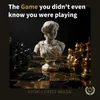
So much of our lives are governed by rules that we aren’t even really aware of. Many of them we never even really question because we just assume that’s the way things are. But what if by questioning those rules, we can live with more agency, leading to a life we choose? “The object of life is not to be on the side of the majority, but to escape finding oneself in the ranks of the insane. “ — Marcus Aurelius The Problem I grew up in Salt Lake City, in the Mormon Church. And when I say my life was prescribed, I mean prescribed. Mission. Marriage. Career. Family. In that order, on that schedule. It wasn't a suggestion — it was presented to me as the truth. Not "this is one way to live." This is the way. This is reality. I followed the path that I thought I as supposed to. I played the part as best I could but always felt like I was just repeating the lines someone else wrote for me. I didn’t feel like I was being authentically me, just the me that everyone else expected I should be. When I would question things or have experiences that contradicted what I was taught, I was told that I just needed to have more faith. That it was my fault that my belief wasn’t strong enough. So I doubled down, trying to fit myself into a system that didn’t work for me. I tightened the mask, hoping that this time it might finally fit. What’s interesting in looking back on my time in the church was that tended I gravitated to others that didn’t wear the mask. I envied those that bucked the system and followed their own path. Being around them I found that I could be more of my authentic self. I didn’t have to pretend to be someone that I wasn’t. And here's the thing about growing up inside something that total — you don't experience it as a rule. You experience it as just how things are. You don't question the water you're swimming in. The last few years I was in the church, I would attend church infrequently. It was exhausting trying to fit myself into a way of living that was so ill-fitting. I was at odds with the doctrine. Told that obedience to the leadership was more important than anything else. I got tried of “you just have to have more faith” as the answer to questions they couldn’t answer. I finally reached the point where I asked: is this actually true, or is this just what I was taught? The day I finally left, I didn't just leave a church. I left a rulebook I'd mistaken for reality itself. It literally felt like a giant weight had been lifted off my shoulders. I felt free. Once I left, I still had a long journey. Leaving the church, I lost a big part of my identity. I lost a community. I lost a certainty in how I was supposed to be in the world. It took years for me to find my footing and create a life by my choice, not the script that was handed to me. But here’s something important that I learned, and it’s something that most people will never understand. You are allowed to do exactly what you want in life and be the person you want to be. But it also comes with some caveats: 1. Everyone else is allowed to do the same. 2. You are responsible for your choices and actions. 3. You don’t get to choose the consequences of your actions. Maybe you didn't grow up Mormon. Maybe you didn't grow up religious at all. But I'd bet you're living inside a version of the same thing right now. A career path you never chose so much as inherited. A way of dressing, or dating, or succeeding, or how you’re supposed to act as a man or a woman, a way of being that you copied because everyone around you was doing it and it looked like law. Here's the uncomfortable question: how much of what you're doing right now is because it's true — or because it's expected? We treat these two very different things like they're the same. There's what's actually true — gravity, death, the fact that actions have consequences you don't control. And there's what's agreed upon — how a man is supposed to act, what a "respectable" life looks like, how long you're allowed to be sad before people get uncomfortable. One of those doesn't care what you think. The other is just a bunch of people's habits, dressed up to look like law. But here’s the thing: when you’re younger you think that adults have it all figured out and that when you grow up, you’ll have it figured out too. But the real truth is this: we’re all just making it up. Most of the “rules” are just conventions. They’re habits that we’ve agreed to as a society. It’s just a game that we’re all playing. That's the trap. Not that the game exists — because it always will. The trap is forgetting you're allowed to notice you're playing it. The Philosophy Epictetus has a way of putting this that cuts through the noise: "Remember that you are an actor in a play, the character of whi
Podzilla Summary coming soon
Sign up to get notified when the full AI-powered summary is ready.
Free forever for up to 3 podcasts. No credit card required.
More from Stoic Coffee Break

Why Socrates Would Hate AI | 391
Inner Critic vs. Inner Coach | 390
The Pressure Code: Interview with Performance Coach Jason Stacy | 388
The Danger of Certainty | 387
Get summaries like this every morning.
Free AI-powered recaps of Stoic Coffee Break and your other favorite podcasts, delivered to your inbox.
Free forever for up to 3 podcasts. No credit card required.