Free Daily Podcast Summary
Stillness in the Storms: Daily Summaries Delivered
by Steven Webb
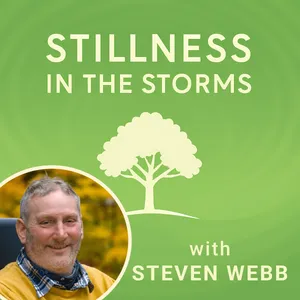
Stillness in the Storms brings a fresh voice to mindfulness - one that truly understands transformation comes not from escaping hardship, but finding peace within it.Join Steven Webb, a man who turned personal tragedy into an uplifting journey, as he reveals how to uncover inner calm and meaning in life's toughest moments.After a devastating diving accident left him severely paralyzed at 19 years old, Steven emerged with deep insights on resilience, presence, and living fully. Now, he shares those hard-won lessons to help you transform adversity into personal growth.Blending Zen Buddhism, Stoic philosophy, and his own story, Steven speaks to those struggling with grief, health challenges, burnout, and other storms we all face. Through relatable examples and practical wisdom, he makes mindfulness feel accessible - no retreat required.Inspirational yet down-to-earth, Steven will reframe how you approach life’s difficulties. You’ll gain tools to build courage, practice gratitude, rele
Latest Episodes
The most recent episodes — sign up to get AI-powered summaries of each one.
- Yesterday17 min
We're All Terrible Meditators: The Art of Doing Nothing on Purpose
Are you bad at meditating? So is everyone. The mind wanders because that is its job. Meditation is not quieting it, it is noticing you have gone and coming back.Support me with a coffee and join my Weekly Calm every Sunday: stevenwebb.ukWhen I started, I thought meditation was sit down, be quiet, no thoughts, pure bliss. It lasted about 30 seconds. Then a teacher gave me the only instruction that ever worked: just sit and do nothing. His version had four letters. Your body knows how to breathe and your mind knows how to go quiet. The job is getting out of their way. Think of a snow globe. To settle the snow you do nothing, you just watch, and life will shake it up again anyway. Every time the mind wanders it is a happy accident, as Bob Ross would say. Smile, say thank you mind, and come back.One thing to try: Get somewhere five minutes early and just sit in the car. Each time you catch the mind off in a story, smile, say thank you mind, and come back to what you can hear and feel. Five minutes, twice a day.In this episode Winnie the Pooh, and why meditation is doing nothing on purpose The only instruction that ever worked: just sit and do nothing (his had four letters) The snow globe. To settle the snow, you do nothing You're being thought. What's your next thought going to be? We're all terrible meditators, and why that is fine Bob Ross and the happy accident 178 podcasts and I've yet to find the one little thing that fixes everything Calvin and Hobbes, do a bit more nothing, and five minutes in the carWith gratitude toJess, David, Angi, Jeroen, Jose and Jill, Helen, Tracey, Carol, Hayden, Sarafena, Cheryl and Strength from Within Yoga, and new monthly supporter RowanThe companion meditation: Nothing to Get Right: A Peace Meditation With Little InstructionSupport the podcast and join the Weekly Calm: stevenwebb.ukThank you for listening.StevenLinks to Steven Webb's podcast and how you can support his work.Donate paypal.me/stevenwebb or Coffee stevenwebb.ukSteven's courses, podcasts and links: stevenwebb.uk
- 1 weeks ago18 min
What Will I Miss? My Story for World Suicide Prevention Day
What would you miss? This episode is about suicide, my granddad's and my own, and the one question that kept me here. If you need help right now, the numbers are just below.If you need help right nowUK and Ireland: Samaritans, call 116 123. Free, any hour, any day.UK only, if you cannot talk: text SHOUT to 85258. Free, 24 hours.US: call or text 988.Australia: Lifeline, 13 11 14.I was 12 when my granddad went missing from the farm. The next morning Andy woke me and said they had found him. At 18 my heart was broken and I tried to end my life, and later that year I broke my neck and lay in a hospital bed thinking I was better off not here. Years on, at rock bottom again, I wrote a note, printed it, left it face down and went out in my chair with a plan. I sat there for two hours. What stopped me was my stepdaughter Kember and one thought: I wonder what she will become. I did not want to die. I just wanted the pain to stop, and I think that is true of almost everybody who says they do not want to be here. Around the world 727,000 people a year die by suicide, one every 43 seconds. Three in four are men, and the men most at risk are 50 to 54, which is right where I am. So this is the conversation.One thing to try: If you are anywhere near that door, ask one question. Not what will I lose, not what will I gain. What will I miss? Then hang on for a few more weeks. And if it is someone you love, ask them: just for a moment, tell me what you would miss.In this episode Who World Suicide Prevention Day is for, and a warning 727,000 a year. Three in four are men, and I am the age most at risk I was 12 when my granddad went missing from the farm 18, heartbroken, and a cry for help Lying in hospital with a broken neck, thinking I was better off not here The note on the computer, and two hours at the edge The thought that stopped me: I wonder what she will become A permanent solution to a temporary problem The text my daughter sends us now, and why it works What will I miss? The one question, and the numbers to ringSupport the podcast and join the Weekly Calm: stevenwebb.ukThank you for listening.StevenLinks to Steven Webb's podcast and how you can support his work.Donate paypal.me/stevenwebb or Coffee stevenwebb.ukSteven's courses, podcasts and links: stevenwebb.uk
- 2 weeks ago18 min
Gates, Not Thorns: Are Your Boundaries a Prison?
Support Steven's work. Treat him to a coffee stevenwebb.ukAre your boundaries keeping you safe, or keeping you stuck? I have never liked the word. This week a reader called Katherine gave me a better one: gates, not thorns.I have carers in my life 24 hours a day, so I could not build walls even if I wanted to. I had to grow the strength to let the world in instead, and that is where I stand on boundaries. A red line between two people is healthy. It is an agreement, not a wall. A rulebook the whole world has to obey is not, and the old Buddhist texts do not even have a word for it. What they have is sila, your own conduct. Rules for you, and nobody else. A boundary that never comes down was never protection. It becomes a prison.One thing to try: Next time you go to defend something, ask one question. Is this a gate or a thorn? Protecting something tender until it is stronger is fine. Refusing the world is not.In this episode Katherine's email: a garden, not thorny bushes Come, even if you have broken your vow a thousand times Carers in my life 24 hours a day If you want to learn calm, spend time with your family A healthy boundary: not my best today, so I close the gate Red lines between two people are different The Buddhists had no word for boundaries. They had sila Life will not honour your bubble A boundary that never comes down becomes a prison Where in your life has a wall quietly become a prison?With gratitude toCheryl, Susan, Jane, Ankita, Dan, Cassie, Melanie, Joan and ReishinSupport the podcast and join the Weekly Calm: stevenwebb.ukThank you for listening.StevenLinks to Steven Webb's podcast and how you can support his work.Donate paypal.me/stevenwebb or Coffee stevenwebb.ukSteven's courses, podcasts and links: stevenwebb.uk
- Aug 22, 202620 min
There Is No Steven in Here: What I Learned at the Bottom of a Swimming Pool
Who are you, really, behind all the roles? Sit properly with that question and no answer comes. That is the answer.Open me up and there is no Steven in there. In deep sleep there is no Steven either. We wake up and we come online and we boot the roles: dad, councillor, host, meditator. Each one needs a different set of skills, and you can only run one at a time. So who is watching the breath when you meditate? Ask whether you are aware of your left toe and you were not, and then you were. In that gap before the answer, there is nobody home, and that is not terrifying. It is the most freeing thing I know.One thing to try: Ask yourself, are you aware? Then notice the moment before you answer.In this episode I always wanted to be somebody, and should have been specific Every role needs a different set of skills In deep sleep there is no Steven You cannot run two roles at once Who is doing the relaxing Are you aware of your left toe No fixed little statue of you sits inside Do it with excitement and curiosity My daughter found it terrifying. It is notWith gratitude toYuva, Karin, Sue, HJ, Anita, Lorraine, Brandy, Jane, Sergio and IrmaSupport the podcast and join the Weekly Calm: stevenwebb.ukThank you for listening.StevenLinks to Steven Webb's podcast and how you can support his work.Donate paypal.me/stevenwebb or Coffee stevenwebb.ukSteven's courses, podcasts and links: stevenwebb.uk
- Aug 11, 202619 min
If This Were My Last Podcast
If this were my last podcast, what would I want to leave you with? Let everything happen to you. No feeling is final.That is Rilke, and it is where this one started. No script, just a cup of coffee. You cannot change the present moment. You cannot grow your hair, lose weight, get younger or stop the rain in this second, and yet we spend enormous energy arguing with what has already arrived. Imagine a rainbow with only two colours in it. That is a life lived in a narrow band of feeling. Watching the film Albatross and hearing the ending changed how I think about all of it.One thing to try: Ask one question today. What small colour can I let into my life?In this episode You cannot change the present moment Arguing with what has already arrived The hero on the uncomfortable cushion The good times need nothing from you Born, pain, desire, joy, rain, shine. All of it Not every voice is healthy, but all of them carry weight Rilke, and go to the limits of your longing A rainbow with only two colours What would love be without loss What small colour can I let inWith gratitude toSenga, Jess, Anita, Sue, Evelyn and GlennSupport the podcast and join the Weekly Calm: stevenwebb.ukThank you for listening.StevenLinks to Steven Webb's podcast and how you can support his work.Donate paypal.me/stevenwebb or Coffee stevenwebb.ukSteven's courses, podcasts and links: stevenwebb.uk
- Aug 2, 202618 min
Happily Never After
What if the thing you keep chasing is the exact reason you cannot catch it? There is no happily ever after, and that is good news.Picture the ox with a carrot on a stick fixed above its own head. Every step forward moves the carrot forward. That is happiness as most of us run it. And it is not a design fault, it is evolutionary genius, because if you settled the moment you got something you would never go further. The man who loses everything is miserable on day one and fine two years later. Happiness is an emotion. It arrives and it leaves, like all the others. It was never going to move in.One thing to try: Catch yourself saying I will be happy when. Pause there and notice how much of life you just skipped.In this episode The ox, the stick and the carrot above its own head Stop chasing and you see what you already have Why this is evolutionary genius, not a fault We would never run faster or try again Halfway up, turn around and look at the valley Everything becomes normal in the end The man on the park bench, day one and two years on Happiness arrives and leaves, like every other emotion I will be happy when, and what it costs youSupport the podcast and join the Weekly Calm: stevenwebb.ukThank you for listening.StevenLinks to Steven Webb's podcast and how you can support his work.Donate paypal.me/stevenwebb or Coffee stevenwebb.ukSteven's courses, podcasts and links: stevenwebb.uk
- Jul 26, 202620 min
Part of You Doesn't Want the Pain to Stop: Here's Why
Why does part of you not want the pain to stop? Pain is inevitable. Suffering is the second arrow, and you fire that one.The first arrow lands and it hurts. Then we load the bow ourselves. Every replay in your head, every post, every phone call to a friend, is another arrow into the same wound. And here is the uncomfortable bit. The suffering loop feeds us, because it makes us the hero of our own story. Nobody wants to hear about the good day and the view over the ocean. Everybody leans in for the battle. I have been the victim hero for the last few weeks and I know exactly how it works.One thing to try: When a painful thought comes back, ask one question. Is this taking me anywhere? If not, it is the second arrow.In this episode The council motion, and the word I actually said I think you meant albatross Thinking about them with other people Every replay loads the bow again Pain does not mean your practice is failing Life will still dish it up to you Why the suffering loop feeds us Nobody leans in for the good day Is this the second arrowWith gratitude toAdam, Alison, Anna, Diana, Dominique, Dova, Ellen, Fran, Jenna and Mia, Jennifer, Jude, Kellee, Kylin, Marcie, Rita, Simon, Stefan, Steven and SueSupport the podcast and join the Weekly Calm: stevenwebb.ukThank you for listening.StevenLinks to Steven Webb's podcast and how you can support his work.Donate paypal.me/stevenwebb or Coffee stevenwebb.ukSteven's courses, podcasts and links: stevenwebb.uk
- Jun 28, 202621 min
What Your Anger Is Really Saying
What is your anger actually saying? My teacher Jun Po told me he has never known an angry person who did not care.Sit with that one. Anger is the bodyguard. It steps in to put something right, to stop it happening again, to defend what matters. Throw the hammer away and you have thrown away an emotion that evolution spent a very long time building. A child is furious about a red T-shirt when they wanted green, and to them the world just ended. When you are in a life where things go wrong fast, the gap between the spark and the fire shrinks. But it is a gap, and it can be widened.One thing to try: Instead of arguing, say six words. I see you care deeply. Why?In this episode Throw away the hammer and you throw away the tool A red T-shirt when they wanted green Anger is the bodyguard that steps in Do you really believe that, Steven When there is no time between spark and reaction There is a gap, and it does not have to become a fire I see you care deeply. Tell me why Sitting down with people I disagree with over a cup of tea Anger does not need banishing. It needs hearingWith gratitude toAlice, Kim in the Yukon, Maya, Ken, Linda and Michael, the regulars Laura and Stuart, and new monthly supporters Sue, Jude, Jenna and Mia, and RitaSupport the podcast and join the Weekly Calm: stevenwebb.ukThank you for listening.StevenLinks to Steven Webb's podcast and how you can support his work.Donate paypal.me/stevenwebb or Coffee stevenwebb.ukSteven's courses, podcasts and links: stevenwebb.uk
About Stillness in the Storms
Stillness in the Storms brings a fresh voice to mindfulness - one that truly understands transformation comes not from escaping hardship, but finding peace within it.Join Steven Webb, a man who turned personal tragedy into an uplifting journey, as he reveals how to uncover inner calm and meaning in life's toughest moments.After a devastating diving accident left him severely paralyzed at 19 years old, Steven emerged with deep insights on resilience, presence, and living fully. Now, he shares those hard-won lessons to help you transform adversity into personal growth.Blending Zen Buddhism, Stoic philosophy, and his own story, Steven speaks to those struggling with grief, health challenges, burnout, and other storms we all face. Through relatable examples and practical wisdom, he makes mindfulness feel accessible - no retreat required.Inspirational yet down-to-earth, Steven will reframe how you approach life’s difficulties. You’ll gain tools to build courage, practice gratitude, rele
Customized Recaps
AI-powered recaps with compact key takeaways, quotes, and insights.
Straight to Your Inbox
Get key takeaways from Stillness in the Storms in a 5-minute read.
Save Hours Every Week
Stay current on your favorite podcasts without falling behind.
Frequently Asked Questions
What is Podzilla's Stillness in the Storms daily summary?
It's a free AI-powered email that summarizes new episodes of Stillness in the Storms as soon as they're published. You get the key takeaways, notable quotes, and links & mentions — all in a quick read.
How does the Stillness in the Storms podcast summary work?
When a new episode drops, our AI transcribes and analyzes it, then generates a personalized summary tailored to your interests and profession. It's delivered to your inbox every morning.
Is this an official Stillness in the Storms product?
No. Podzilla is an independent service that summarizes publicly available podcast content. We're not affiliated with or endorsed by Steven Webb.
Can I get summaries of other podcasts too?
Absolutely! The free plan covers up to 3 podcasts. Upgrade to Pro for 15, or Premium for 50. Browse our full catalog at /podcasts.
How often does Stillness in the Storms release new episodes?
Stillness in the Storms publishes biweekly. Our AI generates a summary within hours of each new episode.
What topics does Stillness in the Storms cover?
Stillness in the Storms covers topics including Fitness, Religion & Spirituality, Spirituality, Culture, Health & Fitness, Society & Culture, Mental Health. Our AI identifies the specific themes in each episode and highlights what matters most to you.
Start getting Stillness in the Storms summaries tomorrow morning.
Free forever for up to 3 podcasts. No credit card required.
Free forever for up to 3 podcasts. No credit card required.