Free Daily Podcast Summary
Start to Scale from The Beauty Center at FIT: Daily Summaries Delivered
by Choulie Letters
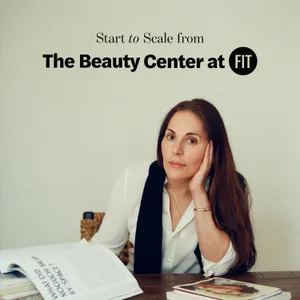
Hosted by Alison Cayne, founder of Choulie, Start to Scale from The Beauty Center at FIT explores how beauty companies are built. Founders, operators, and industry leaders talk candidly about the decisions behind product, brand, retail, growth, and the work of building a company that lasts. chouliebody.substack.com
Latest Episodes
The most recent episodes — sign up to get AI-powered summaries of each one.
- Today1h 11m
Tracy Dubb
Tracy Dubb started her career in investment banking, moved into private equity, and eventually founded M3 Ventures, investing in emerging brands across beauty, wellness, and consumer goods. Then, in 2020, she launched Isla Beauty with Charlie Denton, whose family has been formulating and manufacturing beauty products for four generations. She also writes a Substack I love, Market Research, about beauty, business, and consumer culture.Tracy has watched the consumer brand landscape change dramatically over the past decade, first as an investor and then as a founder. She understands what makes a company attractive to investors, and what it actually takes to build one. As we discuss, those aren’t always the same thing.We talked about how the investment landscape has changed, what Tracy understands differently now that she’s a founder, and why the speed at which a brand takes off tells you surprisingly little about its long-term potential.We also delve into the fascinating world of beauty formulation, Isla’s commitment to developing fewer, better products, and the challenge of keeping a brand interesting without constantly launching something new.And we had a funny conversation about the performance of being a founder, from obligatory factory visits in hairnets to the strange expectation that you should document your entire working life.In this episode, we discuss:* How Tracy’s experience as a founder changed the way she thinks about investing* What founders should understand before raising venture capital* Isla’s approach to concentrated skincare* What surprised Tracy about beauty manufacturing, formula ownership, and the claims brands make about their products* The difference between a brand’s muse and its actual customer* How Amazon and TikTok have changed beauty distribution* Where early-stage founders tend to overspend* The growing obsession with facial optimization, AI-generated beauty standards, and whether consumers will eventually push backListen to Tracy Dubb on Start to Scale From The Beauty Center at FIT. This is a public episode. If you would like to discuss this with other subscribers or get access to bonus episodes, visit chouliebody.substack.com
- 1 weeks ago56 min
Chris Danton
Chris Danton is the co-founder of IN GOOD CO., a futurist, brand strategist, and the writer behind GOOD THINKING. She’s one of my favorite writers for making sense of what’s happening across culture, business, technology, and consumer behavior and has this unusual ability to connect seemingly unrelated developments across industries and recognize patterns before they become obvious. When the folks at FIT and I were talking about what this podcast would be, I knew I wanted to go beyond the beauty industry. I wanted the Chris-es of the world, people who can see what’s bubbling up in culture and help businesses turn those shifts into products, services, brands, and experiences that speak to how people actually want to live.Chris is one of those people who continually push me to think about mattering, and for anyone who is building a service, place, or product that is the critical question.When there’s abundance of everything, how do you build something that matters to people?We had a wide-ranging conversation about the enormous changes underway in how people work, discover products, consume media, and form relationships with brands.We also talked about the collapse of trust in traditional influencer marketing, the changing relationship between brands and independent media, and why the next generation of successful companies will need to understand hospitality over extraction.In this episode, we discuss:* How founders can distinguish their own desires from a larger cultural need* Why shared mindsets tell us more about consumer behavior than demographics* Why the collapse of trust in influencers and social media is forcing brands to reconsider how they earn attention* Why brands need to understand the broader cultural lives of their customers* The critical questions you need to ask as you build a brand* Why enduring relevance depends on meaningListen to Chris Danton on Start to Scale from The Beauty Center at FIT. This is a public episode. If you would like to discuss this with other subscribers or get access to bonus episodes, visit chouliebody.substack.com
- 2 weeks ago56 min
Umaimah Sharwani
As much as I love to talk about brand and positioning, the beauty business is about making products that people love and want to buy again and again. Umaimah Sharwani has spent her career building the operational side of consumer brands, from product development and manufacturing to supply chains, fulfillment, and international expansion. She was the third employee at Glossier, joining before the brand launched, and helping build the systems that supported its extraordinary growth.Since then, she’s worked with brands including Reframe Beauty, Wyn Beauty, Ceremonia, Billie, The Nue Co., and Uni, and founded her own food company, Paro. Today, she works with founders as a fractional COO (most recently helping Nick Axelrod build contrapposto) often coming in at the beginning to help turn an idea into a physical product and a functioning business.We talked about what it was like to be at Glossier in 2014, when DTC beauty was still relatively new, and how much of the company’s early success came from Emily Weiss’s vision and the team’s attention to every detail of the customer experience.We also got into the practical realities of launching a consumer brand: finding the right manufacturers, understanding minimum order quantities, deciding when custom packaging is worth the investment, and why ordering more inventory rarely saves as much money as founders expect.One of my favorite moments was her comparison of choosing a manufacturer to dating. The red flags you notice on day one are usually the same ones you’ll be dealing with on day 100. Responsiveness, enthusiasm, flexibility, and a genuine willingness to work together matter enormously, particularly when you’re a small brand.And I loved her point about margins and scale. Founders often assume their economics will improve dramatically as they grow, but even a tenfold increase in production doesn’t necessarily change the numbers very much. Meanwhile, all that additional inventory ties up cash, takes up storage space, and limits your ability to make changes.In this episode, we discuss:* What it was like to be Glossier’s third employee* How operations touches everything from product development and packaging to customer service and the brand experience* Why even the most operationally minded person needs to understand a founder’s vision and why the product should exist* When custom packaging is worth the cost, complexity, and longer timelines* The three things Umaimah believes every founder should understand before starting a consumer products companyListen to Umaimah Sharwani on Start to Scale From The Beauty Center at FIT. This is a public episode. If you would like to discuss this with other subscribers or get access to bonus episodes, visit chouliebody.substack.com
- 3 weeks ago57 min
Leigh Patterson
Leigh Patterson is a writer, editor, and creative director, and the founder of Lucca Studio, a research-based creative studio working across brand strategy, editorial direction, writing, and archival research. Her clients include Le Labo, Apiece Apart, COS, Cuyana, Bunkhouse Hotels, Gjelina Group, Antica Terra, and Cereal Magazine. She’s also the creator of The Moon Lists, a decade-long project exploring the art of paying attention.Leigh began her career working with literary archives, examining the letters, photographs, receipts, and ordinary objects people leave behind (think Frida Kahlo’s personal lipstick collection.) That experience shaped her approach to creative work: finding the overlooked details that reveal something essential about a person, a place, or a brand.We talked about the growing pressure on brands to tell stories, the difference between having a genuine point of view and manufacturing one, and why some of the most enduring independent businesses deliberately remain small. We also explored taste, the increasingly blurred lines between brands and publishing, and the importance of making things that reward people’s attention.One of my favorite observations from Leigh was that taste is inseparable from having an interesting life. The things we choose, the experiences we collect, and the unexpected ways we combine them say far more about us than any recognizable set of cultural signals.In this episode, we discuss:* How Leigh’s work with literary archives shaped her approach to creative direction* Why some brands have rich stories to tell while others are better served by keeping things simple* The four things Leigh believes every successful brand needs* Why founders can lose their way* The value of keeping small teams, and resisting the pressure to grow endlessly* Why an algorithm can replicate the objects but not the life behind them* The origins of The Moon Lists* Why the beauty industry needs a new vocabulary for aging women, and what more sophisticated consumers are beginning to demandListen to Leigh Patterson on Start to Scale From The Beauty Center at FIT. This is a public episode. If you would like to discuss this with other subscribers or get access to bonus episodes, visit chouliebody.substack.com
- 4 weeks ago59 min
Julia Straus
Julia Straus has been at the helm of three very different consumer businesses: TULA Skincare, Sweaty Betty, and now Sincerely Yours.She’s built a brand from almost nothing, taken over a well-established international business with hundreds of employees, and returned to the earliest stages of a company in a beauty industry that has changed enormously since she first entered it.At TULA, she was one of the early believers in influencer marketing, back when beauty bloggers were still called bloggers and sending someone a product with no strings attached was a relatively novel marketing strategy.Sweaty Betty presented an entirely different set of challenges. Julia inherited a 20-year-old apparel brand with roughly 50 stores, hundreds of employees, and a complex inventory and merchandising operation. As she explains, the demands of running an apparel business are fundamentally different from those of running a beauty brand.Now, with Sincerely Yours, Julia is back at the beginning, building a skincare brand for teens and tweens at a time when young consumers have unprecedented access to beauty products, information, and influence.What makes Sincerely Yours particularly interesting is the relationship between the audience and the business. Her co-founders, Salish and Jordan Matter, bring years of connection and trust with an enormous YouTube community, but Julia is clear that an existing audience alone isn’t enough to sustain a brand.Sincerely Yours was created around a specific problem: young consumers were buying sophisticated skincare products that weren’t necessarily appropriate for their skin, while parents struggled to understand what they should be using.The company launched with Sephora because that was where its customers wanted to shop. But as Julia explains, entering retail comes with obligations that founders often underestimate, from hiring and inventory planning to meeting another company’s operational expectations.In this episode, we discuss:* The differences between building and scaling* Building a creator-led brand with staying power* Understanding the next generation of beauty consumers* The realities of big retail* Hiring around talent rather than an organizational chart* Learning to lead yourself* Listening when you’re not the customerListen to my conversation with Julia Straus on Start to Scale from The Beauty Center at FIT. This is a public episode. If you would like to discuss this with other subscribers or get access to bonus episodes, visit chouliebody.substack.com
- Oct 19, 202650 min
April Gargiulo
Vintner’s Daughter has been something of a north star for me as I’ve been building Choulie. I’ve admired the extraordinary quality of the products, of course, but also the patience and discipline behind the business. So I was thrilled to sit down with founder April Gargiulo for this episode of Start to Scale.April launched Vintner’s Daughter in 2014, bringing lessons from her family’s Napa Valley winery and her earlier career in design to an industry that was becoming increasingly obsessed with speed, novelty, and growth. More than a decade later, she’s built one of beauty’s most respected brands with just three products, a carefully chosen network of retailers, and no outside investment.It’s been profitable since roughly her first year in business.What I find particularly interesting is how little April has deviated from her original vision, even as the industry around her has changed dramatically. She develops each product over time, holds true to her ideals and brand values, and thinks about building a company that will be relevant a hundred years from now.We talked about what that kind of conviction requires, how she reconciles patience with the commercial realities of running a business. In this episode, we discuss:* What the wine industry taught her about beauty* Why she chose to bootstrap* The freedom that comes with profitability* Developing products over five years* Choosing the right retailers* Building a community she never set out to build* What happens when consumers have had enough* A more generous definition of beautyOne of my favorite parts of the conversation came when I asked April how she thinks about finding new customers in an increasingly fragmented market. Her answer was wonderfully simple: she trusts that the people who share her values will eventually find Vintner’s Daughter.Listen to Start to Scale from the Beauty Center at FIT This is a public episode. If you would like to discuss this with other subscribers or get access to bonus episodes, visit chouliebody.substack.com
- Oct 12, 202651 min
Abby Wallach
Abby Wallach has spent her career seeing things before the market was quite ready for them.She began in beauty and fragrance PR before moving into entertainment and production, then co-founded Beautiful Stranger, an early digital platform that combined short-form video, product discovery, and commerce years before any of those things became standard. She later returned to fragrance, developing new formats and delivery systems and, today, building House of Scent Invent, an end-to-end fragrance innovation platform that works with brands and retailers to bring their products to life.We talk about the tension between founder conviction and commercial reality. And how an idea can resonate with an audience without monetizing. Consumers often love something before there is a viable business around it, and being first can mean doing the expensive and frustrating work of teaching everyone else what the category is.We talk about rejection, competition, pivots, and how founders’ primary job is distinguishing between signals and noise.And then we get into fragrance, and the future of scent.Abby has spent over a decade questioning why fragrance has to live primarily in an atomizer on a vanity. She predicted the growth of solids, balms and other skin-first formats that can travel, be touched and reapplied, and become a new ritual in someone’s day.The traditional perfume bottle isn’t going anywhere, she says. But the ways we use fragrance are expanding around it: different formats, different gestures, different rituals, and a much more intimate relationship between scent and skin.In this episode, we discuss:* What it means to build something before the market is ready for it* Beautiful Stranger and the early convergence of content, commerce and video* The difference between consumer enthusiasm and a viable business* The skills Abby carried from live entertainment and production into entrepreneurship* How fragrance formats are moving beyond the traditional spray bottle* Why a trend and the evolution of a category are very different thingsListen to Abby Wallach on Start to Scale From The Beauty Center at FIT. This is a public episode. If you would like to discuss this with other subscribers or get access to bonus episodes, visit chouliebody.substack.com
- Oct 5, 202650 min
Jenn Krouse
Jenn Krouse is the founder and CEO of AUNU Beauty, a skincare brand built around medical-grade Mānuka honey. Before creating AUNU, Jenn worked at Tory Burch and WeWork and was part of the founding executive team at Victoria Beckham Beauty, where she served as CFO and COO as the business grew to more than $100 million in revenue.Jenn and I talked about what happens when you’ve spent years building and scaling other, bigger companies and then you start your own from zero.We talk about foundational lessons: understanding healthy growth, managing inventory and distribution, knowing where to invest money and time, and recognizing that operations and finance are as much a part of brand building as marketing and creative.We also get into large-scale retail. Early conversations with major retailers made her realize that the brand wasn’t ready for what those partnerships would require, and that distribution alone can’t create the education, awareness, or customer understanding AUNU still needed to build.Instead, AUNU has grown through DTC and through dermatologists and estheticians, where the medical history of its hero ingredient already has relevance. Jenn is AUNU’s only full-time employee, relying on a network of experienced consultants, fractional executives, and agencies rather than building a large team before the business requires one.And, of course, we talk about the metrics. For Jenn, bringing in new customers matters, but the repeat purchase is evidence that there is something real underneath the brand.Since we recorded this conversation, AUNU has received 12 beauty awards, including an Allure Best of Beauty 2026 award for The Salve in clean skincare.In this episode, we discuss:* What Jenn learned at Tory Burch, WeWork, and Victoria Beckham Beauty* Healthy growth and the financial discipline behind brand building* Why AUNU decided not to rush into large-scale retail* Medical-grade Mānuka honey and the idea behind AUNU* Building a company with fractional talent rather than a large full-time team* Why repeat purchase matters more than the first sale* The tension between natural skincare and clinical efficacy* What consumers are looking for from beauty now* Why expertise and trusted voices still matter in an increasingly noisy marketListen to Jenn Krouse on Start to Scale From The Beauty Center at FIT This is a public episode. If you would like to discuss this with other subscribers or get access to bonus episodes, visit chouliebody.substack.com
Get Start to Scale from The Beauty Center at FIT summaries in your inbox
Free AI-powered daily recaps. Key takeaways, quotes, and mentions — in a 5-minute read.
Get Free Summaries →Free forever for up to 3 podcasts. No credit card required.
You Might Also Like
Listeners also like.

Beyond The Beauty with Bobbi Brown
Bobbi Brown explores the beauty industry by interviewing top makeup artists and brand founders about their careers and challenges.

Gloss Angeles
Beauty journalists discuss makeup, skincare, and wellness trends alongside industry experts and celebrities.

The Fempire Podcast
Conversations on hormones, health, and leadership for high-performing women building integrated lives.

Well with Arielle Lorre
Explores holistic wellness through candid conversations with experts in health, beauty, fitness, and personal growth.

Working Hard with Grace Beverley
Real people share hard-won lessons on success, resilience, and life balance across diverse fields, from activism to business and beyond.

Liftoff Journeys with Jeanniey Walden
Conversations with leaders reveal the real decisions, doubts, and turning points that shaped their careers and personal growth.

The Bossticks
Unfiltered conversations with top leaders, entrepreneurs, and experts offering actionable advice for personal growth.

Life with Marianna
A beauty and lifestyle entrepreneur interviews influencers and founders about wellness, self-care, and personal growth.

The Creator Passport Podcast
A creator couple shares practical strategies for growing and monetizing a content business without burnout.

Liftoff Journeys with Jeanniey Walden
Conversations with leaders reveal the pivotal, unpolished moments that shaped their careers and personal growth.

Skincare School
Adore Beauty

Breaking Beauty Podcast
Two veteran beauty editors review products, discuss skincare and makeup trends, and interview industry insiders weekly.
About Start to Scale from The Beauty Center at FIT
Hosted by Alison Cayne, founder of Choulie, Start to Scale from The Beauty Center at FIT explores how beauty companies are built. Founders, operators, and industry leaders talk candidly about the decisions behind product, brand, retail, growth, and the work of building a company that lasts. chouliebody.substack.com
Customized Recaps
AI-powered recaps with compact key takeaways, quotes, and insights.
Straight to Your Inbox
Get key takeaways from Start to Scale from The Beauty Center at FIT in a 5-minute read.
Save Hours Every Week
Stay current on your favorite podcasts without falling behind.
Frequently Asked Questions
What is Podzilla's Start to Scale from The Beauty Center at FIT daily summary?
It's a free AI-powered email that summarizes new episodes of Start to Scale from The Beauty Center at FIT as soon as they're published. You get the key takeaways, notable quotes, and links & mentions — all in a quick read.
How does the Start to Scale from The Beauty Center at FIT podcast summary work?
When a new episode drops, our AI transcribes and analyzes it, then generates a personalized summary tailored to your interests and profession. It's delivered to your inbox every morning.
Is this an official Start to Scale from The Beauty Center at FIT product?
No. Podzilla is an independent service that summarizes publicly available podcast content. We're not affiliated with or endorsed by Choulie Letters.
Can I get summaries of other podcasts too?
Absolutely! The free plan covers up to 3 podcasts, any in the catalog. Basic raises that to 15, Pro to 40 and Max to 100. Browse our full catalog at /podcasts.
What topics does Start to Scale from The Beauty Center at FIT cover?
Start to Scale from The Beauty Center at FIT covers topics including Business, Arts, Fashion, Entrepreneurship, Beauty. Our AI identifies the specific themes in each episode and highlights what matters most to you.
Start getting Start to Scale from The Beauty Center at FIT summaries tomorrow morning.
Free forever for up to 3 podcasts. No credit card required.
Free forever for up to 3 podcasts. No credit card required.