Free Daily Podcast Summary
Social Slowdown: sustainable digital marketing for entrepreneurs: Daily Summaries Delivered
by Meg Casebolt
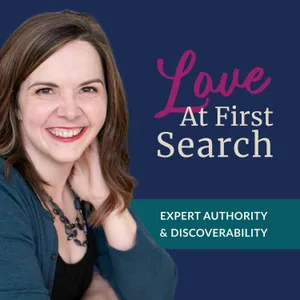
At Love At First Search, we’re singularly devoted to helping entrepreneurs & small businesses show up in search results, specifically targeting Google & YouTube. loveatfirstsearch.substack.com
Latest Episodes
The most recent episodes — sign up to get AI-powered summaries of each one.
- 1 weeks ago15 min
You Don’t Need to Be Everywhere. You Need a Stronger Signal.
You do not need to post on every platform, turn every idea into 17 formats, or chase whatever algorithm happens to be hot this week.You do need your expertise to show up consistently in more than one place.In this episode, I explain omnichannel reinforcement using a metaphor I learned from my electrical-engineer dad: your website is the transmitter, your public platforms are the repeaters, and your audience tunes in when they’re ready to find you.We’ll talk about why repetition is not the same thing as redundancy, how inconsistent messaging creates interference, and why distributing a fuzzy or generic idea only gives you a fuzzy signal in more places.I also break down the difference between:Omnichannel reinforcement: consistency and credibilityRepurposing: efficiencySyndication: reachAnd I’ll give you a simple way to audit the platforms you already use before you add another channel to your marketing workload.Resources & next stepsRead more about omnichannel reinforcement, one of the six key components of the BEACON Framework for AI DiscoverabilityGet the full show notes at loveatfirstsearch.com/episode/omnichannel-reinforcementIf you want help sharpening what you’re known for and building a public authority system around it, learn more about Signal This is a public episode. If you would like to discuss this with other subscribers or get access to bonus episodes, visit loveatfirstsearch.substack.com
- 1 weeks ago13 min
Authority Architecture: Does Your Website Explain Your Expertise?
Your website can contain years of valuable content and still fail to communicate what that body of work adds up to.In this episode, I explain what I call authority architecture: the way your website organizes your identity, expertise, offers, ideas, and evidence so that both people and search systems can understand how those pieces fit together.We’ll look at what still matters from traditional SEO architecture, what changes when AI systems are trying to understand and recommend experts, and why your homepage and navigation are the fastest places to see whether your site is actually explaining your expertise.You’ll also learn the four questions your homepage should help answer:Who is this for?Who are you?What do you do?How do you do it?And if you have years of blog posts, podcast episodes, videos, or case studies, we’ll talk about why simply having a large body of work isn’t enough if none of it is connected into a clear authority system.Get the full show notesFind out more about working together on an Authority Calibration or inside Signal Mentorship.
- 2 weeks ago13 min
What Should People [and AI] Recommend You For?
What should make someone think of you?That question matters whether the recommender is a friend, a referral partner, Google, ChatGPT, or Perplexity.Relationship-based marketers have been asking versions of this question for years: Jessica Lackey talks about getting painfully clear on the moment someone should “call me when…”; Michelle Mazur teaches expert referability; Nikki McKnight’s “Would Recommend” standard asks whether a business is worth talking about.Those aren’t AI strategies, they’re recommendation strategies.And the same clarity helps AI systems understand when you are the right person to surface in AI recommendations. In this episode, I’m talking about semantic territory: the collection of problems, situations, ideas, decisions, and expertise areas you want associated with your name strongly enough that you become a reasonable recommendation.You’ll learn:why semantic territory is bigger than a keyword strategywhy you probably already have a territory, even if you’ve never intentionally defined ita simple Google AI Overview exercise you can use as a rough snapshot of what the system currently associates with youwhy knowing what you don’t want to be recommended for matters just as muchhow referral partners often occupy the adjacent territory you don’t want to ownwhy specificity makes recommendation easier without forcing you into a tiny permanent nichehow your offers, case studies, interviews, explanations, and other public work reinforce the territory you occupywhat to do when your legacy content still points toward work you’ve outgrownThe goal isn’t to claim the entire map. It’s to become an obvious recommendation in the right situation.And if you’ve been in business for a while, your semantic territory probably isn’t blank. The more useful question is:Is the territory you already occupy the territory you still want? ResourceGet access to the free AI Findability Library.Read more about Semantic Territory as part of the Expertise Foundation process.
- 3 weeks ago16 min
AI Knows You Exist. Does It Know What Belongs to You?
AI can know that you exist without fully understanding what belongs to you.Your website, LinkedIn profile, podcast appearances, old bios, offers, frameworks, and years of published work may all exist online — like puzzle pieces scattered across a table. But if the relationships between those pieces aren’t clear, AI systems can struggle to see the complete picture.I learned this firsthand when I searched my name in Perplexity in 2025. It knew I had hosted The Social Slowdown. It separately knew that Aggressively Human existed and that I co-hosted it. But it hadn’t connected those facts to the same Meg Casebolt.The information wasn’t missing. The relationships were. In this episode, I explain:what an entity actually is, without the technical jargonwhy established experts are especially vulnerable to entity fragmentationhow old brands, titles, bios, and offers can muddy your current identitywhy your identity can be distributed across the web without being fragmentedwhat “consistency” actually means — and why every bio does not need to say exactly the same thinghow an Entity Signal Statement can help make important relationships explicitwhy entity clarity is the foundation of AI authority, but isn’t enough by itself to earn a recommendationsimple ways to repair missing connections without rebuilding your whole websiteYour digital history isn’t necessarily a liability. It can be evidence of experience and authority — as long as search and AI systems can connect those pieces back to the same source. The goal isn’t to force every puzzle piece into one place. It’s to connect them well enough that the picture of your expertise becomes obvious. ResourceWant to strengthen your own entity signals?Get the Entity Optimization Playbook in my free AI Findability Library:https://loveatfirstsearch.com/ai-library/
- Oct 26, 202616 min
The AI Authority Sequence: What Needs to Work First?
If AI isn’t recommending you, the common reaction is to do more marketing.Publish more. Post more. Pitch more podcasts. Build more backlinks. Show up on more platforms.But if the thing blocking you has nothing to do with reach, all that extra visibility may just amplify the wrong signal.In this episode, I’m breaking down the sequence I use to think about expert authority: how you move from simply being understandable to becoming distinctive, reinforced, trusted, and eventually difficult to separate from the ideas you’re known for.You’ll learn why:clearer expertise has to come before broader distributionbeing specific isn’t the same as being distinctiveyour website, podcast, LinkedIn, YouTube, and guest appearances should reinforce the same underlying associations rather than create five different versions of youtrust is an inference created by accumulated evidence, not something you can declareattribution becomes more likely when your ideas are repeatedly connected to you across your own body of work and third-party sourcesauthority building works better as a sequence than as a giant marketing checklistI call this sequence the Unmistakable Authority Method, but the point isn’t to memorize five stages.The point is to figure out what is actually blocking recommendation right now.Maybe you have a clarity problem. Maybe you’re interchangeable with everyone else in your category. Maybe your strongest ideas are buried in a fragmented archive. Maybe your public evidence is solid, but it isn’t reinforced or corroborated anywhere else.Different problems need different interventions.If you want help identifying yours, take the free AI Signal Check: https://loveatfirstsearch.com/signal-checkIf you prefer the written diagnostic to the Signal Check assessment, check out the Content Signals Diagnostic.
- Oct 19, 202616 min
AI Knows You. Why Isn't It Recommending You?
AI can know exactly who you are and still never recommend you.That’s the distinction Meg Casebolt explores in this episode of Love At First Search: the difference between being recognized by AI systems and being selected as a strong fit for a specific problem.Recognition answers questions like:Who are you?What do you do?What company are you connected to?What topics are you associated with?Recommendation asks something harder:Why you, for this specific need?That requires more than identity. It requires enough public evidence for a system to understand your expertise, trust your authority, distinguish your point of view, and connect you to the right problem.In this episode, Meg talks about why broad visibility is not the goal, why smaller specialists can outperform bigger generalists for specific recommendation queries, and why established experts often already have the expertise but lack a clear enough public record for AI systems to recognize the pattern.She also explains why “just publish more content” is often the wrong advice, how fragmented expertise creates ambiguity, and why recommendation emerges from patterns across a body of work rather than from one optimized page or one self-declared claim.The key idea: Recognition means the system knows who you are. Recommendation means it has enough evidence to choose you.And for service providers, consultants, coaches, and other experts, that second outcome is the one that actually matters.Go deeper in the AI Findability Library: https://loveatfirstsearch.com/ai-library/
- Oct 12, 202616 min
AI Discoverability for Experts: What Modern Search Rewards in 2026
Search isn’t dead, but Google isn't the only tool that peoplea re using anymore And the path between someone asking a question and finding the right expert has changed.For years, search worked through a fairly simple model: someone typed a query into Google, Google ranked a list of webpages, and the goal of SEO was to earn a high enough position to get the click.That still happens. But it’s no longer the whole system.Google AI Overviews, ChatGPT, Gemini, Perplexity, and other AI-mediated search tools can now interpret questions, retrieve information from multiple sources, compare what they find, and synthesize an answer before someone ever visits a website.That changes what experts need to make visible.In this episode, Meg Casebolt, founder of Love At First Search, explains how modern search is moving beyond page rankings and keyword-first content strategy toward a system that also has to understand the source behind the information: who you are, what you know, what you’re known for, and whether there is enough evidence to trust and recommend you.You’ll hear about why AI did not suddenly replace search when ChatGPT launched, how individual ideas can be retrieved from webpages and synthesized into larger answers, why Meg no longer starts content strategy with keyword volume, and why expert ideas need to be stated explicitly enough for both humans and machines to understand.Meg also explores how zero-click search changes measurement. Rankings and traffic still matter, but they no longer tell the entire story. Citations, mentions, branded searches, recognition, trust, and recommendation are becoming part of the discoverability picture too.The takeaway: modern search is no longer only about getting a webpage to rank. It’s about making your expertise understandable enough to retrieve, credible enough to trust, and clear enough to recommend.Go deeperFor more on AI discoverability and how search systems evaluate information and expertise:How AI Chooses What to Citehttps://loveatfirstsearch.com/how-ai-chooses-what-to-cite/Google AI Search: How Search Is Changinghttps://loveatfirstsearch.com/google-ai-search/Why I Returned to Blogging for AI Discoverabilityhttps://loveatfirstsearch.com/blogging-for-ai/AI Findability Libraryhttps://loveatfirstsearch.com/ai-library/
- Oct 6, 202613 min
Love At First Search Is Back: Authority, AI Discoverability, and the Future of Search
After nearly three years of podcast silence, I’m reviving this feed — but not to pick up exactly where Social Slowdown left off.Search has changed. My work has changed with it. And the questions I’m most interested in now are less about ranking for keywords and more about how experts become easier to understand, trust, and recommend across Google, ChatGPT, Gemini, Perplexity, YouTube, and the rest of the public web.In this reintroduction episode, I explain why I decided to revive an old podcast feed instead of starting from scratch, what happened when dormant listeners immediately started downloading three-year-old episodes again, and how I’m thinking about the value of old content, existing audiences, and accumulated authority.I also lay out the experiment I’m running across the blog, YouTube, this podcast, and LinkedIn: taking the same core concepts, translating them into different formats, and tracking both how humans respond and how search and AI systems pick them up.Over the next several episodes, we’ll get into:recognition vs. recommendationthe Unmistakable Authority Methodentity claritysemantic territoryauthority architecturepublic evidence and reinforcementwhy you can’t build authority in privatehow omnichannel distribution can strengthen your signalpositioning and narrative differentiationwhat to do when years of accumulated content start making you harder to understand, not easierIf you’ve been here since Social Slowdown, thanks for sticking around. If you found me more recently, welcome.Love At First Search is now about expert authority, discoverability, and the future of search.Explore the AI Findability Library: loveatfirstsearch.com/ai-library
Get Social Slowdown: sustainable digital marketing for entrepreneurs summaries in your inbox
Free AI-powered daily recaps. Key takeaways, quotes, and mentions — in a 5-minute read.
Get Free Summaries →Free forever for up to 3 podcasts. No credit card required.
You Might Also Like
Listeners also like.

SEO for Established Entrepreneurs: The Basic B
Brittany Herzberg | SEO Coach & Lead Gen Strategist

Right About Now - Legendary Business Advice
Raw business insights from founders and industry leaders, revealing real wins, failures, and actionable strategies without the fluff.

Authority Matters
Explores how personal branding, trust, and visibility are transforming professional influence and business growth in the digital age.

Marketing Made Simple
Strategies for crafting clear marketing messages that connect with customers and grow businesses.

Everyone Hates Marketers | No-BS Marketing & Brand Strategy Podcast
A marketing podcast offering practical insights on branding, strategy, and customer research from industry professionals.
Search Engine
Explores curious questions about the world with investigative storytelling and thoughtful analysis.

More or Less
Tech insiders discuss the future of Silicon Valley and the industry's biggest trends.

Go Social Podcast with Josh Hightower
Podgo

So, Get This
iHeartPodcasts and Bubbler

Websites Made Simple: How to have a successful website design business
A podcast offering practical guidance for web designers to build a profitable, authentic business by overcoming common challenges.

The AI in Business Podcast
Interviews with AI executives reveal practical applications and strategic insights for business leaders adopting AI.

Young and Profiting (YAP) with Hala Taha: Entrepreneurship and Self-Improvement Podcast
Interviews with top entrepreneurs and experts deliver actionable strategies for business growth, productivity, and personal development.
About Social Slowdown: sustainable digital marketing for entrepreneurs
At Love At First Search, we’re singularly devoted to helping entrepreneurs & small businesses show up in search results, specifically targeting Google & YouTube. loveatfirstsearch.substack.com
Customized Recaps
AI-powered recaps with compact key takeaways, quotes, and insights.
Straight to Your Inbox
Get key takeaways from Social Slowdown: sustainable digital marketing for entrepreneurs in a 5-minute read.
Save Hours Every Week
Stay current on your favorite podcasts without falling behind.
Frequently Asked Questions
What is Podzilla's Social Slowdown: sustainable digital marketing for entrepreneurs daily summary?
It's a free AI-powered email that summarizes new episodes of Social Slowdown: sustainable digital marketing for entrepreneurs as soon as they're published. You get the key takeaways, notable quotes, and links & mentions — all in a quick read.
How does the Social Slowdown: sustainable digital marketing for entrepreneurs podcast summary work?
When a new episode drops, our AI transcribes and analyzes it, then generates a personalized summary tailored to your interests and profession. It's delivered to your inbox every morning.
Is this an official Social Slowdown: sustainable digital marketing for entrepreneurs product?
No. Podzilla is an independent service that summarizes publicly available podcast content. We're not affiliated with or endorsed by Meg Casebolt.
Can I get summaries of other podcasts too?
Absolutely! The free plan covers up to 3 podcasts, any in the catalog. Basic raises that to 15, Pro to 40 and Max to 100. Browse our full catalog at /podcasts.
What topics does Social Slowdown: sustainable digital marketing for entrepreneurs cover?
Social Slowdown: sustainable digital marketing for entrepreneurs covers topics including Business, Marketing, Entrepreneurship. Our AI identifies the specific themes in each episode and highlights what matters most to you.
Start getting Social Slowdown: sustainable digital marketing for entrepreneurs summaries tomorrow morning.
Free forever for up to 3 podcasts. No credit card required.
Free forever for up to 3 podcasts. No credit card required.