Free Daily Podcast Summary
So Money with Farnoosh Torabi: Daily Summaries Delivered
by Farnoosh Torabi
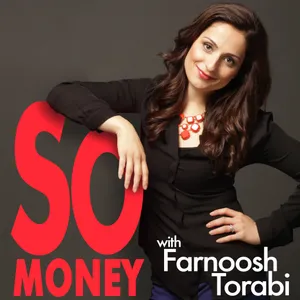
Host Farnoosh Torabi is an award-winning financial strategist, TV host and bestselling author. With over 40 million downloads and multiple Webby wins, So Money is dedicated to sharing inspiring money strategies and stories straight from today's financial leaders, bestselling authors and entrepreneurs. One day, hear an intimate money conversation with industry greats like Queen Latifah, Barbara Corcoran or Margaret Cho. Another day learn the basics of cryptocurrency and its impact on our wallets. On Fridays, tune in as Farnoosh answers our most pressing financial questions about saving, investing and building wealth. Advice and insights always delivered through a lens of equity, inclusivity and the changing world we live in.
Latest Episodes
The most recent episodes — sign up to get AI-powered summaries of each one.
- 2 days ago31 min
2037: Rates Are Going Up. Now What, Farnoosh?
Big changes are coming to So Money. Farnoosh shares more about the show’s 2027 evolution into a weekly, video-first podcast focused on money in midlife—and why the overwhelming response from listeners has reinforced her decision to go deeper on the financial questions that emerge in our 40s, 50s and beyond.Then, it’s time for the news. The Federal Reserve raised interest rates for the first time in three years, and Farnoosh breaks down what the move could mean for your credit cards, HELOCs, mortgages, savings and even the job market. Plus: why higher rates make this an especially important moment to review your debt, credit score and emergency savings.In the mailbag, Farnoosh offers an order of operations for a listener wondering whether to prioritize paying off high-interest debt, building savings or continuing to invest. And a parent asks how to teach teenagers about investing. Farnoosh shares ideas including custodial Roth IRAs, investing tools for kids and some of her favorite resources for raising financially savvy teens.The So Money midlife feedback form: https://www.jotform.com/form/262556781257063Learn more about Farnoosh's upcoming literary workshop Book to Brand. Early bird registration is now open! Hosted on Acast. See acast.com/privacy for more information.
- 4 days ago35 min
2036: The "Hell Yeah" Rule for Work, Money and Doing Less
What if the secret to getting more done isn’t doing more, but getting ruthless about what you stop doing?My guest today, Mike Allen, has a pretty simple test for figuring out what stays and what goes. In fact, you just heard it: “Hell yeah.”If someone asks you to take on the project, go to the thing, have the meeting, make the commitment, and your reaction is anything less than hell yeah? Mike says that might be your answer right there.And listen, as someone who has spent a lot of her career saying yes, building, adding, producing, optimizing, I needed this conversation.Mike Allen is the co-founder of Axios and previously co-founded Politico. He’s also the longtime journalist behind the daily Axios AM and Axios PM newsletters. His new book, Simplify: Do 50 Percent More with 50 Percent Less, co-authored with Axios co-founders Jim VandeHei and Roy Schwartz, is essentially an argument against what they call toxic complexity.Because here’s the irony: AI was supposed to make our lives easier. Instead, we have more content, more choices, more decks, more emails, more things we could be doing. And Mike’s argument is that unless we get intentional about what deserves our attention, technology is just going to help us create more noise, faster.Their framework is three steps: Confront what you’re doing. Delete what doesn’t matter. Amplify what does.We talk about why complexity can actually feel comforting, how to declare “meeting bankruptcy,” what a simplified financial life might look like, and why figuring out what is enough may be one of the most important things you can do with your money and your time.And I end up applying Mike’s advice to my own business in real time, including some changes I’m making to So Money in 2027.Learn more about Farnoosh's upcoming literary workshop Book to Brand. Early bird registration is now open! Hosted on Acast. See acast.com/privacy for more information.
- 6 days ago34 min
2035: The Psychology of Self Worth, Money and Success
What if the thing standing between you and more success, more money, even better relationships…isn’t a lack of opportunity?What if it’s your ability to actually believe you’re worthy of what comes your way?My guest today is Dr. Marisa G. Franco, a psychologist, TED speaker, professor at the University of Maryland and New York Times bestselling author who has an incredible gift for taking complicated psychological research and making it feel deeply personal — and useful.You may know her from her bestselling book Platonic: How the Science of Attachment Can Help You Make—and Keep—Friends. Her newest book, Worth, goes even deeper, exploring how our sense of self-worth gets formed, how it shapes our relationships and choices, and how we can begin to change it.We talk about how the way we learned to connect with people as children can follow us into adulthood — showing up not only in our friendships and romantic relationships, but in how we earn, spend, invest and take risks with money.We get into why some people actually feel worse when good things happen to them. Why telling yourself “I am rich, I am loved, I am amazing” might actually backfire. And some fascinating research suggesting that education, wealth and other advantages can only take us so far if we don’t have the self-worth to capitalize on them.And maybe my favorite takeaway: becoming more secure isn’t about eliminating all of your insecurities. It’s about being able to recognize them without letting them run the show.Learn more about Farnoosh's upcoming literary workshop Book to Brand. Early bird registration is now open! Hosted on Acast. See acast.com/privacy for more information.
- 1 weeks ago53 min
2034: Ask Farnoosh...About Farnoosh: My Midlife Financial Plan, Unveiled
You’ve been asking for this episode, and today I’m finally pulling back the curtain on my own financial plan.Consider this a very special edition of Ask Farnoosh — except this time, you’re asking the questions about my money.For roughly 15 years, much of my financial life was on cruise control: automate the investing, save for retirement, fund the kids’ accounts, maintain the emergency fund, repeat. But midlife has me asking a different set of questions. Am I still saving the right amount? Could I invest a little less and spend more on my life today? How much do we actually need for retirement? And, gulp…should I consider an annuity?My financial planner Maggie Johndrow of Johndrow Wealth Management joins me to reveal what we discovered after putting my entire financial picture under the microscope — including where I may have been over-saving, why we’re rethinking my SEP IRA strategy, and how we’re balancing retirement security with enjoying life now.Then Maggie’s colleague Colette Ward joins us for an annuities crash course: what they are, why their reputation has changed and when they may—or may not—make sense.It’s my Midlife Money Checkup. And hopefully, it inspires yours.Reach Maggie at maggien@johnddrowwealth.comReach Colette at colette@johnddrowwealth.comLearn more about Farnoosh's upcoming literary workshop Book to Brand. Early bird registration is now open! Hosted on Acast. See acast.com/privacy for more information.
- 1 weeks ago33 min
2033: How to Build a Forever Paycheck in Retirement
We're taught our whole working lives to save. Nobody teaches us how to stop.That's the blind spot my guest today has spent the last several years staring down. Jean Chatzky has been one of the most trusted voices in personal finance for as long as I've been in this business, and she just published what she says is the best of her fourteen books, because it's solving a problem she's actually living through herself.Her new book is called The Forever Paycheck, and it's about the moment nobody plans for: the day the direct deposits stop and you're left staring at a lump sum that has to somehow last the rest of your life. Turns out most of us are terrible at this. Even people who did everything right, who saved diligently for forty years, freeze up when it's time to actually spend the money. Jean found that people with guaranteed income streams spend nearly twice as much as people sitting on identical savings, and that confidence to spend is tied to better health and longer life.We get into why our brains treat a shrinking balance like a loss even when it's working exactly as intended, what she's doing with her own money at 61, and the uncomfortable math behind long-term care that almost nobody wants to run. Learn more about Farnoosh's upcoming literary workshop Book to Brand. Early bird registration is now open! Hosted on Acast. See acast.com/privacy for more information.
- 1 weeks ago33 min
2032: How to Get Rich Without Leaving Your Parents Behind
What does it mean to build wealth when you don't come from money and when getting ahead financially isn't just about you? My guest today is Maria Melchor, founder of FirstGenLiving and author of the new book Always Have Enough: How to Build Wealth When You Don't Come From Money. Maria grew up in a Mexican immigrant family, at one point undocumented in the United States, watching her parents piece together everything from paychecks and government benefits to food bank boxes to make ends meet. As a kid, she saw classmates get cars when they got their driver's licenses while she was waiting for the legal status that would eventually allow her to work, and fully participate in the financial system. Maria would go on to attend Yale, and after graduation found herself earning more at 22 years old than her parents had after decades of incredibly hard work. Which brings to the forefront a complicated question: What do you do when you're the one in the family who suddenly has access to opportunity? ? How much do you owe yourself? How much do you owe the people who helped you get there? And when can you finally say, "I have enough"? Learn more about Farnoosh's upcoming literary workshop Book to Brand. Early bird registration is now open! Hosted on Acast. See acast.com/privacy for more information.
- 2 weeks ago27 min
2031: Ask Farnoosh: Leave More Money to the Child Who Needs It Most? Plus: COBRA, Life Insurance & Inherited 401(k)s
Big changes are coming to So Money in 2027. Farnoosh opens the episode with an early preview of what’s ahead, including a more video-forward format and a sharper focus on the intersection of midlife and money — the season when careers, kids, aging parents, health, relationships and financial priorities are all shifting at once.She also reflects on the life and legacy of Gloria Steinem, who died this week at 92, and shares a personal story about once finding herself just a few seats away from Steinem on an Amtrak train — and regretting that she never worked up the courage to say hello.Then, Farnoosh looks at the latest jobs report and weighs in on a debate sparked by Armchair Expert: If one adult child becomes wealthy while another struggles financially, should parents leave them different amounts in their will? Farnoosh shares why she leans toward equal inheritances, with thoughtful exceptions for significant needs.In the Ask Farnoosh mailbag: Jay in Denver recently got married and wants to know how he should rethink his life insurance as he plans for children. Tamara in Los Angeles inherited her mother’s 401(k) and wants to understand her options for transferring, investing and eventually withdrawing the money. And a listener who was recently laid off asks whether COBRA is worth the cost or if shopping for coverage on the health insurance marketplace could be a better move.Plus, Farnoosh shares resources on Trump Accounts and explains why major life changes are often the right time to revisit your entire financial plan.Gloria Steinem — NYT never-before-seen 2008 interview: Watch the New York Times video. The Times released the previously unseen interview on September 3. Trump Accounts — July 10, Episode 2007: Ask Farnoosh: Should I Open a Trump Account? Trump Accounts — August 14, Episode 2022: Trump Account Updates, Money-Maxxing and Stay-at-Home BoyfriendsRobin Wigglesworth — Episode 2029: The Bond Market Explained: What It Means For Your MoneyJoseph Moore — Episode 2030: How to Get Rich: 300 Years of Money LessonsLearn more about Farnoosh's upcoming literary workshop Book to Brand. Early bird registration is now open! Hosted on Acast. See acast.com/privacy for more information.
- 2 weeks ago40 min
2030: How to Get Rich: 300 Years of Money Lessons
My guest today owns land on the moon.And somehow, that is not even the most interesting thing about his approach to money.Joseph Moore is a historian and professor who spent years studying how Americans have tried to get rich over the last 300 years — from land speculation and market bubbles to stocks, crypto and today’s biggest investment trends.And after all that research, he came to a pretty provocative conclusion: a lot of the financial advice we hear over and over again may not actually be the best way to build wealth.So Joseph decided to test history for himself. He created a cryptocurrency. He systematically shorted Jim Cramer’s stock picks. He studied how investors behaved through centuries of booms and busts — and used some of those lessons in his own portfolio.Along the way, he became a millionaire.His new book is How to Get Rich in American History: 300 Years of Financial Advice That Worked (and Didn’t).Today, we’re talking about what 300 years of history can teach us about getting rich, why he says diversification alone won’t make you wealthy, how to recognize hype before it’s too late, and the money advice he thinks far too many of us blindly follow.Learn more about Farnoosh's upcoming literary workshop Book to Brand. Early bird registration is now open! Hosted on Acast. See acast.com/privacy for more information.
Get So Money with Farnoosh Torabi summaries in your inbox
Free AI-powered daily recaps. Key takeaways, quotes, and mentions — in a 5-minute read.
Get Free Summaries →Free forever for up to 3 podcasts. No credit card required.
You Might Also Like
Listeners also like.

Financial Feminist
A feminist take on personal finance, teaching women to earn, save, and grow wealth while challenging patriarchal systems.

She's On The Money
A no-judgment zone for women learning to manage money, invest, buy property, and grow wealth through relatable chats and real-life stories.

Suze Orman's Women & Money (And Everyone Smart Enough To Listen)
Suze Orman delivers personal finance advice focused on emotional and practical money management for long-term financial well-being.

NerdWallet's Smart Money Podcast
Personal finance experts break down budgeting, saving, investing, and credit to help listeners make informed money decisions.

Money Rehab with Nicole Lapin
A financial guide to overcoming money taboos and improving personal finance with practical advice from Nicole Lapin.

Afford Anything | Get Smarter With Money
A weekly discussion on financial freedom covering psychology, income, investing, real estate, and entrepreneurship with experts.

How to Money
Two friends break down personal finance topics like debt payoff and investing in simple, practical terms for everyday listeners.

The Money Mondays
Discusses investments, side hustles, and charity through interviews with entrepreneurs and celebrities in their homes and studios.

Other People's Pockets
A show that explores personal finances by having guests openly discuss their income, spending, and money habits.
Money Making Conversations Master Class
Successful entrepreneurs and leaders share strategies for building businesses and creating wealth.

Money For Couples with Ramit Sethi
Real couples explore money psychology and relationships, guided by Ramit Sethi to align finances with their shared values and goals.

The Stacking Benjamins Show
Two friends discuss personal finance, investing, and money trends with humor and expert guests in a casual, accessible way.
About So Money with Farnoosh Torabi
Host Farnoosh Torabi is an award-winning financial strategist, TV host and bestselling author. With over 40 million downloads and multiple Webby wins, So Money is dedicated to sharing inspiring money strategies and stories straight from today's financial leaders, bestselling authors and entrepreneurs. One day, hear an intimate money conversation with industry greats like Queen Latifah, Barbara Corcoran or Margaret Cho. Another day learn the basics of cryptocurrency and its impact on our wallets. On Fridays, tune in as Farnoosh answers our most pressing financial questions about saving, investing and building wealth. Advice and insights always delivered through a lens of equity, inclusivity and the changing world we live in.
Customized Recaps
AI-powered recaps with compact key takeaways, quotes, and insights.
Straight to Your Inbox
Get key takeaways from So Money with Farnoosh Torabi in a 5-minute read.
Save Hours Every Week
Stay current on your favorite podcasts without falling behind.
Frequently Asked Questions
What is Podzilla's So Money with Farnoosh Torabi daily summary?
It's a free AI-powered email that summarizes new episodes of So Money with Farnoosh Torabi as soon as they're published. You get the key takeaways, notable quotes, and links & mentions — all in a quick read.
How does the So Money with Farnoosh Torabi podcast summary work?
When a new episode drops, our AI transcribes and analyzes it, then generates a personalized summary tailored to your interests and profession. It's delivered to your inbox every morning.
Is this an official So Money with Farnoosh Torabi product?
No. Podzilla is an independent service that summarizes publicly available podcast content. We're not affiliated with or endorsed by Farnoosh Torabi.
Can I get summaries of other podcasts too?
Absolutely! The free plan covers up to 3 podcasts. Upgrade to Pro for 15, or Premium for 50. Browse our full catalog at /podcasts.
How often does So Money with Farnoosh Torabi release new episodes?
So Money with Farnoosh Torabi publishes every few days. Our AI generates a summary within hours of each new episode.
What topics does So Money with Farnoosh Torabi cover?
So Money with Farnoosh Torabi covers topics including Business, Entrepreneurship. Our AI identifies the specific themes in each episode and highlights what matters most to you.
Start getting So Money with Farnoosh Torabi summaries tomorrow morning.
Free forever for up to 3 podcasts. No credit card required.
Free forever for up to 3 podcasts. No credit card required.