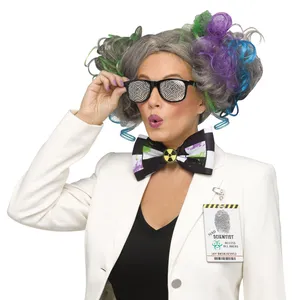
Free Daily Podcast Summary
Sitcom Science: Daily Summaries Delivered
by Circle Of Insight Productions
Sitcom Science examines the intersection of popular television and real-world science through rigorous, evidence-based analysis. Hosted by a licensed psychologist and science communicator, each episode fact-checks the physics, psychology, biology, and technology portrayed in beloved sitcoms and series, separating entertaining fiction from established scientific understanding. From quantum mechanics in The Big Bang Theory to medical scenarios in House M.D. and chemical processes in Breaking Bad, the podcast delivers clear explanations, expert insights, and thoughtful discussions on the accuracy, implications, and broader lessons behind the screen. Emphasizing curiosity over fandom, Sitcom Science bridges entertainment and education, making complex concepts accessible to curious listeners while exploring the cognitive and cultural impact of scientific portrayals in media. New episodes explore one show, one concept at a time, blending humor, critical thinking, and reliable research. Whether you are a science enthusiast, TV fan, or lifelong learner, join us as we investigate: Was the science right? What does it teach us? And how does it shape our understanding of the world?
Latest Episodes
The most recent episodes — sign up to get AI-powered summaries of each one.
- 4 days ago4 min
Gilligan’s Island — Can You Survive by Drinking Coconut Water Instead of Fresh Water?
Stranded on a tropical island without a reliable source of fresh water, could Gilligan and the Skipper survive by drinking coconut water? Although coconut water contains fluid and important electrolytes, its high potassium and relatively low sodium content make it an imperfect replacement for ordinary drinking water, especially during prolonged heat exposure. We examine how the kidneys regulate hydration, why electrolyte balance matters, and what happens when someone relies on coconut water as their primary source of fluids.
- 5 days ago3 min
Better Call Saul: Could a Stroke Leave You Conscious but Unable to Speak?
In Breaking Bad and Better Call Saul, Hector Salamanca remains mentally aware of his surroundings but is largely unable to speak or move, communicating through a small bell attached to his wheelchair. Could a stroke really leave someone trapped inside their own body while preserving their ability to think, understand language, and experience emotions? We explore locked-in syndrome, brainstem injuries, aphasia, and the remarkable neurological systems responsible for consciousness and communication. The science reveals why losing the ability to speak is not necessarily the same as losing the ability to think.
- 5 days ago3 min
SpongeBob SquarePants and the Krabby Patty: Why Does a Burger Taste Better When It’s Grilled?
What makes a Krabby Patty irresistible, and why does cooking a burger transform its flavor? Using SpongeBob SquarePants as our starting point, we explore the Maillard reaction, the chemical interaction between amino acids and sugars that produces hundreds of flavor and aroma compounds. We also examine why temperature, moisture, and cooking methods determine whether a burger develops a delicious brown crust or simply turns gray.
- 1 weeks ago4 min
The Truth Serum Myth: Can Chemistry Force Someone to Tell the Truth? From Marvel's Ant-Man to the CIA's MKULTRA
In Ant-Man and the Wasp, True Lies, and Alias, truth serum seems capable of making even the most determined person reveal their secrets. But can chemicals actually force someone to tell the truth, or do they simply interfere with the brain's ability to think clearly? This episode investigates sodium thiopental, scopolamine, and the neuroscience of chemically altered consciousness, alongside the CIA's real-life MKULTRA experiments. From Hollywood interrogation scenes to secret government research, we uncover why truth serum remains one of science's most persistent myths.
- 1 weeks ago3 min
Amnesia with a Blunt Instrument: Can a Second Blow to the Head Really Restore Your Memory?
In Gilligan's Island, a blow to the head can erase someone's memory, while another perfectly timed impact miraculously restores it. Movies like The Bourne Identity and countless soap operas have made sudden memory loss one of Hollywood's favorite medical mysteries. But what actually happens inside the brain during a concussion, and can physical trauma selectively erase someone's identity while leaving everything else intact? This episode explores traumatic brain injuries, hippocampal function, retrograde and anterograde amnesia, and why a second head injury is far more likely to worsen neurological damage than reverse it.
- 1 weeks ago3 min
The Voltage Trap: Why Frankenstein’s Creature Would Never Wake Up
A heavy switch slams forward. Spark gaps erupt with blinding blue light. The massive surgical table descends from the open skylight, and Victor Frankenstein famously bellows: “It’s alive!”Mary Shelley published Frankenstein in 1818, inspired by the galvano-electric experiments of Luigi Galvani and Giovanni Aldini, who made severed frog legs and executed convicts twitch using electrical currents. In cinema, reanimation looks simple: connect the anatomy, introduce high-voltage electricity, restart the pulse, and consciousness returns.In clinical neuroscience, that leap collapses entirely.
- 2 weeks ago3 min
Breaking Bad Science: Can Teeth Really Explode Like Popcorn in a Fire?
In Breaking Bad, investigators examining the remains of Gus Fring’s destroyed meth laboratory suggest that extreme heat caused a victim’s teeth to pop like popcorn, making identification impossible. But can human teeth actually explode when exposed to intense heat? This episode of Sitcom Science explores the chemistry of tooth enamel, the physics of thermal expansion, and how forensic scientists identify severely burned human remains. We separate Hollywood drama from real forensic science to discover whether Walter White’s destructive cleanup was as effective as the television series suggests.
- 2 weeks ago3 min
Breaking Bad’s Giant Magnet: Can Criminals Really Destroy Digital Evidence?
In Season 5 of Breaking Bad, Walter White and Jesse Pinkman attempt to destroy incriminating evidence by using an enormous electromagnet against a laptop inside a police evidence room. But could this actually work, and how difficult is it to permanently destroy digital evidence? This episode explores electromagnetism, computer forensics, and the surprising ways investigators can recover information from damaged electronic devices. We also examine the psychology of evidence destruction and why criminals frequently overestimate their ability to eliminate traces of their actions.
Get Sitcom Science summaries in your inbox
Free AI-powered daily recaps. Key takeaways, quotes, and mentions — in a 5-minute read.
Get Free Summaries →Free forever for up to 3 podcasts. No credit card required.
You Might Also Like
Listeners also like.
Good Science
Fictional health officials parody conspiracy theories and anti-science rhetoric through absurdist comedy on public health topics.
Mayim Bialik's Breakdown
Explores the intersection of science and spirituality through conversations on consciousness, healing, and unexplained phenomena.

SciShow Tangents
Scientists compete with quirky facts and scientific stories, blending humor and deep dives into unexpected topics.

Science Stuff To Blow Your Mind
Podgo
Galaxy Brains with Dave Schilling and Jonah Ray
Polygon
Science Quickly
A bite-sized science podcast exploring discoveries with journalists and experts.
Science Vs
A show that investigates popular topics and myths by analyzing scientific evidence to determine what’s fact, fiction, or uncertain.
The Rest Is Science
Hannah Fry and Michael Stevens explore puzzling scientific questions that challenge everyday assumptions about reality.
Unsung Science
Explores the overlooked stories behind major scientific and technological breakthroughs and the people who created them.
3SchemeQueens
Exploring baffling medical cases where the body is the crime scene and diagnosis is the plot twist.
Unobtainium Podcast
A Hollywood writer-producer and an astrophysicist analyze the science behind sci-fi films, separating fact from cinematic fiction.
Science for Kids / Science's Not Boring: The Kids Science Podcast
Two fictional siblings host a science podcast for kids, exploring topics like space, nature, and the human body through engaging stories.
About Sitcom Science
Sitcom Science examines the intersection of popular television and real-world science through rigorous, evidence-based analysis. Hosted by a licensed psychologist and science communicator, each episode fact-checks the physics, psychology, biology, and technology portrayed in beloved sitcoms and series, separating entertaining fiction from established scientific understanding. From quantum mechanics in The Big Bang Theory to medical scenarios in House M.D. and chemical processes in Breaking Bad, the podcast delivers clear explanations, expert insights, and thoughtful discussions on the accuracy, implications, and broader lessons behind the screen. Emphasizing curiosity over fandom, Sitcom Science bridges entertainment and education, making complex concepts accessible to curious listeners while exploring the cognitive and cultural impact of scientific portrayals in media. New episodes explore one show, one concept at a time, blending humor, critical thinking, and reliable research. Whether you are a science enthusiast, TV fan, or lifelong learner, join us as we investigate: Was the science right? What does it teach us? And how does it shape our understanding of the world?
Customized Recaps
AI-powered recaps with compact key takeaways, quotes, and insights.
Straight to Your Inbox
Get key takeaways from Sitcom Science in a 5-minute read.
Save Hours Every Week
Stay current on your favorite podcasts without falling behind.
Frequently Asked Questions
What is Podzilla's Sitcom Science daily summary?
It's a free AI-powered email that summarizes new episodes of Sitcom Science as soon as they're published. You get the key takeaways, notable quotes, and links & mentions — all in a quick read.
How does the Sitcom Science podcast summary work?
When a new episode drops, our AI transcribes and analyzes it, then generates a personalized summary tailored to your interests and profession. It's delivered to your inbox every morning.
Is this an official Sitcom Science product?
No. Podzilla is an independent service that summarizes publicly available podcast content. We're not affiliated with or endorsed by Circle Of Insight Productions.
Can I get summaries of other podcasts too?
Absolutely! The free plan covers up to 3 podcasts, any in the catalog. Basic raises that to 15, Pro to 40 and Max to 100. Browse our full catalog at /podcasts.
How often does Sitcom Science release new episodes?
Sitcom Science publishes 2x weekly. Our AI generates a summary within hours of each new episode.
What topics does Sitcom Science cover?
Sitcom Science covers topics including Science, Education, Culture, Society & Culture. Our AI identifies the specific themes in each episode and highlights what matters most to you.
Start getting Sitcom Science summaries tomorrow morning.
Free forever for up to 3 podcasts. No credit card required.
Free forever for up to 3 podcasts. No credit card required.