Free Daily Podcast Summary
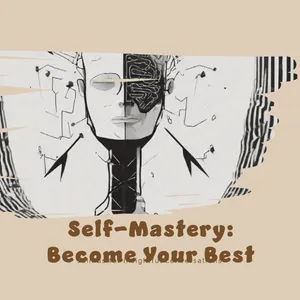
Self-Mastery Become Your Best: Daily Summaries Delivered
by zaporamaks
Embark on a transformative journey of self-discovery and personal growth with ”Self-Mastery: Become Your Best”, your guide to unlocking your full potential and creating a life you love. Join us as we explore inspiring stories, practical strategies, and expert insights to help you:Cultivate a positive mindset and overcome limiting beliefsSet and achieve ambitious goals with clarity and focusEnhance your self-esteem and build unshakeable confidenceDevelop resilience and bounce back from setbacks with strengthNurture meaningful relationships and build a supportive communityDiscover your passions and pursue a fulfilling purposeDesign a life aligned with your values and aspirationsWhether you’re seeking career advancement, improved relationships, or a greater sense of personal fulfillment, ”Self-Mastery: Become Your Best” is your roadmap to achieving your dreams. Each episode will provide you with actionable tips, inspiring stories, and expert guidance to help you take control of yo
Latest Episodes
The most recent episodes — sign up to get AI-powered summaries of each one.
- Yesterday7 min
Living With Intentionality - Energy Management — Protecting Your Time and Mind
This episode explores why managing energy is often more important than simply managing time. Drawing on Daniel Kahneman’s work on limited attention, Gloria Mark’s research on digital distraction and task switching, sleep science, Sabine Sonnentag’s studies on psychological detachment, and Edward Deci and Richard Ryan’s Self-Determination Theory, it explains how focus, recovery, boundaries, and meaningful motivation shape the quality of our work and daily life. The episode emphasizes protecting high-energy periods for important tasks, reducing unnecessary interruptions, building recovery into the day, and recognizing that every commitment spends attention as well as time. The central message is that intentional living means giving your best energy to what matters most instead of allowing urgency and constant demands to consume it.
- 1 weeks ago8 min
Living With Intentionality - Minimalism and Mental Clarity
This episode explores minimalism as a tool for reducing cognitive load, protecting attention, and creating more mental space. Drawing on Daniel Kahneman’s work on attention and cognitive effort, research on clutter and stress from UCLA’s Center on Everyday Lives of Families, Gloria Mark’s studies on digital distraction, and the Zeigarnik effect on unfinished tasks, it explains how physical clutter, excessive commitments, constant notifications, and information overload can quietly drain mental energy. The episode emphasizes that minimalism is not about owning as little as possible. It is about removing low-value noise so that important goals, relationships, and decisions receive more attention. The central message is that clarity often comes through subtraction—fewer distractions, fewer unnecessary commitments, and more room for focus, recovery, reflection, and deliberate living.
- 2 weeks ago8 min
Living With Intentionality - Designing a Life by Choice, Not Chance
This episode explores how intentional living means consciously shaping your life around values, priorities, and meaningful choices instead of drifting through habits, expectations, and default decisions. Drawing on research by Kennon Sheldon and Andrew Elliot on self-concordant goals, Peter Gollwitzer’s work on implementation intentions, Edward Deci and Richard Ryan’s Self-Determination Theory, and Barry Schwartz’s research on the paradox of choice, it explains why clarity, boundaries, and practical systems are essential for turning values into action. The episode also emphasizes that intentionality is not about controlling every outcome or optimizing every hour. It is about choosing more deliberately, accepting trade-offs, defining success for yourself, and regularly reassessing whether your current path still reflects who you are becoming.
- 3 weeks ago8 min
Confidence & Self-Worth - Confidence in Communication, Work, and Life
This episode explores how authentic confidence appears in everyday communication, professional situations, decision-making, boundaries, and personal relationships. Drawing on Manuel J. Smith’s work on assertiveness, Albert Bandura’s self-efficacy research, Carol Dweck’s growth mindset, Edward Deci and Richard Ryan’s Self-Determination Theory, Kristin Neff’s self-compassion research, and Amy Edmondson’s work on psychological safety, it shows that confidence is built through action, preparation, autonomy, and repeated exposure to discomfort. The episode emphasizes speaking clearly without overexplaining, handling feedback without tying it to self-worth, making decisions without waiting for perfect certainty, and learning to tolerate rejection and disagreement. The central message is that confidence is not about looking fearless—it is about trusting your voice, your judgment, and your ability to respond when situations do not go exactly as planned.
- Oct 7, 20268 min
Confidence & Self-Worth - Becoming Comfortable with Failure
This episode explores how to build a healthier relationship with failure by separating setbacks from identity. Drawing on Carol Dweck’s growth mindset research, Martin Seligman’s work on explanatory style, Anders Ericsson’s deliberate practice, Albert Bandura’s self-efficacy theory, Kristin Neff’s self-compassion research, and Amy Edmondson’s work on psychological safety, it explains why failure can become a source of learning rather than a verdict on personal worth. The episode emphasizes reframing mistakes, taking manageable risks, reflecting honestly on what went wrong, building recovery plans, and creating enough psychological safety to admit errors without collapsing into shame. The central message is that becoming comfortable with failure does not mean lowering standards—it means developing the resilience to learn, adapt, and try again.
- Oct 1, 20268 min
Confidence & Self-Worth - Self-Worth vs. External Validation
This episode explores the difference between healthy self-worth and dependence on external validation. Drawing on Jennifer Crocker’s research on contingent self-worth, Leon Festinger’s Social Comparison Theory, Edward Deci and Richard Ryan’s Self-Determination Theory, and Kristin Neff’s work on self-compassion, it explains how approval, status, praise, and comparison can become unstable foundations for identity. The episode emphasizes learning to separate feedback from personal value, define internal standards, tolerate uncertainty, and build self-trust through actions that align with personal values. The central message is that praise can encourage you and criticism can help you improve, but neither should determine your worth.
- Sep 23, 20269 min
Confidence & Self-Worth - Overcoming Imposter Syndrome
This episode explores why capable people can still feel undeserving of their success and fear being exposed as a fraud. Drawing on Pauline Clance and Suzanne Imes’ original work on the imposter phenomenon, Carol Dweck’s growth mindset research, Thomas Curran’s work on perfectionism, Albert Bandura’s self-efficacy theory, and Kristin Neff’s research on self-compassion, it explains how distorted attribution, perfectionism, social comparison, and difficulty internalizing success can reinforce self-doubt. The episode emphasizes replacing vague insecurity with evidence: recognizing accomplishments, separating real skill gaps from anxiety, accepting praise, learning from mistakes, and viewing uncertainty as a normal part of growth. The central lesson is that authentic confidence does not come from knowing everything or performing perfectly. It comes from trusting your ability to learn, adapt, recover, and grow.
- Sep 17, 20269 min
Confidence & Self-Worth - Building Authentic Confidence
This episode explores authentic confidence as something built through action, competence, self-trust, and resilience rather than appearance or constant certainty. Drawing on Albert Bandura’s research on self-efficacy, Carol Dweck’s growth mindset, Jennifer Crocker’s work on contingent self-worth, Edward Deci and Richard Ryan’s Self-Determination Theory, and Kristin Neff’s research on self-compassion, it explains how confidence grows when people take manageable risks, learn from failure, keep promises to themselves, and become less dependent on external approval. The episode also distinguishes confidence from self-worth and arrogance. Real confidence does not require believing you will always succeed. It comes from trusting that you can respond, adapt, learn, and recover when outcomes are uncertain. The central message is that authentic confidence is built through evidence, self-respect, and consistent action—not through pretending to be fearless.
Get Self-Mastery Become Your Best summaries in your inbox
Free AI-powered daily recaps. Key takeaways, quotes, and mentions — in a 5-minute read.
Get Free Summaries →Free forever for up to 3 podcasts. No credit card required.
You Might Also Like
Listeners also like.

The One You Feed | Personal Growth, Emotional Resilience & Purpose
Conversations with thought leaders explore personal growth, emotional resilience, and living with purpose through small, consistent actions.
Growth Mindset Psychology: The Science of Self-Improvement
Explores the science behind lasting self-improvement through psychology, neuroscience, and timeless wisdom traditions.

Know Thyself
Examines self-awareness, consciousness, and personal growth through interviews with experts in spirituality, science, and creativity.

Quest for Success
A clinical psychologist helps leaders strengthen mindset, morals, body, spirit, and finances to overcome self-doubt and achieve personal success.

Passion Struck with John R. Miles
Explores human flourishing through science-based conversations on resilience, purpose, and intentional living.
A Bit of Optimism
Conversations with thinkers and doers exploring what drives purpose, growth, and meaning in life.

Imperfect Love
A psychologist answers real-life questions on love, self-acceptance, and personal growth using a mindfulness-based approach.
The PURPOSEFUL LIFE Podcast
Examines intentional living through mindset shifts, habits, and personal growth to help find purpose and balance.

The Best of You
A therapist and guests explore emotional healing and personal growth through psychology and faith.

Mindset Mastery Moments with Dr. Alisa Whyte
Examines mindset, psychology, and personal growth to help listeners overcome limitations and improve their lives.

EPIC Begins With 1 Step Forward
Real people share strategies and stories for overcoming challenges and achieving meaningful personal and professional goals.
The Happiness Formula
iHeartPodcasts
About Self-Mastery Become Your Best
Embark on a transformative journey of self-discovery and personal growth with ”Self-Mastery: Become Your Best”, your guide to unlocking your full potential and creating a life you love. Join us as we explore inspiring stories, practical strategies, and expert insights to help you:Cultivate a positive mindset and overcome limiting beliefsSet and achieve ambitious goals with clarity and focusEnhance your self-esteem and build unshakeable confidenceDevelop resilience and bounce back from setbacks with strengthNurture meaningful relationships and build a supportive communityDiscover your passions and pursue a fulfilling purposeDesign a life aligned with your values and aspirationsWhether you’re seeking career advancement, improved relationships, or a greater sense of personal fulfillment, ”Self-Mastery: Become Your Best” is your roadmap to achieving your dreams. Each episode will provide you with actionable tips, inspiring stories, and expert guidance to help you take control of yo
Customized Recaps
AI-powered recaps with compact key takeaways, quotes, and insights.
Straight to Your Inbox
Get key takeaways from Self-Mastery Become Your Best in a 5-minute read.
Save Hours Every Week
Stay current on your favorite podcasts without falling behind.
Frequently Asked Questions
What is Podzilla's Self-Mastery Become Your Best daily summary?
It's a free AI-powered email that summarizes new episodes of Self-Mastery Become Your Best as soon as they're published. You get the key takeaways, notable quotes, and links & mentions — all in a quick read.
How does the Self-Mastery Become Your Best podcast summary work?
When a new episode drops, our AI transcribes and analyzes it, then generates a personalized summary tailored to your interests and profession. It's delivered to your inbox every morning.
Is this an official Self-Mastery Become Your Best product?
No. Podzilla is an independent service that summarizes publicly available podcast content. We're not affiliated with or endorsed by zaporamaks.
Can I get summaries of other podcasts too?
Absolutely! The free plan covers up to 3 podcasts, any in the catalog. Basic raises that to 15, Pro to 40 and Max to 100. Browse our full catalog at /podcasts.
What topics does Self-Mastery Become Your Best cover?
Self-Mastery Become Your Best covers topics including Education, Self-Improvement. Our AI identifies the specific themes in each episode and highlights what matters most to you.
Start getting Self-Mastery Become Your Best summaries tomorrow morning.
Free forever for up to 3 podcasts. No credit card required.
Free forever for up to 3 podcasts. No credit card required.