Free Daily Podcast Summary
Science Friction: Daily Summaries Delivered
by ABC
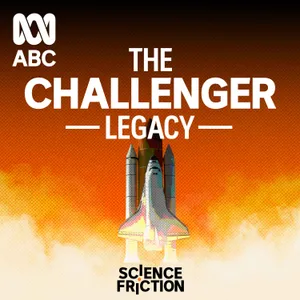
Quantum computers could be the next giant leap in technology — transforming how we heal people, how we grow food, how we get around our cities. So how close are we to the quantum future we've been promised? For Science Friction, Jacinta Bowler unpacks how the weird world of quantum physics could change everything. Hear about the surprising twists, the quantum cat-fights and the plucky heroes that have defined humanity's effort to build nature's most unpredictable machine. Dead and Alive is a four-part series from Science Friction. Episode 1 is out on Wednesday, July 8th. Artemis Explained (Season 6) In humanity's next giant leap, astronauts are heading back to the Moon for the first time in more than 50 years. We'll bring you daily Artemis II mission updates, from lift-off to splashdown, and answer your questions about life as an astronaut, the science of spaceflight, and plans to venture beyond the Moon. The Challenger Legacy (Season 5) In January 1986, the Challenger space shuttle disintegrated 73 seconds after lift-off. This is the story of how the tragedy unfolded, the engineers who tried to stop it — and the enduring consequences for humanity's exploration of space. Artificial Evolution (Season 4): Three decades ago, Dolly the Sheep became the first ever cloned mammal. Nearly 30 years later, genetic technology has reshaped the world around us. Environment reporter Peter de Kruijff explores what's changed, where we are headed, and whether we're okay with it. Brain Rot (Season 3): How does being chronically online affect our brains? Technology reporter Ange Lavoipierre explores the wildest ways people are using tech — from falling in love with AI companions to data-dumping a life into a language model — and the big questions about our own screen use. Cooked (Season 2): Why do some studies show ice cream is good for you? Why do some people say they feel good going carnivore, and do we really need as many electrolytes as the internet tells us? Food and nutrition scientist Dr Emma Beckett cuts through these confusing findings to explain how nutrition science works. AI Overlords (Season 1): AI didn't come from nowhere, and its development hasn't been a smooth, straight line — it's been rife with drama, conflict and disagreement. Technology reporter James Purtill looks at where AI came from, who controls it and where it's heading.
Latest Episodes
The most recent episodes — sign up to get AI-powered summaries of each one.
- Jul 28, 202625 min
04 | Dead and Alive: Hype train
When it comes to the often incomprehensible world of quantum, it can be hard to distinguish hype from reality. We might be on the verge of a breakthrough ... or tech start-ups might be trying to drum up momentum for the benefit of their stakeholders.Hype is important in science, but can it go too far? And has AI knocked the wind out of the sails of quantum computing?Got feedback? Email us sciencefriction@abc.net.auGuests:Dr Tara RobersonScience communicatorStela TodorovicMedia Director for PsiQuantum AustraliaGideon LichfieldJournalist, former editor-in-chief of WIRED and MIT Technology ReviewProfessor Warwick BowenDirector of the Centre of Excellence in Quantum Biotechnology and leader of the Quantum Optics Laboratory, University of QueenslandPresenter: Jacinta BowlerScript producers: Fiona Pepper, James BullenSenior Producer: Shelby TraynorExecutive Producer: Petria LadgroveSound Engineer: Tim JenkinsArchives Research: Lisa Chidlow, Michael Osmond
- Jul 21, 202625 min
03 | Dead and Alive: Plucky country
You might not know it, but Australia is an unexpected frontrunner in the race to build a quantum computer. Despite our isolation, leading quantum experts have called Australia home for decades, chipping away at this massive challenge. What have we learnt, from our first digital computer CSIRAC, to now? And will it all culminate in the world's first million-qubit computer?Got feedback? Email us sciencefriction@abc.net.auGuests:Dr Peter ThorneFormer weekend service operator for CSIRACProfessor Michelle SimmonsCEO of Silicon Quantum Computing and director of the Centre of Excellence for Quantum Computation and Communication Technology, UNSWProfessor Robert ClarkFounding director of the Centre of Excellence for Quantum Computer Technology, UNSWProfessor Geoff PrydeChief Technical Director, PsiQuantum AustraliaPresenter: Jacinta BowlerScript producers: Fiona Pepper, James BullenSenior Producer: Shelby TraynorExecutive Producer: Petria LadgroveSound Engineer: Tim JenkinsArchives Research: Lisa Chidlow, Michael Osmond
- Jul 14, 202625 min
02 | Dead and Alive: Quantum attack
It's 1994, and a mathematical algorithm puts a spotlight on quantum computing for the first time.Defence departments, spy agencies and cybersecurity experts are on edge over the explosive Shor's algorithm.They spend decades and billions of dollars searching for a solution before something called "Q-day" arrives.Got feedback? Email us sciencefriction@abc.net.auGuests:Dr Henry EverittSenior technologist for optical sciences, US ArmyEmeritus Professor Charles ClarkPhysicist, formerly National Institute of Standards and Technology (NIST)Dr Sushmita RujAssociate professor, University of New South Wales' Institute for CybersecurityPresenter: Jacinta BowlerProducer: Fiona PepperSenior Producer: Shelby TraynorExecutive Producer: Petria LadgroveSound Engineer: Tim JenkinsArchives Research: Lisa Chidlow, Michael OsmondAdditional audio courtesy of CSIRO Publishing
- Jul 7, 202625 min
01 | Dead and Alive: Battle for quantum supremacy
Google announces it has achieved something game changing — quantum supremacy. But not everybody agrees.The company claims its quantum computer called Sycamore has solved a problem that no classical computer could manage in hundreds of thousands of years. IBM wants this stricken from history.A war of words breaks out as two tech giants race to build a useful quantum computer that could change how the world works.Guests:Scott YoungCropping and livestock farmer in Ballan, VictoriaGideon LichfieldJournalist, former editor-in-chief of WIRED and MIT Technology ReviewProfessor John Martinis2025 Nobel laureate in PhysicsCredits:Presenter: Jacinta BowlerProducer: Fiona PepperSenior Producer: Shelby TraynorExecutive Producer: Petria LadgroveSound Engineer: Tim JenkinsArchives Research: Lisa Chidlow, Michael OsmondThis story was made on the lands of the Wurundjeri, Gadigal and Menang Noongar peoples.More informationQuantum supremacy using a programmable superconducting processorOn “quantum supremacy” - IBM
- Jun 30, 20265 min
INTRODUCING — Dead and Alive
Quantum computers could be the next giant leap in technology — transforming how we heal people, how we grow food, how we get around our cities.So how close are we to the quantum future we've been promised?For Science Friction on ABC Radio National, Jacinta Bowler unpacks how the weird world of quantum physics could change everything.Hear about the surprising twists, the quantum cat-fights and the plucky heroes that have defined humanity's effort to build nature's most unpredictable machine. Dead and Alive is a four-part series from Science Friction on ABC Radio National. Episode 1 is out Wednesday July 8th.
- Apr 15, 202617 min
12 | Artemis Explained: What a ride
The Integrity astronauts are back on Earth recovering from their journey, while NASA prepares for Artemis III. Belinda and Jacinta answer some of your questions in the wake of a successful moon orbit mission. To hear more podcast episodes from hosts Belinda Smith and Jacinta Bowler about the Artemis II mission to the moon, search ‘Science Friction: Artemis Explained podcast’ from Radio National (RN) on the ABC Listen App (Australia), or wherever you get your podcasts.Get in touch with us: sciencefriction@abc.net.au.Credits:Presenters: Belinda Smith and Jacinta BowlerSenior Producer: Shelby TraynorExecutive Producer: Petria LadgroveThis story was made on the lands of the Gadigal and Wurundjeri peoples.
- Apr 11, 202617 min
11 | Artemis Explained: Mission accomplished
There wasn't a dry eye in mission control as the Artemis II astronauts safely returned in what NASA called a "perfect" splashdown.Belinda and Jacinta relive the historic re-entry, and dig into the wild physics associated with blasting through Earth's atmosphere and plopping into the ocean.To hear more podcast episodes from hosts Belinda Smith and Jacinta Bowler about the Artemis II mission to the moon, search ‘Science Friction: Artemis Explained podcast’ from Radio National (RN) on the ABC Listen App (Australia), or wherever you get your podcasts.Get in touch with us: sciencefriction@abc.net.au.Credits:Presenters: Belinda Smith and Jacinta BowlerSenior Producer: Shelby TraynorExecutive Producer: Petria LadgroveThis story was made on the lands of the Gadigal and Wurundjeri peoples.
- Apr 10, 202617 min
10 | Artemis Explained: Countdown to splashdown
Nine days down … only one to go.The Artemis II mission is currently hurtling through space back to Earth, and is expected to land in the Pacific Ocean off the Californian coast tomorrow morning, Australia time.Belinda and Jacinta find out what the four astronauts on board have been doing as they make their approach, including being sent on an impromptu scavenger hunt, and what they can expect to feel as they re-enter Earth's atmosphere.To hear more podcast episodes from hosts Belinda Smith and Jacinta Bowler about the Artemis II mission to the moon, search ‘Science Friction: Artemis Explained podcast’ from Radio National (RN) on the ABC Listen App (Australia), or wherever you get your podcasts.Get in touch with us: sciencefriction@abc.net.au.Credits:Presenters: Belinda Smith and Jacinta BowlerSenior Producer: Shelby TraynorExecutive Producer: Petria LadgroveThis story was made on the lands of the Gadigal and Wurundjeri peoples.
Get Science Friction summaries in your inbox
Free AI-powered daily recaps. Key takeaways, quotes, and mentions — in a 5-minute read.
Get Free Summaries →Free forever for up to 3 podcasts. No credit card required.
You Might Also Like
Listeners also like.
BBC Inside Science
Explores the latest scientific discoveries and debates shaping our understanding of the world.
Inquiring Minds
Explores the intersection of science and society through critical thinking and in-depth analysis.
The World, the Universe and Us
Explores big scientific questions about life, consciousness, climate, and the cosmos with expert scientists and New Scientist journalists.
Science In Action
The BBC covers the latest weekly developments and news in science.
The Life Scientific
A scientist discusses their research, inspirations, and career with physicist Jim Al-Khalili.
13 Minutes Presents: Artemis II
A deep dive into NASA’s Artemis II mission, following four astronauts on their historic journey around the Moon.

Science Friday
Explores diverse science and technology topics, from space to microscopic life, with engaging educational stories.
Science Quickly
A bite-sized science podcast exploring discoveries with journalists and experts.
The Pulse
Explores surprising stories in health and science, from operating rooms and labs to breakthrough innovations.
Unexpected Elements
Explores hidden scientific connections behind global news and everyday phenomena.
Curious Cases
Hannah Fry and Dara Ó Briain use science to solve listeners' questions and mysteries.
Brave New Planet
Explores the societal and ethical impacts of emerging technologies like AI and genetic engineering through expert conversations.
About Science Friction
Quantum computers could be the next giant leap in technology — transforming how we heal people, how we grow food, how we get around our cities. So how close are we to the quantum future we've been promised? For Science Friction, Jacinta Bowler unpacks how the weird world of quantum physics could change everything. Hear about the surprising twists, the quantum cat-fights and the plucky heroes that have defined humanity's effort to build nature's most unpredictable machine. Dead and Alive is a four-part series from Science Friction. Episode 1 is out on Wednesday, July 8th. Artemis Explained (Season 6) In humanity's next giant leap, astronauts are heading back to the Moon for the first time in more than 50 years. We'll bring you daily Artemis II mission updates, from lift-off to splashdown, and answer your questions about life as an astronaut, the science of spaceflight, and plans to venture beyond the Moon. The Challenger Legacy (Season 5) In January 1986, the Challenger space shuttle disintegrated 73 seconds after lift-off. This is the story of how the tragedy unfolded, the engineers who tried to stop it — and the enduring consequences for humanity's exploration of space. Artificial Evolution (Season 4): Three decades ago, Dolly the Sheep became the first ever cloned mammal. Nearly 30 years later, genetic technology has reshaped the world around us. Environment reporter Peter de Kruijff explores what's changed, where we are headed, and whether we're okay with it. Brain Rot (Season 3): How does being chronically online affect our brains? Technology reporter Ange Lavoipierre explores the wildest ways people are using tech — from falling in love with AI companions to data-dumping a life into a language model — and the big questions about our own screen use. Cooked (Season 2): Why do some studies show ice cream is good for you? Why do some people say they feel good going carnivore, and do we really need as many electrolytes as the internet tells us? Food and nutrition scientist Dr Emma Beckett cuts through these confusing findings to explain how nutrition science works. AI Overlords (Season 1): AI didn't come from nowhere, and its development hasn't been a smooth, straight line — it's been rife with drama, conflict and disagreement. Technology reporter James Purtill looks at where AI came from, who controls it and where it's heading.
Customized Recaps
AI-powered recaps with compact key takeaways, quotes, and insights.
Straight to Your Inbox
Get key takeaways from Science Friction in a 5-minute read.
Save Hours Every Week
Stay current on your favorite podcasts without falling behind.
Frequently Asked Questions
What is Podzilla's Science Friction daily summary?
It's a free AI-powered email that summarizes new episodes of Science Friction as soon as they're published. You get the key takeaways, notable quotes, and links & mentions — all in a quick read.
How does the Science Friction podcast summary work?
When a new episode drops, our AI transcribes and analyzes it, then generates a personalized summary tailored to your interests and profession. It's delivered to your inbox every morning.
Is this an official Science Friction product?
No. Podzilla is an independent service that summarizes publicly available podcast content. We're not affiliated with or endorsed by ABC.
Can I get summaries of other podcasts too?
Absolutely! The free plan covers up to 3 podcasts. Upgrade to Pro for 15, or Premium for 50. Browse our full catalog at /podcasts.
How often does Science Friction release new episodes?
Science Friction publishes daily. Our AI generates a summary within hours of each new episode.
What topics does Science Friction cover?
Science Friction covers topics including Science, Culture, Society & Culture. Our AI identifies the specific themes in each episode and highlights what matters most to you.
Start getting Science Friction summaries tomorrow morning.
Free forever for up to 3 podcasts. No credit card required.
Free forever for up to 3 podcasts. No credit card required.