Free Daily Podcast Summary
Pekingology: Daily Summaries Delivered
by Center for Strategic and International Studies
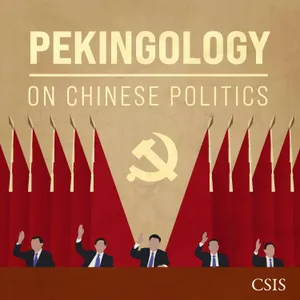
China is one of the 21st century’s most consequential nations, and it has never been more important to understand how the country is governed. Pekingology is the podcast that unpacks Chinese politics, the inner workings of the Communist Party, and how China's domestic and foreign policy will impact the world. Pekingology is hosted by Henrietta Levin, Senior Fellow with the Freeman Chair in China Studies at CSIS. It is produced by Gina Kim.
Latest Episodes
The most recent episodes — sign up to get AI-powered summaries of each one.
- 3 days ago55 min
Ambassador Dan Kritenbrink on US-China Summits and Strategy
In this episode of Pekingology, Senior Fellow Henrietta Levin is joined by Ambassador Daniel Kritenbrink, former Assistant Secretary of State for East Asian and Pacific Affairs, U.S. Ambassador to Vietnam, and Senior Director for Asian Affairs at the National Security Council, to discuss U.S.-China diplomacy and the upcoming meeting between President Donald Trump and Chinese President Xi Jinping. Drawing on decades of experience engaging with senior Chinese officials, including Xi Jinping, Kritenbrink reflects on Xi’s leadership style and China’s increasingly confident approach to the United States and the international system. He discusses the role of leader-level diplomacy in managing U.S.-China competition, lessons he learned from preparing for Xi’s 2015 state visit to Washington, and what effective communication between Washington and Beijing looks like behind closed doors. They also examine what to expect from the Trump-Xi summit, the prospects for maintaining what Kritenbrink describes as a “fragile truce” between the two countries, and the economic, technological, and security issues that will continue to test U.S.-China relations.
- 2 weeks ago45 min
Kurt Campbell on China Strategy and Diplomacy
In this episode of Pekingology, Henrietta Levin, Senior Fellow with the CSIS Freeman Chair in China Studies, is joined by Kurt Campbell, former Deputy Secretary of State and President Biden’s “Asia Czar.” He is currently Chairman of The Asia Group and Distinguished Fellow in Diplomacy with the Georgetown University School of Foreign Service. Henrietta and Kurt discuss how Beijing views American power, the development of U.S. strategy towards China, U.S.-China diplomacy and the characters that sat on the Chinese side of the table, and more. To learn more about Kurt Campbell’s perspectives on China, you can read his April 2025 Foreign Affairs article, co-authored with Rush Doshi, Underestimating China: Why America Needs a New Strategy of Allied Scale to Offset Beijing’s Enduring Advantages, and his 2016 book, The Pivot: The Future of American Statecraft in Asia.
- Aug 20, 202648 min
China’s Struggle for Influence in Central Asia
Founded in 2001 by China, Russia, and key Central Asian states, the Shanghai Cooperation Organization (SCO) marks its 25th anniversary this year. With Chinese President Xi Jinping expected to attend the SCO Leaders' Summit in Kyrgyzstan later this month, the organization has become an increasingly important platform for advancing Beijing's vision of a multipolar international order as China's economic, political, and security influence across Central Asia continues to grow. In this episode of Pekingology, CSIS Senior Fellow Henrietta Levin is joined by Bradley Jardine, co-author of the new book, Backlash: China’s Struggle for Influence in Central Asia. Henrietta and Bradley unpack China's goals for the upcoming SCO summit, as well as China's long history in Central Asia. They discuss Beijing's use of Silk Road narratives to frame its contemporary engagement with Central Asia, Chinese leaders' top priorities in the region - from border security, to energy resilience, to construction of an increasingly Sinocentric regional architecture - how Central Asian governments quietly manage tensions over repression in Xinjiang, and whether the "debt diplomacy" narrative holds up. They also explore the collision of Chinese and Russian interests in Central Asia, and how the SCO became a leading component of the new international order China is working to build.
- Aug 6, 202641 min
Inside China's Dual Economy
China is generating groundbreaking advances in electric vehicles, battery technology, applied artificial intelligence, and industrial robotics. Yet Chinese households are facing stagnant wages, consumption is weak, and public confidence in the economy appears to be declining. In this episode of Pekingology, CSIS Senior Fellow Henrietta Levin is joined by Alicia García-Herrero, a leading expert on Chinese economics, to unpack China's "dual economy." They discuss why President Xi has prioritized global technological leadership over economic opportunity at home, why many of China's most successful companies struggle to turn a profit, and whether rapid AI adoption will boost growth or imperil social stability. To learn more, read Alicia García-Herrero's recent article in China Leadership Monitor, "China's Dual Economy: When Strategic Ambition Hollows Out the Foundation."
- Jul 23, 202634 min
Embodied AI and the Transformation of China’s Robotics Industry
China is rapidly emerging as a global leader in robotics and embodied artificial intelligence, leveraging its manufacturing scale and deep supply chains to shape the future of automation. In this episode of Pekingology, CSIS Senior Fellow Henrietta Levin is joined by Wendy Chang, Senior Analyst at MERICS, to unpack the significant advances – and limitations – of China’s robotics sector and its embodied AI ecosystem. They discuss the politics that have driven huge amounts of capital towards innovative Chinese robotics companies, why China’s humanoid robots may not be quite as impressive as they initially appear, and the global implications of China's robotics ambitions. To learn more about China's embodied AI strategy, you can read the new MERICS report from Wendy Chang, Rebecca Arcesati, and Altynay Junusova: Embodied AI: China's Ambitious Path to Transform Its Robotics Industry.
- Jul 9, 202649 min
Avoiding War in the South China Sea
Ten years after an international tribunal found the vast majority of China’s claims in the South China Sea to be unlawful, the risk of conflict in this vital global throughway remains stubbornly high. This week on Pekingology, CSIS Senior Fellow Henrietta Levin is joined by Greg Poling, Director and Senior Fellow of the CSIS Asia Maritime Transparency Initiative and Southeast Asia Program, for a wide-ranging discussion on China’s strategy, successes, and failures in the South China Sea. They examine the evolving nature of China’s maritime claims, why Beijing cares so much about small rocks in the middle of the ocean, and why the South China Sea has become a major flashpoint in U.S.-China relations. To learn more about the South China Sea, you can read Greg’s book On Dangerous Ground: America’s Century in the South China Sea. https://global.oup.com/academic/product/on-dangerous-ground-9780197633984
- Jun 25, 202643 min
China Was Ready for the Age of Anarchy
As a global power, China faces a growing tension between its ambitions to reshape the international order and its disinterest in bearing the costs of upholding that new system. In this episode of Pekingology, CSIS Senior Fellow Henrietta Levin is joined by Sam Chetwin George, Senior Fellow at the Asia Society’s Center on U.S.–China Relations and Research Fellow at China Heritage, to explore Beijing’s evolving perspectives on the post-World War II order and what comes next. They discuss China’s vision for global governance, the ideological foundations of its international strategy, how its domestic economic challenges may shape its international priorities, and how it approaches the conflicts in Ukraine, Iran, and Myanmar. To learn more about Sam’s perspectives on Chinese foreign policy, you can read his new Foreign Affairs article, China Was Ready for the Age of Anarchy: Why Turbulence Will Make Beijing More Assertive. https://www.foreignaffairs.com/china/china-was-ready-age-anarchy
- Jun 11, 202642 min
Inside the China-Russia Partnership
China and Russia have transformed a historically fraught relationship into one of the most consequential strategic partnerships in the world. This week on Pekingology, CSIS Senior Fellow Henrietta Levin is joined by Alexander Gabuev, a leading expert on China-Russia ties and director of the Carnegie Russia Eurasia Center. They examine how Xi Jinping and Vladimir Putin have deepened their bilateral and personal ties, what China gains from supporting Russia's war in Ukraine, and where the limits of their “no-limits” partnership may lie. The conversation explores energy, sanctions, leverage, people-to-people ties, and the role of the Xi-Putin relationship in shaping the future of international order.
Get Pekingology summaries in your inbox
Free AI-powered daily recaps. Key takeaways, quotes, and mentions — in a 5-minute read.
Get Free Summaries →Free forever for up to 3 podcasts. No credit card required.
You Might Also Like
Listeners also like.

School of War
Discussions with military leaders, policymakers, and historians on the strategy, history, and consequences of war.
Not Another Politics Podcast
Political scientists analyze major political issues using data, theory, and research to explain the forces shaping American politics.

Squawk Pod
A daily digest of key moments, interviews, and debates from CNBC’s “Squawk Box,” with added context from a senior producer.
Global Security Briefing
Experts analyze global security challenges and international defense policies, with a focus on the UK, Indo-Pacific, and Gulf regions.
The Truth of the Matter
Breaks down complex global policy issues through informed, balanced discussions without spin or sensationalism.

The Context
A deep dive into the historical and cultural forces shaping contemporary China and its people.

The Rest Is Politics: US
Insightful analysis of U.S. politics and policy from a former White House official and a veteran BBC correspondent.

The Team House
Deep-dive conversations on national security with special operations veterans, intelligence professionals, and frontline reporters.

The Ezra Klein Show
Conversations on pressing political, social, and cultural issues with experts and thinkers.
CSPI Podcast
Conversations with CSPI scholars and experts on topics in science, technology, and politics.

In the Room with Peter Bergen
Peter Bergen examines global news stories through interviews with experts and firsthand reporting on national security, technology, and conflict.
Stanford Psychology Podcast
Students interview psychologists about recent research and its real-world applications in mental health, behavior, and cognition.
About Pekingology
China is one of the 21st century’s most consequential nations, and it has never been more important to understand how the country is governed. Pekingology is the podcast that unpacks Chinese politics, the inner workings of the Communist Party, and how China's domestic and foreign policy will impact the world. Pekingology is hosted by Henrietta Levin, Senior Fellow with the Freeman Chair in China Studies at CSIS. It is produced by Gina Kim.
Customized Recaps
AI-powered recaps with compact key takeaways, quotes, and insights.
Straight to Your Inbox
Get key takeaways from Pekingology in a 5-minute read.
Save Hours Every Week
Stay current on your favorite podcasts without falling behind.
Frequently Asked Questions
What is Podzilla's Pekingology daily summary?
It's a free AI-powered email that summarizes new episodes of Pekingology as soon as they're published. You get the key takeaways, notable quotes, and links & mentions — all in a quick read.
How does the Pekingology podcast summary work?
When a new episode drops, our AI transcribes and analyzes it, then generates a personalized summary tailored to your interests and profession. It's delivered to your inbox every morning.
Is this an official Pekingology product?
No. Podzilla is an independent service that summarizes publicly available podcast content. We're not affiliated with or endorsed by Center for Strategic and International Studies.
Can I get summaries of other podcasts too?
Absolutely! The free plan covers up to 3 podcasts. Upgrade to Pro for 15, or Premium for 50. Browse our full catalog at /podcasts.
How often does Pekingology release new episodes?
Pekingology publishes biweekly. Our AI generates a summary within hours of each new episode.
What topics does Pekingology cover?
Pekingology covers topics including Government. Our AI identifies the specific themes in each episode and highlights what matters most to you.
Start getting Pekingology summaries tomorrow morning.
Free forever for up to 3 podcasts. No credit card required.
Free forever for up to 3 podcasts. No credit card required.