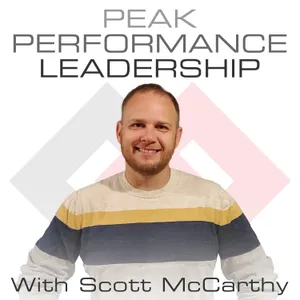
Free Daily Podcast Summary
Peak Performance Leadership: Daily Summaries Delivered
by Scott McCarthy, 20 year serving Military Commander
Get key takeaways, quotes, and insights from Peak Performance Leadership in a 5-minute read. Delivered straight to your inbox.
Latest Episodes
The most recent episodes — sign up to get AI-powered summaries of each one.
- 5 days ago31 min
When Leaders Get Sick: How to Build Teams That Thrive Without You | Episode 367
In today's relentless work environment, leaders are pressured to continuously perform, make rapid decisions, and drive organizational success. But sooner or later, life intervenes—illness, vacation, or unexpected absences disrupt routines and challenge leadership norms. The real test arises not from how leaders perform when present, but from how their teams and organizations operate in their absence. This episode dives into the uncomfortable reality of becoming a bottleneck: the hidden dangers when a team’s momentum, decisions, and outcomes hinge on constant leadership involvement. By exploring why dependency often masquerades as trust and how high-performing leaders unintentionally stunt team growth, this conversation sheds light on practical ways leaders can empower teams, build resilience, and sustain productivity regardless of their physical presence. Architecting a team that thrives, learns, and executes without the leader at the center isn’t just operationally wise—it’s a hallmark of great leadership. This episode delivers actionable strategies to reframe absence as opportunity, foster true autonomy, and move from being indispensable to being impactful. Timestamped Overview 00:19: Why sickness and absence challenge leadership—and why the response matters03:42: The myth of being indispensable: Why dependency is not trust04:49: Recognizing when your organization runs (or stalls) without you07:03: Self-reflection: What actually happens when you’re not there?07:46: Dependency vs. trust: The core distinction every leader must understand09:16: How high performers unintentionally become bottlenecks10:49: The hidden costs: Initiative crushed by permission-seeking12:05: Reflection on when you’ve become the bottleneck in decision-making15:23: Strategies for leaders to unplug and truly delegate16:52: Four warning signs your team is dependent—not empowered19:15: Are you really creating psychological safety for challenge and pushback?20:26: Operationalizing trust: How to set clear intent, thresholds, and boundaries23:02: Defining what your team "owns" and when escalation is needed24:15: After Action Reviews: Learning from mistakes instead of defaulting to the leader25:50: Trust first—moving beyond the “prove yourself” mentality26:38: Building capability: Why leadership in senior roles means letting go27:41: The growth that comes from team struggle and doing things differently28:24: Measuring leadership by what works when you’re gone For the complete show notes be sure to check out our website: https://leaddontboss.com/367
- Apr 9, 202621 min
Unlock Your Leadership Operating System: Daily Habits for Enduring Resilience | Scott McCarthy | Episode 366
Resilience is often championed in leadership circles as something demonstrated in times of crisis. However, leaders who thrive at peak performance understand that true resilience isn’t conjured up under pressure—it’s cultivated daily through disciplined systems and habits. This episode explores how leaders can safeguard their energy and capacity for decision making by protecting four key aspects: clarity, thinking time, physical state, and recovery. When leaders neglect these, fatigue masquerades as productivity, judgment erodes, poor decisions become culture problems, and teams drift away. Building resilient leadership is about creating boring, repeatable habits that empower endurance, consistency, and clarity, not merely relying on raw willpower or grinding through exhaustion. Today’s discussion offers practical insights and actionable strategies for leaders who want to sustain their performance and maintain the psychological safety and cohesion of their teams. Timestamped Overview 00:01 Questioning common leadership myths: why resilience isn’t proven in crisis, but is exposed by it.01:42 The significance of energy systems as the foundation of effective leadership.02:29 Personal story: realizing the impact of energy leaks on team morale and cohesion.03:08 The dangers of glorifying exhaustion and mistaking depletion for commitment.04:01 How fatigue wears a “productivity costume” and why judgment erodes under burnout.04:23 Connection between values drift, psychological safety, and team turnover.05:08 The four daily systems leaders must protect: clarity, thinking time, physical state, and recovery.05:40 Clarity: focusing on core problems and objectives amid ambiguity and bias.07:11 Importance of regular thinking time—how it fosters proactive leadership.08:45 Practical advice for scheduling and protecting thinking time.10:18 Physical state: sleep, exercise, and nutrition as foundations for mental resilience.12:01 Personal routines for adapting training and sleep to changing schedules.13:07 Using gym time for clarity and problem solving—"double stack" strategies.13:47 Recovery: why leaders must protect downtime, delegate, and recharge.15:12 The link between recovery and decision-making capacity.15:51 Additional tips—setting non-negotiable daily outcomes and protecting best mental hours.16:49 The role of boring, repeatable habits in building resilience and endurance.18:13 Why discipline, not willpower, is the scalable system for peak performance. For the complete show notes be sure to check our website: https://leaddontboss.com/366
- Apr 2, 202622 min
From Toxic to Thriving: The Leader’s Guide to Healthy Organizations | Scott McCarthy | Episode 365
Every leader dreads the silent emergence of toxicity within their organization. Toxic environments erode trust, breed burnout, and drain both morale and top talent. Yet, the line between occasional dysfunction and systemic toxicity isn't always clear. Recognizing when negative patterns become entrenched is critical for leaders determined to foster healthy, resilient workplaces. This episode breaks down the five key warning signs of a toxic organization, along with their "anti-signs"—the healthy behaviors and conditions leaders should nurture. With practical strategies for addressing common pitfalls like gossip, unchecked burnout, favoritism, and the silencing of new ideas, this episode empowers leaders to diagnose organizational health and take decisive, values-based action. Timestamped Overview 00:01 Defining toxic organizations and why the topic matters right now03:58 The purpose of identifying toxicity: signs vs. anti-signs04:48 Sign #1: People Are Leaving Quietly – and the anti-sign of advocacy & internal referrals06:36 Sign #2: Gossip Fills the Gaps – and the anti-sign of psychological safety and direct dialogue08:26 Sign #3: Burnout Is the Norm – and the anti-sign of a sustainable pace and visible recovery10:30 Sign #4: Ideas Get Shut Down – and the anti-sign of empowerment and experimentation12:33 Sign #5: Favorites Win, Values Lose – and the anti-sign of values-based accountability14:20 Why toxic signs aren't always binary and how to diagnose the bigger picture15:22 Navigating false positives: when turnover, gossip, or favoritism might be misunderstood19:18 How to fix toxicity: setting standards, modeling healthy behaviors, and taking action20:33 Recap of the five signs and anti-signs for organizational health For the complete show notes be sure to check out our website: https://leaddontboss.com/365
- Mar 26, 202627 min
5 Communication Errors That Kill Performance—and How to Fix Them | Episode 364 | Scott McCarthy
In every workplace, communication is the cornerstone of effective leadership—and it’s consistently cited as the number one challenge faced by teams and organizations. Communication breakdowns can derail progress, create misalignment, and leave employees feeling unheard, ultimately slowing down decision-making and lowering morale. This episode explores the five most common communication errors plaguing leaders today, along with practical strategies for resolving each one. Understanding and addressing these errors empowers leaders to foster stronger feedback loops, enhance clarity, align their teams, and cascade messaging efficiently throughout their organizations. For leaders seeking to unlock peak performance, mastering communication is not just a skill—it's a fundamental responsibility. Timestamped Overview 00:01 - Communication as a Fundamental Leadership Issue: Why teams and organizations struggle with communication, and a preview of the five major errors.04:27 - Error #1 – One-Way Communication and No Feedback Loops: The dangers of pushing information downward without mechanisms for upward feedback; impacts on morale and solutions like bidirectional loops and weekly pulse checks.08:44 - Error #2 – Encoding vs. Decoding: How leaders struggle to be understood; strategies for intent-message-reception and verifying real understanding using mirroring techniques.13:46 - Error #3 – Activity Over Clarity: The pitfalls of over-prioritizing and vague direction; introducing the 3x3 brief model (purpose, priorities, parameters) and delegation for clarity.18:23 - Error #4 – Replacing Meetings for Leadership: How unfocused meetings waste time and energy; adopting deep listening, vulnerability, and increasing focus to achieve decisions and direction.22:15 - Error #5 – Cascade Failure: Misalignment at the top, resulting in mixed messaging; establishing narrative alignment, cascade kits, FAQs, and visual priorities to ensure consistent communication.24:36 - Recap of the Top Five Errors: Quick overview and final thoughts on tackling common communication pitfalls in leadership.25:40 - Resources for Further Learning: Information about the leadership book, additional platforms, and where to find more content.26:57 - How to Support and Subscribe: Ways to continue learning and helping others elevate their leadership performance. Resources Mentioned Lead Don’t Boss Book websitePeak Performance Leadership Podcast website For the complete resources be sure to check out our website: https://leaddontboss.com/364
- Mar 12, 202623 min
The Stories Behind You Don’t Know Sh*t About Leadership | Episode 363
Leadership is often painted as a discipline with clear-cut answers and definitive frameworks. Books and coaches may promise step-by-step programs that lead to guaranteed success. However, true leadership is far more complex and nuanced—it is an ever-evolving journey that demands humility, self-awareness, and a willingness to continually learn. This episode dives deep into the misconception that anyone has it all figured out when it comes to leadership. Instead of promoting one-size-fits-all solutions, this discussion challenges leaders to embrace the messiness of leading people and organizations. By acknowledging that no leader ever truly "knows it all," individuals are empowered to adapt, experiment, and refine their approach. Listeners will be inspired to seek out learning opportunities in every experience, develop those around them, and become comfortable with the unknowns that naturally come with leadership. This honest perspective is crucial for leaders intent on building trust, resilience, and genuine growth—both for themselves and the teams and organizations they serve. Timestamped Overview 00:01 - Explicit Content Warning & Episode Theme: A heads-up on language and introduction to the episode’s provocative title and theme.00:53 - Podcast Purpose & Book Launch Announcement: Explaining the three domains of leadership and the motivation behind launching his first book.03:00 - Why This Book Was Written: Challenging the flood of leadership formulas and highlighting the necessity for humility and adaptability.04:15 - The Messiness of Leading: Discussing why simple step-by-step leadership models often fail in real life and the need to stay flexible.05:38 - Book Structure Overview: An outline of the five-part structure of the book, including the domains of leading yourself, your team, and your organization.07:52 - Story 1—You Don’t Know Shit: A personal story about the critical lesson of humility learned at the Royal Military College of Canada.12:17 - Story 2—Building Leaders: An account of fostering confidence and capability in a team member, and the transformational impact of true delegation.16:36 - Story 3—Self-Awareness Under Pressure: A relayed story about recognizing personal limits and stepping aside for the good of the team during a crisis scenario.20:02 - Key Book Themes: Reflections on humility, learning, developing others, and when to step back as a leader.21:16 - How to Get the Book & Final Takeaways: Where to buy the book, Scott McCarthy’s autograph offer, and closing thoughts on why no one ever truly knows all there is about leadership.22:03 - How to Support the Podcast: Encouragement to share the episode and subscribe for ongoing leadership development. For the complete show notes be sure to check out our website: https://leaddontboss.com/363
- Jan 29, 202624 min
The Leadership Muscle That Atrophies First Under Stress | Episode 361
In today’s complex and high-speed environment, leaders are navigating an unprecedented flood of demands, decisions, and disruptions. The constant barrage of emails, meetings, and shifting priorities often leads leaders into a state where urgency outweighs importance and action is mistaken for progress. Amid these pressures, a critical—yet often overlooked—leadership muscle begins to weaken: judgment. This episode dives deep into how sustained stress affects decision-making and perspective. Recognizing the signs of judgment fatigue and understanding its impact on teams and organizations is essential for anyone in a leadership position. Listeners will uncover strategies to protect, recover, and strengthen their decision-making capabilities, ensuring that both immediate needs and long-term goals are effectively balanced. The insights shared are vital for leaders intent on maintaining clarity, minimizing burnout, and fostering high performance, even during relentless pressure. Timestamped Overview 00:00:00] Leadership Under Pressure: The question of protecting and sharpening judgment under stress[00:01:29] The Reality of Modern Leadership: Fast pace, constant demands, and the AI revolution[00:02:14] Announcing the Book: “You Don’t Know Sh About Leadership and Neither Do I”[00:04:33] The Leadership Muscle That Atrophies First: How sustained pressure impacts leaders[00:05:14] Activity vs. Effectiveness: Avoiding the trap of urgency over importance[00:06:34] Tunnel Vision and Shrinking Perspective: Recognizing the signs of judgment fatigue[00:07:57] Stress and Cognition: How stress narrows thinking and filters out critical data[00:08:38] The Short-Term Thinking Trap: How strategy loses to activity during stress[00:09:45] Confusing Speed with Quality: The cost of false urgency[00:10:24] What Is Judgment?: The skill of weighing trade-offs and anticipating consequences[00:10:58] Identity, Cognitive Load & Decision Quality: How always-deliver pressures undermine good judgment[00:12:13] Day-to-Day Warning Signs: Rapid decisions, increased rework, and loss of strategic focus[00:13:36] Why Experienced Leaders Are at Greater Risk: Endurance vs. reflection and sustainability[00:15:25] Team Impact: The cascade effects of poor judgment on clarity, trust, and execution[00:17:13] Rebuilding Judgment: How to create space for reflection and protect quality decision-making[00:18:24] The Eisenhower Matrix: Separating urgency from importance[00:19:09] Truth-Telling Circles: Why leaders need trusted advisors who challenge their thinking[00:19:42] Aligning Decisions with Peak Performance: Scheduling critical decisions for optimal cognitive windows[00:20:07] Quick Self-Check: Questions for leaders to assess their current decision-making approach[00:21:41] Leadership Challenges and Opportunities: Ending with reflection, not reaction Pre-order / Buy my book! - https://leaddontboss.com/buy Check out our complete show notes: https://leaddontboss.com/361
- Jan 22, 202638 min
Mastering Influence: Building Strategic Relationships for Leadership Success | Brad Englert | Episode 360
In the world of modern leadership, influence is an essential skill—often making the difference between teams that thrive and those that merely survive. Yet, many leaders misunderstand what it truly means to influence others. Rather than relying on authority or formal power, effective influence is grounded in building meaningful relationships, understanding others' goals, and fostering an environment of collaboration and trust. This episode explores how intentional relationship-building can create lasting value and resilience within organizations. Listeners will discover the missteps leaders often make, strategies to build credibility before a crisis arises, and how core values such as empathy, transparency, and accountability can transform a team’s culture and performance. Whether facing disengaged teams, skeptical stakeholders, or the need for strategic change, mastering authentic influence is a leadership necessity for sustained success. Timestamped Overview [00:04:51] The True Nature of Influence: Why leaders often get it wrong out of the gate and the importance of building relationships proactively. [00:06:15] Building Emotional Bank Accounts: Why it’s crucial to establish genuine connections before problems emerge. [00:07:55] Facing Fear and Setting Expectations: The psychological barriers that keep leaders behind their desks and how to encourage team outreach. [00:09:51] Shifting Culture: Moving from a reactive, “fire drill” mentality to a customer-oriented, proactive organization. [00:10:52] Family-First Culture and Retention: How focusing on values like work-life balance can outperform higher salaries in employee retention. [00:12:50] Modeling Healthy Work Habits: Practices like delayed email responses and empowering team members during leadership absences. [00:14:58] The Power of Trust: How trust frees teams to innovate, take accountability, and focus on organizational priorities. [00:16:52] Vendor and Partner Relationships: Turning unhappy users into advocates and transforming vendor partnerships for campus-wide success. [00:19:20] Strategic Vendor Management: Proactive, ongoing communication and how relationships drive better deals and outcomes. [00:21:28] The Three Principles of Influence: Understanding goals, managing expectations, and genuinely caring about others’ success. [00:24:08] The Courage to Say “Whoa!”: How to slow down, clarify expectations, and ensure quality under pressure. [00:28:09] Influencing Teams: Aligning strategy, setting clear goals, and sharing accountability. [00:31:15] Transparent Communication: Weekly blogs, consistent messaging, and the role of humility in admitting mistakes. [00:33:25] Crisis Preparedness: Tabletop exercises, emergency planning, and learning from military-inspired response strategies. [00:35:41] Relationship Mapping: Strategically identifying who to build relationships with and making it a regular practice. For the complete show notes be sure to check out our website: https://leaddontboss.com/360
- Jan 8, 202612 min
5 Emerging Leadership Trends in 2026 (That No One's Talking About) | Episode 359
In an era of constant change, adaptability is more crucial than ever for leaders determined to thrive. The leadership landscape of 2026 is shifting in ways that extend far beyond AI and machine learning. This episode uncovers five key leadership trends that are quietly reshaping how teams operate, grow, and endure. From micro movements that accelerate culture change to boundary leadership replacing burnout, today’s most successful leaders will need to master new skills and mindsets. Understanding these trends isn’t optional—the future of leadership will be determined by those who are willing to bold adapt and lead intentionally in the face of emerging challenges. Timestamped Overview [00:01:05] Upcoming Book Announcement: "You don't know shit about leadership and neither do I" – scheduled for release February 2026.[00:02:06] Five Emerging Leadership Trends of 2026: Why leaders must look beyond AI and focus on real issues. [00:02:32] Micro Movements Over Grand Strategies: The importance of visible, weekly wins and short-term momentum to accelerate culture change.[00:04:04] Breaking Down Big Goals: How leaders can keep teams engaged with small, continuous victories.[00:04:25] Conflict Fluency: Moving past avoidance to handle tension with clarity, emotion decoding, and curiosity.[00:05:52] High Trust Teams Need High Conflict Resolution: Setting new standards for courageous conversations.[00:06:12] Silent Sabotage—The New Disengagement: Recognizing emotional withdrawal and passive resistance as warning signs.[00:07:52] AI Will Expose Poor Leadership: Why automation will highlight broken systems and unclear goals, rather than replace leaders.[00:09:10] Boundary Leadership Outperforms Burnout Culture: The value of intentionality, modeling resilience, and prioritizing downtime to sustain performance.[00:10:15] Pacing for Long-Term Success: Leaders must pace their teams for sustained energy throughout the year, avoiding burnout. For the complete show notes be sure to check out our website: https://leaddontboss.com/359
Get Peak Performance Leadership summaries in your inbox
Free AI-powered daily recaps. Key takeaways, quotes, and mentions — in a 5-minute read.
Get Free Summaries →Free forever for up to 3 podcasts. No credit card required.
You Might Also Like
Listeners also like.

Super Powered: Leadership, Strategy, Decision Making & Peak Performance - Stories & Strategies from World-Class Performers for Executive Success
Rob D. Willis
S.M.A.R.T. Performance "A Leaders Blueprint to Sustainable Success!"
Walter Dusseldorp, FACHE, MBA, LSSBB
Benchmarked
Messier Larocque Performance Group

Elevate Your Leadership
Robert Pizzini

Leading Human
Chad Prevost
Spartan Leadership with Josh Kosnick
Josh Kosnick

The Scott Mann Podcast
Scott Mann
40% Better - Engineering Leadership
Bill
Timeless Leadership
Scott Monty
The Science of Leadership
Tom Collins

Performance Intelligence
Andrew May
Teach Me to Fish "Helping Leaders better understand what drives People"
Matt Leclair
About Peak Performance Leadership
As the world continues to accelerate in complexity and ambiguity, leaders cannot afford to settle for mediocrity. You need to be at your best, your team does, as well as your organization. Thus, you need to be peak performers. The Peak Performance Leadership Podcast is here for you to achieve just that.This weekly podcast will help you find new ways to become the best leader than you can be. I take the lessons learned from my 20+ years of leadership experience coupled with the world's best guests in all areas of leadership to give you a leading edge.This show focuses on the three domains of leadership:Leading Yourself - learn how to perform at your peak, to ensure that you have the mindset of a leader, set and crush your goals.Leading Your Team - learn how to inspire and motivate your team. Build a cohesive team through trust and mutual goals.Leading Your organization - efficiency and effectiveness are what drives bottom line. You as th
Customized Recaps
AI-powered recaps with compact key takeaways, quotes, and insights.
Straight to Your Inbox
Get key takeaways from Peak Performance Leadership in a 5-minute read.
Save Hours Every Week
Stay current on your favorite podcasts without falling behind.
Frequently Asked Questions
What is Podzilla's Peak Performance Leadership daily summary?
It's a free AI-powered email that summarizes new episodes of Peak Performance Leadership as soon as they're published. You get the key takeaways, notable quotes, and links & mentions — all in a quick read.
How does the Peak Performance Leadership podcast summary work?
When a new episode drops, our AI transcribes and analyzes it, then generates a personalized summary tailored to your interests and profession. It's delivered to your inbox every morning.
Is this an official Peak Performance Leadership product?
No. Podzilla is an independent service that summarizes publicly available podcast content. We're not affiliated with or endorsed by Scott McCarthy, 20 year serving Military Commander.
Can I get summaries of other podcasts too?
Absolutely! The free plan covers up to 3 podcasts. Upgrade to Pro for 15, or Premium for 50. Browse our full catalog at /podcasts.
What topics does Peak Performance Leadership cover?
Peak Performance Leadership covers topics including Education, Business, Government, Management, Entrepreneurship, Self-Improvement, Non-Profit. Our AI identifies the specific themes in each episode and highlights what matters most to you.
Start getting Peak Performance Leadership summaries tomorrow morning.
Free forever for up to 3 podcasts. No credit card required.
Free forever for up to 3 podcasts. No credit card required.