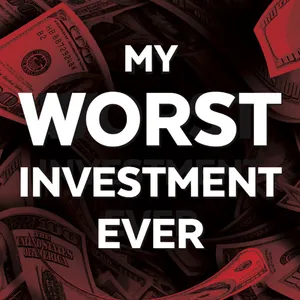
Free Daily Podcast Summary
My Worst Investment Ever Podcast: Daily Summaries Delivered
by Andrew Stotz
Welcome to My Worst Investment Ever podcast hosted by Your Worst Podcast Host, Andrew Stotz, where you will hear stories of loss to keep you winning. In our community, we know that to win in investing you must take the risk, but to win big, you’ve got to reduce it. Your Worst Podcast Host, Andrew Stotz, Ph.D., CFA, is also the CEO of A. Stotz Investment Research and A. Stotz Academy, which helps people create, grow, measure, and protect their wealth.
Latest Episodes
The most recent episodes — sign up to get AI-powered summaries of each one.
- 1 weeks ago35 min
Tony Martignetti - The One-Week Fundraising Plan Small Nonprofits Are Missing
BIO: Tony Martignetti is the author of the upcoming book, Planned Giving Accelerated. He's been helping small- and mid-size US nonprofits launch Planned Giving fundraising programs since 1997. Tony is a lawyer, but he doesn't write or talk like one. He weaves in his background in stand-up comedy and improv to make Planned Giving easy, accessible, and affordable.STORY: Tony returns with a different kind of investment story: how he spent eight months writing Planned Giving Accelerated, a book designed to help small and mid-sized nonprofits launch a legacy giving program in as little as one week.LEARNING: The best fundraising asset most small nonprofits already have is their most loyal, longest-tenured donors, and putting it to work costs nothing but a conversation. "Planned giving is not a conversation about death. It's about life, the longevity and sustainability of your nonprofit's work."Tony Martignetti Tony Martignetti is the author of the upcoming book, Planned Giving Accelerated. He's been helping small- and mid-size US nonprofits launch Planned Giving fundraising programs since 1997. Tony is a lawyer, but he doesn't write or talk like one. He weaves in his background in stand-up comedy and improv to make Planned Giving easy, accessible, and affordable.Tony joins the podcast for the second time. In his first appearance, Ep820: A Flattering Binder and $13,500 Down the Drain, he shared how a $13,500 bet on a flashy Manhattan PR agency taught him to check his ego. This time he returns with the opposite kind of story: a low-cost, three-step system that has helped nonprofits raise nine figures without spending a dollar on PR.What is planned giving, and why does it matter?Planned giving fundraising is the practice of securing long-term gifts made through a donor's estate or retirement plan, rather than a check written today. Tony's new book focuses specifically on the simplest and most common form: a bequest, meaning a gift left through a nonprofit inside a supporter's will.For a nonprofit, these gifts function like seeds planted years or even decades before they mature. Since most bequest donors are in their 60s or 70s when they name a charity in their will, the gift itself may not arrive for another 20 to 30 years. That time horizon is exactly why Tony sees planned giving as the foundation of real organizational sustainability—feeding an endowment a nonprofit can grow indefinitely, rather than a one-time cash infusion that gets spent immediately.The missed opportunity hiding in your donor listTony points out that most nonprofits miss donor opportunities because they don't ask. They already have everything they need to start a legacy giving program and simply never ask. Tony's three-step framework, which he calls the Martignetti Three-Step, One-Week Planned Giving Launch, laid out in the first three chapters of his book, is designed to get an organization from zero to a live planned giving program within a week:Step one: Identify your top prospects by analyzing donors who have shown consistent giving over at least 10 years, regardless of gift size, to ensure targeted outreach.Step two: Start with the simplest planned gift there is, a bequest written into a will, rather than a more complex vehicle.Step three: Cultivate and solicit those prospects directly by initiating a personalized, values-based conversation about legacy, making the donor comfortable and engaged.Tony's point is that a nonprofit does not need a press release, a webpage, or a campaign to say it has launched planned giving. It needs one honest, genuine conversation with the right donor. Have that conversation, and the program is live.Furthermore, he explains, the size of the gift matters less than its consistency. When a donor has given $5 each year for 20 years, it shows a strong emotional connection to the cause and makes them a better prospect for planned giving than a single large donation made one year ago.Why the conversation isn't about deathA
- 3 weeks ago32 min
Dustin Heiner - Reselling Your Sawdust: The Passive Income Strategy Hiding in Your Business
BIO: Dustin Heiner is a real estate investor who quit his job at 37 with financial freedom and passive income from his real estate investing. Through his coaching, podcast, and YouTube channel, he has helped thousands of people invest in real estate.STORY: In late 2019, Dustin was one signature away from leasing a gym that had nothing to do with real estate, then COVID-19 shut every gym in America and closed the deal for him instead. That near miss led him to a strategy that now runs quietly underneath everything he does: reselling his sawdust.LEARNING: You do not need a new business to build a new income stream. Look first at what your current one is already producing, and throwing away. "How does a smart man learn? He learns from his own mistakes, but a wise man learns from other people's mistakes."Dustin Heiner Dustin Heiner is a real estate investor who quit his job at 37 with financial freedom and passive income from his real estate investing. Through his coaching, podcast, and YouTube channel, he has helped thousands of people invest in real estate.He is also the founder of the Real Estate Wealth Builders Conference, where he brings thousands of real estate investors together to connect and grow their investing businesses.Dustin joins the podcast for the second time to unpack a business mistake he almost made in 2019, and the powerful lesson it taught him about turning overlooked assets into new revenue streams.He first appeared on episode 144: His Life Went From Loss to Success When He Mastered Passive Income.Catching up since 2019When Dustin last appeared on the show, real estate had just freed him from his day job. Years later, the numbers have grown considerably. He now owns more than 30 single-family rental homes and is assembling a further portfolio of nine to twelve properties. Some individual properties bring in around $3,000 a month in passive cash flow.But Dustin focuses not on the money he makes, but on the mindset behind his investing approach. He does not own a portfolio of properties and hope the market carries them higher, the way you might watch a stock. He runs a business built on real estate, and every property in it earns its place as inventory, not a bet on appreciation.The gym that almost sank a real estate empireDustin's core business has always been real estate. But in 2019, while his rental portfolio was thriving, he took his eye off the ball and chased a passion project: opening a gym. Dustin spent months trying to buy a property to set up the gym, but he couldn't find one worth the price, so he decided to lease space instead.This business model was completely outside his real estate expertise. He was about to sign the lease when COVID-19 hit, and gyms across the US were declared non-essential and shut down.If Dustin had signed the lease, he would have been obligated to pay rent for a closed-down business with no income. This would be his worst deal, even though he didn't make it in reality. What Dustin really lost was the time and attention he should have put into investments already making him money.Reselling your sawdustThe lesson Dustin took from this experience is a concept he calls reselling your sawdust, a more practical way to earn passive income. To explain this concept, he describes a sawmill. Its main product is lumber, but it also produces sawdust, a byproduct that usually costs money to burn or haul away.Instead of treating that sawdust as waste, some sawmills package and sell it as bedding for gerbil cages, compressed fire-starting logs, or filler in other products. The "waste" becomes a second profit center with almost no extra effort, because it was already being produced.Dustin argues the same opportunity exists inside almost every business. His sawmill is real estate. Everything else—his knowledge, au
- Aug 20, 20261h 8m
#Business DNA: Interview with Chane Laosonthorn
Founder values must be translated into systems: His grandfather's attention to every patient had to become a measurable standard the rest of the hospital could follow. What clinics can't afford, Wattanapat built: Small clinics can't afford the specialists or the equipment for serious cases. Wattanapat built that capability instead, adding specialists like neurosurgeons and cardiologists. Local healthcare providers can be partners rather than competitors: Community clinics handle the basic cases and send Wattanapat the ones that need emergency, inpatient, or specialist care. It's not competition; help flows both ways. Growth requires selective investment: The hospital doesn't try to offer every procedure; it invests where there's real patient need and refers rare cases elsewhere. Even the offices are bare; every baht goes to equipment instead. People are the real growth constraint: Keeping the right people is what limits growth. On Samui, specialists come from elsewhere and tend to leave. On the mainland, the problem is finding department heads who are managers, not just clinicians. Subscribe to our free Substack: https://uncoveredthaistocks.com/LEADER DNAChane Laosonthorn had not planned to work in healthcare. He studied management, marketing and accounting in Australia before building experience in finance and human resources. Chane was preparing to accept a promotion in Perth when his grandmother told him that the family hospital was struggling. His grandfather, the hospital's founder, had suffered a health setback, and the family faced a choice between selling, running, or diversifying the businessChane chose to return to Thailand with no clinical background and limited knowledge of hospital operations. The decision was personal before it was strategic: protecting his grandfather's legacy and testing himself against a genuinely hard problem.Chane's outsider perspective became an advantage. Rather than approaching the hospital solely as a medical institution, Chane examined its systems, people, finances, and organizational structure. He preserved the founder's commitment to patient satisfaction and quality care while replacing dependence on individual personalities with measurable standards, specialist capacity, and professional management.His leadership philosophy is to calculate the risks carefully, decide whether the opportunity is worth pursuing, and, once the decision is made, commit to delivering it.What Chane sharedFounder values must be translated into systemsValues cannot depend entirely on the personality of a founder. Wattanapat translated Dr Wittaya's attention to patients into operating procedures, performance indicators and measurable service standards.Clinical depth creates a stronger business modelThe hospital expanded its specialist and sub-specialist capabilities while investing in biomedical equipment that smaller clinics could not economically provide. This allowed Wattanapat to handle more complex cases and build a strong referral network.Local healthcare providers can be partners rather than competitorsCommunity clinics treat basic conditions and refer patients who need emergency, inpatient, or specialist care. Wattanapat supports these clinics instead of trying to replace them, creating a healthcare network that benefits every provider.Growth requires selective investmentThe hospital does not attempt to offer every possible procedure. It invests where there is sufficient patient volume, clinical need, and revenue potential, while referring rare or highly specialized cases to appropriate partners. Also, by design, the management offices at WPH are plain. Every baht saved on non-essentials goes toward biomedical equipment and specialist capacity, the things that actually differentiate patient care.People, not capital, are the real growth constraint.Capital and market demand are important, but hospitals cannot grow safely without qualified clinicians, department heads and managers. With hospital financing secured through its stock listing, WPH's bottleneck is finding and retaining the right department heads and specialists, particularly on islands like Samui where staff often relocate away eventually.Welcome to Business DNA, a chance for us to delve into the essential make-up of business leaders and their organizations. Our focus is not o
- May 18, 202639 min
Laurie Barkman - Don't Wait Until You're Exiting to Plan Your Exit
BIO: Laurie Barkman is a Certified Exit Planner, M&A Advisor, and founder of The Business Transition Sherpa®.STORY: Laurie explains why it's important to start planning your exit plan five to seven years before and what you need to do during that period.LEARNING: Don't wait until you're exiting to plan your exit. "Don't wait to do exit planning when you're exiting, it will be too late. Start five to seven years out. This gives you time to make an impact for change, make the business more attractive and ready, and to also make yourself more ready." Laurie Barkman Guest profileLaurie Barkman is a Certified Exit Planner, M&A Advisor, and founder of The Business Transition Sherpa®. As the former CEO who led a $100 million company through acquisition, she helps business owners build valuable, sellable companies and exit on their terms.Laurie is the Amazon best-selling author of The Business Transition Handbook: How to Avoid Succession Pitfalls and Create Valuable Exit Options and hosts the award-winning podcast Succession Stories, rated in the top 2.5% of podcasts globally.Get a complimentary business assessment. See how an acquirer would evaluate your business, enabling you to focus today on what will be important down the road. Learn what changes could double the value of your business.Return visit: what's changed and what hasn'tThree years ago, Laurie joined Andrew on Ep727: Quit Often Quit Fast to share her own worst investment ever. This time, she's back with something arguably more valuable: a masterclass on the single most common mistake business owners make: waiting too long to plan their exit."I wish I knew this sooner." That phrase, Laurie says, is the number one thing she hears from business owners who've gone through a transition without proper planning. By the time they're ready to sell, it's already too late to improve the business, attract better buyers, or close the wealth gap they've been quietly ignoring.If you haven't heard Episode 727, go back and listen to Laurie's personal story. In this episode, she brings that same honesty, this time pointed squarely at what you, as a business owner, need to be doing right now.Exit planning is not an exit-day activityThe most important insight Laurie delivers in this episode is deceptively simple: exit planning needs to start long before you're planning to exit.If a prospective client tells her they're thinking about selling their business in one to three years, her response is direct: "You're already behind." A well-structured exit takes five to seven years to execute properly. That's not because the paperwork is complicated. It's because building a more attractive, more valuable, more transferable business takes time. And so does getting you personally ready for what comes after.Laurie works with two very different kinds of readiness:Business readiness: Making the business more attractive, more operationally independent, and more valuable to a future buyer.Personal readiness: Preparing the owner emotionally and financially for the life that comes after the company. Too many founders kick this can down the road, only to find the finish line overwhelming when it finally arrives.The exit timeline exerciseOne of Laurie's most practical tools is what she calls the Exit Timeline Exercise. She sits with clients and literally maps out, year by year, what needs to happen (both in the business and in their personal lives) to set them up for a successful transition.This isn't a generic checklist. It's built around the owner's specific situation: their age, their family's ages, their life stage, and what they actually want their next chapter to look like.Understanding the numbers: wealth gap
- Apr 20, 202626 min
Ep820: Tony Martignetti – A Flattering Binder and $13,500 Down the Drain
BIO: Tony Martignetti is the evangelist for Planned Giving fundraising for small- and mid-size nonprofits.STORY: Two years into building his business, Tony convinced himself he could become the nation's thought leader on planned giving fundraising — not just for nonprofits, but for all Americans. He walked into a swanky Midtown Manhattan PR agency, got dazzled by a four-inch binder, and signed up at $6,750 per month. Two months and $13,500 later, his only return was a single bylined op-ed in a free subway newspaper.LEARNING: Check your ego. Vet your big ideas with honest, trusted people before spending any money. Understand that PR, even when it works, rarely converts to actual revenue. "This was an ego investment. I did it for my vanity project. I got one placement in a giveaway newspaper on a federal holiday when nobody was in the subway. That was it." Tony Martignetti Guest profileTony Martignetti is the evangelist for Planned Giving fundraising for small- and mid-size nonprofits. Connect with him on LinkedIn.Check out Tony's free How-to Guide on Planned Giving Fundraising.Worst investment everTwo years into running his consultancy, Tony had a big idea. He didn't just want to serve the nonprofit sector; he wanted to reach all Americans and make planned giving a concept that everyday citizens (not just charity insiders) would understand and act on.To do that, Tony decided he needed PR, the kind that lands you on 60 Minutes and gets Charlie Rose calling.He found his way to a prestigious agency in Midtown Manhattan, far from his own modest office in the Flatiron neighborhood. They had an 80-story skyscraper overhead to match. At the pitch meeting, they brought out what Tony describes as a four-inch-thick three-ring binder, every page in a plastic sleeve. Client on The Today Show. Client on Good Morning America. Client on 60 Minutes. Client with Charlie Rose.All this sucked Tony in, and he bought it all—hook, line, and sinker. They kept feeding his ego. He signed on at $6,750 per month.What he got for $13,500After two months, Tony canceled the contract. His total return: one bylined op-ed in AM New York, a free newspaper distributed in New York City subway stations. The placement ran on Martin Luther King Day. A federal holiday when subway ridership was a fraction of normal on a Tuesday.No leads from Good Morning America. No call from 60 Minutes. No magazine profiles. No newspaper reporters are following up. Nothing promising on the horizon. Just $13,500 lighter and one op-ed that almost nobody read.Why the agency let it happenThe agency saw a solo entrepreneur with ideas far bigger than the media landscape could realistically support, and instead of managing Tony's expectations honestly, they kept stoking his enthusiasm to secure the fee. They should have talked him down to what's reasonable to expect. Instead, they completely mismanaged his expectations and kept feeding his ego to capture a fee.The fundamental problem was that Tony's ambition—to educate ordinary Americans about the value of nonprofits, then about the value of supporting them long-term, then to direct them toward specific giving vehicles—was a multi-step awareness campaign that no single PR placement could accomplish. It was simply too much to ask of the media.The uncomfortable truth about PR and revenueYears after the failed agency experiment, Tony had better PR results. He hired a skilled freelance publicist who secured quotes for him in The New York Times, the Wall Street Journal, and the Chronicle of Philanthropy, the leading trade publication in his sector. Reporters on the nonprofit beat came to know him and called him when they needed a source.And yet: not one new client ever picked up the phone because they saw Tony's name in the Times. This taught him a lesson: PR is more about reputation and awareness than revenue.Lessons learnedPR might get done right, and it still won't save you. It can build reputation and awareness over the years. It is not a customer acquisition channel.For early-stage founders, the honest question to ask before writing a large check is: Is this actually going to build the business, or is this about making me feel like I've arrived?Don't go check yo
- Mar 23, 202649 min
David Siegel – The Agentic Economy: Why AI Agents Will Redefine Work and Wealth
BIO: David Siegel is a Silicon Valley entrepreneur who has founded more than a dozen companies. He has written five books on technology and business, was once a candidate for the dean of Stanford Business School, and is now an AI thought leader leading an AI startup he hopes will pave the way for the agentic economy.STORY: Nine months after David's last appearance on the podcast, the conversation has shifted from "what are LLMs?" to agents that act. 60-65% of NYSE trades are already fully machine-to-machine—a preview of where all commerce is headed.LEARNING: You don't need to know exactly how AI works, but you need to get in the game. "The biggest investment mistake everyone is making right now is not appreciating the exponential nature of what we're in and what is coming. The next 12 months will be nothing like any 12 months that have ever happened in human history."David Siegel David Siegel is a Silicon Valley entrepreneur who has founded more than a dozen companies. He has written five books on technology and business, was once a candidate for the dean of Stanford Business School, and is now an AI thought leader leading an AI startup he hopes will pave the way for the agentic economy.David joins the podcast for the fourth time and discusses his latest progress in AI with Andrew.The health reset before we beginBefore diving into AI, David opened with an invitation that even Andrew found surprising: a free online water-fasting event starting on April 20, 2026, with a preliminary strategy session on April 12.What is a water fast? David explains that it's not a diet or a weight-loss tool; it's a physiological reset. For three to six days, your body enters ketosis and "cleans house," activating suppressed systems and energizing you. David does this three to four times per year, emphasizing it's not a monthly practice but a strategic reset aligned with your health journey.The coaching program makes fasting easier and more fun through group accountability, with no obligation, just information to help anyone at any point in their health journey. Learn about fasting, or just join a group of people doing the same thing at the same time. It's designed for people from the West Coast to Europe. Please register for the event and feel free to invite anyone: https://us02web.zoom.us/meeting/register/Tk-zp9ZERomWb0643Sypmw.The agentic economy: what's coming in 20 yearsDavid's core message centers on a profound shift: we're entering the agentic economy, where machine-to-machine communication replaces human-to-website interaction. He notes that in 20 years, you won't shop on Amazon. There won't be advertising or marketing for humans. All those "Cialdini mind tricks" of urgency, storytelling, and Russell Brunson funnels will vanish. Everything will be machine-to-machine, just like the stock market today, where 65% of NYSE trades open and close in less than one second.Even driving will be prohibited because human reaction times cannot match the frequency of machine communication. We're in an awkward transitional period where humans and machines must coexist. Nobody likes it, but it's taking us toward a future where drudge work is automated.What is an AI agent?David clarified a critical distinction that many miss: LLMs (Large Language Models) talk back, type responses, and generate images and videos—but don't do anything outside your interaction.AI Agent, on the other hand, is an LLM connected to APIs that can actually take action: send emails, order meals, book travel, make purchases, and run ads. Think of it as a virtual remote assistant working 24/7 while you sleep.OpenClaw: The framework powering the revolutionOpenClaw (CLAW = agents, inspired by lobsters from a forward-thinking fiction book) is an open-source framework created by Peter Steinberger on GitHub. It connects LLMs (the thinking entities) to APIs (the conduits for doing).This is revolutionary because it allows AI to take real-world actions. Previously, AI was confined to conversation. It can now execute tasks across systems. David strongly warns that OpenClaw is highly technical and requires API configuration. It's not designed for humans to use directly. It's for engineers building agent infrastructure.The security risks nobody is talking a
- Feb 2, 202631 min
Athena Brownson – What Happens When Trust Replaces Due Diligence
BIO: Athena Brownson is a Denver realtor, investor, developer, and former professional skier whose resilience through chronic illness fuels her refined, strategic, and client-focused approach to real estate.STORY: Athena lost $130,000 in her first development project when a builder she considered a friend vanished with the upfront funds. Her trust and incomplete due diligence led to a total loss, teaching her that personal relationships can create dangerous blind spots in business.LEARNING: Due diligence is non-negotiable. Trust is a liability. “A simple conversation with someone that we know, like, and trust is invaluable, because they can point out to us the blind spots that we may have missed in our excitement.”Athena Brownson Guest profileAthena Brownson is a Denver realtor, investor, developer, and former professional skier whose resilience through chronic illness fuels her refined, strategic, and client-focused approach to real estate.Worst investment everAthena Brownson entered her first development project with confidence and a seemingly dream team. With a 45-year veteran developer—her father—by her side, she felt prepared. She had saved diligently, owned the land, and chose a builder she’d known for three years, a dear friend’s business partner.After multiple interviews where her father asked all the right questions, they felt secure. They signed a contract and paid $130,000 upfront for site clearing, asbestos abatement, and foundation work.Initial excitement turned to unease as progress was glacial. A blue fence went up, and some abatement started, but then communication stopped. Phone lines went dead. Subcontractors began calling Athena directly, asking why they hadn’t been paid.The devastating truth emerged: the builder had vanished with the funds. Athena later discovered she was one of eight victims of the same scam. Despite her real estate expertise and her father’s decades of experience, they had been outmaneuvered by a trusted contact.Lessons learnedDue diligence is non-negotiable: Trust is not a replacement for verification. Athena’s key takeaway was the need for exhaustive due diligence: calling not just a few references, but a comprehensive list of past and current clients to hear the unfiltered story of their experiences.Friendship clouds judgment: A personal connection created a dangerous blind spot. It made her and her experienced team less likely to probe aggressively or assume the worst, a bias scammers often exploit.Assume the worst, hope for the best: The mindset must shift from “I trust you until you prove me wrong” to “Show me consistent, verifiable proof that you are trustworthy.” In business, healthy skepticism is a necessary form of self-defense.Measure twice, cut once: This adage applies to money and contracts. Double and triple-check every detail, every claim, and every line item before funds change hands.Andrew’s takeawaysMoney is life energy: Andrew referenced the classic book Your Money or Your Life, emphasizing that money represents hours of your life traded for it. Guarding it fiercely is an act of self-preservation.Trust is a liability: Stories like Athena’s and others show that misplaced trust is a common thread in catastrophic losses. Systems and verification must replace blind faith.Seek counsel, not confirmation: When making big decisions, actively seek advisors who will challenge you and point out blind spots, not just those who will validate your excitement.Actionable adviceAthena advises investors to do these three things when vetting any partner:Demand a list of 10 past and current clients/vendors and call them all. Don’t settle for 2-3 curated references. Ask specific questions about communication, budgeting, and problem-solving.<span class="ql-ui" contenteditable="
- Jan 19, 202640 min
Jon Ostenson – Top 10 Franchise Opportunities for 2026
BIO: Jon is the Founder and CEO of FranBridge Consulting, a 2-time Inc. 5000 company, and a leading franchise consultant.STORY: Jon believes franchising remains one of the most effective ways to build durable income, especially when investors focus on operational discipline and unit economics. He shares his top franchise categories for 2026.LEARNING: Look for businesses with repeat customers, operational discipline, proven unit economics, and leadership teams that have already made their mistakes.Guest profileJon Ostenson is the Founder and CEO of FranBridge Consulting, a 2-time Inc. 5000 company, and he is a top 1% franchise consultant. Jon is also the author of the bestselling book, Non-Food Franchising. Jon draws on his experience as a former Inc. 500 Franchise President and Multi-Brand Franchisee in helping his clients select their franchise investments.For many aspiring business owners, the biggest financial losses don't come from bad intentions. They come from underestimating complexity, overestimating scalability, or betting everything on an unproven idea. Jon Ostenson knows this lesson intimately.As the founder and CEO of FranBridge Consulting and franchise consultant, Jon has spent years helping entrepreneurs shortcut costly mistakes by investing in proven, non-food franchise models.In Episode 815: I Built a Million-Dollar Business That Never Made a Profit, he openly shared how he once built a million-dollar business that never made a profit. That experience now informs how he evaluates opportunities with discipline, structure, and risk control.Looking ahead to 2026, Jon believes franchising remains one of the most effective ways to build a durable income stream, especially when investors focus on operational discipline and unit economics. Below are his top franchise categories for 2026, and more importantly, why they help investors avoid the common traps that sink new businesses.Why Franchising Can Help Investors Avoid Big MistakesOne of the most common investment errors is assuming passion alone will overcome operational complexity. Many entrepreneurs love an idea but underestimate the systems, staffing, pricing discipline, and capital required to make it profitable.Franchising addresses this risk by offering something rare: a business model with historical data. Instead of guessing whether pricing works or whether customers will pay, franchisees can examine real-world performance, talk to existing owners, and follow systems that have already survived market cycles, helping investors feel confident in demand-driven, structured opportunities.Jon emphasizes that franchising is not about eliminating risk. It's about trading unbounded risk for structured risk, supported by systems, training, and benchmarks.1. Cost Mitigation Consulting: Profits Without PayrollCost-mitigation franchises help small and medium-sized businesses reduce expenses by analyzing vendor contracts, utility bills, shipping costs, and other fees. Clients pay nothing up front and instead share a percentage of the savings.What makes this model compelling is its simplicity. There's no inventory, no employees required, and no large infrastructure investment. Franchisees focus on business-to-business sales while the franchisor provides analytical support and benchmarking tools.From an investment standpoint, this avoids two common mistakes: high fixed costs and overstaffing before revenue stabilizes.2. Freight Brokerage: Leveraging Collective Buying PowerShipping costs remain a pain point for businesses, and freight brokerage franchises sit neatly between companies and major carriers like UPS, FedEx, and DHL.Rather than competing on price alone, franchisees act as trusted advisors, simplifying logistics and negotiating better rates using collective buying power. Technology and systems are already in place, preventing the trial-and-error phase that sinks many startups.This model rewards consultative selling skills while insulating owners from volatile commodity pricing.3. Digital Billboard Advertising: Recurring Local RevenueDigital billboard franchises install advertising screens in high-traffic locations such as medical offices, oil chang
Get My Worst Investment Ever Podcast summaries in your inbox
Free AI-powered daily recaps. Key takeaways, quotes, and mentions — in a 5-minute read.
Get Free Summaries →Free forever for up to 3 podcasts. No credit card required.
You Might Also Like
Listeners also like.
The Investor's Podcast (We Study Billionaires) - The Investor’s Podcast Network
Analyzes the investment strategies of billionaire investors and explores lessons from legendary financiers on wealth, wisdom, and life.
Invest Like the Best with Patrick O'Shaughnessy
Interviews with top investors and business leaders reveal strategies and insights for smarter investing and decision-making.
How I Invest with David Weisburd
Interviews with top institutional investors about their strategies and decision-making.
The BetterLife Podcast
Real estate investing, wealth building, and lifestyle design through conversations with investors and entrepreneurs.
Financial Advisor Success
Real stories and strategies from top financial advisors and consultants on building and growing a successful advisory business.

BiggerPockets Business Podcast
Real entrepreneurs share practical advice on starting, growing, and selling businesses, covering hiring, marketing, and raising capital.
Right About Now - Legendary Business Advice
Real talk from business founders and entrepreneurs about building companies, lessons learned, and what actually works in real-world ventures.
The Entrepreneur DNA
Entrepreneurs share lessons on building businesses and personal growth through real experiences and mistakes.
The Paul Morris Podcast
Entrepreneurs and investors share strategies for building wealth, scaling businesses, and leading high-performance teams.
Proven Podcast
Charles Schwartz
Founder's Story
Real founders share raw stories of building, scaling, and leading companies, revealing the grit and purpose behind entrepreneurial success.

Wake Up to Wealth
A real estate expert shares strategies and stories on building wealth through real estate, entrepreneurship, and financial mindset.
About My Worst Investment Ever Podcast
Welcome to My Worst Investment Ever podcast hosted by Your Worst Podcast Host, Andrew Stotz, where you will hear stories of loss to keep you winning. In our community, we know that to win in investing you must take the risk, but to win big, you’ve got to reduce it. Your Worst Podcast Host, Andrew Stotz, Ph.D., CFA, is also the CEO of A. Stotz Investment Research and A. Stotz Academy, which helps people create, grow, measure, and protect their wealth.
Customized Recaps
AI-powered recaps with compact key takeaways, quotes, and insights.
Straight to Your Inbox
Get key takeaways from My Worst Investment Ever Podcast in a 5-minute read.
Save Hours Every Week
Stay current on your favorite podcasts without falling behind.
Frequently Asked Questions
What is Podzilla's My Worst Investment Ever Podcast daily summary?
It's a free AI-powered email that summarizes new episodes of My Worst Investment Ever Podcast as soon as they're published. You get the key takeaways, notable quotes, and links & mentions — all in a quick read.
How does the My Worst Investment Ever Podcast podcast summary work?
When a new episode drops, our AI transcribes and analyzes it, then generates a personalized summary tailored to your interests and profession. It's delivered to your inbox every morning.
Is this an official My Worst Investment Ever Podcast product?
No. Podzilla is an independent service that summarizes publicly available podcast content. We're not affiliated with or endorsed by Andrew Stotz.
Can I get summaries of other podcasts too?
Absolutely! The free plan covers up to 3 podcasts. Upgrade to Pro for 15, or Premium for 50. Browse our full catalog at /podcasts.
What topics does My Worst Investment Ever Podcast cover?
My Worst Investment Ever Podcast covers topics including Education, Business, Management, Investing, How To. Our AI identifies the specific themes in each episode and highlights what matters most to you.
Start getting My Worst Investment Ever Podcast summaries tomorrow morning.
Free forever for up to 3 podcasts. No credit card required.
Free forever for up to 3 podcasts. No credit card required.