Free Daily Podcast Summary
Money to Give: Daily Summaries Delivered
by Richard C. Peck
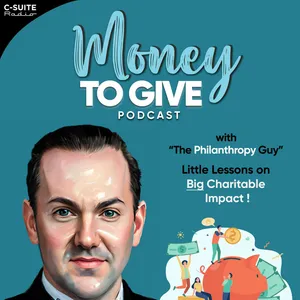
I'm Rick Peck, also known as "The Philanthropy Guy.” Let's talk about: 1) How nonprofits can most effectively showcase their mission and vision; 2) How donors and potential donors can make the greatest impact possible in the world; and 3) how professional advisors, including philanthropic advisors, can offer the most up-to-date information and services to their clients. After spending almost 20 years in the charitable giving world, I realized it's time to help more nonprofits thrive rather than just survive, while also helping those who have MONEY TO GIVE find top organizations that are deserving of their donations.
Latest Episodes
The most recent episodes — sign up to get AI-powered summaries of each one.
- 4 days ago41 min
Ep. 96 Why Relationships and Confidence Matter in Uncertain Times with Bill Crouch
What happens when economic uncertainty causes nonprofit leaders to pull back at the very moment they may need to lean in? In this episode of Money to Give, Rick Peck sits down with Bill Crouch, founder of BrightDot and former college president, for a thought-provoking conversation about fundraising, donor relationships, and leading with confidence during changing times. Bill shares why he remains optimistic about generosity even amid inflation, market volatility, and donor fatigue, and why fear and a scarcity mindset can prevent nonprofits from recognizing the opportunities still in front of them.Throughout the episode, Bill and Rick explore what relationship-driven fundraising really looks like, particularly when engaging high-net-worth donors. Bill encourages nonprofit leaders to move beyond transactions and traditional fundraising tactics by doing their homework, understanding what matters personally to donors, asking for advice, and building authentic relationships before making an ask. He calls this approach “starting with heart.” They also discuss changing donor demographics, donor-advised funds, the importance of demonstrating meaningful impact, and Bill’s concept of moving from “stewardship” to “mattership”—helping donors understand that their generosity truly matters.Whether you are a nonprofit leader, fundraiser, board member, philanthropic advisor, or donor, this episode offers a valuable reminder that uncertain times do not have to lead to smaller thinking. Bill challenges organizations to step into uncertainty, pursue small early victories, strengthen their networks, invest in their fundraising teams, and create cultures where donors and employees alike feel seen and appreciated. At its core, the conversation is about something that never goes out of style: building genuine relationships and helping people know that they belong, they matter, and together they can make a difference.Contact Rick Peck:Website: https://www.thephilanthropyguy.comEmail: ThePhilanthropyGuy@gmail.comBook A Call: Rick Peck's CalendarSign Up For Charitable Giving Newsletter: Charitable Giving NewsletterLinkedIn: Richard PeckContact Bill Crouch:Website: thebrightdot.comEmail: bill@thebrightdot.comLinkedIn: Bill Crouch
- 1 weeks ago26 min
Ep. 95 Bridging the Gap Between Generosity and Healthcare Access with Adeolu Adeboye
What if lifesaving healthcare already exists, but the people who need it simply cannot afford to access it? In this episode of Money to Give, Rick Peck sits down with Adeolu Adeboye, a board-certified trauma surgeon, surgical intensivist, and founder of Shekinah Global Healthcare Foundation, to explore how philanthropy can help close critical gaps in healthcare access. Drawing from his experience providing free surgical and medical care in underserved communities, Adeolu explains why effective philanthropy begins with listening to local communities and understanding what is truly preventing patients from receiving care. Sometimes the answer is not another hospital or new program, but providing the resources that allow existing healthcare systems and professionals to reach people who have been excluded from care.Throughout the episode, Adeolu and Rick explore the difference between immediate relief and lasting change, and why philanthropy needs both. Adeolu explains that healthcare is a connected system involving transportation, diagnosis, medications, equipment, medical professionals, surgery, follow-up care, and more. If even one piece is missing, a patient may remain untreated. Through Shekinah Global Healthcare Foundation, Adeolu has embraced a partnership-driven approach that brings together local healthcare systems, medical professionals, volunteers, donors, and companies around the needs of patients. His philosophy is simple but powerful: “Impact does not always require ownership. It requires alignment.”Whether you are a donor, nonprofit leader, healthcare professional, philanthropic advisor, or someone looking for a meaningful way to give, this conversation offers an important reminder that philanthropy extends far beyond writing a check. Money, expertise, time, relationships, supplies, and influence can all become part of the solution when they are thoughtfully coordinated around a shared purpose. Adeolu encourages listeners to ask themselves three questions: What do I have? What problem do I care deeply about? And who is already doing credible work in that space? You may not be able to solve an entire problem, but what you have to offer could completely change life for one person, and create a ripple effect for an entire family and community.Adeolu and his team will put this philosophy into action again during their next medical and surgical mission in Ibadan, Nigeria, September 20–26. For those who would like to be part of that work, you can learn more about Shekinah Global Healthcare Foundation and help support the mission at https://shekinahglobalfoundation.org/. Contact Rick Peck:Website: https://www.thephilanthropyguy.comEmail: ThePhilanthropyGuy@gmail.comBook A Call: Rick Peck's CalendarSign Up For Charitable Giving Newsletter: Charitable Giving NewsletterLinkedIn: Richard PeckContact Adeolu Adeboye:Website: https://shekinahglobalfoundation.org/Email: aaa263@cornell.eduLinkedIn: Adeolu Adeboye
- 2 weeks ago45 min
Ep. 94 Building Community, Belonging, and Sustainable Support with Miryam Kabakov
What happens when a deeply personal experience reveals a need shared by an entire community? In this episode of Money to Give, Rick Peck sits down with Miryam Kabakov, co-founder and executive director of Eshel, to explore how her own experience coming out in the Orthodox Jewish community inspired an organization dedicated to creating support, belonging, and greater inclusion for LGBTQ Orthodox individuals and their families. Miryam shares how Eshel has grown from its first retreat 15 years ago into a community offering peer support, retreats, family resources, education, and connections to welcoming religious leaders across North America.Throughout the episode, Miryam and Rick discuss the challenges of building and funding a nonprofit serving a highly specific community, including Eshel’s early struggle to find funders who understood its mission. Miryam explains how storytelling, relationship building, and demonstrating impact gradually helped the organization earn trust and attract support. They also explore the importance of funding the programs that are already working—not simply pursuing the next “shiny and new” idea—and why nonprofits must clearly communicate the true costs of delivering programs so donors can help make successful work sustainable.Whether you are a donor, nonprofit leader, fundraiser, philanthropic advisor, or someone interested in how personal experience can become a catalyst for meaningful change, this conversation offers a powerful reminder of what can happen when people feel seen, supported, and connected. Miryam’s journey demonstrates that lasting impact often begins by listening closely to a community, building trust one relationship at a time, and having the persistence to keep doing the work even before others fully understand its importance.Contact Rick Peck:Website: https://www.thephilanthropyguy.com Email: ThePhilanthropyGuy@gmail.comBook A Call: Rick Peck's Calendar Sign Up For Charitable Giving Newsletter: Charitable Giving Newsletter LinkedIn: Richard PeckContact Miryam Kabakov:Website: Eshel Email: info@eshelonline.orgLinkedIn: Miryam Kabakov
- 3 weeks ago33 min
Ep. 93 Building a Legacy Beyond the Game with Hannibal Navies
What happens when an athlete’s desire to give back is matched with the infrastructure needed to create lasting impact? In this episode of Money to Give, Rick Peck sits down with Hannibal Navies, former nine-year NFL veteran and leader of Athletes Charitable, to explore how professional and collegiate athletes can turn their passion for philanthropy into sustainable charitable work. Drawing from his own experience creating a foundation while playing in the NFL, Hannibal shares why athletes often have deeply personal reasons for giving back, but may lack the time, resources, and nonprofit expertise needed to build organizations that endure.Throughout the episode, Hannibal and Rick discuss why charitable work needs many of the same fundamentals as any successful business: strong infrastructure, compliance, fundraising strategy, impact measurement, storytelling, and the right team. Hannibal explains how fiscally sponsored programs can remove many of those administrative barriers, allowing athletes to focus on their strengths. their stories, platforms, passions, and relationships with the communities they want to serve. They also explore why communicating impact matters, how philanthropy can become part of an athlete’s identity and brand, and why beginning this work earlier, even at the collegiate level, can help build a lifetime of generosity.Whether you are an athlete, donor, nonprofit professional, philanthropic advisor, or someone interested in the intersection of sports and giving, this conversation offers a compelling look at what it takes to turn good intentions into sustainable impact. Hannibal’s message is clear: an athletic career may eventually end, but a commitment to service can become a lasting source of purpose and legacy for decades to come.Contact Rick Peck:Website: https://www.thephilanthropyguy.comEmail: ThePhilanthropyGuy@gmail.comBook A call: Rick Peck's CalendarSign Up For Charitable Giving Newsletter: Charitable Giving NewsletterLinkedIn: Richard PeckContact Hannibal Navies:Website: https://athletescharitable.org/LinkedIn: Hannibal NaviesInstagram: @BullNaviesAthletes Charitable Instagram: @AthletesCharitable
- Aug 20, 202643 min
Ep. 92 Why Collaboration Could Make the Nonprofit Sector Stronger with Kate Harris
What if nonprofits could create greater impact by collaborating instead of competing? In this episode of Money to Give, Rick Peck sits down with Kate Harris, nonprofit collaboration strategist and founder of the Kate Harris Group, to explore why partnerships, mergers, and other forms of strategic collaboration may be among the nonprofit sector’s most underused tools. Kate challenges the assumption that there are simply “too many nonprofits,” arguing instead that organizations often lack the connections and infrastructure needed to work together effectively.Throughout the episode, Kate and Rick discuss how competition for limited funding can unintentionally discourage collaboration and why nonprofits, boards, and funders should begin thinking differently about organizational sustainability. Kate explains that collaboration exists on a spectrum, from informal partnerships and shared programs to asset transfers and mergers, and that successful partnerships require planning, resources, and a shared commitment to the people being served. She also offers an important challenge to nonprofit boards: shift from fidelity to the organization itself to fidelity to the mission. By building partnerships before a crisis occurs, organizations can strengthen their missions, protect the communities they serve, and potentially create a more compelling case for philanthropic investment.Whether you are a nonprofit leader, board member, donor, funder, philanthropic advisor, or someone interested in strengthening the charitable sector, this conversation offers a fresh perspective on what collaboration can make possible. Kate’s message is clear: collaboration does not have to mean failure, reduction, or loss of identity. When approached strategically, it can help nonprofits pool resources, strengthen their influence, improve access to services, and ultimately create greater impact for the communities at the center of their work.Contact Rick Peck:Website: https://www.thephilanthropyguy.comEmail: ThePhilanthropyGuy@gmail.comBook A call: Rick Peck's CalendarSign Up For Charitable Giving Newsletter: Charitable Giving NewsletterLinkedIn: Richard PeckContact Kate Harris:Website: https://kateharrisgroup.comLinkedIn: Kate Harris
- Aug 13, 202647 min
Ep. 91 Building Stronger Nonprofits Through Financial Strategy and Trust with Stephen Garten
What does it take for a nonprofit to move from passion to long-term sustainability? In this episode of Money to Give, Rick Peck sits down with Stephen Garten, founder and CEO of Charity Charge, to explore one of the nonprofit sector's greatest challenges: building strong financial infrastructure while staying focused on mission. Drawing on more than a decade of experience serving nonprofits, Stephen shares why many organizations struggle not because they lack passion, but because they lack the operational and financial tools needed to grow sustainably. Together, they discuss practical strategies for founders, the importance of business acumen, and how nonprofits can position themselves for long-term success.Throughout the episode, Stephen and Rick discuss why nonprofit leaders should think like entrepreneurs by carefully evaluating community needs before launching new organizations, considering alternatives such as fiscal sponsorship, and seeking guidance from experienced nonprofit founders. They also examine the broader nonprofit funding landscape, including the importance of trust-based philanthropy, investing in organizational capacity, and strengthening donor stewardship through authentic relationships rather than transactional fundraising. Stephen also shares how Charity Charge is helping nonprofits access financial products and services designed specifically for the charitable sector, filling a gap left by traditional banking and business tools.Whether you are a nonprofit founder, executive director, board member, donor, philanthropic advisor, or anyone passionate about strengthening the charitable sector, this conversation offers thoughtful guidance on building organizations that are both mission-driven and financially resilient. Stephen's message is clear: lasting impact requires more than passion—it requires strategic planning, trusted relationships, and investing in the infrastructure that allows nonprofits to serve their communities for years to come.Contact Rick Peck:Website: https://www.thephilanthropyguy.comEmail: ThePhilanthropyGuy@gmail.comBook A call: Rick Peck's CalendarSign Up For Charitable Giving Newsletter: Charitable Giving NewsletterLinkedIn: Richard PeckContact Stephen Garten:Website: https://charitycharge.comLinkedIn: Stephen Garten
- Aug 6, 202645 min
Ep. 90 Sleep in Heavenly Peace: How One Bed Can Change a Child's Life with Luke Mickelson
What if one of the greatest barriers to a child's success is something many of us take for granted—a bed? In this episode of Money to Give, Rick Peck sits down with Luke Mickelson, founder of Sleep in Heavenly Peace (SHP), to discuss the hidden crisis of child bedlessness and how one simple act of generosity can transform a child's life. What began as a small Christmas project in Luke's Idaho community has grown into the world's largest bed-building charity, with hundreds of chapters working to ensure that no child sleeps on the floor. Along the way, Luke shares the powerful stories that inspired the movement and why a safe place to sleep is about so much more than a mattress.Throughout the episode, Luke and Rick explore the far-reaching impact of providing children with a bed of their own. Beyond improving sleep, a bed offers dignity, security, better school performance, improved health, and a sense of hope. Luke explains how child bedlessness often goes unnoticed because families facing job loss, domestic violence, housing instability, or other hardships must prioritize food and shelter before purchasing beds. He also shares how Sleep in Heavenly Peace empowers volunteers across the country to build and deliver beds locally, creating opportunities for entire communities to rally around children in need. As Luke explains, "Child bedlessness is not a real word, but it's a real problem."Whether you are a donor, nonprofit leader, volunteer, philanthropic advisor, or simply someone looking for a meaningful way to serve your community, this episode offers an inspiring reminder that lasting impact often begins with meeting a basic human need. Luke's story demonstrates that ordinary people can accomplish extraordinary things when they choose to act. One bed may seem like a simple gift, but for a child, it can provide comfort, stability, dignity, and hope for a brighter future.Contact Rick Peck:Website: https://www.thephilanthropyguy.comEmail: ThePhilanthropyGuy@gmail.comBook A call: Rick Peck's CalendarSign Up For Charitable Giving Newsletter: Charitable Giving NewsletterLinkedIn: Richard PeckContact Luke Mickelson:Website: https://shpbeds.orgEmail: luke.mickelson@shpbeds.orgLinkedIn: Luke Mickelson
- Jul 30, 202638 min
Ep. 89 Why Passion Isn't Enough: Building Stronger Nonprofits Through Leadership and Strategy with David Rhode
What does it take to build a nonprofit that lasts? In this episode of Money to Give, Rick Peck sits down with David Rhode, nonprofit consultant, speaker, and author of Passion Isn't Enough, to explore why a compelling mission must be supported by strong leadership, sound strategy, and operational excellence. Drawing on years of experience coaching nonprofit leaders, David explains why passion may inspire an organization, but sustainable impact requires intentional planning, engaged boards, thoughtful fundraising, and disciplined execution.Throughout the episode, David and Rick discuss the essential traits of effective nonprofit leadership, including resilience, optimism, and active listening. They also examine why strategic planning should be practical and actionable rather than overly complex, and how regular measurement and evaluation help organizations demonstrate impact while continually improving their programs. David emphasizes that great leaders don't simply manage from behind a desk, they stay connected to the people they serve and use what they learn to strengthen both their mission and their organization.Whether you are a nonprofit executive, board member, donor, fundraiser, or philanthropic advisor, this episode offers practical guidance for building organizations that can thrive for years to come. David's message is both encouraging and challenging: passion may be the spark that starts a nonprofit, but leadership, accountability, and strategy are what allow that passion to create lasting impact.Contact Rick Peck:Website: https://www.thephilanthropyguy.comEmail: ThePhilanthropyGuy@gmail.comBook A call: Rick Peck's CalendarSign Up For Charitable Giving Newsletter: Charitable Giving NewsletterLinkedIn: Richard PeckContact David Rhode:Website: https://dotdotorg.comLinkedIn: David RhodeBook: Passion Isn't Enough
Get Money to Give summaries in your inbox
Free AI-powered daily recaps. Key takeaways, quotes, and mentions — in a 5-minute read.
Get Free Summaries →Free forever for up to 3 podcasts. No credit card required.
You Might Also Like
Listeners also like.
Impact Podcast, Mentorship with Eddie Wilson
A seasoned entrepreneur shares insights on building businesses, leadership, and living with purpose to create meaningful impact.
Nonprofit Everything
A bi-weekly Q&A podcast covering topics related to nonprofits.
Mick Unplugged
A leadership podcast exploring the deep personal motivations behind high achievers’ success by asking what drives them at their core.

The Money Mondays
Discusses investments, side hustles, and charity through interviews with entrepreneurs and celebrities in their homes and studios.
Money Making Conversations Master Class
Successful entrepreneurs and leaders share strategies for building businesses and creating wealth.
Nonprofit Hub Radio
Interviews with nonprofit leaders and experts offering practical insights to help organizations improve and grow.

Afford Anything | Get Smarter With Money
A weekly discussion on financial freedom covering psychology, income, investing, real estate, and entrepreneurship with experts.
How to Money
Two friends break down personal finance topics like debt payoff and investing in simple, practical terms for everyday listeners.

Money Guy Show
Teaches wealth-building strategies to help listeners grow their assets and achieve financial goals efficiently.

BigDeal
Conversations with driven entrepreneurs and investors reveal raw, practical lessons on building wealth and living intentionally.

Passion Struck with John R. Miles
Explores purpose, resilience, and connection through science-backed conversations with experts in psychology, neuroscience, and performance.
A Bit of Optimism
Conversations with thinkers and doers exploring what drives purpose, growth, and meaning in life.
About Money to Give
I'm Rick Peck, also known as "The Philanthropy Guy.” Let's talk about: 1) How nonprofits can most effectively showcase their mission and vision; 2) How donors and potential donors can make the greatest impact possible in the world; and 3) how professional advisors, including philanthropic advisors, can offer the most up-to-date information and services to their clients. After spending almost 20 years in the charitable giving world, I realized it's time to help more nonprofits thrive rather than just survive, while also helping those who have MONEY TO GIVE find top organizations that are deserving of their donations.
Customized Recaps
AI-powered recaps with compact key takeaways, quotes, and insights.
Straight to Your Inbox
Get key takeaways from Money to Give in a 5-minute read.
Save Hours Every Week
Stay current on your favorite podcasts without falling behind.
Frequently Asked Questions
What is Podzilla's Money to Give daily summary?
It's a free AI-powered email that summarizes new episodes of Money to Give as soon as they're published. You get the key takeaways, notable quotes, and links & mentions — all in a quick read.
How does the Money to Give podcast summary work?
When a new episode drops, our AI transcribes and analyzes it, then generates a personalized summary tailored to your interests and profession. It's delivered to your inbox every morning.
Is this an official Money to Give product?
No. Podzilla is an independent service that summarizes publicly available podcast content. We're not affiliated with or endorsed by Richard C. Peck.
Can I get summaries of other podcasts too?
Absolutely! The free plan covers up to 3 podcasts. Upgrade to Pro for 15, or Premium for 50. Browse our full catalog at /podcasts.
How often does Money to Give release new episodes?
Money to Give publishes weekly. Our AI generates a summary within hours of each new episode.
What topics does Money to Give cover?
Money to Give covers topics including Education, Business, How To, Non-Profit. Our AI identifies the specific themes in each episode and highlights what matters most to you.
Start getting Money to Give summaries tomorrow morning.
Free forever for up to 3 podcasts. No credit card required.
Free forever for up to 3 podcasts. No credit card required.