Free Daily Podcast Summary
Moms Talk Autism Podcast: Daily Summaries Delivered
by Shannon Korza, Brittney Crabtree, Tash Dillmon, and Jean Mayer
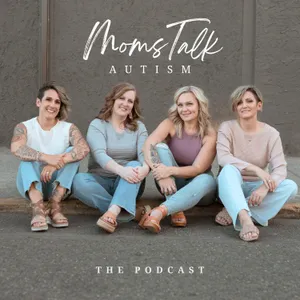
The Moms Talk Autism Podcast is for parents raising children with special needs. We are four moms, all with autistic children and other neurodivergence. Teaching a special needs child to navigate the world around them comes with challenges and struggles. We want to talk about those challenges openly with you and others. We discuss grief, school, family balance, siblings, therapies, social conversations, behaviors, delays, diagnosis advocation, and marriage. We do not hold degrees in medicine or neuroscience, nor are we special education teachers, but we are experts in raising our kids and figuring out everything as we go. Think of this podcast as a coffee shop chat with your closest girlfriends. We want to talk, raise awareness, and help each other thrive with our neurodivergent families in a neurotypical world. Shannon Korza, Tash Dillmon, Jean Mayer & Brittney Crabtree
Latest Episodes
The most recent episodes — sign up to get AI-powered summaries of each one.
- 3 days ago54 min
Re-Launch: Stem Cells, Autism & the Questions We Still Have
What happens when a parent’s personal experience leads them to explore emerging treatments that medicine is still studying? This week, Tash and Shannon sit down with Dr. Eric Weiss, a physician, father, and advocate for continued research into autism care. Dr. Weiss shares how raising an autistic child changed the direction of his career and led him to explore emerging approaches, including stem cell therapy and the possible role of inflammation in autism. We talk about his personal journey, what he has observed in his work, and why conversations around newer or less-established treatments can be complicated, especially in a community that has seen its share of overpromising, cure culture, and families desperate for answers. Our goal in this episode is not to tell you what to believe or what treatment to choose. It’s to have an open conversation, ask questions, and explore one family and physician’s perspective while keeping the well-being and individuality of autistic people at the center. As always: stay curious, do your research, and make decisions with the professionals who know your child best. This episode is for informational purposes only and is not medical advice. The views shared are those of our guest, and we encourage families to research carefully and consult qualified healthcare professionals before making treatment decisions. Hosted by Simplecast, an AdsWizz company. See pcm.adswizz.com for information about our collection and use of personal data for advertising.
- 5 days ago50 min
What If It's Actually OCD?
What if what looks like anxiety, rigidity, or “just part of autism” is actually OCD? This week, Brittney, Tash, and Shannon sit down with clinician and mom of four neurodiverse children, Natalia Aiza, to talk about how OCD can show up in neurodivergent kids—and why it can sometimes be difficult to recognize. We get into fear, compulsions, anxiety, and the overlap that can make it hard for parents to know what they’re actually seeing. Natalia also shares what families may want to pay attention to and why understanding the reason behind a behavior can change the way we support our kids. Because sometimes the behavior isn’t the whole story. Sometimes fear is driving a lot more than we realize. Instagram: @letstalk.ocd Website: www.kairoswellnesscollective.com Books and other resources: https://nataliaaiza.com/ IOCDF.org Dr. Eli Lebowitz Breaking Free Books Children’s Yale-Brown OC Scale (CYBOCS) Hosted by Simplecast, an AdsWizz company. See pcm.adswizz.com for information about our collection and use of personal data for advertising.
- 1 weeks ago59 min
Re-Launch: How Much Should We Expect?
How much should we expect from our kids? And how do we know when we’re asking too much… or not enough? This week, we’re revisiting a conversation about one of the hardest parts of parenting neurodivergent kids: balancing support and accommodation with opportunities to build independence, resilience, and confidence. Our kids may need things to look different. They may need more time, more support, or a completely different path. But that doesn’t mean we stop giving them chances to learn, adapt, experience consequences, and discover what they’re capable of. The hard part is figuring out where that line is for your child. We talk about expectations, limitations, coping skills, independence, and why there is no one-size-fits-all answer. At the end of the day, we keep coming back to the same things: know your child, communicate in whatever way works for your family, and lead with love. Hosted by Simplecast, an AdsWizz company. See pcm.adswizz.com for information about our collection and use of personal data for advertising.
- 1 weeks ago46 min
Are We Helping or Are We Hurting?
When does helping actually stop helping? This week, we’re talking about the very blurry line between supporting our kids and accidentally doing too much for them. As parents of autistic and neurodivergent kids, it can be hard to know when to step in, when to wait, and when to let them struggle a little so they can build confidence and independence. We get into self-care skills, hygiene, sibling dynamics, puberty, patience, and the importance of presuming competence - even when our instinct is screaming at us to just do it for them. And sometimes the bigger challenge is looking at ourselves and asking the uncomfortable question: are we helping… or are we getting in the way? It’s a balancing act - guiding them, supporting them, protecting them, and still giving them room to grow. Hosted by Simplecast, an AdsWizz company. See pcm.adswizz.com for information about our collection and use of personal data for advertising.
- 2 weeks ago1h 33m
Re-Launch: What If We’ve Been Told the Wrong Things?
What if some of the things we’ve been taught about autism aren’t actually the whole story? This week, we’re joined by Jonathan Alderson, author of Challenging the Myths of Autism, to talk about the beliefs and assumptions that can shape the way we approach autistic children—and what happens when we start questioning them. We get into why there is no one-size-fits-all approach, how to figure out what may actually be helpful for your individual child, and why the order in which therapies and supports are introduced can matter. But one of the biggest takeaways from this conversation has less to do with a specific therapy and more to do with the relationship itself. The way we approach our kids matters. The trust, connection, attitude, and intention between a child and the adults supporting them can become the foundation for everything else. This is part one of our conversation with Jonathan. In part two, we dig deeper into ThriveGuide and how families can begin building a more individualized roadmap for support. Hosted by Simplecast, an AdsWizz company. See pcm.adswizz.com for information about our collection and use of personal data for advertising.
- 2 weeks ago47 min
What Happens When We're Gone?
What happens to our kids when we’re not here anymore? It’s one of those questions most of us would rather shove into a drawer and deal with… never. But eventually, we have to talk about it. This week, Tash and Shannon sit down with licensed financial advisor Mary McDirmid, who specializes in helping families raising children with disabilities. Mary is also a mom herself, and her own family’s experience with a rare disease is what led her into this work. We talk about planning for long-term care, understanding benefits, protecting eligibility, sibling roles, building a support network, and creating a roadmap that doesn’t leave everyone scrambling later. And maybe most importantly, we talk about how to start. Because financial planning for a child with disabilities can feel overwhelming, emotional, and ridiculously complicated—but doing something is better than avoiding it altogether. You do not need to have the next 40 years figured out today. You just need a place to begin. Find Mary here: https://allneedsplanning.com/ Hosted by Simplecast, an AdsWizz company. See pcm.adswizz.com for information about our collection and use of personal data for advertising.
- 3 weeks ago59 min
Re-Launch: Nobody Prepared Us for Periods
Nobody prepared us for periods. Not the hygiene. Not the sensory challenges. Not the school logistics. Not the mood changes. Definitely not the trial-and-error involved in figuring out what actually works for your child. This week, Shannon and Brittney sit down with Ashley Lewis to talk honestly about what puberty has looked like with her autistic daughter, Presley. We get into the practical stuff—period management, showers, bedding, bras, school support, gynecological care, and the little tricks that can make this stage feel more manageable. But we also talk about the bigger picture: helping our daughters through huge physical and emotional changes while giving them grace, respecting their boundaries, and figuring it out right alongside them. There is no perfect way to do this. Sometimes it’s just patience, extra mattress protectors, and a whole lot of learning as you go. Hosted by Simplecast, an AdsWizz company. See pcm.adswizz.com for information about our collection and use of personal data for advertising.
- 3 weeks ago1h 10m
Six Kids. Six Diagnoses. One Mom.
Six kids. All six on the autism spectrum. Yeah… we had questions too. This week, Brittney and Tash sit down with Laura Wampler to talk about what it has really looked like raising a house full of neurodivergent kids—from searching for the right diagnoses and fighting for support at school to navigating therapies, crisis moments, and figuring out what actually works for each individual child. But Laura’s story didn’t stop with her own family. Those years of learning, advocating, and building the right team eventually led her to help other families walking the same road. We talk about that transition, why lived experience matters, and the importance of finding people who truly understand this life. Laura also shares the story behind Unite & Uplift, a grassroots conference created specifically to give moms of neurodivergent kids something we desperately need: connection, support, and a little room to breathe. Because sometimes finding your people changes everything. Mothers Together Website: mothers-together.com Unite and Uplift Conference: uniteuplift.com Laura’s IEP Coaching Website: https://laurawampler.com/ Hosted by Simplecast, an AdsWizz company. See pcm.adswizz.com for information about our collection and use of personal data for advertising.
Get Moms Talk Autism Podcast summaries in your inbox
Free AI-powered daily recaps. Key takeaways, quotes, and mentions — in a 5-minute read.
Get Free Summaries →Free forever for up to 3 podcasts. No credit card required.
You Might Also Like
Listeners also like.

Tony Mantor: Why Not Me ?
Explores autism, mental health, and human stories to promote understanding, challenge stigma, and support neurodiversity.

You Only Know What You Know
Compass Health Center

After Bedtime with Big Little Feelings
Honest conversations about modern parenting challenges with practical advice and emotional support from experienced guides.

What Fresh Hell: Parenting, Relationships, and Making Life Better, with Two Funny Moms
Two moms discuss parenting challenges, child development, and self-care with humor and practical advice.

Talk2Tamara
Tamara Gestetner

Good Moms Bad Choices
Two mothers discuss the realities of modern parenting with honesty and humor, embracing both good and bad choices.
Mixing it up with Mixter: An Autism Podcast
Kari Thomas

Ask Lisa: Untangling Family Life
Psychologist Lisa Damour answers parents' questions about raising tweens and teens with evidence-based advice on mental health, behavior, and family dynamics.

ANDMOM with Skylar Diggins and Cassidy Hubbarth
Explores the challenges and realities of balancing professional ambitions with motherhood through candid conversations.
Previa Alliance Podcast
Discusses perinatal mental health through conversations with survivors and professionals.

The Whinypaluza Podcast
A parenting podcast offering advice and support through expert interviews on raising children, marriage, and family life.

Thrive Through and Beyond Cancer
Season Johnson
About Moms Talk Autism Podcast
The Moms Talk Autism Podcast is for parents raising children with special needs. We are four moms, all with autistic children and other neurodivergence. Teaching a special needs child to navigate the world around them comes with challenges and struggles. We want to talk about those challenges openly with you and others. We discuss grief, school, family balance, siblings, therapies, social conversations, behaviors, delays, diagnosis advocation, and marriage. We do not hold degrees in medicine or neuroscience, nor are we special education teachers, but we are experts in raising our kids and figuring out everything as we go. Think of this podcast as a coffee shop chat with your closest girlfriends. We want to talk, raise awareness, and help each other thrive with our neurodivergent families in a neurotypical world. Shannon Korza, Tash Dillmon, Jean Mayer & Brittney Crabtree
Customized Recaps
AI-powered recaps with compact key takeaways, quotes, and insights.
Straight to Your Inbox
Get key takeaways from Moms Talk Autism Podcast in a 5-minute read.
Save Hours Every Week
Stay current on your favorite podcasts without falling behind.
Frequently Asked Questions
What is Podzilla's Moms Talk Autism Podcast daily summary?
It's a free AI-powered email that summarizes new episodes of Moms Talk Autism Podcast as soon as they're published. You get the key takeaways, notable quotes, and links & mentions — all in a quick read.
How does the Moms Talk Autism Podcast podcast summary work?
When a new episode drops, our AI transcribes and analyzes it, then generates a personalized summary tailored to your interests and profession. It's delivered to your inbox every morning.
Is this an official Moms Talk Autism Podcast product?
No. Podzilla is an independent service that summarizes publicly available podcast content. We're not affiliated with or endorsed by Shannon Korza, Brittney Crabtree, Tash Dillmon, and Jean Mayer.
Can I get summaries of other podcasts too?
Absolutely! The free plan covers up to 3 podcasts, any in the catalog. Basic raises that to 15, Pro to 40 and Max to 100. Browse our full catalog at /podcasts.
How often does Moms Talk Autism Podcast release new episodes?
Moms Talk Autism Podcast publishes weekly. Our AI generates a summary within hours of each new episode.
What topics does Moms Talk Autism Podcast cover?
Moms Talk Autism Podcast covers topics including Fitness, Parenting, Health & Fitness, Kids & Family, Family, Mental Health. Our AI identifies the specific themes in each episode and highlights what matters most to you.
Start getting Moms Talk Autism Podcast summaries tomorrow morning.
Free forever for up to 3 podcasts. No credit card required.
Free forever for up to 3 podcasts. No credit card required.