Free Daily Podcast Summary
Mindful Paths Podcast: Daily Summaries Delivered
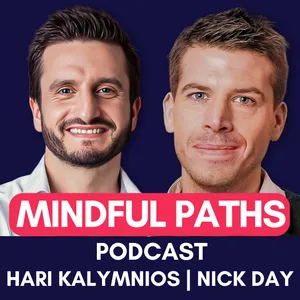
by Nick Day & Hari Kalymnios
Mindful Paths is a conversation with hosts Nick Day and Hari Kalymnios on training your mind for modern life. Exploring mindset, mental fitness, daily wellness habits, fitness, neuroscience, nutrition, meditation, yoga, mental health, wellbeing, resilience, and meaning through practical tools, events (such as mindvalley), lived experience, and honest reflection.
Latest Episodes
The most recent episodes — sign up to get AI-powered summaries of each one.
- 1 weeks ago48 min
Mindful Presence Mastery | How Assumptions Build Your Reality
Mental fitness training starts with understanding how thoughts create reality, not just interpret it. In this episode, Nick and Hari unpack Sydney Banks' Three Principles through a live story, revealing how a single unverified assumption builds an entire emotional experience. Discover why mindful presence and a trained mind matter more than your circumstances, and how the same situation produces opposite outcomes depending on your thinking patterns. Hari walks through a live case study, connecting with someone over several days only to watch her disappear with someone else on the final night, and how he caught himself constructing an entire story with zero actual evidence to support it. Nick reframes it through the Three Principles lens, the idea that we feel our thinking, not our circumstances. The conversation moves through Hari's decision to perform in an unrehearsed stage act at Mindvalley despite years of refusing every invitation before it, three double tequilas deep and completely off script, using it to unpack why "if you can't, then you must" is often the clearest sign of where real growth is waiting. From there, Nick and Hari explore why obstacles are not in your way but on it, using the Biosphere 2 story of trees collapsing without wind stress to grow strong roots as a metaphor for resilience. They connect it to why accepting that life is inherently difficult can paradoxically be the thing that makes it easier to carry. The episode closes with a shared reminder that the goal isn't to stop thinking or eliminate discomfort, but to notice the meaning you're assigning in the moment and choose, deliberately, whether it's serving you. Whether you're spiralling over a text that never came, talking yourself out of a risk worth taking, or just tired of feeling like your circumstances are running the show, this episode will change how you catch your own thinking in the act. Subscribe for more conversations on mindset, wellbeing, the psychology of habit, and what it truly means to live a focused and mindful life. - - - - - - - - - - - - - - - - - - - - - - - - - - - - - - - - - - - - - - - - - - - - - - - - - - - - - - - - - - - - - - - - - - - - - - - - - - - - - - - 📌Connect 👉 Instagram: https://www.instagram.com/mindful_paths_podcast/ 👉 Nick Day's LinkedIn: https://www.linkedin.com/in/nickday/ 👉 Website: Mindful Paths Podcast: https://jgarecruitment.com/the-mindful-paths-podcast/ 👉 Learn more about Fear: https://www.feartobold.com 👉 Transformational Coaching Inquiries: nick@t4mcoach.com 👉 Hari Kalymnios LinkedIn: https://www.linkedin.com/in/harikalymnios 👉 Hari Kalymnios Website: https://harikalymnios.com/ 👉 Nick Day Website: https://t4mcoach.com/ - - - - - - - - - - - - - - - - - - - - - - - - - - - - - - - - - - - - - - - - - - - - - - - - - - - - - - - - - - - - - - - - - - - - - - - - - - - - - - - Timestamps: Catching Up After Mindvalley: Sleep, Parties, and Cold Dips The Daily Dip Ritual and the Power of Consistency Losers Find an Excuse, Winners Find a Way The ABC to Success: Awareness, Behavior, Consistency Vision, Risk, and the Cost of Playing It Safe Not All Risk-Takers Succeed And a Confession About Friday Night Three Double Tequilas and an Unrehearsed Stage Performance Liberation, Vulnerability, and What Comes After The Three Principles: Why We Feel Our Thinking, Not Our Circumstances A Live Case Study: Building a Story From Zero Evidence Thoughts as Clouds: Learning to Let Them Pass This Too Shall Pass: Obstacles, Acceptance, and Getting Comfortable With Hard
- 3 weeks ago51 min
The Hesitation Pattern | Mental Fitness for Performance Optimization
Mental fitness isn't just meditation, it's recognizing the stories we tell ourselves to avoid what we want. In this episode, Nick and Hari dive into a live real-time case study on self-sabotage, hesitation, and the hidden fears behind avoidance patterns. Recorded during Hari's annual stay at Mindvalley University in Tallinn, this conversation reveals why the moments you most want to seize are the ones you talk yourself out of and what that pattern costs you. Discover practical reframes for breaking the avoidance loop and training your mind for the goals that matter. Rather than treating this as a simple travel catch-up, Hari uses a recurring pattern at the event, connecting well with someone and then watching the moment slip away, to unpack why the same lesson keeps resurfacing in his life until it's actually learned. Nick reframes it through what he calls the fear paradox, the idea that avoiding rejection guarantees the very loneliness we're truly afraid of. The episode reaches its sharpest point when Nick admits to feeling quietly anxious before travelling with his own long-time business partner to the World Cup final, a trip built entirely on a story he'd invented in his head, and one that turned out to have no basis in reality at all once he was there. The conversation then moves into confabulation, the beliefs we construct and accept as fact, and how it shows up everywhere from social snubs at a party to pre-trip nerves. Nick and Hari also unpack why physical vitality, spirituality, and mindset are inseparable, and why one man's extreme biohacking for longevity misses the point of living well right now. The episode closes with a shared reminder that this isn't about eliminating fear or overthinking entirely, but about noticing the story in the moment it's being written and choosing, deliberately, whether to believe it. Whether you are stuck repeating the same relationship pattern, talking yourself out of a decision before you've made it, or simply wondering why you keep learning the same lesson twice, this episode will change how you catch yourself in the act. Subscribe for more conversations on mindset, wellbeing, the psychology of habit, and what it truly means to live a focused and mindful life. - - - - - - - - - - - - - - - - - - - - - - - - - - - - - - - - - - - - - - - - - - - - - - - - - - - - - - - - - - - - - - - - - - - - - - - - - - - - - - - 📌Connect 👉 Instagram: https://www.instagram.com/mindful_paths_podcast/ 👉 Nick Day's LinkedIn: https://www.linkedin.com/in/nickday/ 👉 Website: Mindful Paths Podcast: https://jgarecruitment.com/the-mindful-paths-podcast/ 👉 Learn more about Fear: https://www.feartobold.com 👉 Transformational Coaching Inquiries: nick@t4mcoach.com 👉 Hari Kalymnios LinkedIn: https://www.linkedin.com/in/harikalymnios 👉 Hari Kalymnios Website: https://harikalymnios.com/ 👉 Nick Day Website: https://t4mcoach.com/ - - - - - - - - - - - - - - - - - - - - - - - - - - - - - - - - - - - - - - - - - - - - - - - - - - - - - - - - - - - - - - - - - - - - - - - - - - - - - - - Timestamps: Catching Up After Travel: World Cup and Mindvalley What Mindvalley University Actually Is Burning Man Meets Ted Talks: Inside the VIP Divide Meeting Speakers and Notable Names The Universe Keeps Throwing Up the Same Lesson The Courage Window: Fear to Bold in Action The Fear Paradox: Guaranteeing What You Fear Most Confabulation: The Story of the World Cup Trip Awareness as the Central Theme Where Spirituality Fits in the BEAT Model Brian Johnson, Biohacking, and Juice Worth the Squeeze Catching the Story in Real Time
- Aug 12, 202646 min
Why Your Daily Commute Spikes Blood Sugar | Mindfulness & Nutrition
What if your morning commute is spiking your blood sugar as much as your breakfast? In this Mindful Paths Podcast episode, Nick and Hari dive into Hari's twelve-day glucose monitoring experiment with his pre-diabetic mother, uncovering the invisible link between stress, daily driving habits, and metabolic health. Discover why mental fitness and nutrition are inseparable, and what your body's stress response is really telling you about the gap between healthy eating and healthy living. Rather than treating glucose monitoring as simply a diabetes tool, Hari reframes it as a mindfulness practice, revealing that his blood sugar rises the moment he gets behind the wheel with no food involved, because the body quietly reads driving as a low-grade threat. Nick pushes the idea further, tracing every spike and crash back to cortisol, adrenaline, and the nervous system rather than food alone. The episode reaches its sharpest point when Hari admits to eating an entire chocolate bar and a large chocolate ice cream in one sitting, around sixty grams of sugar, and watching his blood sugar barely move once he went for a short walk, while a plain jacket potato with vegetables sent him into one of the biggest spikes of the whole experiment. The conversation then moves into the swaps Hari is testing with his mother, from lentil pasta and rye bread to apple cider vinegar and short walks after meals, and why the same bowl of ice cream can spike one person far more than another. Nick and Hari also unpack why fruit juice behaves nothing like the fruit it comes from, and why a documentary showing people reversing type two diabetes challenges what most of us are told about the condition being permanent. The episode closes with a shared reminder that this is not about obsessive tracking or food guilt, but about testing what your own body does with the food everyone else eats, and choosing, deliberately, which small changes are worth keeping. Whether you are chasing your own energy crashes, supporting a parent through prediabetes, or simply wondering why some breakfasts leave you hungrier than the meals before them, this episode will change how you look at your next meal. Subscribe for more conversations on mindset, wellbeing, the psychology of habit, and what it truly means to live a focused and mindful life. - - - - - - - - - - - - - - - - - - - - - - - - - - - - - - - - - - - - - - - - - - - - - - - - - - - - - - - - - - - - - - - - - - - - - - - - - - - - - - - 📌Connect 👉 Instagram: https://www.instagram.com/mindful_paths_podcast/ 👉 Nick Day's LinkedIn: https://www.linkedin.com/in/nickday/ 👉 Website: Mindful Paths Podcast: https://jgarecruitment.com/the-mindful-paths-podcast/ 👉 Learn more about Fear: www.feartobold.com 👉 Transformational Coaching Inquiries: nick@t4mcoach.com 👉 Hari Kalymnios LinkedIn: https://www.linkedin.com/in/harikalymnios 👉 Hari Kalymnios Website: https://harikalymnios.com/ 👉 Nick Day Website: https://t4mcoach.com/ - - - - - - - - - - - - - - - - - - - - - - - - - - - - - - - - - - - - - - - - - - - - - - - - - - - - - - - - - - - - - - - - - - - - - - - - - - - - - - - Timestamps: Introducing the 12-Day Glucose Monitor Experiment Why This Is a Mindfulness Story, Not Just a Diabetes One The Insulin Factory Analogy Explained Discovery: Driving Spikes Blood Sugar With Zero Food The Fruit Juice Trap and Surprising Food Spikes Porridge vs Toast: Fuelling for Endurance Training Is Type 2 Diabetes Really Reversible? The Glucose Goddess Method and the Bean Study Research Walking It Off: Movement, Apple Cider Vinegar and Statins Hidden Sugar Names and Eating With Awareness Managing Stress in the Car and Final Takeaways
- Jul 30, 202643 min
Is Your Past Healing You or Holding You Back?
What if the memories you keep replaying are quietly deciding how happy you feel today? And what does it say about us that a single afternoon with an old friend can undo decades of comparison, regret, and the stories we have been telling ourselves? In this Mindful Paths Podcast episode, Nick Day and Hari Kalymnios turn a chance reunion with an old school friend into a deep dive on nostalgia, why we cling to certain memories, why others vanish, and what it means when the places that shaped us are gone. Using a thirty year reunion, a demolished old workplace, and a childhood journal, they unpack how memory quietly shapes mood, identity, and self worth. Rather than treating nostalgia as simply comforting, Hari reframes it through his own habits, admitting he still keeps decades old keepsakes and journal entries and openly ruminates on the past far more than Nick does. Nick contrasts this with his own instinct to stay future focused, tracing the difference back to grief and trauma he cannot fully separate from his happier memories. The episode reaches its sharpest point when Hari describes cycling past the London office where he worked nightshifts for six years, only to find it demolished without a trace. Nick shares an almost identical moment, the company he left to start his own business no longer exists either. The resolution is not sadness but a shared realisation that legacy lives in the stories we tell, not the bricks and certificates we leave behind. The conversation then moves into how easily comparison can quietly steal happiness, from an old friend who avoids school reunions altogether to the trap of measuring your one life against the highlight reel everyone else posts online. Nick and Hari also unpack why the British reflex to deflect a compliment says more about self esteem than modesty, and why some memories deserve to be visited on purpose while others are better left alone. The episode closes with a simple distinction between bravery and courage, landing on the idea that the goal is never to avoid the past but to choose, deliberately, which parts of it you carry forward. Whether you are haunted by an old memory, tired of comparing your life to everyone else's, or simply curious why nostalgia hits so hard, this episode will change how you look at it. Subscribe for more conversations on mindset, wellbeing, the psychology of habit, and what it truly means to live a focused and mindful life. - - - - - - - - - - - - - - - - - - - - - - - - - - - - - - - - - - - - - - - - - - - - - - - - - - - - - - - - - - - - - - - - - - - - - - - - - - - - - - - 📌Connect 👉Instagram: https://www.instagram.com/mindful_paths_podcast/ 👉 Nick Day's LinkedIn: https://www.linkedin.com/in/nickday/ 👉 Website: Mindful Paths Podcast: https://jgarecruitment.com/the-mindful-paths-podcast/ 👉 Learn more about Fear: www.feartobold.com 👉Transformational Coaching Enquiries: nick@t4mcoach.com 👉 Hari Kalymnios LinkedIn: https://www.linkedin.com/in/harikalymnios 👉 Hari Kalymnios Website: https://harikalymnios.com/ 👉 Nick Day Website: https://t4mcoach.com/ - - - - - - - - - - - - - - - - - - - - - - - - - - - - - - - - - - - - - - - - - - - - - - - - - - - - - - - - - - - - - - - - - - - - - - - - - - - - - - - Timestamps: Catching Up and a Bizarre 30-Year Reunion Reflecting on Courage: A Talk About His Wife The Demolished Office and a Vanished Legacy Bob Lazar, Evidence and Why "Life Is About Stories" Objects, Clutter and the Comfort vs Escape Line of Nostalgia Comparison Is the Thief of Joy (and Why We Can't Take a Compliment) Embodied Cognition: Why Places Trigger Memories Glimmers, Environment and Comparing Your Life Path "It Had to Happen This Way": Regret, Change and Acceptance Journaling, Anchoring and Ruminating on the Past The Fear Equation and Choosing Which Memories to Keep Communication, Confidence and Putting Yourself Out There
- Jul 14, 202650 min
The Monetization of Wellness: Are You Buying Health or Buying Hype?
What if most of what you're buying to get healthier is solving a problem you don't actually have? And what does it say about us that the wellness industry keeps growing almost twice as fast as the global economy, while anxiety and burnout keep climbing right alongside it? In this Mindful Paths Podcast episode, Nick Day and Hari Kalymnios take something most people treat as a personal choice and expose it as a trillion pound industry built on it: the monetization of wellness. Using a wellness conference, a fake heart-monitoring wearable, and years of buying gadgets themselves, they unpack how genuine health gets confused with clever marketing. Rather than dismissing the industry outright, Hari reframes the conversation through his own contradiction: he attends these events, buys the products, and still believes most people need almost none of it. He backs this up with the psychology of paid advice, explaining why we only truly value what costs us something, even when the free version works just as well. The episode reaches its sharpest point in Hari's real story of a slickly marketed wearable that claimed to predict heart attacks weeks in advance. Its "scientists" turned out to be stock photos, and the device itself was identical to a cheap generic one he found on AliExpress. The resolution is a sober reminder that awareness, not another purchase, is what actually protects you. The conversation then moves into how easily coaching and wellness advice can tip into exploitation, from a coach's "you're worth it" pitch aimed at someone at rock bottom, to the self-help junkie cycle where every new book or gadget only reminds you what you lack. Our minds are wired to focus on what we don't have rather than what we do, and the wellness industry increasingly profits from exactly that gap. The episode closes with a comparison between 25-year-old wellness founders selling the future and people who've actually lived past 100, landing on what really predicts a long life: community, purpose, and letting go of grudges. Whether you are questioning your last wellness purchase, wondering if a coach is helping or exploiting you, or simply curious what actually predicts a long life, this episode will change how you look at it. Subscribe for more conversations on mindset, wellbeing, the psychology of habit, and what it truly means to live a focused and mindful life. - - - - - - - - - - - - - - - - - - - - - - - - - - - - - - - - - - - - - - - - - - - - - - - - - - - - - - - - - - - - - - - - - - - - - - - - - - - - - - - 📌Connect 👉Instagram: https://www.instagram.com/mindful_paths_podcast/ 👉 Nick Day’s Linked
- Jul 14, 202650 min
The Monetization of Wellness: Are You Buying Health or Buying Hype? with Hari Kalymnios
What if most of what you're buying to get healthier is solving a problem you don't actually have?And what does it say about us that the wellness industry keeps growing almost twice as fast as the global economy, while anxiety and burnout keep climbing right alongside it?In this Mindful Paths Podcast episode, Nick Day and Hari Kalymnios take something most people treat as a personal choice and expose it as a trillion pound industry built on it: the monetization of wellness. Using a wellness conference, a fake heart-monitoring wearable, and years of buying gadgets themselves, they unpack how genuine health gets confused with clever marketing.Rather than dismissing the industry outright, Hari reframes the conversation through his own contradiction: he attends these events, buys the products, and still believes most people need almost none of it. He backs this up with the psychology of paid advice, explaining why we only truly value what costs us something, even when the free version works just as well.The episode reaches its sharpest point in Hari's real story of a slickly marketed wearable that claimed to predict heart attacks weeks in advance. Its "scientists" turned out to be stock photos, and the device itself was identical to a cheap generic one he found on AliExpress. The resolution is a sober reminder that awareness, not another purchase, is what actually protects you.The conversation then moves into how easily coaching and wellness advice can tip into exploitation, from a coach's "you're worth it" pitch aimed at someone at rock bottom, to the self-help junkie cycle where every new book or gadget only reminds you what you lack. Our minds are wired to focus on what we don't have rather than what we do, and the wellness industry increasingly profits from exactly that gap.The episode closes with a comparison between 25-year-old wellness founders selling the future and people who've actually lived past 100, landing on what really predicts a long life: community, purpose, and letting go of grudges.Whether you are questioning your last wellness purchase, wondering if a coach is helping or exploiting you, or simply curious what actually predicts a long life, this episode will change how you look at it.Subscribe for more conversations on mindset, wellbeing, the psychology of habit, and what it truly means to live a focused and mindful life.- - - - - - - - - - - - - - - - - - - - - - - - - - - - - - - - - - - - - - - - - - - - - - - - - - - - - - - - - - - - - - - - - - - - - - - - - - - - - - -📌Connect👉Instagram: https://www.instagram.com/mindful_paths_podcast/👉 Nick Day’s LinkedIn: https://www.linkedin.com/in/nickday/👉 Website: Mindful Paths Podcast: https://jgarecruitment.com/the-mindful-paths-podcast/👉 Learn more about Fear: www.feartobold.com👉Transformational Coaching Enquiries: nick@t4mcoach.com👉 Hari Kalymnios LinkedIn: https://www.linkedin.com/in/harikalymnios👉 Hari Kalymnios Website: https://harikalymnios.com/👉 Nick Day Website: https://t4mcoach.com/- - - - - - - - - - - - - - - - - - - - - - - - - - - - - - - - - - - - - - - - - - - - - - - - - - - - - - - - - - - - - - - - - - - - - - - - - - - - - - -Timestamps: Welcome Back & the Explosion of the Wellness Industry Inside HEALF: A Verdict on the New Wellness Conference Boom Authenticity, Accessibility & the Commercialization of Health Biohacking Basics: Why Most People Don't Need Any of It When Coaching Turns Exploitative: The "You're Worth It" Pitch Pay Now, Pay Later: Why We Value What Costs Us Something Duped by Marketing: The Fake Heart-Monitor Wearable Objective vs Subjective: Measuring Mental Fortitude GLP-1 Drugs, Root Causes & the Self-Help Junkie Trap Peter Crone, Inner Knowing & the Psychedelic Perspective Finding Your Unique Purpose in a Crowded Wellness Space What Actually Predicts Longevity: Community, Purpose & Letting Go
- Jul 1, 202640 min
Do What Is Hard So Your Life Becomes Easy
What if the comfort you have been chasing is the very thing quietly making your life harder? And what does it reveal about your mindset when a rogue taxi in Marrakesh, a glacial mountain plunge, or a leaking roof becomes the most clarifying experience of your year? In this Mindful Paths Podcast episode, Nick Day and Hari Kalymnios move through a wide-ranging, honest conversation that keeps returning to the same uncomfortable truth: the hard things are the point. Using stories of alternative parenting, high-altitude trekking, near-kidnappings, and childhood perception, they explore why chasing comfort and avoiding difficulty are quietly eroding the resilience we need to live well. Rather than offering a self-help framework, Hari distills the philosophy into a single principle he uses with his own students before they step on stage: when you do what is easy, your life becomes hard. When you do what is hard, your life becomes easy. It sounds simple. The conversation reveals just how deeply most of us resist it. The episode opens in unexpected territory. A story about a friend's family who home-birth, homeschool, and follow Waldorf principles becomes a meditation on how children exist in a state adults spend decades trying to recover: physically flexible, mentally open, and unburdened by fixed thinking. Nick's story of his daughter, who grew up seeing a blurry shadow-outline of everything and named it her imaginary best friend, is one of the most quietly powerful moments in the episode. She simply thought that was how the world looked for everyone. The conversation then moves into posture, comfort, and the Feldenkrais Method, where Moshe Feldenkrais relearned to walk by studying the movement of babies and toddlers. Nick reflects on how cushions, ergonomic chairs, and padded shoes have made modern adults structurally weaker. Hari connects this to the pharmaceutical model: there is no money in healthy people, and no money in dead ones. The money is in keeping people in between. The episode reaches its most vivid stretch with Nick's account of his Atlas Mountains trip. A taxi driver who grabbed his phone, demanded sixty euros, and drove at a hundred miles an hour through Marrakesh traffic. A full body submersion in glacial water at around four degrees with ice visible around the pool. Scaling Toubkal in one hour forty-seven minutes, the fastest recorded that entire month on Strava. And all four runners returning home with suspected E. coli from a decorative fountain they ran through to cool down. What makes this more than a travel story is how Nick processed it in real time, referencing Sydney Banks: your thoughts control your feelings, not your circumstances. Easy to say. Much harder to live. The episode closes with a phrase&
- Jul 1, 202640 min
Do What Is Hard So Your Life Becomes Easy with Hari Kalymnios
What if the comfort you have been chasing is the very thing quietly making your life harder?And what does it reveal about your mindset when a rogue taxi in Marrakesh, a glacial mountain plunge, or a leaking roof becomes the most clarifying experience of your year?In this Mindful Paths Podcast episode, Nick Day and Hari Kalymnios move through a wide-ranging, honest conversation that keeps returning to the same uncomfortable truth: the hard things are the point. Using stories of alternative parenting, high-altitude trekking, near-kidnappings, and childhood perception, they explore why chasing comfort and avoiding difficulty are quietly eroding the resilience we need to live well.Rather than offering a self-help framework, Hari distills the philosophy into a single principle he uses with his own students before they step on stage: when you do what is easy, your life becomes hard. When you do what is hard, your life becomes easy. It sounds simple. The conversation reveals just how deeply most of us resist it.The episode opens in unexpected territory. A story about a friend's family who home-birth, homeschool, and follow Waldorf principles becomes a meditation on how children exist in a state adults spend decades trying to recover: physically flexible, mentally open, and unburdened by fixed thinking. Nick's story of his daughter, who grew up seeing a blurry shadow-outline of everything and named it her imaginary best friend, is one of the most quietly powerful moments in the episode. She simply thought that was how the world looked for everyone.The conversation then moves into posture, comfort, and the Feldenkrais Method, where Moshe Feldenkrais relearned to walk by studying the movement of babies and toddlers. Nick reflects on how cushions, ergonomic chairs, and padded shoes have made modern adults structurally weaker. Hari connects this to the pharmaceutical model: there is no money in healthy people, and no money in dead ones. The money is in keeping people in between.The episode reaches its most vivid stretch with Nick's account of his Atlas Mountains trip. A taxi driver who grabbed his phone, demanded sixty euros, and drove at a hundred miles an hour through Marrakesh traffic. A full body submersion in glacial water at around four degrees with ice visible around the pool. Scaling Toubkal in one hour forty-seven minutes, the fastest recorded that entire month on Strava. And all four runners returning home with suspected E. coli from a decorative fountain they ran through to cool down. What makes this more than a travel story is how Nick processed it in real time, referencing Sydney Banks: your thoughts control your feelings, not your circumstances. Easy to say. Much harder to live.The episode closes with a phrase that quietly lands. When a person with money meets a person with experience, the person with experience walks away with the money, and the person with money walks away with the experience. Every expensive lesson, every scam, every misjudged risk is tuition. The question is only whether you extract the learning.Whether you are drawn to the philosophy of doing hard things, curious about how mindset holds under real pressure, or simply wondering why comfort might be costing you more than you think, this episode will stay with you long after it ends.Subscribe for more conversations on mindset, wellbeing, the psychology of habit, and what it truly means to live a focused and mindful life.- - - - - - - - - - - - - - - - - - - - - - - - - - - - - - - - - - - - - - - - - - - - - - - - - - - - - - - - - - - - - - - - - - - - - - - - - - - - -📌Connect 👉Instagram: https://www.instagram.com/mindful_paths_podcast/👉 Nick Day’s LinkedIn: https://www.linkedin.com/in/nickday/👉 Website: Mindful Paths Podcast: https://jgarecruitment.com/the-mindful-paths-podcast/👉 Learn more about Fear: www.feartobold.com👉Transformational Coaching Enquiries: nick@t4mcoach.com👉 Hari Kalymnios LinkedIn: https://www.linkedin.com/in/harikalymnios👉 Hari Kalymnios Website: https://harikalymnios.com/👉 Nick Day Website: https://t4mcoach.com/- - - - - - - - - - - - - - - - - - - - - - - - - - - - - - - - - - - - - - - - - - - - - - - - - - - - - - - - - - - - - - - - - - - - - - - - - - - - Timestamps: Welcome & The Reading Glasses Debate Children See the World Differently Waldorf Education & Raising Kids Outside the System Why Adults Harden: Flexibility Between the Ears When You Do What Is Easy, Your Life Becomes Hard The Case For and Against Homeschooling Nick's Atlas Mountains Trip Begins Glacial Cold Plunge & The Competitive Dip The Rogue Taxi: A Near-Kidnapping in Marrakesh Food Poisoning & the Fountain That Finished the Trip</p
About Mindful Paths Podcast
Mindful Paths is a conversation with hosts Nick Day and Hari Kalymnios on training your mind for modern life. Exploring mindset, mental fitness, daily wellness habits, fitness, neuroscience, nutrition, meditation, yoga, mental health, wellbeing, resilience, and meaning through practical tools, events (such as mindvalley), lived experience, and honest reflection.
Customized Recaps
AI-powered recaps with compact key takeaways, quotes, and insights.
Straight to Your Inbox
Get key takeaways from Mindful Paths Podcast in a 5-minute read.
Save Hours Every Week
Stay current on your favorite podcasts without falling behind.
Frequently Asked Questions
What is Podzilla's Mindful Paths Podcast daily summary?
It's a free AI-powered email that summarizes new episodes of Mindful Paths Podcast as soon as they're published. You get the key takeaways, notable quotes, and links & mentions — all in a quick read.
How does the Mindful Paths Podcast podcast summary work?
When a new episode drops, our AI transcribes and analyzes it, then generates a personalized summary tailored to your interests and profession. It's delivered to your inbox every morning.
Is this an official Mindful Paths Podcast product?
No. Podzilla is an independent service that summarizes publicly available podcast content. We're not affiliated with or endorsed by Nick Day & Hari Kalymnios.
Can I get summaries of other podcasts too?
Absolutely! The free plan covers up to 3 podcasts. Upgrade to Pro for 15, or Premium for 50. Browse our full catalog at /podcasts.
How often does Mindful Paths Podcast release new episodes?
Mindful Paths Podcast publishes biweekly. Our AI generates a summary within hours of each new episode.
What topics does Mindful Paths Podcast cover?
Mindful Paths Podcast covers topics including Education, Fitness, Culture, Health & Fitness, Society & Culture, Self-Improvement. Our AI identifies the specific themes in each episode and highlights what matters most to you.
Start getting Mindful Paths Podcast summaries tomorrow morning.
Free forever for up to 3 podcasts. No credit card required.
Free forever for up to 3 podcasts. No credit card required.