Free Daily Podcast Summary
Microbiology Uncovered: Daily Summaries Delivered
by Daisy
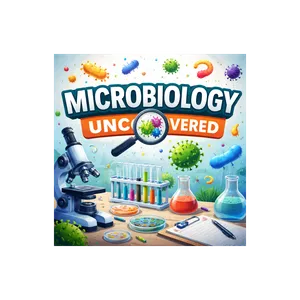
This podcast explores the fascinating world of microorganisms through the foundational concepts presented in Tortora, Funke, and Case's Microbiology: An Introduction. Each episode breaks down key microbiology topics—including microbial structure, metabolism, genetics, immunology, infectious disease, and microbial control—clearly and engagingly.Designed for students in nursing, health sciences, and biology, the podcast connects core microbiological principles with real-world health applications. Listeners will gain a deeper understanding of how microbes influence human health, disease, and the environment.Perfect for reviewing course material, reinforcing lectures, or exploring microbiology beyond the classroom.
Latest Episodes
The most recent episodes — sign up to get AI-powered summaries of each one.
- Mar 18, 202626 min
Pathogenic Mechanisms and the Study of Infectious Disease
This lecture material explores the core principles of pathology and epidemiology, revealing how diseases arise and ripple through populations. It clarifies key terms such as virulence and pathogenesis while tracing the course of illness from incubation to recovery. The text delves into the delicate balance between humans and their microbiome, showing how infections emerge when this harmony is disrupted. It spotlights healthcare-associated infections, emphasizing the vulnerability of compromised patients and the vital role of hygiene in halting disease spread. Furthermore, it reveals how pathogens breach defenses through multiple entry points and deploy strategies such as capsules and antigenic variation to evade the immune system. The session wraps up with practice exam questions to reinforce understanding of microbial traits and transmission pathways.
- Mar 18, 202625 min
Viruses and Industrial Microbiology 1 source
These lecture materials explore the diverse and vital roles viruses and microorganisms play in both living systems and industrial processes. They start by tracing the intricate life cycles of bacteriophages and animal viruses, revealing how some pathogens can trigger tumor growth or cause neurological harm through prions. Shifting the focus to industry, the content showcases microbes as indispensable agents in water purification and the production of a variety of products, including pharmaceuticals, enzymes, and food additives. Emphasizing health and safety, the lectures delve into food preservation methods like pasteurization and highlight the enduring benefits of probiotics and prebiotics. The presentation concludes by underscoring the crucial role of bioremediation, where targeted organisms help detoxify pollutants and manage organic waste effectively.
- Mar 17, 202624 min
Microbial Classification: Eukaryotes, Viruses, and Prions
These educational materials offer an in-depth journey into microbial classification, spotlighting the fascinating diversity of eukaryotes and infectious agents. Beginning with clear definitions of protists and algae, the text unravels the intricate life cycles of Apicomplexa parasites responsible for malaria and toxoplasmosis. It then delves into the world of arthropods, revealing how insects and arachnids act as biological or mechanical vectors for disease transmission. A major section delves into virology, detailing the replication of bacteriophages and animal viruses, their role in cancer development, and laboratory cultivation techniques. The source concludes by introducing prions, extraordinary protein-based pathogens linked to devastating neurodegenerative diseases and fatal brain disorders.
- Mar 17, 202622 min
Microbial Classification and Identification Systems
This educational guide delves into the systematic methods for classifying and identifying microorganisms, distinguishing between grouping related species and matching unknown specimens to known traits. Using tools like Bergey’s Manual alongside biochemical and staining tests, scientists chart the vast diversity of life, from Gram-positive and Gram-negative bacteria to complex eukaryotes. The guide highlights the endosymbiotic theory explaining the origins of eukaryotic cells and explores the unique traits of the four eukaryotic kingdoms, with special attention to the fascinating world of mycology. Ultimately, it serves as a primer on biological lineage, showing how even the largest living organisms, like expansive fungal networks, are shaped by their nutritional and reproductive strategies.
- Mar 17, 202624 min
Microbial Genetics and Antimicrobial Chemotherapy
This lecture overview delves into how microbial genetics shapes the success of antibiotic treatments. It highlights mutations and genetic transfer as the key forces driving bacterial evolution and survival in the face of environmental challenges. The discussion covers diverse antimicrobial strategies, from breaking down cell walls to blocking vital metabolic pathways, and reveals how clinicians assess drug potency through diffusion and dilution tests. A major focus is the escalating threat of antibiotic resistance, fueled by natural selection and human error. Ultimately, it emphasizes that combining drugs strategically and thorough patient evaluation are vital weapons in outsmarting today's resilient bacteria.
- Mar 17, 202621 min
Microbial Metabolism and the Central Dogma of Molecular Biology
This lecture dives into microbial metabolism, the intricate chemical dance cells perform to keep life thriving. It splits into catabolism, where molecules break down to unleash energy, and anabolism, which harnesses that energy to build vital cellular parts. Enzymes take center stage as biological catalysts, speeding up reactions by lowering the activation energy, yet they remain finely tuned to environmental cues such as pH and temperature. The material explores how cells craft ATP through oxidation-reduction reactions and phosphorylation. Key metabolic pathways, such as glycolysis and the Krebs cycle, emerge as microbes' main strategies for transforming nutrients into energy. Additionally, it reveals how inhibitors and feedback loops skillfully regulate enzyme activity to preserve cellular harmony.
- Mar 17, 202621 min
Microbial Growth and Control
This lecture dives into the nutritional needs, growth behaviors, and chemical defenses against microorganisms. It explores how bacteria acquire vital elements such as nitrogen and carbon, sorting them into autotrophs, phototrophs, or chemotrophs based on their energy and food sources. The material unpacks the process of binary fission and reveals how biofilms form as resilient microbial communities that defy standard cleaning methods. It also highlights how environmental factors, such as temperature, shape bacterial growth and affect food safety. Lastly, the effectiveness of disinfectants such as halogens, alcohols, and heavy metals is tested using the disc diffusion method to demonstrate strategies for halting microbial threats.
- Mar 17, 202622 min
Introduction to microbiology
This introductory microbiology lecture invites students to explore the fascinating world of microscopic life, from bacteria and viruses to fungi and protozoa. It sets clear grading criteria and course expectations while weaving a captivating historical journey that features pioneers such as Antoni van Leeuwenhoek and Louis Pasteur. The lecture unpacks the key differences between prokaryotic and eukaryotic cells and highlights how most microbes, including those in our own microbiome, play beneficial roles. Students also delve into the scientific naming system, discover diverse microbial shapes, and learn about the unique traits of various biological domains. To support learning, the session introduces memory techniques and practical PowerPoint cues designed to boost retention and engagement.
Get Microbiology Uncovered summaries in your inbox
Free AI-powered daily recaps. Key takeaways, quotes, and mentions — in a 5-minute read.
Get Free Summaries →Free forever for up to 3 podcasts. No credit card required.
You Might Also Like
Podcasts in similar categories.
The Jamie Kern Lima Show
Entrepreneur Jamie Kern Lima interviews experts and celebrities about overcoming self-doubt and building self-belief.

Makes Sense - with Dr. JC Doornick
Explores everyday mysteries and thought-provoking questions about human behavior and reality.
The Mel Robbins Podcast
A motivational podcast offering research-backed tools and personal stories to help listeners make positive life changes.

Hidden Brain
Explores human behavior and the unconscious patterns that shape our decisions, relationships, and society through science and storytelling.

The Level Up Podcast w/ Paul Alex
A former detective shares real stories and practical strategies on building passive income, financial freedom, and entrepreneurial success.

From Underdog to Entrepreneur: Building Dreams with Pat Miller
A former underdog interviews successful entrepreneurs to share strategies for overcoming odds and building businesses from the ground up.
Something You Should Know
Explores practical wisdom and expert insights to help listeners improve their lives, careers, and relationships.

The Diary Of A CEO with Steven Bartlett
Raw, unfiltered conversations with influential figures and experts exploring personal growth, mindset, and the realities of success.
About Microbiology Uncovered
This podcast explores the fascinating world of microorganisms through the foundational concepts presented in Tortora, Funke, and Case's Microbiology: An Introduction. Each episode breaks down key microbiology topics—including microbial structure, metabolism, genetics, immunology, infectious disease, and microbial control—clearly and engagingly.Designed for students in nursing, health sciences, and biology, the podcast connects core microbiological principles with real-world health applications. Listeners will gain a deeper understanding of how microbes influence human health, disease, and the environment.Perfect for reviewing course material, reinforcing lectures, or exploring microbiology beyond the classroom.
Customized Recaps
AI-powered recaps with compact key takeaways, quotes, and insights.
Straight to Your Inbox
Get key takeaways from Microbiology Uncovered in a 5-minute read.
Save Hours Every Week
Stay current on your favorite podcasts without falling behind.
Frequently Asked Questions
What is Podzilla's Microbiology Uncovered daily summary?
It's a free AI-powered email that summarizes new episodes of Microbiology Uncovered as soon as they're published. You get the key takeaways, notable quotes, and links & mentions — all in a quick read.
How does the Microbiology Uncovered podcast summary work?
When a new episode drops, our AI transcribes and analyzes it, then generates a personalized summary tailored to your interests and profession. It's delivered to your inbox every morning.
Is this an official Microbiology Uncovered product?
No. Podzilla is an independent service that summarizes publicly available podcast content. We're not affiliated with or endorsed by Daisy.
Can I get summaries of other podcasts too?
Absolutely! The free plan covers up to 3 podcasts, any in the catalog. Basic raises that to 15, Pro to 40 and Max to 100. Browse our full catalog at /podcasts.
How often does Microbiology Uncovered release new episodes?
Microbiology Uncovered publishes daily. Our AI generates a summary within hours of each new episode.
What topics does Microbiology Uncovered cover?
Microbiology Uncovered covers topics including Science, Education, Courses, Life Sciences. Our AI identifies the specific themes in each episode and highlights what matters most to you.
Start getting Microbiology Uncovered summaries tomorrow morning.
Free forever for up to 3 podcasts. No credit card required.
Free forever for up to 3 podcasts. No credit card required.