Free Daily Podcast Summary
Master Your Marriage: Daily Summaries Delivered
by Sharla and Robert Snow
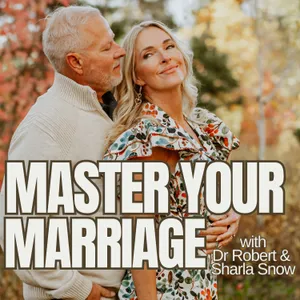
The average couple waits 6 years to get help in their marriage. That's 6 years of pain, hurt, frustration and lost opportunity. This podcast is designed to help you NOT become a part of that statistic. Hosted by Dr. Robert and Sharla Snow — themselves married for 31 years — The Master Your Marriage show is here with straight-talking guidance on how to fill your marriage with fun, friendship and love, without it ever feeling like "hard work." No matter how long you've been struggling with your marriage, or how long it's been since you've felt that "spark," we promise you, there is hope! Your MASTERFUL marriage starts here.
Latest Episodes
The most recent episodes — sign up to get AI-powered summaries of each one.
- 5 days ago25 min
Why Your Marriage Collapses Under Pressure
Get the workbook that accompanies this seriesLast week we talked about borrowing a self. How many of us build a pseudo-self out of attention and approval — reassurance from a partner, praise from a boss, a degree, a title. Those boosters attach our worth to things we do not control. When the attention is stripped away, we don’t really know who we are. That is a recipe for more anxiety and more reactivity.A solid self is built on beliefs, values, and principles you have defined for yourself. Not the ones you inherited and never questioned.That is this episode. Principles. The handful of things you would still conduct yourself by if nobody clapped, if your partner didn’t agree, and if the tension in the room got really thick. That’s when we find out who we are and what we will stand for.In this conversation we talk about:The pile of “shoulds” we bring into marriage, and how the pseudo-self absorbs them to keep the peaceWhy true belief is not rebelling and not conforming — it is your own reasoningThe difference between a value and a principleWhy feelings are information, but they don’t get to driveHow a family code becomes “personality,” and then collides with someone else’s codeWhat an I-position sounds like — sentences about your functioning, not a diagnosis of themWhy the system may spike in anxiety when you stop borrowing, and why that is not proof you chose wrongA value can live in your head. A principle has to show up in how you treat the person across from you. You do not have a principle until you can argue for it — to yourself. If you cannot hold it unless someone is nodding, it is still a booster.Fulfillment and comfort are not the same thing. Living a borrowed life can look successful and still feel empty. Living a principled life can feel tense at first. It is a life you respect.This week’s assignmentOne value. Your own thinking.Pick one value that really matters in this marriage.Write two or three principles under it. Sentences that start with I.Argue for them. Why this? What does it protect? What does it cost? When would you still keep it?Do the borrowed test. Whose voice is this?Live one sentence for seven days. Stay in contact. When anxiety comes, stop, breathe, ask what the real story is.If you want the longer version, we made a downloadable workbook that walks the three-episode stack and gives you space to write your relationship principles. $5 on our Stan Store.Don’t wait on it to start. This episode is enough to begin.When an anxious person starts to think for herself or himself, the entire relationship system becomes a lot less reactive.MentionedKathleen Smith, Everything Isn’t Terrible: Conquer Your Insecurities, Interrupt Your Anxiety, and Finally Calm DownMurray Bowen, family systems theoryWorkbook [LINK]: https://stan.store/masteryourmarriage/p/when-disagreement-feels-like-a-threatConnect With Us:Website: MasterYourMarriage.usInstagram: https://www.instagram.com/masteryourmarriageFacebook: https://www.facebook.com/MasterYourMarriage/If you try this and something shifts, even a little, we’d love to hear about it. Reply to this episode or send a note through masteryourmarriage.us.If you and your partner want help practicing conversations like this, you can book a free 30-minute discovery call at masteryourmarriage.us.
- 1 weeks ago25 min
Why You Manage Their Mood Instead of Your Own
Last week we talked about anxiety as a response to a real or imagined threat. How we make our partner the threat. How reactivity is the anxiety.This week is the question underneath that: why does their disagreement knock the floor out from under you?A lot of us don’t actually know who we are unless someone is reflecting it back. Praise. A title. Being busy. A spouse who validates us. A room that doesn’t push back. Those things feel like a self. They’re boosters. They work for a minute. Then they wear off, and we need the next one.That’s borrowing a self. And a borrowed self experiences “I don’t see it that way” as a threat. So of course we manage their mood. Of course we please, campaign, or reach for distance. We’re trying to get the floor back.In this episode we talk about:Why you can look so capable at work and come undone at homeHow boosters and borrowed selves make difference feel dangerousWhat differentiation actually means in a marriageWhy cutting people out soothes anxiety, until you run out of peopleSmall ways to start using your own mind againYou can see a hard thing differently than your partner sees it and still stay in the room. Not because you agree. Because you each have enough self to let the other person have a self too.This week’s practiceNotice:When do I use my achievements to prop up my sense of self, or even just my mood?When have I focused more on getting love or praise than on developing my own beliefs, principles, or interests?How might I take a little more responsibility for my sense of self this week?And in the moment: stop. Breathe. Ask how the best version of you would want to respond. Try your own thinking before you ask someone to tell you, fix it, or approve it.MentionedKathleen Smith, Everything Isn’t Terrible: Conquer Your Insecurities, Interrupt Your Anxiety, and Finally Calm DownConnect With Us:Website: MasterYourMarriage.usInstagram: https://www.instagram.com/masteryourmarriageFacebook: https://www.facebook.com/MasterYourMarriage/If you try this and something shifts, even a little, we’d love to hear about it. Reply to this episode or send a note through masteryourmarriage.us.If you and your partner want help practicing conversations like this, you can book a free 30-minute discovery call at masteryourmarriage.us.
- 2 weeks ago29 min
When Your Partner Feels Like a Threat - Relationship Anxiety Explained
If you don’t think you have anxiety, this episode is probably for you.A lot of us hear “anxiety” and picture someone who worries all day and imagines every disaster. That is not how it usually shows up in marriage. In close relationships, anxiety often looks like defensiveness, shutting down, fixing, blaming, or making your partner the problem.In this episode, we reframe anxiety as a response to a real or imagined threat. That threat system is useful. It is supposed to help you stay alive. The trouble is that humans don’t just react to actual danger. We can invent it. We can turn disagreement, feedback, or feeling misunderstood into a bear.Drawing on ideas from Dr. Kathleen Smith’s book Everything Isn’t Terrible, we talk about:Why reactivity is an anxiety responseHow we make our partner the threatWhy focusing on the other person usually increases anxietyHow curiosity helps you override autopilotWhat it means to respond instead of reactYou are never going to become a robot who never gets triggered. That is not the goal. The goal is to slow down long enough to ask, “What’s the real story here?” Not every alarm is a fire. Sometimes it is just feedback.This week’s practiceObserve:When does my anxiety perceive danger where there is none?When do I focus on or blame my partner, and how does that increase my anxiety?Then get more curious:How does focusing on the other person conflict with who I want to be?How does responding to imagined danger affect my relationship?Where can I practice focusing on my side of the street this week?MentionedKathleen Smith, Everything Isn’t Terrible: Conquer Your Insecurities, Interrupt Your Anxiety, and Finally Calm DownConnect With Us:Website: MasterYourMarriage.usInstagram: https://www.instagram.com/masteryourmarriageFacebook: https://www.facebook.com/MasterYourMarriage/If you try this and something shifts, even a little, we’d love to hear about it. Reply to this episode or send a note through masteryourmarriage.us.If you and your partner want help practicing conversations like this, you can book a free 30-minute discovery call at masteryourmarriage.us.
- 3 weeks ago22 min
Why “AND” Changes Hard Conversations
One of the smallest words in English can quietly change the emotional climate of a marriage.In this episode, we talk about the difference between “but” and “and.” “But” often cancels whatever came before it. “And” lets two truths stand side by side.This is not a dramatic new technique. It is a simple linguistic shift that helps couples stay on the same side of the problem — in hard conversations, in parenting, and in the first conversation that happens inside your own head.We also look at how a childhood diet of hard “No” can shape rigid “No adults,” how shame thinks in either/or, and how the Wise Adult posture sounds in real time.In This EpisodeWhy “but” undercuts ownership and makes the second half of the sentence the only pointHow “and” holds two realities at once without forcing one to erase the otherEither/or thinking vs both/and (dialectical) thinkingAdaptive Child vs Wise Adult — rigidity vs flexibilityPaul Zohav’s idea of “No adults” and the relational cost of growing up without enough “and”How to bridge a “No” with an “And” without abandoning your needsThe most important place to practice “and”: the conversation in your own headThe shame mantra: “I’m enough and I matter despite…”Everyday sentence swaps for plans, mental load, repair, and moneyKey TakeawaysYou can own your part and name the impact.You can hold a boundary and honor the other person’s experience.You can regret something and still be enough.Marriage is full of moments where two true things are happening at the same time. “And” is one of the simplest ways to practice that kind of maturity.Practice This WeekNotice. For three days, just catch how often you use “but” when feelings, responsibility, or need are involved. Write a few down.Practice the internal version. When shame or harsh self-talk shows up, insert an “and.” Try: “I’m enough and I matter despite…”Use it once out loud. Choose one lower-stakes conversation and deliberately hold two truths with “and.”Connect With Us:Website: MasterYourMarriage.usInstagram: https://www.instagram.com/masteryourmarriageFacebook: https://www.facebook.com/MasterYourMarriage/If you try this and something shifts, even a little, we’d love to hear about it. Reply to this episode or send a note through masteryourmarriage.us.If you and your partner want help practicing conversations like this, you can book a free 30-minute discovery call at masteryourmarriage.us.
- Aug 19, 202633 min
Empathy: The Antidote to Contempt
We just spent two episodes looking at contempt—the number one predictor of divorce. One of the clearest takeaways is this: empathy and contempt cannot live in the same room.When contempt is operating, we elevate ourselves. Disgust and superiority crowd out our capacity to stay present with the person we claim to love the most. And when we lose that presence, we start wounding each other without fully seeing it.In this episode, Sharla unpacks empathy as the skill that stands opposite to contempt. Drawing from Nonviolent Communication, she offers a clear definition, clears up common confusions about what empathy is (and isn’t), walks through the three essentials of how to actually do it, and names the three situations where empathy is hardest. The episode ends with a practical exercise you can use this week to start rebuilding the muscle.In this episode you’ll learn:Why empathy and contempt cannot coexistA clean definition of empathy: giving full presence and sensing what is alive in the other personWhat empathy is not (sympathy, advice, “I understand,” correcting, and agreeing)The three essentials: Being Present, Focusing on the Now, and Sensing Feelings & NeedsHow to stay present with harsh words, a closed-off partner, and hearing “No”A simple written exercise (the Emotion Shifting Exercise) to practice shifting from judgment toward compassionFree ResourceDownload the Emotion Shifting Exercise worksheet hereThis week’s challengePick one recent moment where you felt judgment, superiority, or flat toward your partner. Do the Emotion Shifting Exercise with it. Notice what shifts in your body and perspective.Empathy will not fix everything. But without it, almost nothing else we try will last. It is the soil that repair, intimacy, and lasting closeness grow in.If this episode was useful, would you leave a five-star review and share one thing that landed for you? And if someone in your life needs this conversation, please share it with them.For coaching or to practice these skills live with your partner, reach out at masteryourmarriage.us.
- Aug 12, 202629 min
Walking Away from Contempt
Last week we named the problem: contempt is addictive, corrosive, and the #1 predictor of divorce. This week we take up the harder question—how do we actually walk away from it?We open with an honest look at whether it’s possible to keep a largely contempt-free marriage while still participating in a culture that runs on contempt. The short answer: not in any deep or sustainable way. Contempt is a habit of mind, and habits don’t stay neatly contained. What we practice outside the home eventually shapes the atmosphere inside it.From there we get practical. Drawing from Arthur Brooks’ Love Your Enemies, John Gottman’s research, and real marriage experience, we walk through six concrete steps for starving the contempt habit and practicing warm-heartedness—especially at home.In this episode we discuss:Why you can’t fully separate “contempt out there” from “contempt at home”The quiet fears that grow in a spouse when contempt is part of the atmosphereTreating your marriage as the laboratory for changeThe 5-to-1 rule and why it mattersMaking a personal rule that contempt is never justifiedReal moral courage: standing up for people who believe differently than youStaying curious instead of assuming the worstReducing exposure to outrage cultureUsing moments of contempt as practice opportunitiesThis episode is about direction, not perfection. The goal is to begin walking away from contempt—on purpose, over time—starting with the person who knows you best.Book mentioned:Love Your Enemies by Arthur BrooksRelated episode:The Addiction of ContemptGet in TouchWebsite: MasterYourMarriage.usInstagram: https://www.instagram.com/masteryourmarriage
- Jul 29, 202632 min
The Addiction of Contempt
In this episode, we unpack one of the most destructive forces in modern relationships: contempt.Drawing from Arthur Brooks’ book Love Your Enemies, we explore why contempt is not just a communication problem—but an addictive pattern that is quietly eroding marriages, families, and our sense of belonging. We look at the difference between anger and contempt, the brain chemistry that makes contempt feel rewarding in the short term, and the research showing how costly it becomes over time.We also examine the loneliness epidemic, particularly among younger generations, and how a culture of contempt may be one of the hidden drivers behind our growing disconnection.This episode focuses on awareness. Next week, we’ll get practical and ask a harder question: Is it possible to build a marriage and home largely free of contempt while still living in a culture that constantly invites us into it?In this episode, we discuss:Why contempt may be one of the most addictive relational patterns in our cultureThe Vietnam War heroin study and what it reveals about our need for real connectionThe difference between anger and contemptJohn Gottman’s research on contempt as the strongest predictor of divorceThe physical and emotional costs of living with chronic contemptMotive attribution asymmetry and why political division feels so personalWhy so many of us hate the division… yet keep participating in itBook mentioned:Love Your Enemies by Arthur BrooksNext episode:We’ll explore whether it’s possible to keep contempt out of our closest relationships while still engaging with a culture that runs on it—and what that practice actually looks like.Get in TouchWebsite: MasterYourMarriage.usInstagram: https://www.instagram.com/masteryourmarriageFacebook: https://www.facebook.com/MasterYourMarriage/Mentioned in this episode:Research Interview RequestBefore we get back to the episode, I want to share something quick. A lot of people who listen here are looking for more support than the podcast alone can offer. Some are interested in coaching, but many want a more structured program with clear tools and ongoing guidance. We’re in the early stages of creating something like that right now, and we’re looking for a few people to interview so we can make sure we get it right. If you’ve ever felt successful in your career but disconnected at home, I’d really love to talk with you to get your insights as we create something that can genuinely help couples. This is purely for research — no sales pitch, no pressure. If you’re interested, go to masteryourmarriage.us/research to schedule a quick interview.” Alright…back to the episode
- Jul 22, 202624 min
Breaking the Silent Treatment: How to End the Silence and Reconnect in Your Marriage
We’ve all heard (or said) those loaded words: “We need to talk.” For most of us, they immediately trigger defensiveness and dread. But what happens when conversations stop altogether? In this replay episode, we explore the difference between healthy silence and the damaging silent treatment, why it’s so harmful to your marriage, and practical ways to break the silence and start reconnecting.Whether you’re currently experiencing emotional distance, stonewalling, or a full-blown demand-withdrawal pattern, this conversation offers hope and actionable steps. We discuss real client situations, common pitfalls, and how to approach hard topics without triggering another fight.Key Topics Covered:The critical difference between a productive “adult time-out” and the silent treatmentHow the silent treatment functions as a form of emotional control or abuseWhy research shows the silent treatment activates the same brain areas as physical painPractical scripts and strategies to name the silence and turn toward each other againThe power of “I” statements and acknowledging fear to rebuild connectionIf silence has been growing in your relationship, this episode will help you take that first brave step back toward one another.Key TakeawaysSilence can be golden when it’s a mutual agreement to revisit the conversation later. The silent treatment is a refusal to engage at all.The silent treatment leaves the other person feeling rejected, unimportant, and unloved — and over time it erodes trust and intimacy.Avoiding conflict doesn’t work. Unspoken issues build until there’s no emotional energy left to fight for the marriage.The best way to break the silence is to name it out loud, using vulnerable “I” statements and acknowledging your fears.Small, consistent efforts to turn toward each other are what keep couples from drifting apart.Resources & Further ReadingMeta-analysis on the demand/withdraw pattern: Schrodt, P., Witt, P., & Shimkowski, J. (2014). Communication MonographsAdditional research: NCBI article on the silent treatment and its effectsConnect With UsWebsite: MasterYourMarriage.usInstagram: @masteryourmarriageFacebook: Master Your MarriageLooking for personalized support? Schedule a free 30-minute discovery call at masteryourmarriage.us — we work with couples ready to do the real work of repair.Mentioned in this episode:Research Interview RequestBefore we get back to the episode, I want to share something quick. A lot of people who listen here are looking for more support than the podcast alone can offer. Some are interested in coaching, but many want a more structured program with clear tools and ongoing guidance. We’re in the early stages of creating something like that right now, and we’re looking for a few people to interview so we can make sure we get it right. If you’ve ever felt successful in your career but disconnected at home, I’d really love to talk with you to get your insights as we create something that can genuinely help couples. This is purely for research — no sales pitch, no pressure. If you’re interested, go to masteryourmarriage.us/research to schedule a quick interview.” Alright…back to the episode
Get Master Your Marriage summaries in your inbox
Free AI-powered daily recaps. Key takeaways, quotes, and mentions — in a 5-minute read.
Get Free Summaries →Free forever for up to 3 podcasts. No credit card required.
You Might Also Like
Listeners also like.

EmPowered Couples with The Freemans
Married psychologists Jocelyn and Aaron Freeman offer practical relationship tools and honest coaching for couples navigating challenges together.

The Intimate Marriage Podcast, with Intimacy Coach Alexandra Stockwell, MD
Explores emotional and sexual intimacy in marriage through practical advice on building deeper connection and authentic partnership.

Love This Way!
Discusses modern relationships, emotional wellness, and self-worth to help people build and maintain healthy love.

Money For Couples with Ramit Sethi
Real couples explore money psychology and relationships, guided by Ramit Sethi to align finances with their shared values and goals.

Passion Struck with John R. Miles
Explores purpose, resilience, and connection through science-backed conversations with experts in psychology, neuroscience, and performance.

The Sabrina Zohar Show
Explores modern dating, anxious attachment, and personal growth through raw conversations on healing and self-discovery.

Small Things Often
Quick, research-based tips to strengthen relationships in five minutes or less.

You Are Not Broken
Explores sex, hormones, and midlife for women with science, humor, and candid conversations about body and mind reconnection.

The Dr. John Delony Show
A mental health expert and relationship coach offers advice on building strong marriages and navigating personal challenges.

Studio 5
Conversations with experts and friends aimed at improving home life, relationships, and personal well-being.

The Mel Robbins Podcast
A motivational podcast offering practical, science-backed strategies and personal stories to help listeners improve their lives.

Podmastery: podcasting insights and advice for indie creators
Practical podcasting advice for independent creators aiming to grow their audience and improve production.
About Master Your Marriage
The average couple waits 6 years to get help in their marriage. That's 6 years of pain, hurt, frustration and lost opportunity. This podcast is designed to help you NOT become a part of that statistic. Hosted by Dr. Robert and Sharla Snow — themselves married for 31 years — The Master Your Marriage show is here with straight-talking guidance on how to fill your marriage with fun, friendship and love, without it ever feeling like "hard work." No matter how long you've been struggling with your marriage, or how long it's been since you've felt that "spark," we promise you, there is hope! Your MASTERFUL marriage starts here.
Customized Recaps
AI-powered recaps with compact key takeaways, quotes, and insights.
Straight to Your Inbox
Get key takeaways from Master Your Marriage in a 5-minute read.
Save Hours Every Week
Stay current on your favorite podcasts without falling behind.
Frequently Asked Questions
What is Podzilla's Master Your Marriage daily summary?
It's a free AI-powered email that summarizes new episodes of Master Your Marriage as soon as they're published. You get the key takeaways, notable quotes, and links & mentions — all in a quick read.
How does the Master Your Marriage podcast summary work?
When a new episode drops, our AI transcribes and analyzes it, then generates a personalized summary tailored to your interests and profession. It's delivered to your inbox every morning.
Is this an official Master Your Marriage product?
No. Podzilla is an independent service that summarizes publicly available podcast content. We're not affiliated with or endorsed by Sharla and Robert Snow.
Can I get summaries of other podcasts too?
Absolutely! The free plan covers up to 3 podcasts. Upgrade to Pro for 15, or Premium for 50. Browse our full catalog at /podcasts.
How often does Master Your Marriage release new episodes?
Master Your Marriage publishes weekly. Our AI generates a summary within hours of each new episode.
What topics does Master Your Marriage cover?
Master Your Marriage covers topics including Education, Fitness, Relationships, Culture, Health & Fitness, Society & Culture, Self-Improvement. Our AI identifies the specific themes in each episode and highlights what matters most to you.
Start getting Master Your Marriage summaries tomorrow morning.
Free forever for up to 3 podcasts. No credit card required.
Free forever for up to 3 podcasts. No credit card required.