Free Daily Podcast Summary
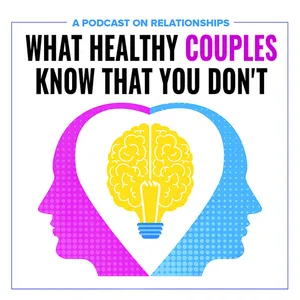
What Healthy Couples Know That You Don't: Relationship Advice and Respect: Daily Summaries Delivered
by Rhoda Sommer LCSW
Relationships matter. Do you want to know the nitty gritty of what makes a relationship work? Get your answers to relationship questions. Learn how to keep respect alive & well, because lack of respect is why people get divorced. Learn what builds trust & how to recover from infidelity, drama or codependency. Advice from psychotherapist Rhoda Sommer based on over 35 years of working with couples. www.therapyideas.net
Latest Episodes
The most recent episodes — sign up to get AI-powered summaries of each one.
- 4 days ago58 min
The Stories That Keep You Stuck: How Your Mind Creates Your Reality—and Your Relationships
We are unreliable narrators of our own stories. We swallow whole the casual observations people have made about us. We believe the mean-spirited things that were shot at us like arrows. We grow up with ideas our parents have given us that may actually be more true about them than they are about us. And then trauma, disappointment, and painful experiences add another layer until we begin creating stories about who we are, what we're worth, and what we're capable of.
- 2 weeks ago49 min
How to Build a Stronger Marriage: Stop Blaming Each Other and Start Choosing "Us"
What if the biggest problem in your relationship isn't that you disagree, fight, or even hurt each other? What if the problem is that, somewhere along the way, you stopped taking care of the "us"? Taking care of the "us" means learning to listen even when we disagree. It means becoming curious about a point of view we don't share instead of mentally rehearsing our rebuttal while our partner is still talking. It means recognizing that understanding someone isn't the same as agreeing with them—and that taking responsibility for our part doesn't mean accepting all the blame.
- Oct 21, 202646 min
What Your Envy Is Trying to Tell You (It's Not What You Think)
There are some emotions we talk about all the time, and then there are emotions we quietly tuck away because we're not proud of them. Envy is one of those emotions. We rarely admit it, rarely examine it, and almost never talk about it honestly. Yet it may be one of the most revealing emotions we experience. While jealousy has become a common topic in relationships, envy usually remains hidden, almost as if acknowledging it would make us a bad person.
- Oct 7, 202645 min
Is Your Partner Really the Problem? The Mental Health Work That Can Transform Your Relationship
Relationships help us grow up. That's one of the things I love about them, even though sometimes it's also one of the things we like the least. Our relationships hold up a mirror to us. They show us where we're generous and where we're selfish, where we're patient and where we're defensive, where we're good listeners and where we're already preparing our rebuttal before the other person has finished talking. And it's so much easier to point the finger at someone else.
- Sep 24, 20261h 0m
Why you keep choosing the wrong people, the hidden trauma behind your relationship patterns
Have you ever looked at your relationships and thought, why do I keep ending up here? Maybe you keep choosing emotionally unavailable people. Maybe you become the caretaker, the pursuer, the one who works harder to make the relationship work. Maybe you recognize the pattern while you're in it and still can't seem to stop repeating it. What if some of the patterns you think are simply bad choices are actually old coping strategies that once helped you survive pain? Trauma doesn't always announce itself as trauma. Sometimes it looks like the person you're attracted to. The way you respond when someone pulls away, the amount of rejection you can tolerate.
- Sep 9, 202656 min
Why You Can't Always Control Your Emotions—and How to Change That
What if being emotionally overwhelmed isn't a character flaw—and learning to regulate yourself isn't about becoming someone who never gets upset? What if self-regulation is simply learning how to find your footing again when life knocks you off balance? That's what makes self-regulation so important for our relationships and our own well-being. It is the internal ability to notice and manage our thoughts, emotions, and behaviors, but more importantly, it reminds us that we have choices even when it feels like we don't.
- Aug 26, 202650 min
The Hidden Habits That Are Quietly Hurting Your Relationship (And How to Change Them)
Have you ever wondered why some people seem to grow through life's hardest experiences while others stay stuck repeating the same painful patterns? Most of us want healthier relationships, greater peace, and a stronger sense of purpose, but wanting change and creating change are two very different things. The truth is that transformation rarely begins with learning one more communication skill. It begins with the courage to be honest with ourselves.
- Aug 12, 202636 min
What Shame Is Really Trying to Tell You: The Surprising Key to Healing Trauma and Finding Yourself Again
Shame is one of the most powerful human emotions. It can quietly influence the choices we make, the relationships we create, the risks we take, and even the way we talk to ourselves when no one else is listening. Unlike guilt, which says "I did something wrong," shame can leave us feeling like "something is wrong with me." And that belief can become a heavy burden to carry.
Get What Healthy Couples Know That You Don't: Relationship Advice and Respect summaries in your inbox
Free AI-powered daily recaps. Key takeaways, quotes, and mentions — in a 5-minute read.
Get Free Summaries →Free forever for up to 3 podcasts. No credit card required.
You Might Also Like
Listeners also like.

Imperfect Love
A psychologist answers real-life questions on love, self-acceptance, and personal growth using a mindfulness-based approach.

The Sabrina Zohar Show
Explores modern dating, anxious attachment, and personal growth through raw conversations on healing and self-discovery.
Rebuilding Us: Marriage Podcast
Dana Che - Christian Speaker & Relationship Expert
Unf*ck Your Relationships
Michelle Panning

Small Things Often
Quick, research-based tips to strengthen relationships in five minutes or less.

I Do, Part 2
Single women over 50 navigate dating and relationships while embracing second chances at love.

Oversharing
Sisters Jordana Abraham and Dr. Naomi Bernstein discuss relationship challenges, answering listener questions with humor and therapy insights.

The Best of You
A therapist and guests explore emotional healing and personal growth through psychology and faith.

You Are Not Broken
A urologic surgeon hosts experts to discuss women's health, hormones, and sexuality with science-backed insights and candid conversation.

How's Work? with Esther Perel
Esther Perel facilitates therapy sessions between coworkers to address emotional conflicts and communication challenges at work.

Decoded | Unlock The Secrets of Human Behavior, Emotion and Motivation
Analyzes subconscious patterns in human behavior and provides methods to change them.
Ask Lisa: Untangling Family Life
Psychologist Lisa Damour answers parents' questions about raising tweens and teens with evidence-based advice on mental health, behavior, and family dynamics.
About What Healthy Couples Know That You Don't: Relationship Advice and Respect
Relationships matter. Do you want to know the nitty gritty of what makes a relationship work? Get your answers to relationship questions. Learn how to keep respect alive & well, because lack of respect is why people get divorced. Learn what builds trust & how to recover from infidelity, drama or codependency. Advice from psychotherapist Rhoda Sommer based on over 35 years of working with couples. www.therapyideas.net
Customized Recaps
AI-powered recaps with compact key takeaways, quotes, and insights.
Straight to Your Inbox
Get key takeaways from What Healthy Couples Know That You Don't: Relationship Advice and Respect in a 5-minute read.
Save Hours Every Week
Stay current on your favorite podcasts without falling behind.
Frequently Asked Questions
What is Podzilla's What Healthy Couples Know That You Don't: Relationship Advice and Respect daily summary?
It's a free AI-powered email that summarizes new episodes of What Healthy Couples Know That You Don't: Relationship Advice and Respect as soon as they're published. You get the key takeaways, notable quotes, and links & mentions — all in a quick read.
How does the What Healthy Couples Know That You Don't: Relationship Advice and Respect podcast summary work?
When a new episode drops, our AI transcribes and analyzes it, then generates a personalized summary tailored to your interests and profession. It's delivered to your inbox every morning.
Is this an official What Healthy Couples Know That You Don't: Relationship Advice and Respect product?
No. Podzilla is an independent service that summarizes publicly available podcast content. We're not affiliated with or endorsed by Rhoda Sommer LCSW.
Can I get summaries of other podcasts too?
Absolutely! The free plan covers up to 3 podcasts, any in the catalog. Basic raises that to 15, Pro to 40 and Max to 100. Browse our full catalog at /podcasts.
How often does What Healthy Couples Know That You Don't: Relationship Advice and Respect release new episodes?
What Healthy Couples Know That You Don't: Relationship Advice and Respect publishes biweekly. Our AI generates a summary within hours of each new episode.
What topics does What Healthy Couples Know That You Don't: Relationship Advice and Respect cover?
What Healthy Couples Know That You Don't: Relationship Advice and Respect covers topics including Fitness, Relationships, Culture, Health & Fitness, Society & Culture, Mental Health. Our AI identifies the specific themes in each episode and highlights what matters most to you.
Start getting What Healthy Couples Know That You Don't: Relationship Advice and Respect summaries tomorrow morning.
Free forever for up to 3 podcasts. No credit card required.
Free forever for up to 3 podcasts. No credit card required.