Free Daily Podcast Summary
Leaning into Leadership: Daily Summaries Delivered
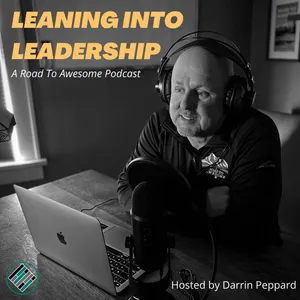
by Darrin Peppard
We all want to see successes in both our personal and professional lives. Often, that requires strong leadership. In a time when leadership can be more challenging than ever, this podcast is dedicated to cultivating leaders by elevating the voices of leaders and promoting positivity. Join Dr. Darrin Peppard, lifelong educator and best-selling author, for this mixed platform podcast (some solo, some guest interview) for inspiration and insight, and some great leadership stories from those are living it, excelling at it, and celebrating it. Together, let's lean into leadership.
Latest Episodes
The most recent episodes — sign up to get AI-powered summaries of each one.
- Today33 min
Episode 299: Too Damn Happy - Building More Joy Into the Work with Phil Januszewski
What if flourishing at work didn't require a massive life overhaul?In this episode of Leaning Into Leadership, Darrin welcomes back speaker, educator, and soon-to-be author Phil Januszewski for a high-energy conversation about happiness, relationships, and the small choices that can make demanding work more sustainable.After 20 years in the classroom, Phil stepped away from teaching to speak full time — or, as he puts it, he “quit my job to help other teachers not quit theirs.” His work now takes him across the country helping educators and other service-oriented professionals feel less tired and more inspired. His upcoming book, Too Damn Happy, draws from his own experiences along with positive psychology to explore practical ways people can flourish even in challenging, high-pressure environments.Darrin and Phil dig into the idea of “building in the good stuff.” Instead of waiting until after work or the weekend to do the things that fill us up, Phil challenges us to intentionally put small moments of joy into the workday itself. A song. A quick walk outside. A two-minute conversation with someone you care about. These aren't dramatic changes; they're small deposits that can make the work more sustainable.They also explore what happens when we give away our natural gifts. Those gifts aren't necessarily talents you can put on a résumé. They might be humor, listening, cooking, creativity, energy, calm, or simply being willing to admit when you don't know something. When we bring more of ourselves into our work and share those gifts with others, we create opportunities for connection — and give others permission to do the same.That leads Darrin and Phil into an important conversation about relationships. We spend a lot of time talking about educators getting to know their students, but relationships are a two-way street. When adults appropriately allow others to see who they really are, they can open the door for trust, vulnerability, and genuine human connection. And students are also watching how the adults around them interact with one another.Phil closes by sharing how he's leaning into leadership right now: giving his gifts and connecting great people with other great people. For him, leadership isn't simply about doing his own work well. It's about helping other people thrive too.In this episode:Why Phil left the classroom after 20 yearsThe story behind Too Damn HappyWhy happiness doesn't require ignoring the difficult parts of our workHow to “build in the good stuff” throughout your dayWhy tiny shifts can make demanding work more sustainableIdentifying and giving away your natural giftsHow vulnerability opens the door to stronger relationshipsWhy students notice the relationships adults modelThe difference between performative positivity and genuine flourishingHow giving and connecting others can become an act of leadershipThis Episode Is Sponsored by HeyTutorHeyTutor partners with schools and districts to provide high-impact, in-person tutoring in literacy and math, giving students targeted support alongside the work of classroom teachers.Learn more about how HeyTutor can support student learning in your school or district at HeyTutor.com
- 1 weeks ago38 min
Episode 298: The Resistance Solution with Becca Silver
What if resistance isn’t something leaders need to overcome?In Episode 298 of the Leaning Into Leadership Podcast, Darrin sits down with Becca Silver, CEO and founder of The Whole Educator and author of The Resistance Solution, for a powerful conversation about what is really happening when educators push back against change.Becca challenges leaders to stop labeling people as “resistant” and instead recognize that resistance is an experience people move through. Rather than relying on compliance, consequences, or generic advice like “build better relationships,” she introduces a human-centered approach that helps leaders understand the unmet needs underneath resistance.Drawing from her own experience as a teacher who resisted change, an instructional coach who initially struggled to create change, and eventually a leadership coach who became highly effective at working with educators experiencing resistance, Becca shares the research behind her five Catalyst Mindsets.Darrin and Becca explore:Why resistance is often the result of unmet needs rather than unwillingness or negativityThe difference between a “resistant teacher” and a teacher experiencing resistanceWhy schools hire critical thinkers—and then sometimes expect them simply to complyThe five Catalyst Mindsets: value, belonging, success, growth, and ownershipWhy generic strategies for dealing with resistance often miss the real problemThe critical difference between compliance, buy-in, and true ownershipWhy agency is essential if leaders want people to own changeHow clarity around non-negotiables and professional judgment can immediately increase ownershipWhy leaders must explicitly tell people where they have permission to use their expertiseHow human-centered leadership can move change forward without going around people’s humanityOne of the most practical takeaways from the conversation is something leaders can implement immediately: be crystal clear about what is non-negotiable and where people have the agency to exercise their professional judgment.When people understand where they have voice, choice, and the ability to make a meaningful impact, leadership can begin moving beyond compliance and toward genuine ownership.Becca also shares how she is personally leaning into leadership through shared leadership—developing others to lead the work rather than building something that depends entirely on her.Connect with Becca SilverBecca Silver is the CEO and founder of The Whole Educator and author of The Resistance Solution. Her work helps instructional coaches and educational leaders navigate resistance to change through a human-centered approach.Learn more about Becca, The Resistance Solution, the Resistance Solution Community, her Book Study Facilitator Training, and the Coaching the Whole Educator podcast through The Whole Educator.This Episode Is Sponsored by HeyTutorHeyTutor partners with schools and districts to provide high-impact, in-person tutoring in literacy and math, giving students targeted support alongside the work of classroom teachers.Learn more about how HeyTutor can support student learning in your school or district at HeyTutor.com
- 2 weeks ago33 min
Episode 297: Stop Accepting “That’s Just the Way It Is”
What happens when growth doesn’t solve your problems—but actually makes them bigger?In Episode 297 of Leaning Into Leadership, Dr. Darrin Peppard sits down with entrepreneur, Marine veteran, and business leader Ron Nussbaum for a conversation about entrepreneurship, problem solving, challenging the status quo, and what it really takes to build something that matters.Ron shares the story behind BuilderComs and the realization that changed the way he thought about growth: if you scale your organization without solving the problems already inside it, you’re simply scaling those problems too.That lesson reaches far beyond entrepreneurship.Darrin and Ron explore why leaders sometimes become comfortable tolerating things that are merely “okay,” why challenging the status quo doesn’t mean changing everything, and why one of the most important questions a leader can ask is, “What problem are we actually trying to solve?”Ron also shares the thinking behind Ask a Shop Owner, a platform designed to give small business owners actionable guidance and accountability when they encounter real-world business challenges.The conversation closes with an important reality about entrepreneurship and leadership: every meaningful pursuit involves trade-offs. The goal isn’t to avoid them. It’s to intentionally choose the trade-offs that move you toward the life, organization, and outcomes you actually want.In this episode:Why leaders need to stop scaling problemsChallenging “that’s just the way we’ve always done it”Finding the real problem before searching for solutionsWhy growth can magnify existing organizational weaknessesTurning experience and knowledge into actionable plansThe role accountability plays in creating resultsWhy entrepreneurship requires uncomfortable trade-offsChoosing freedom, stability, and the outcomes that matter mostExpanding the reach of your leadershipRon’s challenge is simple but powerful: don’t accept a problem simply because everyone else has learned to live with it. Challenge it. Solve it. Then scale the solution.This Episode Is Sponsored by HeyTutorHeyTutor partners with schools and districts to provide high-impact, in-person tutoring in literacy and math, giving students targeted support alongside the work of classroom teachers.Learn more about how HeyTutor can support student learning in your school or district at HeyTutor.com
- 3 weeks ago35 min
Episode 296: Beyond Compliance - Building Classrooms Where Students Want to Engage
What if the goal of great teaching isn’t getting students to comply, but creating the conditions where they genuinely want to engage?In this episode of Leaning Into Leadership, Dr. Darrin Peppard sits down with educator, school leader, author, and founder of Terry Leadership Group, Kendall Terry, for a conversation about what happens when schools stop focusing primarily on what teachers are doing and start paying closer attention to what students are actually learning.Kendall shares his experience helping build Clayton-Bradley Academy from its early years and the unique opportunity that came with designing educational systems from the ground up. Rather than inheriting decades of “this is how we’ve always done it,” Kendall and his colleagues were able to ask a different question: What does research tell us about how the brain learns, and how should that change what happens in our classrooms?That question eventually helped shape the Learning-Centered School Model, where the learner—not the teacher, the curriculum, or the test—is at the center of instructional decisions. Kendall and Darrin explore what that actually looks like in practice, from something as simple as welcoming every student into the classroom to making learning relevant, interactive, safe, and meaningful.The conversation then moves into Kendall’s BRACE Framework, five conditions that can dramatically influence engagement:B — Belonging: Students and teachers need to know they are valued and that their voices matter.R — Relevance: Learners need to understand what they are learning and why it matters.A — Agency: Students and teachers need autonomy, ownership, and opportunities to create, try, fail, and try again.C — Challenge: Learning should stretch people appropriately while providing the support necessary for success.E — Engaged Response: Learning isn’t a one-and-done transaction. Students need opportunities to respond, receive feedback, revisit their thinking, and continue until they reach mastery.For school leaders, BRACE also provides another powerful opportunity: shifting classroom walkthroughs and instructional feedback away from simply looking for compliance and toward identifying the conditions that produce authentic student engagement. As Kendall points out, students can comply because they don’t want to get in trouble—or they can engage because the learning experience is meaningful enough that they actually want to participate. Those are very different outcomes.Darrin and Kendall also dig into SMART habits and an important leadership truth: goals give us a destination, but habits determine whether we ever get there.The challenge isn’t deciding that we want greater belonging, stronger engagement, or improved student achievement. The challenge is determining what we will actually do on a Tuesday afternoon when the fire drill just ended, students are bouncing off the walls, and the big strategic goal is the furthest thing from our minds.Kendall suggests starting incredibly small. Want to increase belonging? Build the habit of greeting every student by name. Then connect the behavior to a predictable trigger: If class is beginning, then I will greet every student who enters my classroom by name.Small. Repeatable. Intentional.And over time, potentially transformational.Finally, Kendall answers the question every guest on Leaning Into Leadership receives: How are you leaning into leadership right now?His answer is one every leader should consider: listening.Not listening while preparing the next response. Not listening long enough to tell someone why they're wrong. But listening with the genuine intention of understanding another person's perspective, experience, and situation.Because belonging begins when people believe their voice actually matters.In This EpisodeWhy student learning—not teacher performance—should be at the center of instructional decisionsHow brain research can influence everyday classroom practiceWhy greeting students and creating predictability matter more than we sometimes realizeThe difference between student compliance and genuine engagementKendall's BRACE Framework for increasing engagementHow belonging, relevance, agency, challenge, and engaged response work togetherWhy leaders can use BRACE to strengthen classroom walkthroughs and feedbackThe limitations of setting goals without intentionally developing habitsHow small, repeatable habits can create significant changeWhy leaders need to listen to understand instead of listening to respond<
- 4 weeks ago43 min
Episode 295: Who Takes Care of the Leader? with Melissa Doman
Leadership comes with expectations. Be steady. Be available. Support your people. Make the difficult decisions. Carry the pressure.But what happens when the person everyone looks to for support needs support too?In this episode of Leaning Into Leadership, Darrin sits down with organizational psychologist, former therapist, and author Melissa Doman for an honest and practical conversation about leadership mental health, communication, emotional intelligence, and what sustainable leadership actually looks like.Melissa challenges the idea that leaders should simply absorb the pressure that comes with the role. Instead, she argues that organizations need to humanize leaders and give them permission to communicate their needs, acknowledge their capacity, and access the same resources they are expected to provide for everyone else.Darrin and Melissa explore the popular idea that “leaders eat last” and why servant leadership can become unhealthy when leaders interpret service as sacrificing themselves for everyone around them. Sustainable leadership requires leaders to care for others and manage their own emotional and cognitive capacity.The conversation gets incredibly practical as Melissa introduces the idea of communicating capacity — being able to tell your team honestly where you are and what you can realistically handle. If you're operating at 30 or 40 percent on a particular day, your team doesn't need you to pretend you're at 100. They need clarity about what they can expect from you.Darrin and Melissa also discuss:Why emotional intelligence, communication, and constructive conflict should be considered core professional developmentWhy policies and procedures aren't enough if people haven't learned how to communicate effectivelyThe danger of practicing servant leadership to your own detrimentHow leaders can give team members permission to speak up when something seems differentWhy curiosity is more productive than immediately judging a leader's behaviorHow to communicate your capacity without using it as an excuse for poor performanceThe difference between mission-critical priorities and manufactured emergenciesStephen Covey's circles of control, influence, and concernCreating personal mental well-being non-negotiables that actually work for youWhy leadership peer-support networks should exist inside organizationsThe importance of leaders modeling the use of the resources they encourage their employees to useWhy leadership can become incredibly lonely — and why leaders need other leaders who understand what it means to “sit in the chair”Melissa also shares insights from her book Cornered Office: Why We Need to Talk About Leadership Mental Health, along with the upcoming Wiley re-release of Yes, You Can Talk About Mental Health at Work: Here's Why (and How to Do It Really Well).And because this is Leaning Into Leadership, the conversation somehow also includes salsa dancing, inflatable Velociraptors, ABBA…and the first-ever Chewbacca impression in podcast history. Well, at least in this podcast's history.About Melissa DomanMelissa Doman is an organizational psychologist, former therapist, author, speaker, and consultant who teaches organizations, leaders, and employees the practical skills needed to talk about mental health, communication, and team dynamics at work. Her clients range from global organizations to professional sports teams, mid-sized companies, and small businesses around the world.Her latest book, Cornered Office: Why We Need to Talk About Leadership Mental Health, explores the often-overlooked emotional and cognitive realities of leadership and challenges organizations to include leaders in conversations and systems designed to support workplace mental health.Connect with MelissaWebsite: melissadoman.comLinkedIn: Melissa DomanInstagram: @thewanderingmelMentioned in This EpisodeCornered Office: Why We Need to Talk About Leadership Mental Health (link)Yes, You Can Talk About Mental Health at Work: Here's Why (and How to Do It Really Well) — re-releasing from Wiley on September 29, 2026.This Episode Is Sponsored by HeyTutorHeyTutor partners with schools and districts to provide high-impact, in-person tutoring in literacy and math, giving students targeted support alongside the work of classroom teachers.Learn more about how HeyTutor can support student learning in your school or district at <a href="https://heytutor.com/?utm_source=R
- Aug 19, 202622 min
Episode 294: 5 Leadership Traps to Avoid as the School Year Begins
The beginning of a school year brings an energy that is hard to match. The building is ready, staff members are reconnecting, priorities have been established, and leaders walk into the year determined to lead with clarity and intentionality.Then the students arrive.Suddenly the emails pile up, meetings fill the calendar, parent concerns emerge, staffing challenges demand attention, and the urgent begins competing with what you said mattered most.In this special midweek episode of Leaning Into Leadership, Dr. Darrin Peppard challenges school leaders to recognize five common leadership traps that can quietly derail their best intentions during the opening weeks of school.Darrin explores why presence is different from simply being visible, how the Cycle of Chaos can allow urgency to rewrite your priorities, and why communicating something once doesn't mean people understand it. He also challenges leaders to stop solving every problem themselves and to recognize the important difference between giving someone grace and simply avoiding a necessary conversation.The five leadership traps:Retreating to your office once students arriveLetting urgency rewrite your prioritiesAssuming everyone understood the opening-day messageTrying to solve every problem personallyWaiting too long to address something you already know isn't rightAt the center of the episode is one question every school leader should consider as the year gets underway:Is the leader you're becoming in September the same leader you intended to be at the beginning of August?You probably won't lose your school year in the first few weeks. But you can establish habits during those weeks that you'll spend the rest of the year trying to undo.Be intentional now. Protect what matters. And go have a Road to Awesome year.In This EpisodeWhy presence matters more than performative visibilityHow the urgent can quietly replace your real leadership prioritiesWhy your calendar tells the truth about what you valueThe difference between communicating a message and creating clarityHow solving every problem can actually weaken the people around youWhy servant leadership is about empowerment, not doing everything for othersThe difference between grace and avoidanceWhy addressing small issues early protects the culture you're trying to createHow to recognize leadership drift before it becomes your new normalKey Takeaways“You can't recognize what you never see.”“Your calendar is going to tell the truth about your priorities long before your mission statement ever will.”“Don't confuse delivering a message with creating clarity.”“Don't just solve problems. Build problem-solvers.”“What we tolerate teaches a lesson.”“Clarity early is almost always easier than making corrections later.”This Episode Is Sponsored by HeyTutorHeyTutor partners with schools and districts to provide high-impact, in-person tutoring in literacy and math, giving students targeted support alongside the work of classroom teachers.Learn more about how HeyTutor can support student learning in your school or district at HeyTutor.com.
- Aug 16, 202633 min
Episode 293: The Human Side of Leadership with Stacy Nation
Episode 293 of Leaning Into Leadership is a conversation about something every leader needs to understand: we lead humans, and humans bring their experiences, emotions, stress, and trauma with them to work.Darrin sits down with licensed clinical social worker, speaker, author, and military leader Stacy Nation to explore what trauma-informed—and ultimately trauma-restorative—leadership can look like in schools.Stacy challenges leaders to move beyond simply knowing that trauma exists and begin creating environments built around safety, connection, relationships, and restoration. As she explains, one of the most important resiliency factors is having a positive, caring relationship—which makes relationship-building far more than a “soft” leadership skill.The conversation also turns toward the adults in our schools. Are teachers able to meet their own basic needs during the day? What happens after a difficult interaction with a student? Do leaders create conditions that help adults regulate themselves before asking them to help students do the same? Stacy makes the case that supporting adults and maintaining high expectations are not competing ideas.Darrin and Stacy also dig into neuroscience and leadership, including the difference between the reasoning and emotional functions of the brain, why certain questions can immediately create defensiveness, and how leaders can communicate differently when emotions are running high.Stacy shares the story behind her book, What Really Happens in Therapy Behind Closed Doors: A Guided Journey to Healing, and how her experiences as a therapist, military member, parent, and someone navigating her own family story shaped the work.Finally, the conversation comes back to leadership: creating shared language around emotional regulation, moving from reactive to proactive approaches with students, and recognizing that meaningful change requires more than a one-day training.In this episode, you’ll hear about:The difference between trauma-informed and trauma-restorative practicesWhy relationships are a critical resiliency factorCreating environments where adults can regulate and perform at their bestWhy supporting people does not mean lowering expectationsWhat leaders should understand about the reasoning and emotional brainWhy Stacy encourages leaders to replace “Why?” with “Help me understand”Using shared language around regulation throughout a schoolMoving from reactive responses to proactive supportWhy leaders need to live—not simply model—the practices they expect from othersStacy sums up her approach to leadership beautifully near the end of the conversation: leadership changes when what we teach becomes integrated into how we actually live and lead.Connect with Stacy Nation:Website: gobeyou.orgInstagram: Stacy G NationFacebook: Stacy Nation / Stacy G NationLinkedIn: Stacy NationYouTube: Search Stacy Nation or Stacy YorkBook: What Really Happens in Therapy Behind Closed Doors: A Guided Journey to HealingSponsor SpotlightThis episode is proudly sponsored by HeyTutor.HeyTutor partners with school districts across the country to provide high-dosage tutoring in mathematics and English language arts. Their comprehensive approach—including recruiting, training, scheduling, and managing tutors—allows educators to focus on what they do best while accelerating student learning.Learn more by visiting: heytutor.comConnect with DarrinIf this episode challenged your thinking, I'd love to hear from you.What's one piece of feedback that changed the way you lead?Connect with me on LinkedIn or visit https://darrinpeppard.com/ to continue the conversation.If you enjoyed this episode, please subscribe, leave a review, and share it with another leader who could benefit from this message.
- Aug 9, 202625 min
Episode 292: Why Not? A Leadership Mindset That Changes Everything
Sometimes the biggest opportunities in life begin with the smallest moments.For Bradlee Skinner, it started with a selfie at a Savannah Bananas game. That one interaction eventually led him from the classroom to becoming a plaza DJ for the Savannah Bananas and Texas Tailgators. But this conversation isn't really about baseball—it's about leadership, courage, relationships, and choosing to say "Why Not?" instead of asking "What If?"Joining Darrin are Bradlee and Melissa Skinner, two incredible educators who have built careers around creating meaningful experiences for students while embracing growth, creativity, and intentional leadership. Together they share the philosophy that has begun shaping every area of their lives and why that simple mindset shift has opened doors they never imagined.Along the way, they discuss:How one small decision can completely change your future.Why educators should never underestimate the impact of seemingly ordinary moments.Melissa's powerful "Dot" tradition that reminds students they matter.The leadership culture behind the Savannah Bananas and Fans First Entertainment.What schools can learn about creating unforgettable experiences.Why high expectations are one of the greatest gifts leaders can give.How embracing mistakes creates healthier organizations.The difference between living with "What If?" and living with "Why Not?"Whether you're leading a school, a business, or your own family, this episode is a reminder that leadership often begins by saying yes to opportunities before you're completely ready.In This EpisodeThe selfie that unexpectedly changed Bradlee's career.Building a classroom where every student feels seen.Lessons from the Savannah Bananas' culture of intentional leadership.Why "Plus the Experience" is a leadership principle every organization should embrace.Creating environments where people are encouraged to learn through failure.Living a life guided by "Why Not?"Connect with Today's GuestsBradlee SkinnerInstagram/Facebook/TikTok/X: @BradleeWSkinnerDJ Brand: @DJPhonyStarkMelissa SkinnerFacebook: Ms. Melissa SkinnerInstagram: @IncredibleSkinnerTikTok: @MrsMamaSkinnerSponsor SpotlightThis episode is proudly sponsored by HeyTutor.HeyTutor partners with school districts across the country to provide high-dosage tutoring in mathematics and English language arts. Their comprehensive approach—including recruiting, training, scheduling, and managing tutors—allows educators to focus on what they do best while accelerating student learning.Learn more by visiting: https://heytutor.com/?utm_source=RTA&utm_medium=RTA&utm_campaign=RTAConnect with DarrinIf this episode challenged your thinking, I'd love to hear from you.What's one piece of feedback that changed the way you lead?Connect with me on LinkedIn or visit https://darrinpeppard.com/ to continue the conversation.If you enjoyed this episode, please subscribe, leave a review, and share it with another leader who could benefit from this message.
Get Leaning into Leadership summaries in your inbox
Free AI-powered daily recaps. Key takeaways, quotes, and mentions — in a 5-minute read.
Get Free Summaries →Free forever for up to 3 podcasts. No credit card required.
You Might Also Like
Listeners also like.

A Bit of Optimism
Conversations with thinkers and doers exploring what drives purpose, growth, and meaning in life.
The Learning Leader Show With Ryan Hawk
Conversations with top leaders across industries exploring how continuous learning drives success.

Impact Podcast, Mentorship with Eddie Wilson
A seasoned entrepreneur shares insights on building businesses, leadership, and living with purpose to create meaningful impact.

The Entrepreneur DNA
Entrepreneurs share lessons on building businesses and personal growth through real experiences and mistakes.

Rise & Roar with the Badass Lioness
Women rebuild confidence, find their voice, and step into leadership through personal growth and storytelling.

Mick Unplugged
A leadership podcast exploring the deep personal motivations behind high achievers’ success by asking what drives them at their core.
Maxwell Leadership Podcast
Explores principles and practices of transformational leadership to help individuals positively influence others.

Passion Struck with John R. Miles
Explores purpose, resilience, and connection through science-backed conversations with experts in psychology, neuroscience, and performance.

The School of Greatness
Features interviews with top performers across industries to help listeners develop mindset, health, and habits for personal growth.

The One You Feed | Personal Growth, Emotional Resilience & Purpose
Insightful conversations with leading thinkers on personal growth, emotional resilience, and living with purpose.

De Facto Leaders
Pediatric therapist Dr. Karen Dudek-Brannan shares evidence-based strategies for educators and clinicians to support student growth and leadership.

The Daily Motivation
A daily podcast delivering motivational insights from experts and thought leaders to help listeners stay inspired and driven.
About Leaning into Leadership
We all want to see successes in both our personal and professional lives. Often, that requires strong leadership. In a time when leadership can be more challenging than ever, this podcast is dedicated to cultivating leaders by elevating the voices of leaders and promoting positivity. Join Dr. Darrin Peppard, lifelong educator and best-selling author, for this mixed platform podcast (some solo, some guest interview) for inspiration and insight, and some great leadership stories from those are living it, excelling at it, and celebrating it. Together, let's lean into leadership.
Customized Recaps
AI-powered recaps with compact key takeaways, quotes, and insights.
Straight to Your Inbox
Get key takeaways from Leaning into Leadership in a 5-minute read.
Save Hours Every Week
Stay current on your favorite podcasts without falling behind.
Frequently Asked Questions
What is Podzilla's Leaning into Leadership daily summary?
It's a free AI-powered email that summarizes new episodes of Leaning into Leadership as soon as they're published. You get the key takeaways, notable quotes, and links & mentions — all in a quick read.
How does the Leaning into Leadership podcast summary work?
When a new episode drops, our AI transcribes and analyzes it, then generates a personalized summary tailored to your interests and profession. It's delivered to your inbox every morning.
Is this an official Leaning into Leadership product?
No. Podzilla is an independent service that summarizes publicly available podcast content. We're not affiliated with or endorsed by Darrin Peppard.
Can I get summaries of other podcasts too?
Absolutely! The free plan covers up to 3 podcasts. Upgrade to Pro for 15, or Premium for 50. Browse our full catalog at /podcasts.
How often does Leaning into Leadership release new episodes?
Leaning into Leadership publishes weekly. Our AI generates a summary within hours of each new episode.
What topics does Leaning into Leadership cover?
Leaning into Leadership covers topics including Education, Business, Management, Self-Improvement. Our AI identifies the specific themes in each episode and highlights what matters most to you.
Start getting Leaning into Leadership summaries tomorrow morning.
Free forever for up to 3 podcasts. No credit card required.
Free forever for up to 3 podcasts. No credit card required.