Free Daily Podcast Summary
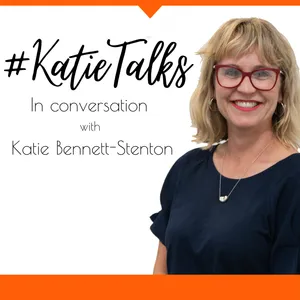
#KatieTalks: Daily Summaries Delivered
by Katie bennett-Stenton
Conversations with influencers sharing thought-provoking, relevant business and leadership insights.
Latest Episodes
The most recent episodes — sign up to get AI-powered summaries of each one.
- 2 weeks ago45 min
#KatieTalks with Rochelle Tognetti: Type Your Own Name Into an LLM Tonight. Then We'll Talk
Most people talking about AI in marketing have never had to fund it, defend it to a board, or answer for it. Rochelle Tognetti has done all three. She was CMO and Partner at Deloitte. In 2024 she walked into her performance review and told her boss she was leaving to go and study. Deloitte wrote a sabbatical clause into the partnership to keep her. She branded the year "my year of saying yes", started lecturing at the University of Sydney, and came back to go all in on AI. She co-founded the Australian Centre for AI in Marketing and is now Adobe's first ever AI Evangelist for Japan and Asia Pacific. In this episode of #KatieTalks, Katie Bennett-Stenton and Rochelle skip the hype and get to what actually separates the leaders from the laggards: your data foundations, your workflow design, your visibility inside a generative engine, and your own instinct. In this conversation Why the market moved from freeze to bets. The question is no longer should we. It is how fast, and how safely. Where agentic AI is genuinely real. Autonomous content personalisation, real-time journey orchestration, and agents working in orchestration with each other. The AI-native consumer. Your customers have the same technology without your risk profile. In some ways they have pulled ahead. The AI agent is now a persona in your plan. Where leaders are kidding themselves. Assuming the process can run without humans, and putting shiny technology on top of fragmented data. GEO, practically. Citations, references, FAQs and long-form content. How to check how you show up, whether to build or partner, and what happens to the SEO budget. Plus the shadow website idea Kato brings back from Sydney. The skill nobody is hiring for. When AI makes your thinking worse, why instinct is a leadership asset, and the difference between using AI as a shortcut and using it as a thought partner. Rochelle Tognetti leads AI Strategy and Evangelism for Asia Pacific and Japan at Adobe. She is the former CMO and Partner at Deloitte Australia, co-founder of the Australian Centre for AI in Marketing, and an academic at the University of Sydney.
- Jun 20, 202631 min
#KatieTalks with Bec Dyce: AI Is Rewriting Discovery. Is Your Brand Even in the Shortlist?
AI is no longer just changing how we work. It is changing how businesses are found, compared and chosen. In this episode of #KatieTalks, Katie Bennett-Stenton speaks with digital marketing leader Bec Dyce about the shift many senior teams still haven’t properly clocked: customers are increasingly using AI to research brands, compare options and build shortlists before they ever reach a website. So what happens when your brand does not appear in the answer? Katie and Bec unpack why the website is no longer just for humans, why brands need to optimise for answers rather than clicks, and why AI visibility is quickly becoming a commercial growth issue, not a digital side quest. They also explore what smart organisations are doing now: auditing how they show up in AI search, strengthening website authority, investing in original thought leadership, and paying attention to the surprising role of LinkedIn, YouTube, earned media and third-party sources in how AI understands a brand. This is a conversation for CEOs, CMOs, marketers and communicators who do not want to wake up in 2027 and discover their competitors have been quietly winning the shortlist. Because if AI is becoming the adviser, the real question is simple: is your brand even in the conversation?
- Jun 6, 202634 min
#KatieTalks with James Fielding: The Rainmaker Myth and the New Rules of Professional Services Growth
In this episode of #KatieTalks, Katie Bennett-Stenton speaks with James Fielding, her business partner at Camojee, about the first major theme from their new report, Rethinking Rainmakers: How Top Firms Multiply Talent and Drive 42% Better Growth. This first conversation explores what is broken in professional services growth, and why firms that rely too heavily on individual rainmakers risk capping performance. Katie and James discuss why sustainable growth requires more than star performers. It requires better systems, stronger pipeline discipline, aligned rewards, embedded collaboration and a shift from individual heroics to institutional growth capability. A strategic conversation for managing partners, CEOs, business development leaders and growth-focused executives rethinking how professional services firms grow.
- May 23, 202621 min
#KatieTalks with Howard Krais: The Human Reality of Change — And What Great Leaders Do Differently
If Episode 1 explains why change fails, this conversation focuses on what it actually takes to make it work. In Part 2, Katie Bennett-Stenton and Howard Krais move from diagnosis to application — exploring the lived experience of change across organisations, cultures and leadership contexts. From global headquarters to frontline teams, this episode surfaces the often-overlooked gap between what organisations say and what people actually experience. They discuss: The “head office illusion” — and why what feels critical at the centre often barely registers on the frontline. Why communication often serves the organisation, not the people it’s meant to support. The role of curiosity and listening in building trust and momentum. Why responding matters more than collecting feedback. How to lead change across cultures — balancing global consistency with local relevance. What the best organisations will do differently: treating change as constant, not episodic. One idea stands out: change is not about agreement — it’s about understanding. When people understand what’s happening and why, they’re far more likely to engage and make it work. This episode is for leaders who want to move beyond theory — and lead change in a way that actually delivers.
- May 9, 202632 min
#KatieTalks with Howard Krais: Why Change Fails — And What Leaders Still Get Wrong
Most organisations don’t fail at change because the strategy is wrong. They fail because they underestimate the human reality of it. In this first episode of a two-part conversation, Katie Bennett-Stenton speaks with Howard Krais — a globally experienced leader in organisational change and communication — about why so many transformation efforts fall short, and what leaders continue to misunderstand. Katie first met Howard at the IABC World Conference in Vancouver, where his perspective on change as a human experience to lead, not a process to manage stood out immediately. This episode focuses on the diagnosis — where organisations go wrong, and why. They explore: Why people don’t resist change — they resist how change is done to them. The disconnect between leadership logic and employee emotion — and why messages are felt before they’re understood. What happens when change is communicated as a fait accompli. Why up to 70% of change efforts fail — and the commercial cost of getting it wrong. The uncomfortable truth about internal communications today: high activity, low strategic impact. Howard also introduces a critical shift: using AI to remove transactional work, freeing communicators to focus on insight, intelligence and influence. This is a clear-eyed conversation for leaders who want change to land — not just launch. About the Guest: Howard Krais has spent over 30 years working in organisational communication and transformation, including roles at NatWest, EY, GSK and Johnson Matthey. He is co-founder of True Communications and co-author of Leading the Listening Organisation.
- Apr 13, 202632 min
#KatieTalks: The Rise of Fractional Leadership, AI and the New Rules of High-Impact Organisations | With Deena Hooper
Organisations are evolving. Leadership models are shifting. And the firms gaining momentum are rethinking how they access expertise, build capability and scale. In this episode of #KatieTalks, Katie Bennett-Stenton speaks with Deena Hooper, Director of Client Experience and Marketing at Korda Mentha, about the growing shift toward fractional leadership, agile expertise and smarter organisational structures. In a market where many large consulting firms are consolidating and recalibrating, Korda Mentha is pursuing an ambitious growth trajectory. This conversation explores what sits behind that confidence, and how leadership, talent and operating models are evolving to support sustainable expansion. Drawing on deep experience across professional services and transformation environments, Katie and Deena explore: Why fractional and flexible leadership models are gaining traction How external leaders bring fresh perspective and accelerate change The risk of capable teams losing strategic altitude and how leaders reset it The evolving role of AI and where human judgement becomes more valuable How high-growth organisations are blending internal capability with external expertise Why relationship-building remains a powerful leadership advantage How leadership capability must evolve to support sustainable growth This is a strategic conversation for CEOs, senior leaders and decision-makers thinking differently about: How they structure leadership How they scale capability How they access specialist expertise How they build high-impact organisations in uncertain times As organisations navigate constant disruption, those willing to rethink traditional leadership models and embrace more agile ways of working will be best positioned to lead, grow and deliver impact. Guest Deena Hooper Director of Client Experience and Marketing Korda Mentha About #KatieTalks #KatieTalks features conversations with senior leaders and influencers sharing strategic insights on leadership, growth and the evolving world of work designed to help organisations think differently and lead with greater impact.
- Mar 19, 202644 min
#KatieTalks: Turning the Tables – On Winning Australian Marketer of the Year
This episode is a little different… and a little more uncomfortable (in the best possible way). For the first time on #KatieTalks, Katie is in the hot seat. Interviewed by Ike Levick, this is a sharp, honest and slightly cheeky unpack of what it actually takes to win the Australian Marketing Institute Certified Practising Marketer of the Year award. And… very timely, given entries for this year’s awards have just opened. No pressure. Spoiler: it’s not about playing it safe, being polite, or waiting your turn. In this conversation, we get into: Why applying for awards (even when your inner critic is having a full-blown moment) is a strategic move, not a vanity exercise The real reason bold, future-focused marketing wins… when it’s anchored in commercial reality, not just pretty ideas Why your point of view isn’t a “nice to have” — it’s your edge, your leverage, your difference How to think well beyond the brief (and then calmly work backwards to make the “impossible” happen) A standout case study: a TikTok-led grad campaign delivering 300% uplift on a ~$1,600 spend Fractional leadership and why smart organisations are increasingly buying sharp thinking, not just headcount The non-negotiables: curiosity, networks, and staying uncomfortably close to what’s next (yes, AI — whether you like it or not) Why lifting the standard of the marketing profession — and backing the next generation — is not optional if we want to be taken seriously It’s part strategy, part career reality check, and part gentle (read: not that gentle) nudge to stop playing small. Because the work that gets noticed, funded and talked about? It’s usually the idea someone almost didn’t say out loud. 🔗 Resources mentioned Ike Levick: https://www.linkedin.com/in/ikelevick/ Australian Marketing Institute: https://ami.org.au/ Edelman Trust Barometer: https://www.edelman.com/trust/trust-barometer If you’ve been waiting for a sign to back yourself, take the bigger swing, or throw your hat in the ring… this might be it.
- Nov 10, 202532 min
#KatieTalks: Why Understanding Gen Z Is Every Leader’s New Competitive Edge
To lead well, and communicate brilliantly, we have to understand the people shaping the world around us. Gen Z already makes up around 60 percent of the global workforce, and while they’re not yet the senior decision-makers in most organisations, their influence on culture, communication and consumer behaviour is undeniable. For leaders, marketers and strategists, grasping these generational shifts isn’t optional; it’s how you stay relevant. In this episode of Katie Talks, Katie Bennett-Stenton speaks with India Starr, a graduate researcher at the USC Annenberg Center for Public Relations, about the findings from the 2025 Global Communication Report: Mind the Gap. Katie met India at the IABC World Conference in Vancouver, where India spoke on a panel exploring how generational perspectives are reshaping communication, influence and leadership. Together, they unpack what the research reveals about the friction, and opportunity, between those creating messages and those consuming them. In this conversation, they explore: Why every generation believes it’s the most informed, and what that reveals about trust, truth and the stories we choose to believe. How older communicators still see a New York Times feature or CNN segment as the ultimate campaign milestone, while younger professionals see a Taylor Swift endorsement as the best it gets. The nuanced differences in how each cohort consumes and evaluates information, less about platforms, more about authenticity and alignment with values. What the research shows about AI, creativity and ethics, and why younger communicators see technology as a creative partner, not a threat. How leaders and marketers can use these insights to build communication that resonates across generations and expectations This is a smart, data-driven and distinctly human conversation about what it means to connect meaningfully across generations and why those who understand these dynamics will shape the future of communication. About the Guest: India Starr is a graduate student at the University of Southern California, where she contributes to the Center for Public Relations’ Global Communication Report. Her research explores generational dynamics, evolving media behaviours and the intersection of technology, trust and influence.
About #KatieTalks
Conversations with influencers sharing thought-provoking, relevant business and leadership insights.
Customized Recaps
AI-powered recaps with compact key takeaways, quotes, and insights.
Straight to Your Inbox
Get key takeaways from #KatieTalks in a 5-minute read.
Save Hours Every Week
Stay current on your favorite podcasts without falling behind.
Frequently Asked Questions
What is Podzilla's #KatieTalks daily summary?
It's a free AI-powered email that summarizes new episodes of #KatieTalks as soon as they're published. You get the key takeaways, notable quotes, and links & mentions — all in a quick read.
How does the #KatieTalks podcast summary work?
When a new episode drops, our AI transcribes and analyzes it, then generates a personalized summary tailored to your interests and profession. It's delivered to your inbox every morning.
Is this an official #KatieTalks product?
No. Podzilla is an independent service that summarizes publicly available podcast content. We're not affiliated with or endorsed by Katie bennett-Stenton.
Can I get summaries of other podcasts too?
Absolutely! The free plan covers up to 3 podcasts. Upgrade to Pro for 15, or Premium for 50. Browse our full catalog at /podcasts.
How often does #KatieTalks release new episodes?
#KatieTalks publishes monthly. Our AI generates a summary within hours of each new episode.
What topics does #KatieTalks cover?
#KatieTalks covers topics including Business. Our AI identifies the specific themes in each episode and highlights what matters most to you.
Start getting #KatieTalks summaries tomorrow morning.
Free forever for up to 3 podcasts. No credit card required.
Free forever for up to 3 podcasts. No credit card required.