Free Daily Podcast Summary
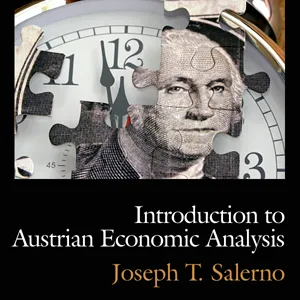
Introduction to Austrian Economic Analysis: Daily Summaries Delivered
by Joseph T. Salerno
Get key takeaways, quotes, and insights from Introduction to Austrian Economic Analysis in a 5-minute read. Delivered straight to your inbox.
Latest Episodes
The most recent episodes — sign up to get AI-powered summaries of each one.
- Jun 23, 2006
10. Banking and the Business Cycle
The tenth and final lecture from Joseph Salerno's Introduction to Austrian Economic Analysis seminar.Loan banking is non-inflationary. Interest rates on loans are merely reflective of price spreads. All speculation, on the free-market, is self-correcting and speeds adjustment, rather than cause economic trouble.100% reserve banking is sound, but fractional reserve banking is inflationary. An inflationary boom is caused by commercial banks extending more credit than any private pools of saving have justified. Money has been created out of thin air. Prices must be allowed to fall to adjust supply and demand. Doing less just postpones the final reckoning. Saving helps during recessions.
- Jun 22, 2006
9. Money and Prices
Barter – direct exchange- is inefficient because of the lack of a double coincidence of wants. Some third medium was sought to solve this. It is called money. Exchanges are not equal, they are win-win, with each party gaining more than he is giving or the exchange would not be made.An increase in the supply of all commodities is good, except for money. Increases in the supply of money merely dilute the purchasing power of each remaining money unit.The ninth of ten lectures from Joseph Salerno's Introduction to Austrian Economic Analysis seminar.
- Jun 21, 2006
8. Competition and Monopoly
The eighth of ten lectures from Joseph Salerno's Introduction to Austrian Economic Analysis seminar.Naturally occurring monopolies do not last long. Competition emerges to upset them. The sovereignty of the individual defines the free market. The only monopolies that do persist are those maintained by government interventions.Cartels are not monopolies. There is no essential difference between a cartel and an ordinary corporation or partnership. But, the cartel is an inherently unstable form of operation.
- Jun 20, 2006
7. Capital, Interest and the Structure of Production
The seventh of ten lectures from Joseph Salerno's Introduction to Austrian Economic Analysis seminar.All action takes time. Humans use time as a tool. Time preference ranking is now, not later, although time preferences will differ over time and for different people, like children who want things right now.Capitalists give up present money in order to pay labor present wages and in order to acquire the resources for the capital production stages. The capitalist has an expectation of future money at the end of the stages of the structure of production. Consumption and investment takes place in every stage of production. The capitalist can only invest. He cannot yet consume. The price spread is the difference between what the capitalist invests and what he receives. The interest rate determines what the capital value of the machine is.
- Jun 19, 2006
6. Pricing of the Factors of Production and the Labor Market
Factors of Production are economic goods: scarce means used to achieve an individual’s ends. They are land, labor and capital. Each is examined. Incomes are earned by factor owners as production takes place. There is no separated production and distribution.The price of a factor is determined by its diminishing general (discounted) marginal value productivity and the given supply (stock) of the factor in the economy. Factor pricing is by the Austrian theory of imputation. To Austrians, all costs are opportunity costs.Consumer goods and producer goods are subjectively determined by how they are used.The sixth of ten lectures from Joseph Salerno's Introduction to Austrian Economic Analysis seminar.
- Jun 16, 2006
4. Price Controls: Case Studies
The immediate effect of price controls or any government intervention upon the market is shortage of goods. Price controls discourage production just when it is needed most. The economy approaches full socialization. Rent control is the easiest way to destroy a city besides bombing it.A maximum price control prohibits all exchanges of a good above a certain price, with the controlled price being below the market equilibrium price. A minimum price control prohibits exchanges below a certain price.The fourth of ten lectures from Joseph Salerno's Introduction to Austrian Economic Analysis seminar.
- Jun 16, 2006
5. Profit, Loss and the Entrepreneur
Capitalist-entrepreneurs must anticipate supply and demand conditions of future market conditions. It is the future price - the appraisement – that must be compared to the costs of factors of production (land, labor, and capital).There is no going rate of profit. The basic rate is the rate of interest. Profits are the outgrowth of uncertainty. Few accounts about the economy focus on losses. Profits are an index that maladjustments are being met and combatted by the profit-making entrepreneurs. Don’t condemn the profit-making entrepreneur, but the one that has suffered losses. Losses are a sign that he has added further to maladjustment.The fifth of ten lectures from Joseph Salerno's Introduction to Austrian Economic Analysis seminar.
- Jun 14, 2006
3. The Determination of Prices
What principles determine the formation of prices on the free market? The equilibrium price between supply and demand determines prices according to the value scales of sellers and buyers and their elastic or inelastic positions.As the price increases, new suppliers with higher minimum selling prices are brought into the market, while demanders with low minimum buying prices will begin to drop out. As the price decreases, the quantity demanded must always either remain the same or increase, never decrease.It is clearly fallacious to believe, as has been the popular assumption, that utility and costs are equally and independently potent in determining price.The third of ten lectures from Joseph Salerno's Introduction to Austrian Economic Analysis seminar.
Get Introduction to Austrian Economic Analysis summaries in your inbox
Free AI-powered daily recaps. Key takeaways, quotes, and mentions — in a 5-minute read.
Get Free Summaries →Free forever for up to 3 podcasts. No credit card required.
You Might Also Like
Listeners also like.
Fundamentals of Economic Analysis: A Causal-Realist Approach
Joseph T. Salerno
Austrian School of Economics: Revisionist History and Contemporary Theory
Joseph T. Salerno
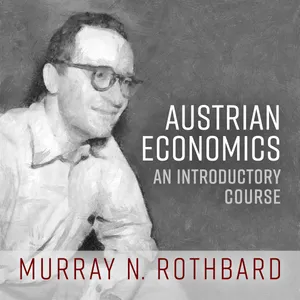
Austrian Economics: An Introductory Course
Murray N. Rothbard
The Austrian School of Economics: A History of Its Ideas, Ambassadors, and Institutions
Eugen-Maria Schulak
Economic Science and the Austrian Method
Hans-Hermann Hoppe
The Austrian School of Economics: An Introduction
Man, Economy, and State, with Power and Market
Murray N. Rothbard
Economics 101
New Austrian Economics - Antal Fekete Podcast
professorfekete.com

Ask an Austrian
LP Mises Caucus
Introduction to Microeconomics
Murray N. Rothbard

The Bitcoin Standard Podcast
Dr. Saifedean Ammous
About Introduction to Austrian Economic Analysis
Joseph T. Salerno presents this series of ten lectures on the fundamentals of Austrian economic theory, with a special emphasis on its technical aspects.
Customized Recaps
AI-powered recaps with compact key takeaways, quotes, and insights.
Straight to Your Inbox
Get key takeaways from Introduction to Austrian Economic Analysis in a 5-minute read.
Save Hours Every Week
Stay current on your favorite podcasts without falling behind.
Frequently Asked Questions
What is Podzilla's Introduction to Austrian Economic Analysis daily summary?
It's a free AI-powered email that summarizes new episodes of Introduction to Austrian Economic Analysis as soon as they're published. You get the key takeaways, notable quotes, and links & mentions — all in a quick read.
How does the Introduction to Austrian Economic Analysis podcast summary work?
When a new episode drops, our AI transcribes and analyzes it, then generates a personalized summary tailored to your interests and profession. It's delivered to your inbox every morning.
Is this an official Introduction to Austrian Economic Analysis product?
No. Podzilla is an independent service that summarizes publicly available podcast content. We're not affiliated with or endorsed by Joseph T. Salerno.
Can I get summaries of other podcasts too?
Absolutely! The free plan covers up to 3 podcasts. Upgrade to Pro for 15, or Premium for 50. Browse our full catalog at /podcasts.
What topics does Introduction to Austrian Economic Analysis cover?
Introduction to Austrian Economic Analysis covers topics including Science, Education, Courses, Social Sciences. Our AI identifies the specific themes in each episode and highlights what matters most to you.
Start getting Introduction to Austrian Economic Analysis summaries tomorrow morning.
Free forever for up to 3 podcasts. No credit card required.
Free forever for up to 3 podcasts. No credit card required.