Free Daily Podcast Summary
Capable & Worthy: Fitness, Nutrition, & Mindset for People Who Don't Want Life to Suck: Daily Summaries Delivered
by Iris, Meri, & Amy
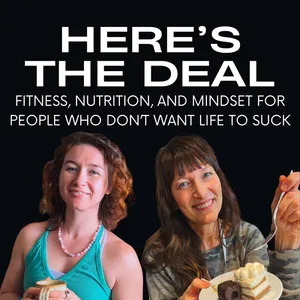
On this show, we challenge the common understanding of what it means and what it takes to be fit and healthy. Because, here’s the deal: Life shouldn’t suck. And a lot of diet and exercise shenanigans y’all get up to is making it suck. Your relationship with food and your body is making it suck. We’re here to help you change all that. So grab a coffee, go for a walk in the sun or get your lift on, and let’s get into it.
Latest Episodes
The most recent episodes — sign up to get AI-powered summaries of each one.
- 1 weeks ago43 min
When to Take a Diet Break (& Other Maintenance Questions)
In today’s episode, we're revisiting one of the most misunderstood parts of a fitness journey: maintenance. We answer listener questions about wanting to eat more without gaining weight, dealing with mental hunger versus physical hunger, and why learning to maintain your results is every bit as important as losing weight in the first place. We also discuss the influence of social media, unrealistic expectations around calories, and why maintenance should never feel like a punishment.We also tackle another coaching question we hear all the time: when is it time to take a break from a calorie deficit? From recognizing diet fatigue and understanding maintenance breaks to overcoming the fear of "undoing your progress," we explain why strategically stepping out of a deficit can actually help you build a healthier body composition and a more sustainable relationship with food.If you've ever worried about gaining weight in maintenance, struggled with constant hunger, or felt nervous about increasing your calories, this conversation is for you."If you take care of your body, your body's gonna take care of you."- Amy Rudolph"The skill is in recognizing I don't actually want more or need more.”- Iris DeadliftsThis week on Capable and Worthy: Fitness, Nutrition and Mindset for People Who Don’t Want Life to Suck:How to tell the difference between physical hunger and mental hungerWhy comparing your maintenance calories to people on social media can be misleadingPractical ways to increase calories while maintaining your weightHow meal structure and food choices can improve fullness and satisfactionSigns that it's time to take a maintenance break or diet breakWhy your scale weight and body composition naturally change in maintenanceHow long to stay in a calorie deficit before considering a breakWhy practicing maintenance is essential for long-term fat loss successResources Mentioned:Maintenance Masterclass EpisodeQ&A: Maintenance Refresher, Mindset Shifts, and Real-Life Strategies for Success in MaintenanceConnect with Us:Iris Deadlifts on InstagramAmy Rudolph on InstagramWork with us at Beth Feraco FitnessThanks for tuning in to this week’s episode of Capable and Worthy: Fitness, Nutrition, and Mindset for People Who Don’t Want Life to Suck, where we challenge the common understanding of what it means and what it takes to be fit and healthy! If you enjoyed this episode, don’t forget to subscribe and leave a review wherever you listen to your favorite podcasts.Apple Podcasts | SpotifyBe sure to share your favorite episodes on social media and tag us!Join Iris Deadlifts on Instagram and Amy Rudolph on Instagram.
- 2 weeks ago1h 0m
Our Personal Goals: How to Stay Consistent When Life Gets Chaotic
In today’s episode, we’re catching up on where we are in life, health, fitness, and our current goals - and, unsurprisingly, life has not exactly been smooth sailing. Iris is in the middle of a 10-12 week fat loss phase at 11 months postpartum, while Amy is continuing to live in maintenance after a major move and a year of focusing on building muscle.We chat about how to make long-term nutrition and fitness sustainable, and how to specifically be flexible without completely abandoning your goals.We discuss the difference between an exception and a pattern, why you shouldn't compare your chapter 2 to someone else's chapter 45, and why sometimes the healthiest decision is to not pursue fat loss right now. Most importantly, we talk about building the kind of confidence where a stressful week becomes a road bump instead of a roadblock.“Maintenance is a love note to your body and your brain."- Amy Rudolph"Rearrange some things, say no, delegate, and put strength training on your freakin' schedule."- Iris DeadliftsThis week on Capable and Worthy: Fitness, Nutrition and Mindset for People Who Don’t Want Life to Suck:Navigating fat loss as a busy momWhy you need a foundation before a calorie deficitPlanning for food when life gets chaoticUsing flexibility within structureWhy strength training is a non-negotiableThe importance of maintenance for long-term resultsRecognizing exceptions versus unhealthy patternsAvoiding FOMO and comparison in your fitness journeyResources Mentioned:How to Eat More Calories at Maintenance (& Other Questions) EpisodeIris Deadlifts on InstagramAmy Rudolph on InstagramWork with us at Beth Feraco FitnessThanks for tuning in to this week’s episode of Capable and Worthy: Fitness, Nutrition, and Mindset for People Who Don’t Want Life to Suck, where we challenge the common understanding of what it means and what it takes to be fit and healthy! If you enjoyed this episode, don’t forget to subscribe and leave a review wherever you listen to your favorite podcasts.Apple Podcasts | SpotifyBe sure to share your favorite episodes on social media and tag us!Join Iris Deadlifts on Instagram and Amy Rudolph on Instagram.
- 3 weeks ago47 min
Abby Langer on Social Media, Celebrities, & The Pressure to be Thin
In today’s episode, we’re talking about diet culture, body image, extreme thinness, and the ever-changing standards women are expected to meet with dietitian and social media educator Abby Langer. We dig into the return of extreme thinness as an aspirational ideal, the influence of GLP-1s and social media, and why we should be questioning the messages telling us that smaller, younger-looking bodies are inherently healthier or more desirable. We also talk about what malnutrition can actually look like, why you can’t determine someone’s health from their appearance alone, and how easily we can internalize these standards without even realizing it.We also get into the practical side of navigating diet culture, including how to identify nutrition misinformation, why credentials and follower counts don’t automatically make someone trustworthy, how social media can exploit our insecurities, and how parents can help their kids develop a healthier relationship with food, bodies, and the internet. Most importantly, this conversation is about learning to recognize when we’re being sold something designed to make us smaller—and deciding that we don’t have to buy into it.“If we don’t talk about it, we’re allowing it.”- Abby Langer“After decades and decades of internalizing this messaging, we have to start to wake up and recognize that we've been sold a lie. It's been a lie."- Abby LangerThis week on Capable & Worthy: Fitness, Nutrition and Mindset for People Who Don’t Want Life to Suck:Why extreme thinness keeps coming back as an idealHow GLP-1s have changed the conversation around weight lossWhy you can’t determine someone’s health from their appearanceHow women internalize body standards from an early ageWhy menopause and aging have become targets for the wellness industryHow to spot nutrition misinformation and fear-based marketingHow social media can reinforce body dissatisfaction and diet cultureRaising kids without passing down body shame and food rules Connect with Abby Langer or Langer Nutrition: Abby Langer on InstagramAbby Langer - Canada's Food and Nutrition ExpertLanger Nutrition BlogBite Me. By Abby LangerAggressive Salad with Abby LangerThanks for tuning in to this week’s episode of Capable & Worthy: Fitness, Nutrition, and Mindset for People Who Don’t Want Life to Suck, where we challenge the common understanding of what it means and what it takes to be fit and healthy! If you enjoyed this episode, don’t forget to subscribe and leave a review wherever you listen to your favorite podcasts.Apple Podcasts | SpotifyBe sure to share your favorite episodes on social media and tag us!Join Iris Deadlifts on Instagram and Amy Rudolph on Instagram.
- 4 weeks ago54 min
How to Put Your Nutrition and Fitness on Autopilot (So You Have to Think Less About It)
In today's episode, we dive into what it means to “fall to the level of your systems” in health and fitness, focusing on meal planning and prepping, getting in NEAT, and going to the gym. We share our own experiences and many practical tips for making food prep, meal planning, and nutrition easier. We also move into the fitness side of things, sharing the power of walking, explaining how to rack up steps throughout your days, and how to find your best gym schedule.It’s all about setting yourself up for success in a way that's flexible and adaptable to your needs.We chat about the importance of finding what works for you, emphasizing that there's no one-size-fits-all solution to health and fitness. We also share stories about what happens when things don't go as planned and how to adjust without feeling like you've failed. By the end of this episode, you'll have a bunch of ideas on how to create systems that not only support your goals but also fit into your life without adding stress.“Decision fatigue is a real thing, especially when you have goals with nutrition and fitness, and you’re creating a new lifestyle that supports where you want to be.”- Iris Deadlifts“The power of being outside doing some exercise and having something other than the inside of your house to look at can be incredibly uplifting.”- Meri“Curiosity over judgement.”- Amy RudolphThis week on Capable & Worthy:Meal prep variations and how to find what suits your style and preferencesHow to automate certain aspects of health and fitness to reduce decision fatigueOur unique systems for meal prep, NEAT, and the gymFreedom in StructureWhat are movement snacks and how you can use themWhat is temptation bundling to help us do the things we need to doThe benefits of having a structured gym planConnect with us:Iris Deadlifts on InstagramAmy Rudolph on InstagramThanks for tuning in to this week’s episode of Capable & Worthy: Fitness, Nutrition, and Mindset for People Who Don’t Want Life to Suck, where we challenge the common understanding of what it means and what it takes to be fit and healthy! If you enjoyed this episode, don’t forget to subscribe and leave a review wherever you listen to your favorite podcasts.Apple Podcasts | Spotify | GooglePlay | iHeartRadioBe sure to share your favorite episodes on social media and tag us!Join Iris Deadlifts on Instagram, and Amy Rudolph on Instagram.
- Aug 17, 202651 min
Understanding Lipedema with Chase Miller, DPT, CLT, AIB-VRC
In today’s episode, we’re talking about lipedema with Dr. Chase Miller, a doctor of physical therapy and certified lymphedema therapist. We dig into what lipedema actually is, how it differs from lymphedema and obesity, what symptoms to look for, and why lipedema is so frequently misunderstood or misdiagnosed. We also discuss what we know - and what we still don’t know - about the role of genetics, hormones, puberty, pregnancy, menopause, and adipose tissue dysfunction.We also get into the practical side of managing lipedema, including compression, exercise, strength training, cardiovascular exercise, nutrition, calorie deficits, and surgical interventions like liposuction. Most importantly, this conversation is about giving people realistic expectations without taking away their sense of agency.Lipedema may change what your body does, but there are still plenty of tools in your toolbox - and early education, consistent habits, and acceptance can help you manage the condition and give yourself the best chance of maintaining your health and quality of life."Diet will always matter, no matter if they have that body type or not. But diet does not simply eliminate lipedema tissue.”- Chase Miller, DPT“Generally, for people who live an active or healthy lifestyle, lipedema symptoms tend to manage better."- Chase Miller, DPTThis week on Capable & Worthy: Fitness, Nutrition and Mindset for People Who Don’t Want Life to Suck:What lipedema is and how it differs from lymphedema and obesityCommon physical signs and symptoms of lipedemaThe potential role of genetics and hormonal changesWhy lipedema can be painful, tender, and difficult to identifyHow compression may help with comfort and circulationThe role of strength training, cardio, and staying activeWhether a calorie deficit affects lipedema fat and body proportionsWhat to know before considering liposuction or other interventions Connect with Adjuvant Physical Therapy / Chase Miller DPT, CLT, AIB-VRC: Adjuvant Physical Therapy WebsiteAdjuvant PT on InstagramAdjuvant PT on FacebookThanks for tuning in to this week’s episode of Capable & Worthy: Fitness, Nutrition, and Mindset for People Who Don’t Want Life to Suck, where we challenge the common understanding of what it means and what it takes to be fit and healthy! If you enjoyed this episode, don’t forget to subscribe and leave a review wherever you listen to your favorite podcasts.Apple Podcasts | SpotifyBe sure to share your favorite episodes on social media and tag us!Join Iris Deadlifts on Instagram and Amy Rudolph on Instagram.
- Aug 10, 202655 min
Willpower: Rethinking Everything You Think You Know About It
In today’s episode, we're challenging one of the biggest myths in health and fitness: that successful people simply have more willpower. We unpack what the latest research actually says about willpower, self-control, and why relying on motivation and discipline alone is a losing strategy. Instead, we explore how your environment, habits, and daily routines quietly shape the choices you make—often without you even realizing it.We also dive into the deeper reasons people struggle with nighttime eating, emotional eating, people-pleasing, chronic dieting, and feeling "stuck." From stress, sleep, and shame to calorie deficit mentality and difficult conversations, this episode is about moving beyond white-knuckling your way through health goals and creating a lifestyle that actually supports the life you want to live.If you've ever believed you just need more discipline, this conversation might completely change the way you approach lasting behavior change.""Don't let your life go by without getting to know yourself and getting curious."- Bri Reinecke"What is it costing you to stay where you are?"- Tiffany GambleThis week on Capable and Worthy: Fitness, Nutrition and Mindset for People Who Don’t Want Life to Suck:Why willpower isn't the secret to successful weight loss or healthy habitsWhat current research says about self-control and behavior changeHow your environment influences your eating habits more than disciplineWhy stress, poor sleep, and under-fueling make cravings feel impossible to resistThe connection between people-pleasing, boundaries, and your health goalsHow years of dieting create a "calorie deficit mindset" that keeps you stuckPractical ways to reduce decision fatigue and make healthy choices easierWhy curiosity - not guilt or shame - is the key to creating lasting changeConnect with Us:Iris Deadlifts on InstagramAmy Rudolph on InstagramWork with us at Beth Feraco FitnessThanks for tuning in to this week’s episode of Capable and Worthy: Fitness, Nutrition, and Mindset for People Who Don’t Want Life to Suck, where we challenge the common understanding of what it means and what it takes to be fit and healthy! If you enjoyed this episode, don’t forget to subscribe and leave a review wherever you listen to your favorite podcasts.Apple Podcasts | SpotifyBe sure to share your favorite episodes on social media and tag us!Join Iris Deadlifts on Instagram and Amy Rudolph on Instagram.
- Aug 3, 202645 min
Q&A: Breastfeeding Hunger, The Right Time for Fat Loss, Finding Community, & More
In today’s episode, we answer some of the most common questions we get about fat loss, strength training, workout programming, breastfeeding hunger and cravings, what to do when the people around you don't share your health and fitness priorities. We kick things off with a candid conversation about what’s happening in our own lives - from moving houses and navigating postpartum fitness to preparing for intentional fat loss phases - and why timing matters more than chasing the "perfect" plan.This episode is all about meeting yourself where you are, choosing the right season for your goals, and creating habits you can actually sustain for life."If you're going to be in a fat loss phase, be in it, and be in it all the way."- Amy Rudolph"My empathy and understanding for parents has shot through the roof. And my patience for excuses has plummeted through the floor."- Iris DeadliftsThis week on Capable and Worthy: Fitness, Nutrition and Mindset for People Who Don’t Want Life to Suck:How to know when it's actually the right time to start a fat loss phaseDo you absolutely have to change your workout every 4–6 weeksNavigating breastfeeding hunger, food noise, and body image during postpartumPractical strategies for staying on track while traveling or on vacationFinding supportive people when your friends and family aren't on the same journeyWhy communication with your partner can make or break your successHow eliminating weight-loss deadlines leads to better long-term results Resources Mentioned / Connect with Us:Iris Deadlifts on InstagramAmy Rudolph on InstagramWork with us at Beth Feraco FitnessIs HIIT required for visceral fat loss? (& other training questions) with Coach BriThanks for tuning in to this week’s episode of Capable and Worthy: Fitness, Nutrition, and Mindset for People Who Don’t Want Life to Suck, where we challenge the common understanding of what it means and what it takes to be fit and healthy! If you enjoyed this episode, don’t forget to subscribe and leave a review wherever you listen to your favorite podcasts.Apple Podcasts | SpotifyBe sure to share your favorite episodes on social media and tag us!Join Iris Deadlifts on Instagram and Amy Rudolph on Instagram.
- Jul 27, 202643 min
Electrolytes As a Health Risk, Healthy Fats, & Progressive "Overstimulus" Explained
In today’s episode, we’re discussing three topics that have been flooding our client conversations lately: the truth about electrolyte supplements, why higher-calorie foods deserve a place in a healthy diet, and what progressive overload actually means if your goal is building muscle.We separate hydration facts from marketing hype, breaking down when electrolyte supplements might actually be useful, and chat about overcoming the fear of calorie-dense foods, and how constantly chasing the lowest-calorie option can sometimes work against your goals. We also unpack one of the most misunderstood concepts in strength training: progressive overload. We explain why it's about creating more stimulus, not simply lifting heavier every workout, and how adapting your training to your energy levels is often the smartest way to stay consistent."It's more than just what we want the scale to do—it's how we want our body to operate."- Amy Rudolph"You cannot think your way into a new way of acting. You have to act your way into a new way of thinking."- Iris DeadliftsThis week on Capable and Worthy: Fitness, Nutrition and Mindset for People Who Don’t Want Life to Suck:Why most people don't actually need electrolyte supplementsThe difference between dehydration that needs water versus electrolytesHow electrolyte marketing has convinced healthy people they need more than they doWhy healthy fats and higher-calorie foods belong in a balanced dietHow fear of calorie-dense foods can lead to under-fueling and stalled progressWhat progressive overload really means (and why it isn't just lifting heavier)How to adjust your workouts without sacrificing strength and muscle growth Connect with Us:Iris Deadlifts on InstagramAmy Rudolph on InstagramWork with us at Beth Feraco FitnessThanks for tuning in to this week’s episode of Capable and Worthy: Fitness, Nutrition, and Mindset for People Who Don’t Want Life to Suck, where we challenge the common understanding of what it means and what it takes to be fit and healthy! If you enjoyed this episode, don’t forget to subscribe and leave a review wherever you listen to your favorite podcasts.Apple Podcasts | SpotifyBe sure to share your favorite episodes on social media and tag us!Join Iris Deadlifts on Instagram and Amy Rudolph on Instagram.
About Capable & Worthy: Fitness, Nutrition, & Mindset for People Who Don't Want Life to Suck
On this show, we challenge the common understanding of what it means and what it takes to be fit and healthy. Because, here’s the deal: Life shouldn’t suck. And a lot of diet and exercise shenanigans y’all get up to is making it suck. Your relationship with food and your body is making it suck. We’re here to help you change all that. So grab a coffee, go for a walk in the sun or get your lift on, and let’s get into it.
Customized Recaps
AI-powered recaps with compact key takeaways, quotes, and insights.
Straight to Your Inbox
Get key takeaways from Capable & Worthy: Fitness, Nutrition, & Mindset for People Who Don't Want Life to Suck in a 5-minute read.
Save Hours Every Week
Stay current on your favorite podcasts without falling behind.
Frequently Asked Questions
What is Podzilla's Capable & Worthy: Fitness, Nutrition, & Mindset for People Who Don't Want Life to Suck daily summary?
It's a free AI-powered email that summarizes new episodes of Capable & Worthy: Fitness, Nutrition, & Mindset for People Who Don't Want Life to Suck as soon as they're published. You get the key takeaways, notable quotes, and links & mentions — all in a quick read.
How does the Capable & Worthy: Fitness, Nutrition, & Mindset for People Who Don't Want Life to Suck podcast summary work?
When a new episode drops, our AI transcribes and analyzes it, then generates a personalized summary tailored to your interests and profession. It's delivered to your inbox every morning.
Is this an official Capable & Worthy: Fitness, Nutrition, & Mindset for People Who Don't Want Life to Suck product?
No. Podzilla is an independent service that summarizes publicly available podcast content. We're not affiliated with or endorsed by Iris, Meri, & Amy.
Can I get summaries of other podcasts too?
Absolutely! The free plan covers up to 3 podcasts. Upgrade to Pro for 15, or Premium for 50. Browse our full catalog at /podcasts.
How often does Capable & Worthy: Fitness, Nutrition, & Mindset for People Who Don't Want Life to Suck release new episodes?
Capable & Worthy: Fitness, Nutrition, & Mindset for People Who Don't Want Life to Suck publishes weekly. Our AI generates a summary within hours of each new episode.
What topics does Capable & Worthy: Fitness, Nutrition, & Mindset for People Who Don't Want Life to Suck cover?
Capable & Worthy: Fitness, Nutrition, & Mindset for People Who Don't Want Life to Suck covers topics including Nutrition, Fitness, Health & Fitness, Mental Health. Our AI identifies the specific themes in each episode and highlights what matters most to you.
Start getting Capable & Worthy: Fitness, Nutrition, & Mindset for People Who Don't Want Life to Suck summaries tomorrow morning.
Free forever for up to 3 podcasts. No credit card required.
Free forever for up to 3 podcasts. No credit card required.