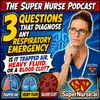
The 3 Questions That Diagnose Any Respiratory Emergency at the Bedside
Want to see this content as a comic book video? 👉 Watch it on YouTube @SuperNurseAI and find us at https://www.youtube.com/@SuperNurseAI In this episode of The Super Nurse Podcast, we break down a simple bedside framework for respiratory emergencies: Is it trapped air, fluid, or a blood clot? You’ll learn how nurses can recognize the difference between COPD exacerbation, acute heart failure, pneumothorax, pleural effusion, and pulmonary embolism using real-world assessment cues. We connect the ABCs of nursing prioritization to practical bedside decisions, including oxygen therapy, BiPAP, chest tubes, tracheostomy care, suctioning, heparin, air embolism positioning, and inhaler pharmacology. This episode is designed for nursing students, new grad nurses, ICU nurses, ER nurses, and anyone preparing for the NCLEX who wants to understand respiratory emergencies beyond memorization. When your patient can’t breathe, don’t just ask how much oxygen they need — ask what mechanism is failing: air, fluid, or blood flow. Key Framework From This Episode When a patient cannot breathe, ask: Is it trapped air? Think COPD, asthma, pneumothorax, air trapping, hyperinflation, poor exhalation. Is it fluid? Think heart failure, pulmonary edema, pleural effusion, pink frothy sputum, crackles, fluid overload. Is it a blood clot or vascular roadblock? Think pulmonary embolism, sudden dyspnea, chest pain, impending doom, dead space ventilation, heparin. What You’ll Learn In this episode, you’ll learn how to: Recognize the difference between COPD exacerbation, heart failure, pneumothorax, pleural effusion, and pulmonary embolism. Understand why airway and breathing come before circulation in nursing prioritization. Explain why COPD is a trapped air problem, heart failure is a fluid problem, and PE is a perfusion problem. Identify key respiratory clues like pink frothy sputum, pursed-lip breathing, barrel chest, cardiac wheeze, hypoxic drive, and sudden impending doom. Connect respiratory emergencies to NCLEX-style clinical judgment and real bedside nursing decisions. High-Yield Nursing Pearls COPD is not just low oxygen — it’s air trapping. Heart failure can wheeze too. A cardiac wheeze can mimic bronchospasm because fluid compresses small airways. A pulmonary embolism is not an airway problem. It’s a blood flow problem: oxygen reaches the alveoli, but blood cannot get there to pick it up. Heparin does not dissolve the clot. It prevents the clot from getting bigger while the body breaks it down over time. A chest tube is physics. It removes air or fluid so the lung can re-expand and restore negative pressure. NCLEX Concepts Covered ABCs, airway priority, respiratory distress, respiratory failure, COPD exacerbation, heart failure, pulmonary edema, pulmonary embolism, pneumothorax, pleural effusion, chest tubes, tracheostomy care, suctioning, BiPAP, oxygen therapy, hypoxic drive, ABG interpretation, heparin drip, PTT monitoring, HIT, air embolism, inhaler pharmacology, albuterol, ipratropium, methylprednisolone. Watch the video version on YouTube at Super Nurse AI. Subscribe to The Super Nurse Podcast for real-world nursing lessons that help you connect nursing school, NCLEX, and bedside clinical judgment. Timestamps 00:00 — The 30-Second Respiratory Emergency The episode opens with a high-stakes bedside scenario: a patient is gasping for air, oxygen saturation is dropping, and they say, “I feel like I’m going to die.” The key nursing priority is immediate ABC assessment: airway, breathing, then circulation. 02:30 — The 3 Bedside Questions The main framework is introduced: when a patient cannot breathe, ask whether the problem is trapped air, fluid, or a blood clot. This shifts the nurse from panic mode into clinical judgment mode. 05:00 — Question 1: Is It Trapped Air? COPD is explained as a trapped air problem where the patient can inhale, but cannot fully exhale. The episode reviews emphysema, barrel chest, hyperresonance, pursed-lip breathing, chronic bronchitis, thick mucus, and cor pulmonale. 09:00 — Question 2: Is It Fluid? Heart failure is explained as a heavy fluid problem, especially when pulmonary edema floods the lungs. The episode contrasts COPD sputum, which may be thick yellow or green, with heart failure sputum, which may become pink and frothy because fluid and blood mix in the alveoli. 12:00 — The Cardiac Wheeze Trap Not every wheeze is COPD or asthma. The podcast explains how fluid buildup can compress small airways and create a cardiac wheeze that mimics bronchospasm, making BNP, chest X-ray, and the full clinical picture criti
Podzilla Summary coming soon
Sign up to get notified when the full AI-powered summary is ready.
Free forever for up to 3 podcasts. No credit card required.
Listen to This Episode
More from The Super Nurse Podcast
Stroke or Stroke Mimic? TIA, Glucose Checks & NGN NCLEX Nursing Priorities
Restlessness Is a Red Flag: Catching Sneaky Subdural Hematomas Early
What NCLEX Tests for the Neurological System: Stroke, Seizures, ICP & Meningitis
When Pneumonia Gets Deadly: Hypoxia, Antibiotics, Sputum Cultures, Lung Sounds & NCLEX
Get summaries like this every morning.
Free AI-powered recaps of The Super Nurse Podcast and your other favorite podcasts, delivered to your inbox.
Free forever for up to 3 podcasts. No credit card required.