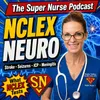
What NCLEX Tests for the Neurological System: Stroke, Seizures, ICP & Meningitis
👉 Watch on YouTube @SuperNurseAI Introduction: Why Neuro Feels So Intimidating Neuro nursing can feel overwhelming because small changes can mean big trouble. The episode opens with the reality that a tiny shift — like a sluggish pupil or abnormal breathing pattern — may be the first clue that a patient is declining. Cranial Nerves Made Practical Instead of memorizing the 12 cranial nerves just to pass a test, this section explains why they matter at the bedside. Key examples include checking pupils with cranial nerve III, assessing facial droop with cranial nerves V and VII, and understanding why the vagus nerve is critical for gag reflex and airway protection. Glasgow Coma Scale and Airway Priority The GCS helps nurses quickly measure neurological status. The biggest NCLEX takeaway: less than 8, intubate — because a severely decreased level of consciousness means the patient may no longer be able to protect their airway. Increased Intracranial Pressure and the Monroe-Kellie Doctrine The skull is described as a rigid pressure cooker containing brain tissue, blood, and cerebrospinal fluid. When one increases, pressure rises, and early signs like restlessness, irritability, worsening headache, or a drop in GCS can signal increasing ICP. Cushing’s Triad and Late Neuro Deterioration Cushing’s triad is a late and dangerous sign of increased ICP. The episode reviews the classic signs: systolic hypertension with widening pulse pressure, bradycardia, and irregular respirations. ICP Nursing Interventions Key nursing actions include elevating the head of bed to 30 degrees, keeping the neck midline, avoiding unnecessary suctioning, and monitoring closely when giving mannitol. The episode emphasizes watching for crackles because mannitol can shift fluid into the bloodstream and trigger pulmonary edema. Lumbar Puncture and Meningitis This section explains why a lumbar puncture can be dangerous if ICP is high. It also reviews meningitis findings, including cloudy CSF, high white blood cells, low glucose, fever, headache, neck stiffness, photophobia, and the need for droplet precautions. Stroke: What Nurses Must Do First For suspected stroke, the episode highlights two immediate nursing priorities: check blood glucose because hypoglycemia can mimic stroke, and get a stat CT scan to determine whether the stroke is ischemic or hemorrhagic before clot-busting treatment is considered. Autonomic Dysreflexia Autonomic dysreflexia is reviewed as a life-threatening complication in patients with spinal cord injuries at T6 or higher. The first action is to sit the patient upright, then find and fix the trigger — often a kinked Foley catheter or bowel impaction. Seizure Safety and Status Epilepticus The episode closes with seizure precautions: do not restrain the patient, do not put anything in their mouth, turn them on their side, pad the side rails, move hazards away, and time the seizure. If the seizure does not stop, status epilepticus becomes an emergency requiring medications like lorazepam. Timestamps for 17:14 Episode 00:00 – Why tiny neuro changes matter A sluggish pupil, abnormal breathing pattern, or small change in responsiveness can be the first warning sign of a major neurological emergency. 01:10 – What NCLEX wants you to know about neuro The episode frames neuro as more than memorization — it is about recognizing dangerous bedside changes early. 02:05 – Cranial nerves made practical Review of the 12 cranial nerves, including how nurses use eye movement, facial symmetry, chewing, gag reflex, and speech to spot neurological problems. 03:35 – PERRLA, facial droop, and the vagus nerve How cranial nerves III, V, VII, and X connect directly to bedside neuro assessment and airway protection. 04:45 – Glasgow Coma Scale and “less than 8, intubate” A GCS of 8 or lower signals severe neurological impairment and loss of airway protection. 05:55 – Increased intracranial pressure and the skull as a pressure cooker The Monroe-Kellie doctrine explains why swelling, blood, or extra CSF inside the skull can quickly become life-threatening. 07:05 – Early signs of increased ICP Restlessness, irritability, worsening headache, subtle pupil changes, and a small drop in GCS can be early warning signs. 08:05 – Cushing’s triad and late neuro deterioration Systolic hypertension with widening pulse pressure, bradycardia, and irregular respirations are late signs of increased ICP and possible herniation. 09:10 – Decorticate vs. decerebrate posturing Flexion toward the core suggests cerebral hemisphere damage, while extension is more concerning for brainstem involvement. 09:55 – Nursing interventions for increased ICP<br
Podzilla Summary coming soon
Sign up to get notified when the full AI-powered summary is ready.
Free forever for up to 3 podcasts. No credit card required.
Listen to This Episode
More from The Super Nurse Podcast
Stroke or Stroke Mimic? TIA, Glucose Checks & NGN NCLEX Nursing Priorities
Restlessness Is a Red Flag: Catching Sneaky Subdural Hematomas Early
When Pneumonia Gets Deadly: Hypoxia, Antibiotics, Sputum Cultures, Lung Sounds & NCLEX
When Staffing Gets Unsafe: Should Nurses Unionize, Strike, or Put Their Heads Down?
Get summaries like this every morning.
Free AI-powered recaps of The Super Nurse Podcast and your other favorite podcasts, delivered to your inbox.
Free forever for up to 3 podcasts. No credit card required.