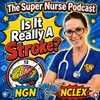
Stroke or Stroke Mimic? TIA, Glucose Checks & NGN NCLEX Nursing Priorities
👉 Watch the video https://www.youtube.com/@SuperNurseAI In this episode of The Super Nurse Podcast, we break down how nurses can quickly recognize a possible stroke while avoiding one of the biggest NGN NCLEX traps: missing a stroke mimic. You’ll learn the difference between a true stroke, a TIA, and hypoglycemia as a stroke mimic — including why checking a finger-stick blood glucose is one of the first bedside priorities. We also review FAST/BE-FAST, last known well time, left-brain versus right-brain stroke clues, CT scan priorities, tPA safety, permissive hypertension, NIHSS scoring, swallow screening, and airway protection. This episode helps nursing students and new grads understand stroke care as real-time clinical judgment, not just memorized NCLEX facts. Podcast Notes This episode focuses on stroke recognition and nursing priorities, especially the difference between a true stroke, a TIA, and a stroke mimic. It opens with a routine assessment that suddenly becomes urgent when the patient shows unilateral facial droop — one of the classic warning signs nurses need to recognize quickly. The first major concept is that stroke symptoms require immediate action, but nurses must also avoid being fooled by mimics. A true stroke involves neurological dysfunction caused by impaired blood flow and cell death, while a TIA is temporary and resolves without evidence of cell death on imaging. At the bedside, however, TIA and stroke can look the same at first, so nurses treat the symptoms seriously until proven otherwise. A major NGN NCLEX priority in the episode is checking blood glucose. Hypoglycemia can mimic stroke because the brain needs a constant supply of glucose to function. If the brain is starved of glucose, the patient may present with confusion, slurred speech, and even unilateral weakness, which is why a finger-stick blood sugar is one of the first things nurses should check. The episode reviews FAST and BE-FAST as bedside stroke recognition tools. Nurses should assess for face drooping, arm or leg weakness, speech difficulty, balance changes, eye or vision changes, and time of symptom onset. The most important time-based detail is the last known well time — not when the patient was found, but when they were last known to be normal. The discussion also explains left-brain and right-brain stroke patterns. A left-brain stroke is associated with language and logic, often causing aphasia and right-sided weakness. A right-brain stroke is associated with reckless behavior, poor safety awareness, impulsivity, and left-sided neglect. Code stroke priorities are covered next. The nurse must help move the patient quickly toward a non-contrast CT scan to determine whether the stroke is ischemic or hemorrhagic. The episode emphasizes that tPA cannot be given until bleeding is ruled out, because giving a clot-busting medication to a hemorrhagic stroke patient could be catastrophic. The episode also reviews the blood pressure balancing act in stroke care. If the patient is eligible for tPA, blood pressure must be controlled below the required threshold before administration. If the patient is not receiving tPA, permissive hypertension may be allowed because the elevated pressure can help perfuse the ischemic penumbra. Ongoing stroke care includes using the NIH Stroke Scale to measure neurological deficits and track changes. The episode explains that even a low NIHSS score can still be life-altering depending on the patient’s job, function, and baseline abilities. The final nursing priorities include swallowing and airway safety. Stroke patients need a swallow screen before oral intake because dysphagia increases the risk of aspiration pneumonia. If the patient’s neurological status worsens and their GCS drops to 8 or below, airway protection becomes the priority. Keywords stroke nursing, stroke NCLEX, stroke or stroke mimic, stroke mimic nursing, TIA nursing, TIA vs stroke, stroke vs TIA, hypoglycemia stroke mimic, glucose check stroke, blood sugar stroke mimic, NGN NCLEX, Next Gen NCLEX, NCLEX prep, pass NCLEX, NCLEX review, NCLEX neuro, neuro nursing, neuro nurse, neuro assessment nursing, FAST stroke, BE FAST stroke, facial droop nursing, unilateral weakness, arm drift, pronator drift, last known well, code stroke nursing, CT scan stroke, ischemic stroke nursing, hemorrhagic stroke nursing, tPA nursing, thrombolytic therapy nursing, permissive hypertension stroke, NIHSS nursing, NIH stroke scale, swallow screen nursing, dysphagia stroke, aspiration risk stroke, GCS nursing, less than 8 intubate, nursing students, new grad nurse, ICU nursing, bedside nursing,
Podzilla Summary coming soon
Sign up to get notified when the full AI-powered summary is ready.
Free forever for up to 3 podcasts. No credit card required.
Listen to This Episode
More from The Super Nurse Podcast
Restlessness Is a Red Flag: Catching Sneaky Subdural Hematomas Early
What NCLEX Tests for the Neurological System: Stroke, Seizures, ICP & Meningitis
When Pneumonia Gets Deadly: Hypoxia, Antibiotics, Sputum Cultures, Lung Sounds & NCLEX
When Staffing Gets Unsafe: Should Nurses Unionize, Strike, or Put Their Heads Down?
Get summaries like this every morning.
Free AI-powered recaps of The Super Nurse Podcast and your other favorite podcasts, delivered to your inbox.
Free forever for up to 3 podcasts. No credit card required.