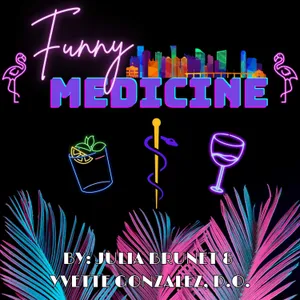
Free Daily Podcast Summary
Funny Medicine Podcast: Daily Summaries Delivered
by Julia Brunet and Yvette Gonzalez, D.O.
Funny Medicine Podcast – The Cure for Boring Medical Talk! Get your dose of medicine— but funny! 🤣💊 Join Dr. Yvy and medical researcher Julia Brunet, two science-loving besties who break down medical mysteries, health fads, and the weirdest wellness trends with wit and sarcasm. From anti-aging disasters to bizarre medical history and the latest in medicine and health, they serve up expert insights with a side of sarcasm. Each week, they dissect trending health topics, viral medical news, and those too-weird-to-be-true medical cases—so you learn and laugh along the way. Whether you’re a healthcare pro, a curious hypochondriac, or just here for the comedy, Funny Medicine Podcast is your prescription for hilarious medical banter. 💉 Laugh. Learn. Repeat. 🎧
Latest Episodes
The most recent episodes — sign up to get AI-powered summaries of each one.
- 1 weeks ago54 min
5 Horrifying Medical Treatments Doctors Actually Recommended | Funny Medicine Podcast
Doctors used to drill holes in people's skulls, prescribe radioactive water, and perform lobotomies. And somehow, these were considered legitimate medical treatments. 😳Welcome to the darker side of medical history. Happy Halloween! 🎃In Episode 138 of Funny Medicine Podcast, Julie and Yvy explore 5 of the most horrifying medical treatments in history, from ancient surgical procedures to disturbing medical experiments and practices that were once considered perfectly normal.We're talking about:🧠 Trepanation: Why ancient civilizations drilled holes into people's skulls, and how some patients actually survived.🩸 Bloodletting: When doctors prescribed leeches and blood removal for practically everything, including illnesses that needed the exact opposite.☠️ Mercury Treatments: How mercury became a popular treatment for syphilis, despite its devastating effects on the human body.☢️ Radium Tonics: When radioactive water was marketed as a wellness product, and the tragic stories that helped expose its dangers.🧠 Lobotomies: The disturbing history of ice-pick brain surgery, including the doctor who received a Nobel Prize for developing the procedure.And here's where things get even more interesting: some of these historical practices have modern medical counterparts, although today's techniques, evidence, and safety standards are very different.We also discuss modern wellness trends, questionable medical claims, and the treatments people might look back on 50 years from now and wonder, "HOW was that ever considered a good idea?"Because if medical history has taught us anything, it's that just because something is popular, recommended, or labeled as healthy doesn't automatically mean it's safe.Come for the Halloween makeup. Stay for the medical history that's somehow more disturbing than our costumes. 💀👇 WE WANT TO KNOW: Which historical medical treatment shocked you the most? And what medical practice or wellness trend today do you think future generations will question?SUBSCRIBE to Funny Medicine Podcast for medical mysteries, fascinating science, health discussions, and the kind of medical history that makes you grateful to be living in the 21st century.👍 Like this episode if you learned something new.💬 Share your thoughts in the comments. We actually want to hear them!🔔 Subscribe and turn on notifications so you don't miss our next episode.Funny Medicine Podcast | Where medicine, science, history, and humor meet.Sources listed in video version of this episode on YouTube. #MedicalHistory #HistoryOfMedicine #FunnyMedicinePodcast
- 3 weeks ago42 min
Pneumonic Plague: Should You Actually Be Worried? | Funny Medicine Podcast
Pneumonic plague vs. bubonic plague: what’s the difference, and should the Russia headlines have you worried? Yvy and Julie break down plague symptoms, how it spreads, and what modern treatment looks like in Episode 137 of Funny Medicine. From the Black Death to modern U.S. cases, we’re digging into the science behind the headlines without turning every rumor into an outbreak. Expect plain-English medical explanations, historical rabbit holes, and the usual Funny Medicine side conversations. In this episode: Bubonic, pneumonic, and septicemic plague explained Yersinia pestis and the history of the Black Death Fleas, rodents, pets, and how people can become exposed Pneumonic plague transmission: what close contact actually means Plague symptoms, antibiotics, and why early treatment matters U.S. plague cases and practical prevention The Russia reports: what was known and what remained unconfirmed Plague is treatable with antibiotics, but prompt medical care is essential. For the medical guidance behind our treatment and transmission discussion, see the CDC’s evidence-based recommendations. Subscribe to Funny Medicine for more medical deep dives with science, context, and a sense of humor. Before this episode, did you know there was more than one form of plague? Tell us in the comments. Recorded October 9, 2026. The Russia discussion reflects information available at recording, including the WHO’s October 7 briefing, which did not confirm plague in the reported incident. This episode is for general education and entertainment, not personal medical advice. THIS PODCAST IS FOR ENTERTAINMENT PURPOSES ONLY AND DOES NOT SUBSTITUTE FOR PROFESSIONAL MEDICAL ADVICE. * 🔔 Subscribe so you never miss an episode → https://linktr.ee/funnymedicine 💬 Tell us in the comments: Have you tried peptides? What was your experience? 📲 Follow us on Instagram, TikTok & Threads: @funnymedicinepodcast 🎧 Listen on Spotify & Apple Podcasts: https://linktr.ee/funnymedicine New episodes every other Tuesday. Support the show • Drop a comment with your questions or stories 🔔 Subscribe: https://bit.ly/FunnyMedicineSubscribe Instagram & Threads: @funnymedicinepodcast Twitter/X: @FunnyMedPod TikTok: @funnymedicinepodcast SOURCES LISTED IN YOUTUBE IN VIDEO VERSION OF THIS EPISODE.#PneumonicPlague #BubonicPlague #FunnyMedicinePodcast #MedicalPodcast #HealthPodcast #FDANews #GutHealth #MedicalEducation
- Oct 1, 202645 min
Vampire Facials: Do They Actually Work? PRP, Microneedling & Young Blood
Vampire facials sound like something we should be discussing during spooky season, not at a med spa... and yet here we are. 🧛♀️🩸 In Episode 136 of Funny Medicine Podcast, we’re diving into the science, history, hype, and very weird cultural obsession behind **vampire facials, PRP (platelet-rich plasma), microneedling, facial rejuvenation, and “young blood” for anti-aging. So what actually happens during a vampire facial? Your own blood is drawn, separated in a centrifuge, and the platelet-rich portion may be applied or injected into the skin, often alongside microneedling. Sounds extremely scientific. But does it actually make your skin look younger? That answer gets complicated. We look at what current research says about PRP for facial aging and acne scars, why some studies show possible benefits while others find little advantage over microneedling alone, and why combining multiple treatments makes it harder to figure out what is actually responsible for the results. And because this is Funny Medicine, somehow we also end up going from ancient bloodletting and leeches to modern med spas, beauty marketing, celebrity trends, biohacking, and people still chasing the fountain of youth thousands of years later. We also get into the part that deserves way more attention: safety. Your own blood does not automatically mean zero risk. Sterile technique, proper blood handling, trained clinicians, single-use equipment, and infection control matter when needles and blood are involved. Then we go even further down the rabbit hole into young plasma, longevity biohacking, Bryan Johnson, mouse studies, and whether “young blood” actually has evidence behind the anti-aging claims. Spoiler: fascinating science does not automatically equal proven human age reversal. So... vampire facial: science, skincare, marketing masterpiece, or a little bit of everything? 🎧 Watch the full episode and tell us in the comments: Would YOU try a vampire facial? And if you’ve already had PRP or microneedling, we want to hear what your experience was. THIS PODCAST IS FOR ENTERTAINMENT PURPOSES ONLY AND DOES NOT SUBSTITUTE FOR PROFESSIONAL MEDICAL ADVICE. 🔔 Subscribe so you never miss an episode → https://linktr.ee/funnymedicine Support the show • Drop a comment with your questions or stories Instagram & Threads: @funnymedicinepodcast Twitter/X: @FunnyMedPod TikTok: @funnymedicinepodcastSources listed in video version of this episode on YouTube.
- Sep 15, 20261h 3m
Burnout Isn’t Just Being Tired — Here’s What It Actually Feels Like | Funny Medicine Podcast
Burnout isn’t just being tired, and apparently it also isn’t magically cured by a yoga class, better time management, or the sacred workplace pizza party. 🙃 In Funny Medicine Podcast Episode 135, we’re breaking down what burnout actually is, what workplace burnout can feel like, how chronic stress can affect you mentally and physically, and why the solution isn’t always telling exhausted people to become “more resilient.” And somehow… this episode also turned into an unexpected therapy session about medical residency. We have regrets. 😂 We get into: 🔥 What burnout actually means according to the WHO 🧠 Burnout symptoms including mental exhaustion, brain fog, cynicism and feeling unlike yourself ⚖️ Burnout vs. depression, and why the distinction matters 🏥 Physician burnout, healthcare worker burnout and medical residency 💼 Workplace stress, overwhelming workloads and staffing shortages 📱 Why being constantly reachable can make disconnecting from work nearly impossible 🛑 Workplace boundaries and the “right to disconnect” 😵💫 Why burnout can make capable people suddenly feel like they can’t function normally 🧘 Why individual wellness strategies aren’t enough when the workplace itself is the problem 👩💼 Leadership, management and creating healthier work environments 👵 Millennials, Gen X, Gen Z and how different generations approach workplace boundaries ✅ What research suggests may actually help with burnout and chronic work stress We also get VERY personal about what burnout looked like during medical school and residency, including brutal schedules, working day after day without enough recovery time, feeling emotionally detached, losing appetite, mental fog, workplace pressure and reaching the point where you simply have nothing left to give. Basically: “I’m fine”, but in burnout font.** Burnout is real, but it’s also complicated. It isn’t a character flaw, it isn’t proof that someone “isn’t resilient enough,” and it shouldn’t automatically be used to explain every symptom someone experiences. Sometimes the question isn’t: “Why can’t I handle this?” It’s: “What has changed that is making it so hard for me to function?” And sometimes the answer is that no amount of color-coded planners can fix doing the workload of three people. 🎧 Watch the full episode and tell us in the comments: What was the first sign that made you realize you were actually burned out—not just tired or having a bad week? ⚕️ Educational Disclaimer: This podcast is for educational and entertainment purposes and is not a substitute for individualized medical or mental health care. Persistent, severe or concerning symptoms deserve evaluation by an appropriate healthcare professional. If you or someone you know is experiencing a mental health crisis or is in immediate danger, seek emergency assistance. In the U.S., you can call or text 988** to reach the 988 Suicide & Crisis Lifeline. #Burnout #WorkplaceBurnout #FunnyMedicinePodcast THIS PODCAST IS FOR ENTERTAINMENT PURPOSES ONLY AND DOES NOT SUBSTITUTE FOR PROFESSIONAL MEDICAL ADVICE. 🔔 Subscribe so you never miss an episode → https://linktr.ee/funnymedicine Support the show • Drop a comment with your questions or stories Instagram & Threads: @funnymedicinepodcast Twitter/X: @FunnyMedPod TikTok: @funnymedicinepodcast 📚 Sources listed in YouTube video version of this episode.
- Sep 1, 202628 min
Sleep Divorce: Why 1 in 3 Couples Are Choosing Separate Beds | Funny Medicine Podcast EP 134
Sleep Divorce: Why Couples Sleep Separately (Snoring, Insomnia, OSA, RLS) | Funny Medicine Yvy and Julie discuss “sleep divorce,” the choice for couples to sleep in separate beds or rooms to improve rest without ending the relationship, noting it’s common and growing in the U.S. They review survey data showing about one-third of Americans sleep separately at least occasionally, with millennials leading, and cite a ResMed survey reporting widespread partner sleep disruption from snoring. They explain sleep stages, how partners influence sleep, and the pros and cons of co-sleeping, including oxytocin benefits versus health harms from disrupted sleep. Medical drivers covered include obstructive sleep apnea (OSA), restless legs syndrome and periodic limb movement disorder, insomnia, and mismatched chronotypes, plus relationship effects of sleep deprivation on conflict, stress hormones, and inflammation. They recommend addressing underlying causes first (OSA screening, sleep study, CPAP, CBT-I), trying practical fixes (separate duvets, white noise, earplugs), and making any sleep separation intentional. 00:00 Awkward Cold Open 00:14 Introducing Sleep Divorce 00:50 Rebranding The Term 01:41 What Sleep Divorce Means 02:44 Origins And History 03:31 Scandinavian Sleep Method 04:46 How Common It Is 07:10 Science Of Co Sleeping 09:24 Medical Causes OSA 11:30 Restless Legs And Kicking 13:51 Insomnia And Circadian Mismatch 14:58 Chronotypes and Sleep Divorce 16:04 Sleep Loss and Fighting 17:00 Science of Sleep Relationship Loop 18:54 Benefits of Sleeping Apart 20:45 Risks and Loneliness Tradeoffs 23:03 Medical Steps Before Divorce 24:19 Making It Intentional 25:59 Bottom Line and Rebrand 28:06 Wrap Up and Goodbye THIS PODCAST IS FOR ENTERTAINMENT PURPOSES ONLY AND DOES NOT SUBSTITUTE FOR PROFESSIONAL MEDICAL ADVICE. 🔔 Subscribe so you never miss an episode → https://linktr.ee/funnymedicine Support the show • Drop a comment with your questions or stories Instagram & Threads: @funnymedicinepodcast Twitter/X: @FunnyMedPod TikTok: @funnymedicinepodcast 📚 SOURCES are listed on the YouTube on the video version of this episode.
- Jul 8, 202656 min
Hormone Pellets Explained: Injections & What Doctors Won't Tell You | Funny Medicine Podcast
Hormone Pellets: Benefits, FDA Warnings, Side Effects & What ACOG Says | Funny Medicine On the Funny Medicine podcast, Yvy and Julie return to discuss hormone pellets, a controversial wellness trend popular on social media and in cities like Miami. They explain what pellets are, how they’re implanted under the skin for 3–6 months, and why the inability to remove or titrate dosing drives major medical concerns. They review the history of pellets from 1930s research, contrast pellets with standard hormone replacement therapy, and describe how perimenopause/menopause symptoms and the 2002 WHI backlash contributed to demand. They cite studies showing supraphysiologic hormone levels with pellets, higher side-effect rates than FDA-approved therapy, and FDA/NASEM concerns including thousands of unreported adverse events. They summarize positions from ACOG, the Menopause Society, and the Endocrine Society, and share questions patients should ask before considering pellets. THIS PODCAST IS FOR ENTERTAINMENT PURPOSES ONLY AND DOES NOT SUBSTITUTE FOR PROFESSIONAL MEDICAL ADVICE. 🔔 Subscribe so you never miss an episode → https://linktr.ee/funnymedicine Support the show • Drop a comment with your questions or stories Instagram & Threads: @funnymedicinepodcast Twitter/X: @FunnyMedPod TikTok: @funnymedicinepodcast 📚 SOURCES listed in video version of this episode on YouTube.
- May 26, 20261h 1m
Peptides Explained: Injections & What Doctors Won't Tell You | Funny Medicine Podcast
Are peptides the future of medicine, or the most overhyped wellness trend on the internet? In this episode of Funny Medicine Podcast, we break down everything you need to know about peptides: what they actually are, how they work inside your body, and why they're suddenly everywhere — from your doctor's office to your Instagram feed to RFK Jr.'s policy agenda. 🔬 We cover the real science behind trending peptides like semaglutide (Ozempic, Wegovy), tirzepatide (Mounjaro, Zepbound), BPC-157, CJC-1295, ipamorelin, thymosin alpha-1, and epithalon, including what the clinical evidence actually says vs. what influencers are claiming. 💉 From subcutaneous injections to nasal sprays to oral peptides, we explain how these compounds are taken, why most can't survive your stomach, and why that matters. ⚠️ PLUS: the gray market and black market peptide boom; contamination risks, counterfeit Ozempic warnings, infection dangers, and what happens when you buy peptides from unregulated online vendors. 🏛️ We also cover the 2026 FDA regulatory battle and RFK Jr.'s controversial push to expand compounding pharmacy access to peptides, and what it means for you. 📌 WHAT WE COVER IN THIS EPISODE: - What peptides are and how they work (lock-and-key receptor science) - 120+ years of peptide history, Nobel Prizes, insulin, and beyond - GLP-1 receptor agonists: semaglutide vs. tirzepatide; weight loss, cardiovascular outcomes, muscle loss risks - BPC-157: compelling animal data, zero completed human trials, FDA status - CJC-1295 + ipamorelin: the growth hormone stack and its real risks - Thymosin Alpha-1: approved in 35+ countries, what it does for immunity and aging - Epithalon and telomere science: real or hype? - How peptides are administered: injectable vs. oral vs. nasal spray vs. topical - Gray market dangers: contamination, mislabeling, counterfeit GLP-1 drugs - The FDA vs. compounding pharmacy battle of 2026 - Evidence-based takeaways: what to actually do THIS PODCAST IS FOR ENTERTAINMENT PURPOSES ONLY AND DOES NOT SUBSTITUTE FOR PROFESSIONAL MEDICAL ADVICE. 🔔 Subscribe so you never miss an episode → https://linktr.ee/funnymedicine 💬 Tell us in the comments: Have you tried peptides? What was your experience? 📲 Follow us on Instagram, TikTok & Threads: @funnymedicinepodcast 🎧 Listen on Spotify & Apple Podcasts: https://linktr.ee/funnymedicine New episodes every other Tuesday. Support the show • Drop a comment with your questions or stories 🔔 Subscribe: https://bit.ly/FunnyMedicineSubscribe Instagram & Threads: @funnymedicinepodcast Twitter/X: @FunnyMedPod TikTok: @funnymedicinepodcast
- May 12, 202651 min
The Raw Milk Trend Needs to Be Studied… Literally | Funny Medicine Podcast
Raw milk is having a very loud wellness-internet moment… so naturally, we had to talk about it. In this episode of Funny Medicine Podcast, we break down the raw milk craze, why people are suddenly obsessed with it again, what pasteurization actually does, and why the “natural is always better” argument gets very questionable once bacteria, foodborne illness, and bird flu enter the chat. We’re talking about the history of milk safety, Louis Pasteur being the MVP, raw milk claims vs. actual science, the risks of pathogens like E. coli, Salmonella, Listeria, Campylobacter, and why H5N1 bird flu in dairy cattle has made the raw milk conversation even more urgent. Also discussed: raw milk laws, herd share loopholes, wellness influencer marketing, pregnancy risks, kids and foodborne illness complications, probiotics, lactose intolerance myths, and one deeply upsetting cow udder video that none of us emotionally consented to. This episode is for anyone who has seen raw milk trending on TikTok, Instagram, Threads, or YouTube and wondered: “Wait… are people really drinking that?” Spoiler: yes. And we have thoughts. Subscribe for more funny, science-based conversations about medicine, health trends, wellness claims, public health, medical misinformation, and the weird things people put on the internet. Follow Funny Medicine Podcast for more evidence-based health conversations with a side of chaos. THIS PODCAST IS FOR ENTERTAINMENT PURPOSES ONLY AND DOES NOT SUBSTITUTE FOR PROFESSIONAL MEDICAL ADVICE. New episodes every other Tuesday. Support the show • Drop a comment with your questions or stories 🔔 Subscribe: https://bit.ly/FunnyMedicineSubscribe Instagram & Threads: @funnymedicinepodcast Twitter/X: @FunnyMedPod TikTok: @funnymedicinepodcast Sources listed in video version of this episode on Youtube.
Get Funny Medicine Podcast summaries in your inbox
Free AI-powered daily recaps. Key takeaways, quotes, and mentions — in a 5-minute read.
Get Free Summaries →Free forever for up to 3 podcasts. No credit card required.
You Might Also Like
Listeners also like.

The House of Pod
A gastrointestinal doctor and colleagues discuss medicine with humor and insight.

Get Better Faster
Doctors and researchers discuss functional medicine and root-cause approaches to chronic illness and health optimization.

Health vs Hype with the American Medical Association
A medical expert debunks viral health trends and misinformation with science-backed insights from physicians.

Red Pill Your Healthcast
Two healthcare providers discuss overlooked health issues and empower listeners to make informed decisions for their families.

This Podcast Will Kill You
Two epidemiologists explore the science, history, and impact of diseases and medical mysteries, one deadly topic at a time.
Frankly Speaking About Family Medicine
Discusses current topics and developments in primary care and family medicine.
Paul Saladino MD podcast
A physician explores the root causes of chronic disease and optimal health through science and personal experimentation.

Made for Health | Peptides | Lyme | Chronic Infections | Long Covid | Insulin Resistance | Hypermobility
A physician explores science-based approaches to treating chronic conditions and restoring health.

Best Medicine
A comedian and guests explore groundbreaking, quirky, and life-changing innovations in medicine through history and science.

The Curbsiders Internal Medicine Podcast
Expert-led internal medicine discussions with clinical insights and humor for primary care and hospital medicine providers.

3SchemeQueens
Exploring baffling medical cases where the body is the crime scene and diagnosis is the plot twist.

The Antisocial Doctors Podcast
Sonia Singh MD & Rebecca Berens MD
About Funny Medicine Podcast
Funny Medicine Podcast – The Cure for Boring Medical Talk! Get your dose of medicine— but funny! 🤣💊 Join Dr. Yvy and medical researcher Julia Brunet, two science-loving besties who break down medical mysteries, health fads, and the weirdest wellness trends with wit and sarcasm. From anti-aging disasters to bizarre medical history and the latest in medicine and health, they serve up expert insights with a side of sarcasm. Each week, they dissect trending health topics, viral medical news, and those too-weird-to-be-true medical cases—so you learn and laugh along the way. Whether you’re a healthcare pro, a curious hypochondriac, or just here for the comedy, Funny Medicine Podcast is your prescription for hilarious medical banter. 💉 Laugh. Learn. Repeat. 🎧
Customized Recaps
AI-powered recaps with compact key takeaways, quotes, and insights.
Straight to Your Inbox
Get key takeaways from Funny Medicine Podcast in a 5-minute read.
Save Hours Every Week
Stay current on your favorite podcasts without falling behind.
Frequently Asked Questions
What is Podzilla's Funny Medicine Podcast daily summary?
It's a free AI-powered email that summarizes new episodes of Funny Medicine Podcast as soon as they're published. You get the key takeaways, notable quotes, and links & mentions — all in a quick read.
How does the Funny Medicine Podcast podcast summary work?
When a new episode drops, our AI transcribes and analyzes it, then generates a personalized summary tailored to your interests and profession. It's delivered to your inbox every morning.
Is this an official Funny Medicine Podcast product?
No. Podzilla is an independent service that summarizes publicly available podcast content. We're not affiliated with or endorsed by Julia Brunet and Yvette Gonzalez, D.O..
Can I get summaries of other podcasts too?
Absolutely! The free plan covers up to 3 podcasts, any in the catalog. Basic raises that to 15, Pro to 40 and Max to 100. Browse our full catalog at /podcasts.
How often does Funny Medicine Podcast release new episodes?
Funny Medicine Podcast publishes weekly. Our AI generates a summary within hours of each new episode.
What topics does Funny Medicine Podcast cover?
Funny Medicine Podcast covers topics including Education, Medicine, Fitness, Health & Fitness. Our AI identifies the specific themes in each episode and highlights what matters most to you.
Start getting Funny Medicine Podcast summaries tomorrow morning.
Free forever for up to 3 podcasts. No credit card required.
Free forever for up to 3 podcasts. No credit card required.