Free Daily Podcast Summary
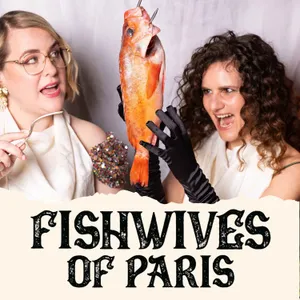
Fishwives of Paris: Daily Summaries Delivered
by Caroline Fazeli & Emily Monaco
Flipping the table on French food mythology and serving the real stories behind your favorite cuisine, with culinary journalist Emily Monaco and wine expert Caroline Fazeli.
Latest Episodes
The most recent episodes — sign up to get AI-powered summaries of each one.
- 6 days ago40 min
Is French Cheese Doomed? Climate Change Threatens Comté and Beaufort
Record heat and historic drought are forcing France's most protected cheeses to break their own rules.Caroline and Emily unpack how the AOP charters for Comté, Beaufort, and Abondance have been temporarily loosened after historic drought hit the Alps and Jura. They explain what changes when cows eat grain and hay instead of mountain grass, why terroir shapes the flavor, and what happened to producers like Salers, who could not adapt in time.Podcast Show NotesIn this episode:• France's record-breaking heat waves and wildfires in summer 2026• The INAO's historic dryness declaration for the Alps and Jura• Temporary charter changes for Abondance, Beaufort, and Comté cheese• How terroir shapes the flavor of mountain cheese• The three jobs behind every wheel of Comté, farmer, cheesemaker, and ager• Why Abondance is so tightly tied to its valley and cattle breed• Beaufort's three tiers and the disappearing Bleu de Termignon• Why Salers producers switched to cheaper Cantal cheese this year• The UNESCO-protected transhumance tradition and its uncertain future• A parallel case in Châteauneuf-du-Pape and possible reform of French irrigation rulesKey Takeaways• July 2026 was the hottest month on record in France, with more than 90,000 hectares of forest and vegetation burned since spring.• The INAO declared historic dryness in the Alps and Jura on August 10, 2026.• Abondance, Beaufort, and Comté are AOP cheeses whose charters normally require a set percentage of local grazing.• Abondance's summer grazing requirement temporarily dropped from 50 percent to 15 percent of local grassland, and outside hay is now allowed.• Beaufort's local feed requirement dropped from about 70 percent to 50 percent, with grain now permitted as a supplement.• Comté's rules changed the least of the three, allowing green corn feed from outside the AOP zone through the end of October.• Salers cheese producers in the Auvergne could not modify their charter in time and switched to making cheaper Cantal instead.• Transhumance, the tradition of moving herds up to summer pastures, was named UNESCO Intangible Cultural Heritage in 2023.
- 1 weeks ago36 min
Why French People Don't Bake at Home Like Americans Do
French people rarely bake elaborate pastries at home, and Versaille-based pastry chef Molly Wilkinson says that is by design.Caroline and Emily talk with Wilkinson, an American pastry chef trained at Le Cordon Bleu, about why French home bakers stick to simple recipes like mousse au chocolat and yogurt cake while buying croissants and tarts from professionals. They compare that mindset to the American love of ambitious home baking projects, from layer cakes to laminated dough.Podcast Show NotesIn this episodeWhy Caroline avoids baking croissants at home despite loving French pastryHow Molly Wilkinson learned lamination and croissant making after Le Cordon BleuThe difference between viennoiserie, patisserie, and home style French dessertsWhy French people would rather buy a pastry from an expert than bake oneThe most common French home desserts, including mousse au chocolat and yogurt cakeHow packet baking powder and boxed recipes shape French home bakingWhy French pastry certification starts as young as age sixteenWhat Molly teaches American home bakers in Le Baking Club, including a Marie Antoinette themed entremetWhy cookies and donuts have become newly popular in French bakeriesMolly's plans to open an American style cafe near the Chateau de VersaillesKey TakeawaysCroissant dough is a laminated, yeasted dough that takes about three days to make properly.French people generally do not bake difficult pastries at home and prefer to buy them from experts.Simple one bowl desserts like mousse au chocolat, fondant au chocolat, and yogurt cake are French home baking staples.Many classic French home recipes originated on the backs of packaged ingredients like Nestle chocolate and baking powder sachets.French pastry chefs typically earn formal certification starting around age sixteen.American baking culture values ambitious home projects and DIY effort in a way French baking culture does not.Molly Wilkinson teaches American home bakers French pastry techniques through her membership, Le Baking Club.Molly Wilkinson is opening a cafe near the Chateau de Versailles in fall 2026.
- 2 weeks ago24 min
The Surprisingly Italian History of the French Macaron
Macarons may be one of France’s most recognizable culinary exports, but their history is much messier than the pastel boxes suggest.In this episode, Caroline and Emily dig into the Italian origins of the macaron and the role Catherine de’ Medici supposedly played in bringing almond cookies to the French court. They explore the roughly 40 regional versions still found around France, including macarons that look nothing like the famous Parisian sandwich cookie.Then it’s on to Paris and Ladurée, where the macaron evolved into the polished luxury pastry tourists recognize today. Caroline breaks down exactly why macarons are so technically difficult to make, from meringue and macaronage to achieving the elusive “foot.”Finally, they taste their way through macarons from Pierre Hermé, Lautrec, and Picard. The biggest shock isn’t a rare flavor or an expensive Parisian creation: it’s just how good the frozen supermarket macarons are.Key TakeawaysMacarons are generally traced back to Italian almond cookies, with Catherine de’ Medici associated with bringing them to France.France has around 40 regional variants, many of which are rustic, undyed and completely unlike the Parisian sandwich macaron.Ladurée helped create and popularize the modern Parisian form, rather than inventing the macaron itself.Macarons use relatively simple ingredients but require considerable technical precision to make well.Macarons actually benefit from aging, as moisture moves from the filling into the shell and creates the desired texture.In the tasting, Picard’s frozen macarons perform surprisingly well against much more expensive pâtisserie versions.
- 3 weeks ago2 min
Season 2 Trailer: Fishwives Is Going Weekly
ishwives of Paris is back for Season 2—and this time, we’re going weekly.Starting September 1, Caroline and Emily will be bringing you a new episode every week. Some will be our full studio productions, some will be more casual webcam episodes, and we’ll be welcoming more guests into the Fishwives universe.We also want to hear from you. We’ll be sharing listener stories and questions on the show—and yes, we’re introducing corrections, because occasionally even Fishwives get things wrong.Have a story we need to hear? A question about French food or wine? Think we got something wrong?Email us at bonjour@fishwivesofparis.com.Fishwives of Paris Season 2 begins September 1, with new episodes every week.
- Aug 18, 202631 min
Why France Refuses to Let Duralex Die
Duralex is the little tempered glass found everywhere from French school cafeterias to Parisian bistros—and once you start looking at its history, it becomes a surprisingly revealing story about modern France.After decades of globalization, disastrous ownership and repeated financial crises, Duralex’s own employees stepped in to save the company, transforming it into a worker cooperative and investing their own money. Now soaring energy costs have put the French icon in danger again.Caroline and Emily unpack why France cares so deeply about an inexpensive water glass—and somehow end up discussing Stanley Cups, the American obsession with hydration, French distrust of ice, cafeteria lunches, James Bond and the secret childhood game hidden on the bottom of every Duralex glass.Podcast Show NotesDuralex was officially launched in 1945, but its origins stretch back to a Loire Valley vinegar maker who needed bottles. Its tempered glass eventually became synonymous with French cafés, schools and institutional dining.In this episode:How Duralex became a postwar French design iconThe disastrous ownership period that helped push the company into decades of instabilityWhy energy costs are particularly dangerous for glass manufacturingHow Duralex became a worker-owned cooperativeWhy tiny French water glasses horrify AmericansThe myth of drinking eight glasses of water every dayWhy some French people avoid water or ice with mealsDuralex at MoMA—and in SkyfallThe number underneath every Duralex glass and the French childhood game attached to itKey TakeawaysDuralex is not merely inexpensive glassware; it has become part of French everyday cultural identity.The company has survived repeated financial crises, ownership changes and receiverships.In 2024, employees reorganized Duralex as a worker cooperative, preserving 250 jobs.Glass manufacturing requires enormous amounts of energy, making Duralex particularly vulnerable to energy-price volatility.The American “eight glasses of water a day” rule is not the clear-cut health requirement many Americans assume it is.Drinking water with a meal does not dilute stomach acid, despite a persistent French belief that it does.The mysterious number underneath a Duralex glass inspired a generations-old French school cafeteria game.
- Aug 4, 202623 min
Everything Is Changing at Fishwives of Paris
Season 2 is almost here, and we're making some big changes.In this bonus episode, we explain why we're moving to weekly episodes, introducing new formats, becoming more responsive to food news, inviting more guests, and building a closer relationship with our listeners.We also look back at our first year, share some behind-the-scenes stories—including filming the entire season while Caroline was pregnant—and explain the mission behind everything we do at Fishwives of Paris.Podcast Show NotesIn this episode:Why Fishwives is moving to weekly episodesWhy we're introducing webcam episodes alongside studio episodesOur philosophy on admitting mistakes and publishing correctionsHow listener feedback will shape future episodesWhy we're expanding our guest lineupBehind the scenes of filming Season 1Caroline's IVF, pregnancy and maternity leave during productionEmily's journalism career and constant travelWhy living in France changed our approach to workThe Fishwives missionHow you can help shape Season 2Key TakeawaysFishwives is becoming a weekly podcast.The show will combine studio and webcam episodes.Listener corrections will become part of future episodes.Audience participation will play a much bigger role.More international guests are coming.The show's editorial mission remains the same while the format evolves.
- Jul 21, 202641 min
How Provence Rosé Took Over the World
Provençal rosé is one of the world's most recognizable wines, but its rise was anything but inevitable.This episode explores how rosé evolved from a low-status byproduct into a global luxury phenomenon. Caroline and Emily trace the history of pink wine from Antiquity to modern Provence, uncover the innovations that created today's pale rosé style, and examine how branding, celebrity culture, and lifestyle marketing transformed an inexpensive regional wine into an international success story.Podcast Show NotesIn this episode:Why rosé was once considered a cheap byproductHow rosé was made in Ancient GreeceThe difference between traditional rosé and Provençal roséThe impact of phylloxera on French wineMarcel Ott's role in refining the modern styleWhy Provence became synonymous with roséThe rise of Whispering AngelBrad Pitt, Miraval, and celebrity wine brandsThe history of rosé piscineWhy ice in rosé is more French than many people realizeKey TakeawaysRosé was historically a low-status wine.Modern Provence rosé is a relatively recent innovation.Marcel Ott helped transform rosé from a byproduct into a premium category.Celebrity culture played a major role in rosé's global success.Whispering Angel helped establish rosé as a luxury lifestyle product.Rosé piscine has deeper roots than many wine drinkers realize.Branding often contributes as much to rosé's value as winemaking.
- Jul 7, 202623 min
Tarte Tropézienne: From Polish Immigrant to French Icon
The Tarte Tropézienne is one of the most famous desserts on the French Riviera, but it wasn't invented by a French pastry chef.In this episode, Emily and Caroline uncover the surprising story behind Saint-Tropez's signature pastry. From Polish immigrant baker Alexandre Micka to Brigitte Bardot's unexpected role in naming the dessert, they explore how a family recipe became a French icon.Along the way, they dive into the history of brioche, French pastry cream, celebrity influence, trademarks, and the transformation of Saint-Tropez from a fishing village into a global luxury destination.Podcast Show NotesIn this episode:Why the Tarte Tropézienne isn't actually a tartThe Polish origins of Saint-Tropez's most famous dessertHow Brigitte Bardot helped create the brandThe movie that transformed Saint-Tropez foreverAlexandre Micka's original bakery storyWhy the dessert became a trademarked productThe history of brioche in FranceThe different creams used in a Tarte TropézienneHow modern pastry chefs reinvent the classic recipeWhy France often embraces foods with foreign originsKey TakeawaysThe Tarte Tropézienne was invented by Polish immigrant Alexandre Micka.Brigitte Bardot gave the pastry its famous name during the filming of And God Created Woman.Saint-Tropez was a relatively unknown fishing village before the 1950s, and now has been ruined by rich Americans.The dessert is actually a brioche filled with cream, not a tart.American buttercream sucks.The name "Tarte Tropézienne" is trademarked, but the dessert itself is widely recreated.The pastry's success mirrors the rise of Saint-Tropez as an international luxury destination.Modern pastry chefs continue to reinterpret the dessert with new flavors and techniques.
About Fishwives of Paris
Flipping the table on French food mythology and serving the real stories behind your favorite cuisine, with culinary journalist Emily Monaco and wine expert Caroline Fazeli.
Customized Recaps
AI-powered recaps with compact key takeaways, quotes, and insights.
Straight to Your Inbox
Get key takeaways from Fishwives of Paris in a 5-minute read.
Save Hours Every Week
Stay current on your favorite podcasts without falling behind.
Frequently Asked Questions
What is Podzilla's Fishwives of Paris daily summary?
It's a free AI-powered email that summarizes new episodes of Fishwives of Paris as soon as they're published. You get the key takeaways, notable quotes, and links & mentions — all in a quick read.
How does the Fishwives of Paris podcast summary work?
When a new episode drops, our AI transcribes and analyzes it, then generates a personalized summary tailored to your interests and profession. It's delivered to your inbox every morning.
Is this an official Fishwives of Paris product?
No. Podzilla is an independent service that summarizes publicly available podcast content. We're not affiliated with or endorsed by Caroline Fazeli & Emily Monaco.
Can I get summaries of other podcasts too?
Absolutely! The free plan covers up to 3 podcasts. Upgrade to Pro for 15, or Premium for 50. Browse our full catalog at /podcasts.
How often does Fishwives of Paris release new episodes?
Fishwives of Paris publishes biweekly. Our AI generates a summary within hours of each new episode.
What topics does Fishwives of Paris cover?
Fishwives of Paris covers topics including History, Arts, Food, Culture, Society & Culture, Travel, Places & Travel. Our AI identifies the specific themes in each episode and highlights what matters most to you.
Start getting Fishwives of Paris summaries tomorrow morning.
Free forever for up to 3 podcasts. No credit card required.
Free forever for up to 3 podcasts. No credit card required.