Free Daily Podcast Summary
Executive Decisions with Steve Sedgwick: Daily Summaries Delivered
by CNBC
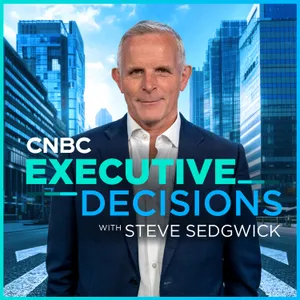
‘Executive Decisions’ is a CNBC podcast offering a rare window into the minds of top decision-makers. Hosted by seasoned financial journalist Steve Sedgwick, each episode explores the pivotal choices that shape the careers and legacies of influential business leaders and policymakers. Through candid conversations about risk, doubt and conviction, the series reminds us that even the most powerful face uncertainty and trade-offs.
Latest Episodes
The most recent episodes — sign up to get AI-powered summaries of each one.
- 6 days ago40 min
Take the Reckless Path: Standard Chartered CEO Bill Winters
Bill Winters planned to become a diplomat. Instead, a job at J.P. Morgan led him into banking and eventually to a pivotal early-career decision: move into the emerging derivatives business despite knowing little about it.In this episode of Executive Decisions, the Standard Chartered Group CEO tells Steve Sedgwick why that experience helped shape a career philosophy he still shares with younger colleagues: when rare opportunities arise, sometimes you should “take the reckless path.” For Winters, that doesn't mean being careless; it means being prepared to choose the less conventional route when it offers more to learn.Winters also reflects on his 26 years at J.P. Morgan, the lessons of the global financial crisis and what it was like to be fired by Jamie Dimon. He explains why he subsequently ignored advice not to join the UK's Independent Commission on Banking and why, six years after leaving J.P. Morgan, he returned to mainstream banking to become CEO of a troubled Standard Chartered.He also discusses the decisions behind Standard Chartered's turnaround, mistakes he made along the way, leadership, AI and why he believes ambition can sometimes become a curse.See Privacy Policy at https://art19.com/privacy and California Privacy Notice at https://art19.com/privacy#do-not-sell-my-info.
- 2 weeks ago43 min
Face the Music: Anthony Scaramucci
Anthony Scaramucci’s career has included high-profile successes and setbacks. In this episode of “Executive Decisions,” the SkyBridge Capital founder reflects on leaving Goldman Sachs to build his own business, why insecurity led him into the wrong job early in his career and the pride and ego that influenced his decision to join the Trump administration. After being fired from the White House after just 11 days, Scaramucci was advised to disappear from public life. Instead, he chose to face his critics - a decision he says became part of a wider reckoning with his mistakes, his relationships and himself. He also discusses being fired and rehired by Goldman Sachs, the lessons he learned from market downturns, rebuilding SkyBridge and the fallout from its relationship with Sam Bankman-Fried and FTX. Through it all, Scaramucci says the lesson has been the same: own your mistakes, face the music and keep going. See Privacy Policy at https://art19.com/privacy and California Privacy Notice at https://art19.com/privacy#do-not-sell-my-info.
- Aug 18, 202634 min
Run Toward the Hard Problems: Commerzbank CEO Bettina Orlopp
Bettina Orlopp took over as CEO of Commerzbank as the German lender was pushing ahead with a multiyear turnaround — and as UniCredit was building a stake that raised the pressure on the bank's leadership.In this episode of Executive Decisions, Orlopp explains how she has approached leading through that pressure: staying calm, speaking candidly about difficult change and relying on trusted teams to deliver the bank's strategy.Orlopp also reflects on the path that brought her there, from nearly two decades at McKinsey to taking on Commerzbank's compliance function, becoming CFO just before the Covid-19 pandemic and later stepping into the CEO role.She discusses how takeover pressure accelerated Commerzbank's strategy work, the challenges of restructuring and why she believes leaders need to be direct about what change will require.Note: This interview was recorded on May 12, 2026. See Privacy Policy at https://art19.com/privacy and California Privacy Notice at https://art19.com/privacy#do-not-sell-my-info.
- Aug 4, 202633 min
Go Where You’ll Learn More: Thomson Reuters CEO Steve Hasker
Steve Hasker never followed a formal career plan. Instead, the Thomson Reuters CEO says his biggest decisions were guided by one question: Would he learn more by saying yes than by staying where he was?In this episode of “Executive Decisions,” Hasker reflects on the childhood experiences that taught him resilience, the mentors who shaped his leadership and why the people around you can matter more than the role itself.He discusses leaving McKinsey for Nielsen after an unexpected pitch from former GE executive Dave Calhoun, the lessons he learned from early career mistakes and why surrounding yourself with talented people can accelerate growth as a leader.Hasker also recalls becoming CEO of Thomson Reuters on the eve of the Covid-19 pandemic, leading 25,000 employees through a period of uncertainty and helping transform the company into an AI-powered technology business.See Privacy Policy at https://art19.com/privacy and California Privacy Notice at https://art19.com/privacy#do-not-sell-my-info.
- Jul 21, 202639 min
Success Isn’t the Finish Line: DSM-Firmenich CEO Dimitri de Vreeze
After more than three decades at science-based firm DSM, Dimitri de Vreeze faced what he calls the hardest decision of his career: selling the materials business where he had grown up professionally. In this episode of “Executive Decisions,” the DSM-Firmenich CEO reflects on why the decision made strategic sense, even as it felt deeply personal, and how it shaped his view that success is not a finish line. De Vreeze discusses joining DSM with plans to stay only a few years, the family values and rebellious streak that shaped his leadership, and why he believes leaders should keep challenging what is already working. He also discusses ending a half-billion-dollar biofuels project, serving as co-CEO, leading the merger that created DSM-Firmenich and why treating assumptions as facts can be one of the biggest risks in decision-making. See Privacy Policy at https://art19.com/privacy and California Privacy Notice at https://art19.com/privacy#do-not-sell-my-info.
- Jul 7, 202635 min
Say Yes Before You're Ready: Capital Group CEO Mike Gitlin
Mike Gitlin never set out with a master plan to become CEO. Instead, his career has been shaped by a series of decisions to embrace opportunities that pushed him outside his comfort zone. In this episode of Executive Decisions, the Capital Group CEO reflects on the family values that shaped his leadership, from lively dinner-table debates to mock trials with his father that taught him to think critically, listen carefully and communicate with confidence. Gitlin discusses his early fascination with financial markets, why he chose to study history instead of finance and the lessons he learned after being thrown into overnight trading in Asia with little experience and no roadmap. He also explains why he left T. Rowe Price - where he thought he would spend the rest of his career - to join Capital Group, helping transform one of the world's largest asset managers from the inside. Along the way, Gitlin shares how moving his family around the world influenced his biggest decisions, why he believes feedback is one of leadership's greatest gifts and why EQ will become even more valuable than IQ in the age of AI.See Privacy Policy at https://art19.com/privacy and California Privacy Notice at https://art19.com/privacy#do-not-sell-my-info.
- Jun 23, 202630 min
Choose Impact Over Ambition: Novonesis CEO Ester Baiget
After 25 years at Dow, Ester Baiget left a business she loved to take on the top job at Novozymes — now Novonesis. It was not a move driven by ego, or a lifelong plan to become CEO. Baiget says she did not need the title. What drew her in was purpose, potential and a belief that she could help the company make a bigger impact through biology. In this episode of “Executive Decisions,” the Novonesis CEO reflects on the family values that shaped her, the teacher who nudged her toward chemical engineering and the mother who pushed her to attend the interview that began her 25-year career at Dow. Baiget discusses why curiosity has guided her more than career planning, how she learned not to take setbacks out of proportion and why the CEO role is less lonely than many assume when you build the right team. She also explains the strategic shift that led Novozymes to see itself not as an enzyme company, but as a biosolutions company — a decision that helped make the merger with Danish biotech company Chr. Hansen possible. See Privacy Policy at https://art19.com/privacy and California Privacy Notice at https://art19.com/privacy#do-not-sell-my-info.
- Jun 9, 202635 min
Leave Without a Plan: BNY CEO Robin Vince
After 26 years at Goldman Sachs, Robin Vince made a decision few senior Wall Street executives would make: he walked away without another job lined up. At 48, he chose to take what he called a “gap year,” turning down an immediate approach from BNY so he could step back and think carefully about what he wanted from the next phase of his life and career. In this episode of Executive Decisions, the BNY CEO explains why stepping away became essential, and how that pause helped him decide he was not finished building. He reflects on the pressure, uncertainty and self-doubt that shaped his career, from arriving in France as a child unable to speak the language to navigating the intensity of Goldman Sachs in the 1990s. Vince also looks back on the global financial crisis, including the weekend of Lehman Brothers’ collapse, and the lessons he took from moments of extreme pressure. He then discusses the transformation of BNY under his leadership, why consistency matters in building institutions and how he balances running one of America’s oldest banks with family life and personal wellbeing. See Privacy Policy at https://art19.com/privacy and California Privacy Notice at https://art19.com/privacy#do-not-sell-my-info.
About Executive Decisions with Steve Sedgwick
‘Executive Decisions’ is a CNBC podcast offering a rare window into the minds of top decision-makers. Hosted by seasoned financial journalist Steve Sedgwick, each episode explores the pivotal choices that shape the careers and legacies of influential business leaders and policymakers. Through candid conversations about risk, doubt and conviction, the series reminds us that even the most powerful face uncertainty and trade-offs.
Customized Recaps
AI-powered recaps with compact key takeaways, quotes, and insights.
Straight to Your Inbox
Get key takeaways from Executive Decisions with Steve Sedgwick in a 5-minute read.
Save Hours Every Week
Stay current on your favorite podcasts without falling behind.
Frequently Asked Questions
What is Podzilla's Executive Decisions with Steve Sedgwick daily summary?
It's a free AI-powered email that summarizes new episodes of Executive Decisions with Steve Sedgwick as soon as they're published. You get the key takeaways, notable quotes, and links & mentions — all in a quick read.
How does the Executive Decisions with Steve Sedgwick podcast summary work?
When a new episode drops, our AI transcribes and analyzes it, then generates a personalized summary tailored to your interests and profession. It's delivered to your inbox every morning.
Is this an official Executive Decisions with Steve Sedgwick product?
No. Podzilla is an independent service that summarizes publicly available podcast content. We're not affiliated with or endorsed by CNBC.
Can I get summaries of other podcasts too?
Absolutely! The free plan covers up to 3 podcasts. Upgrade to Pro for 15, or Premium for 50. Browse our full catalog at /podcasts.
How often does Executive Decisions with Steve Sedgwick release new episodes?
Executive Decisions with Steve Sedgwick publishes biweekly. Our AI generates a summary within hours of each new episode.
What topics does Executive Decisions with Steve Sedgwick cover?
Executive Decisions with Steve Sedgwick covers topics including Business. Our AI identifies the specific themes in each episode and highlights what matters most to you.
Start getting Executive Decisions with Steve Sedgwick summaries tomorrow morning.
Free forever for up to 3 podcasts. No credit card required.
Free forever for up to 3 podcasts. No credit card required.