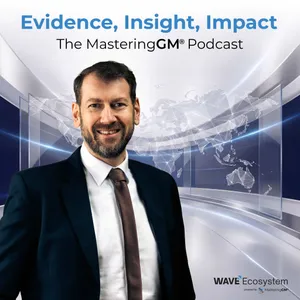
Free Daily Podcast Summary
Evidence, Insight, Impact: The MasteringGM Podcast: Daily Summaries Delivered
by Benjamin Bader
Evidence, Insight, Impact is the podcast for busy Global Mobility and international HR leaders who want clear, research-driven thinking without the noise. Each episode distills complex ideas into practical, usable insights — from translating academic studies into real-world lessons, to commenting on emerging trends, to occasional conversations with experts shaping the future of mobility. Designed to fit into a demanding schedule, episodes are short, focused, and grounded in evidence. If you want to make better decisions, think more strategically, and bring real impact to your GM practice, this podcast is for you.
Latest Episodes
The most recent episodes — sign up to get AI-powered summaries of each one.
- 4 days ago4 min
Want to Become More Strategic? You May be Asking the Wrong Question!
Episode Description What if becoming more strategic isn't about doing more, but about having the courage to do less? With From Operational to Strategic Global Mobility now published, Ben shares the one question he hopes every reader will ask after finishing the book. Rather than encouraging professionals to adopt more frameworks, launch new initiatives, or introduce additional processes, he challenges a fundamental assumption about strategic progress: that improvement always requires adding something new. Drawing on experiences from Global Mobility and other specialist functions, Ben explores why successful teams often become overwhelmed by responsibilities, how operational excellence can unintentionally create strategic limitations, and why deciding what to stop doing may be one of the most important leadership decisions. What This Episode Covers• why becoming more strategic does not necessarily mean doing more• how operational success can create additional responsibilities and expectations• why Global Mobility teams often struggle with too many activities rather than too few• the difference between worthwhile activities and strategically important work• why organizations are better at adding responsibilities than removing them• how effective leaders protect their teams' attention and establish priorities• why saying no can be just as important as identifying new opportunities Key Reflection Questions• which activities consume significant time without creating proportional value?• what responsibilities have become routine simply because nobody has questioned them?• what would you stop doing if you wanted to create more space for strategic work? Key InsightStrategy is not simply about choosing what to do. It is equally about deciding what not to do. Becoming more strategic often requires challenging established habits, removing activities that no longer create sufficient value, and deliberately protecting time and attention for work that matters most. Related ThemesThis episode connects closely to discussions around strategic Global Mobility, organizational priorities, leadership, operational excellence, strategic positioning, resource allocation, organizational effectiveness, and business value creation. The BookFrom Operational to Strategic Global Mobility explores how Global Mobility professionals can rethink their role, challenge established assumptions, and build a function that creates meaningful talent and business value. Now available. Find out more: https://strategicgm.benjaminbader.com HostHosted by Benjamin Bader, Professor of International HRM and co-founder of MasteringGM®. SubscribeSubscribe to Evidence, Insight, Impact — The MasteringGM® Podcast for short, focused episodes exploring the realities of Global Mobility, leadership, organizations, and international work.
- 1 weeks ago5 min
The Biggest Lie People Believe About AI and Leadership
Episode Description Artificial intelligence promises to transform leadership by providing better information, faster analysis, and increasingly sophisticated recommendations. But does having access to better information actually lead to better decisions? In this episode, Ben challenges one of the most common assumptions about AI and leadership: that better information automatically produces better decisions. He explores why leadership has never been about information alone, why judgment becomes increasingly important as AI capabilities improve, and why the greatest risk may not be AI replacing leaders but leaders gradually abandoning independent thinking. Drawing on examples from organizational decision-making, he examines the difference between information and judgment, the dangers of accepting convincing recommendations without questioning them, and why accountability remains central to effective leadership. What This Episode Covers• why better information does not automatically lead to better decisions• how AI is changing the nature of leadership rather than simply replacing leaders• why judgment becomes more valuable as access to information improves• the importance of uncertainty, trade-offs, and organizational context in decision-making• why AI-generated recommendations still require human scrutiny• the risk of intellectual complacency when AI consistently produces convincing answers• why accountability remains a fundamental responsibility of leadership Key Reflection Questions• are you using AI to improve your thinking or increasingly allowing it to think for you?• how often do you challenge AI-generated recommendations rather than accepting them at face value?• what organizational, ethical, or human considerations might be missing from an AI-generated recommendation? Key InsightAI can dramatically improve access to information, analysis, and recommendations, but it cannot eliminate uncertainty or remove the responsibility for making decisions. As AI becomes more capable, effective leadership increasingly depends on the ability to exercise independent judgment, recognize trade-offs, and remain accountable for outcomes. Related ThemesThis episode connects closely to discussions around artificial intelligence, leadership judgment, strategic decision-making, organizational accountability, critical thinking, digital transformation, management, and the future of work. HostHosted by Benjamin Bader, Professor of International HRM and co-founder of MasteringGM®. SubscribeSubscribe to Evidence, Insight, Impact — The MasteringGM® Podcast for short, focused episodes exploring the realities of Global Mobility, leadership, organizations, and international work.
- 2 weeks ago5 min
I Wrote a Book About Global Mobility. Then Something Unexpected Happened!
Episode Description What happens when the book you finish writing turns out to be quite different from the one you originally intended to write? With From Operational to Strategic Global Mobility now officially published, Ben shares the biggest surprise he experienced during the writing process. What started as a book about Global Mobility gradually evolved into a much broader exploration of organizations, leadership, influence, trust, and strategic positioning. Drawing on almost two decades of research, consulting, executive education, and conversations with professionals around the world, Ben explains why the challenges facing Global Mobility are rarely just about mobility. They often reveal something much more fundamental about how organizations operate, make decisions, and recognize value. What This Episode Covers• why the finished book differs from Ben's original vision• how Global Mobility became a lens for understanding broader organizational challenges• why two organizations with similar mobility programs can achieve very different levels of strategic influence• the difference between improving a function's performance and improving organizational outcomes• why influence cannot simply be created through technology, dashboards, or better processes• what specialist functions beyond Global Mobility can learn about strategic positioning• why the writing process helped connect ideas developed over almost twenty years Key Reflection Questions• are the challenges facing your function really operational, or do they reflect broader organizational dynamics?• what makes some specialist functions trusted strategic advisors while others remain service providers?• are you primarily focused on improving your own function, or on helping the organization achieve better outcomes? Key InsightGlobal Mobility is not simply about moving employees across borders. It offers a powerful lens through which to understand organizational influence, leadership, decision-making, and value creation. Becoming strategic requires more than operational excellence. It requires understanding how the organization works and positioning your function to contribute to the decisions that matter. Related ThemesThis episode connects closely to discussions around strategic Global Mobility, organizational positioning, stakeholder influence, leadership, trust, organizational decision-making, strategic HRM, and business value creation. The BookFrom Operational to Strategic Global Mobility explores how Global Mobility professionals can rethink their role, challenge established assumptions, and build a function that creates meaningful talent and business value. Published October 20, 2026. Find out more: https://strategicgm.benjaminbader.com HostHosted by Benjamin Bader, Professor of International HRM and co-founder of MasteringGM®. SubscribeSubscribe to Evidence, Insight, Impact — The MasteringGM® Podcast for short, focused episodes exploring the realities of Global Mobility, leadership, organizations, and international work.
- 3 weeks ago4 min
The Most Expensive Decision Leaders Never Realize They're Making
Episode Description Organizations spend enormous amounts of time analyzing the costs of their decisions. Failed investments, unsuccessful international assignments, inefficient processes, and missed targets are carefully scrutinized. But what about the costs of opportunities that never receive attention in the first place? In this episode, Ben explores why some of the most expensive organizational decisions are those that leaders never consciously recognize as decisions. Drawing on the concept of opportunity cost, he examines how misplaced attention, competing priorities, and an excessive focus on efficiency can prevent organizations from recognizing opportunities to create greater value. Using Global Mobility as an example, he challenges leaders to consider whether they are spending too much time optimizing existing processes and too little time questioning whether they are focusing on the right things. What This Episode Covers• why the most expensive decisions are not always the most visible ones• how opportunity costs influence organizational performance• why organizations measure spending more easily than missed opportunities• how an excessive focus on cost reduction can distract from value creation• the difference between improving efficiency and increasing effectiveness• why Global Mobility needs to look beyond operational optimization• how asking different questions can reveal overlooked opportunities Key Reflection Questions• what opportunities might your organization be overlooking because its attention is focused elsewhere?• are you spending more time improving existing processes than questioning whether they create the right value?• what are you choosing not to do when you prioritize a particular initiative? Key InsightThe most expensive organizational decisions are not necessarily the ones that fail. They may be the opportunities leaders never consider because their attention is directed elsewhere. Every decision involves a trade-off, and understanding what an organization chooses not to pursue can be just as important as evaluating what it decides to do. Related ThemesThis episode connects closely to discussions around strategic decision-making, opportunity cost, organizational priorities, resource allocation, leadership judgment, strategic Global Mobility, efficiency, effectiveness, and business value creation. HostHosted by Benjamin Bader, Professor of International HRM and co-founder of MasteringGM®. SubscribeSubscribe to Evidence, Insight, Impact — The MasteringGM® Podcast for short, focused episodes exploring the realities of Global Mobility, leadership, organizations, and international work.
- Oct 14, 20265 min
Why I Finally Wrote the Book I’d Been Putting Off for Years
Episode Description Global Mobility has become increasingly important to organizations around the world. Yet despite its growing relevance, the function often remains trapped in operational conversations about policies, processes, exceptions, and compliance. In this episode, Ben shares the story behind his new book, From Operational to Strategic Global Mobility, available October 20. He explains why the idea developed over nearly two decades of research, consulting, and conversations with Global Mobility professionals and business leaders, and why he ultimately decided to turn those experiences into a book. What began as a project about Global Mobility gradually became something much broader: an exploration of organizational influence, leadership, trust, decision-making, and what it really means for a specialist function to become strategic. What This Episode Covers• why Ben decided to write From Operational to Strategic Global Mobility• the recurring challenges he observed across organizations over two decades• why positioning may be Global Mobility's biggest strategic challenge• how the book evolved beyond international assignments and mobility management• why becoming strategic is not necessarily about doing different work• why the book deliberately avoids simple formulas and management buzzwords• what readers can expect from future podcast episodes exploring the stories behind the book Key Reflection Questions• is your Global Mobility function recognized for the strategic value it creates, or primarily for the operational services it delivers?• what prevents specialist functions from becoming influential within their organizations?• are you trying to become more strategic by changing what you do, or by changing how others understand your contribution? Key InsightBecoming strategic is not simply about taking on new responsibilities or adopting new technologies. It is fundamentally about positioning, influence, trust, and demonstrating value. The challenges facing Global Mobility are often the same challenges facing specialist functions throughout an organization. Related ThemesThis episode connects closely to discussions around strategic Global Mobility, organizational positioning, leadership, stakeholder influence, decision-making, organizational value creation, and the transition from operational excellence to strategic relevance. The BookFrom Operational to Strategic Global Mobility explores how Global Mobility professionals can rethink their role, challenge established assumptions, and build a function that creates meaningful talent and business value. Available October 20. Find out more: https://strategicgm.benjaminbader.com Host Hosted by Benjamin Bader, Professor of International HRM and co-founder of MasteringGM®. Subscribe Subscribe to Evidence, Insight, Impact — The MasteringGM® Podcast for short, focused episodes exploring the realities of Global Mobility, leadership, organizations, and international work.
- Oct 7, 20266 min
The Relocation Industry Has a Transparency Problem - An Interview with Chris Kline
Episode DescriptionAfter almost 40 years in the relocation industry, Chris Kline has seen the same problems discussed again and again: spiraling costs, policy misalignment, exceptions, limited transparency, and frustration with suppliers. So why do so many of these issues persist? In this special conversational episode, Ben sits down with Chris, author of Unpacking Employee Relocation, and challenges him to condense almost four decades of industry experience into just five minutes. Their conversation takes place in the heart of New York City and explores how the relocation industry makes money, why greater transparency matters, and what organizations should be asking if they want to better understand and control their mobility programs. What This Episode Covers • why familiar relocation challenges continue to persist• what high exception rates may tell us about traditional mobility policies• why organizations need to understand how their suppliers make money• how incentives across the relocation supply chain can influence cost and complexity• why greater transparency starts with asking better questions• the role of contracts, program reviews, and auditing• how organizations can have more open conversations with their suppliers Key Reflection Questions• do you really understand how your relocation suppliers make money from your program?• where are the biggest cost drivers, delays, or sources of friction in your current program?• how valuable are you to your suppliers as a client — and have you ever asked them directly?• what would your suppliers change about the relationship if you gave them the opportunity to answer honestly? Key InsightTransparency is not about treating suppliers with suspicion. It is about understanding the commercial system in which everyone operates. Organizations are better positioned to make informed decisions when they understand how suppliers generate revenue, where incentives sit across the supply chain, and what is actually driving cost, complexity, and employee experience. Related ThemesThis episode connects closely to discussions around relocation costs, supplier management, mobility policy, exceptions, transparency, procurement, governance, auditing, and the commercial realities of the Global Mobility ecosystem. GuestChris Kline has spent 37 years working in the relocation industry and brings an insider perspective on how the industry operates, how suppliers make money, and how organizations can make more informed decisions about their relocation programs. He is the author of Unpacking Employee Relocation. Chris’s BookUnpacking Employee Relocation provides an insider perspective on the commercial realities of employee relocation, helping organizations better understand how the industry operates and make more informed decisions about their mobility programs. Amazon: https://www.amazon.com/Unpacking-Employee-Relocation-Control-Mobility/dp/B0F6CH72V7 HostHosted by Benjamin Bader, Professor of International HRM and co-founder of MasteringGM®. SubscribeSubscribe to Evidence, Insight, Impact — The MasteringGM® Podcast for short, focused episodes and special conversations exploring the realities of Global Mobility, leadership, organizations, and international work.
- Sep 23, 20265 min
Is Everything We Know About the Global Mindset Wrong?
Episode Description The global mindset has become one of the most widely used concepts in international business, leadership, and Global Mobility. Organizations frequently seek employees and leaders who possess it, develop it, or demonstrate it. In this episode, Ben explores whether the concept has become too broad to remain truly useful. Drawing on recent research, he examines why international effectiveness may be better understood as a combination of different capabilities, experiences, behaviors, and contextual factors rather than a single characteristic called a global mindset. What This Episode Covers • why the global mindset has become such a popular concept • the challenge of defining what a global mindset actually is • why international effectiveness is rarely explained by a single capability • how organizations sometimes use the global mindset as a label rather than an explanation • the importance of context in shaping international success Key Reflection Questions • what specific behaviors does your organization associate with a global mindset? • are you evaluating individual capabilities or environmental factors? • when somebody succeeds internationally, can you clearly explain why? Key Insight The global mindset is probably not a single capability. It is more likely a collection of attitudes, experiences, skills, behaviors, and contextual factors that interact in complex ways. Related Themes This episode connects closely to discussions around international leadership, expatriation, cross-cultural effectiveness, talent development, global careers, and international HRM. Host Hosted by Benjamin Bader, Professor of International HRM and co-founder of MasteringGM®. Subscribe Subscribe to Evidence, Insight, Impact — The MasteringGM® Podcast for short, focused episodes exploring the realities of Global Mobility, leadership, organizations, and international work.
- Sep 16, 20264 min
Being Busy Is Not the Same as Being Valuable
Episode Description Organizations often measure what is easiest to count. Projects completed, cases handled, meetings attended, reports produced, and response times achieved. In this episode, Ben explores why activity and impact are not the same thing. Using Global Mobility as an example, he examines how organizations can become highly efficient at measuring effort while struggling to understand value creation, and why focusing on outcomes rather than activity may lead to better decisions and stronger strategic impact. What This Episode Covers • why organizations naturally gravitate toward activity metrics • the difference between measuring effort and measuring value • how activity can create the illusion of progress • why meaningful outcomes often emerge on much longer timelines • practical questions for shifting attention from activity to impact Key Reflection Questions • which metrics in your organization measure activity and which measure impact? • what outcomes would still matter if all activity reporting disappeared tomorrow? • are you optimizing processes or creating value? Key Insight Activity is important, but it is not the goal. The purpose of any function is not to be busy—it is to create value. Related Themes This episode connects closely to discussions around ROI, strategic Global Mobility, performance measurement, organizational effectiveness, business value, and evidence-based decision-making. Host Hosted by Benjamin Bader, Professor of International HRM and co-founder of MasteringGM®. Subscribe Subscribe to Evidence, Insight, Impact — The MasteringGM® Podcast for short, focused episodes exploring the realities of Global Mobility, leadership, organizations, and international work.
Get Evidence, Insight, Impact: The MasteringGM Podcast summaries in your inbox
Free AI-powered daily recaps. Key takeaways, quotes, and mentions — in a 5-minute read.
Get Free Summaries →Free forever for up to 3 podcasts. No credit card required.
You Might Also Like
Listeners also like.
Leading By Example: Executives Making An Impact
Executives share pivotal moments and personal experiences that shaped their leadership and decision-making in real-world business environments.

Proven Podcast
Charles Schwartz

King Dems Podcast
Discusses leadership, AI, and business growth with CEOs and entrepreneurs through practical insights on strategy, innovation, and mindset.

The David Guttman Podcast
Conversations with top leaders on building wealth, integrity, and a meaningful life through real-world lessons and authentic mentorship.

The Creator Passport Podcast
A creator couple shares practical strategies for growing and monetizing a content business without burnout.
HBR IdeaCast
Features leading thinkers in business and management discussing key ideas and trends.

Finding Mastery with Dr. Michael Gervais
Conversations with elite performers across sports, business, and science to explore the psychology of high performance and human potential.
A Bit of Optimism
Conversations with thinkers and doers exploring what drives purpose, growth, and meaning in life.

Right About Now - Legendary Business Advice
Raw business insights from founders and industry leaders, revealing real wins, failures, and actionable strategies without the fluff.

Leading Outward
Leaders tackle culture, accountability, and conflict with real-time coaching and insights from global executives.

Growth Mindset Psychology: The Science of Self-Improvement
Explores the science behind lasting self-improvement through psychology, neuroscience, and timeless wisdom traditions.

The Prof G Pod with Scott Galloway
A no-holds-barred take on business, tech, culture, and life from a professor, author, and entrepreneur.
About Evidence, Insight, Impact: The MasteringGM Podcast
Evidence, Insight, Impact is the podcast for busy Global Mobility and international HR leaders who want clear, research-driven thinking without the noise. Each episode distills complex ideas into practical, usable insights — from translating academic studies into real-world lessons, to commenting on emerging trends, to occasional conversations with experts shaping the future of mobility. Designed to fit into a demanding schedule, episodes are short, focused, and grounded in evidence. If you want to make better decisions, think more strategically, and bring real impact to your GM practice, this podcast is for you.
Customized Recaps
AI-powered recaps with compact key takeaways, quotes, and insights.
Straight to Your Inbox
Get key takeaways from Evidence, Insight, Impact: The MasteringGM Podcast in a 5-minute read.
Save Hours Every Week
Stay current on your favorite podcasts without falling behind.
Frequently Asked Questions
What is Podzilla's Evidence, Insight, Impact: The MasteringGM Podcast daily summary?
It's a free AI-powered email that summarizes new episodes of Evidence, Insight, Impact: The MasteringGM Podcast as soon as they're published. You get the key takeaways, notable quotes, and links & mentions — all in a quick read.
How does the Evidence, Insight, Impact: The MasteringGM Podcast podcast summary work?
When a new episode drops, our AI transcribes and analyzes it, then generates a personalized summary tailored to your interests and profession. It's delivered to your inbox every morning.
Is this an official Evidence, Insight, Impact: The MasteringGM Podcast product?
No. Podzilla is an independent service that summarizes publicly available podcast content. We're not affiliated with or endorsed by Benjamin Bader.
Can I get summaries of other podcasts too?
Absolutely! The free plan covers up to 3 podcasts, any in the catalog. Basic raises that to 15, Pro to 40 and Max to 100. Browse our full catalog at /podcasts.
How often does Evidence, Insight, Impact: The MasteringGM Podcast release new episodes?
Evidence, Insight, Impact: The MasteringGM Podcast publishes weekly. Our AI generates a summary within hours of each new episode.
What topics does Evidence, Insight, Impact: The MasteringGM Podcast cover?
Evidence, Insight, Impact: The MasteringGM Podcast covers topics including Education, Business, Management, Careers. Our AI identifies the specific themes in each episode and highlights what matters most to you.
Start getting Evidence, Insight, Impact: The MasteringGM Podcast summaries tomorrow morning.
Free forever for up to 3 podcasts. No credit card required.
Free forever for up to 3 podcasts. No credit card required.