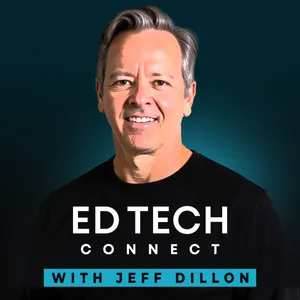
Free Daily Podcast Summary
The Signal: Daily Summaries Delivered
by Jeff Dillon
With more than 500,000 downloads, The Signal is the podcast for higher education’s innovative leaders. Hosted by Jeff Dillon, The Signal cuts through the noise of the "status quo" to bring you the strategic intelligence needed to reshape how institutions recruit, support, and retain students. Every Friday, we sit down with the practitioners and technology builders who are actively defining the next decade of campus life. Why Higher Ed Leaders Listen: In one of the most consequential periods for academia, we move past the hype to focus on Human-Centered Innovation. Our episodes feature deep-dive interviews with guest experts focusing on the "real work" of institutional evolution. Core Topics & AI Strategy: * Artificial Intelligence: Practical AI adoption, governance, and the "Human in the Loop" mindset. * Enrollment Marketing: Modern recruitment strategies and GEO (Generative Engine Optimization). * Student Success: Data-driven retention, mental health, and digital engagement. * Institutional Transformation: Navigating digital transformation with a focus on workforce readiness and AVPs reimagining student care. Whether you are a C-suite leader, IT Director, or Faculty member, join our community of 100,000+ professionals to stay ahead of the curve.
Latest Episodes
The most recent episodes — sign up to get AI-powered summaries of each one.
- 2 days ago24 min
Ep. 105 -Michael Leggs: The Essay Was Never Evidence of Thinking
What if the real crisis AI has exposed in higher education isn't student dishonesty, but the fact that we've been treating final papers as evidence of thinking—when AI can now simulate that thinking in seconds? In this episode, host Jeff Dillon sits down with Michael Leggs, who has taught English at St. Paul College for 21 years and is the founder of Smartlby, an AI‑powered revision tutor designed to help students strengthen their writing through guided reflection—without writing for them. Michael brings a rare perspective: he's not a technologist or an administrator talking about AI in the abstract. He's the person reading the papers, watching students struggle, and redesigning assignments in real time. Michael argues that detection software is a triage response, not a long‑term solution. The deeper problem is that our curriculum and assessment models were already fragile—AI just made it visible. He explains why surveillance tools create environments of mistrust, why revision should be treated as evidence of thinking, and how tools like Smartlby can guide students through a Socratic dialogue about their own writing without ever rewriting a single sentence. For any faculty member, department chair, or academic leader trying to figure out what actually works in the AI era, this episode offers a grounded, practical, and deeply human perspective. Key Takeaways The Real Problem Isn't Cheating—It's Assessment Design: AI didn't create the problem; it exposed a weakness that was already there. We've been treating final papers as evidence of thinking, but AI can now simulate that product. The solution isn't more surveillance—it's redesigning how we assess learning. Detection Software Is a Triage Response, Not a Solution: Institutions rushed to buy detection tools because it was something they could control. But surveillance creates environments of mistrust—students know we don't trust them, and that damages the learning relationship. Revision Is Evidence of Thinking: The shift needs to be from product assessment to process assessment. When a student revises, they are thinking. Tools that track revision give instructors visible evidence of that thinking process. Process Assessment Is Instructionally Scalable—Not Just Technically Scalable: Many tools are technically scalable (they work at scale) but not instructionally scalable (they don't actually help teachers teach better). Smartlby was designed by a teacher with 21 years of classroom experience, so it solves problems faculty actually face. AI Closes the Production Gap—But the Learning Gap Is Still Open: Students can produce more effectively with AI assistance. But producing more isn't the same as learning more. The goal should be to close the learning gap, not just the production gap. Redesign Starts at the Grassroots Level: Faculty sharing ideas about how they're redesigning assignments is where real change begins. It doesn't have to be a top‑down mandate. Department‑level collaboration on assignment types can create scalable, shared solutions. Surveillance Tools Should Be Abolished in Five Years: Michael's hope is that within five years, institutions will stop policing student writing and instead focus on ethical AI use, assistive tools, and redesigning assignments that actually teach students how to think—not just how to produce. The Signal Newsletter: https://edtechconnect.com/newsletter <... Chapters - The Real Problem with AI in Higher Education - The Name of Smartlby - What Pulled You Back into the Classroom? - The Tipping Point for Academic Writing - SmartAlby on How to Prevent Student Cheating - Does generative AI Close the Production Gap? - How to Keep AI Out of the Composition Classroom
- 1 weeks ago31 min
Ep. 104 - Raffi DerSimonian: Ikigai and purpose driven paths
Jeff talks to Raffi DerSimonian, VP and Chief Strategy Officer at ERI, a digital agency that has been building for colleges and universities since 2005. Raffi came up on the institutional side—alumni relations at Becker College, then marketing and communications at Maine College of Art—before moving to the agency side. He brings a rare combination: deep empathy for campus dynamics and a strategist's eye for what actually moves the needle. Raffi shares the story behind ikiGuide.ai, a tool that takes the Japanese concept of Ikigai—the intersection of what you love, what you're good at, what the world needs, and what you can be paid for—and turns it into a guided college search experience. Instead of handing a student a list of programs, ikiGuide gives them a path and the reasoning behind it, pulling in not just curricular offerings but also clubs, activities, study abroad, and stories of students and alumni who have walked similar paths. The conversation also tackles the shifting role of the college website in an AI-driven discovery landscape. Raffi argues that with nearly half of prospective students now consulting AI before visiting a website, the site's purpose is no longer to provide facts—it's to provide a "vibe check," a sense of connection, and evidence that a student can see themselves there. He also offers a sobering challenge to institutions: if your differentiators sound like they could apply to any school in America, it's time to go back to the drawing board. Key Takeaways Start with Purpose, Not a Major: The traditional college search process begins with "what do you want to study?"—a question many 17‑year‑olds can't answer. ikiguide flips that by asking who you are, what brings you joy, and what you're good at, then connecting those answers to a full ecosystem of opportunities. Only 30% of Gen Z Students Feel Prepared for Life After High School: According to Gallup and the Walton Family Foundation, the majority of students enter higher education without a clear sense of direction. Colleges have a responsibility to help them explore, not just funnel them into a predetermined path. The College Website's Role Has Shifted from Facts to Vibe: With nearly half of prospective students now consulting AI before ever visiting a site, the website is no longer the primary source of information. Its job is to provide a sense of connection, evidence of differentiation, and a clear path forward—all within the first three seconds. AI Is Moving the Discovery Upstream—But Websites Still Matter: Students are coming to websites already briefed by AI, with comparisons and assumptions already formed. The site needs to validate that they can see themselves there, not just repeat the facts they already know. Personalization Requires Judiciousness: Over‑personalization can backfire if the institution can't fulfill the expectations it creates. The safer approach is to let users opt in to sharing their interests and then use that data to surface relevant opportunities—not to make assumptions about them. Write for Both Humans and the Machines That Read for Them: AI is now summarizing institutions on behalf of students. Content needs to be findable for AI while still resonating with the human who will eventually read it. The line between the two is blurring rapidly. Differentiation Is the Only Defense Against Sameness: Most higher ed websites look and feel identical. Institutions that clearly articulate what sets them apart—with evidence, not just claims—are the ones that win attention in... Chapters - The Signal: The Future of Higher Ed Websites - In the Elevator With a Consultant - Exploring Ikigai: The College Search - The Future of the University Website - Will Higher Ed Content Be Personalized by AI? - Higher Ed: The Need for Personalization - The Future of Higher Ed: Reimagining the Signal
- 2 weeks ago32 min
Ep. 103 - Jenny Petty: The Alignment Gap That's Bankrupting Higher Ed Marketing
Jeff Dillon talks to Jenny Petty, Vice President of Industry Relations and Advisory Services at Simpson Scarborough, who has spent over a decade inside higher ed—most recently as VP of Marketing Communications at the University of Montana, where she helped reverse a decade‑long enrollment decline. Jenny brings a rare combination of private‑sector marketing experience (including growing a Facebook community from under 200 to over 1 million at IGT, working with brands like Dolly Parton and Family Guy) and deep institutional knowledge. Jenny doesn't hold back. She argues that many CMOs are operating from fear disguised as prudence—dressing up inaction as "getting more buy‑in" or "the campus isn't ready." She challenges the instinct to centralize everything when things feel chaotic, warning that org chart changes often mask deeper alignment problems. She introduces the concept of "alignment debt"—the organizational equivalent of technical debt—that compounds quietly until it becomes one of the most expensive problems an institution faces. For anyone leading marketing, enrollment, or institutional strategy, this episode offers both a diagnosis of what's broken and a framework—assess, align, activate—for actually fixing it. Key Takeaways Fear Disguised as Prudence Is Holding Marketing Back: Many CMOs are afraid—afraid of exposure, afraid of making a public mistake. That fear gets dressed up as "getting more buy‑in" or "socializing the idea more." The result is inaction. The institutions that need to change most are the ones that can least afford to wait. Alignment Debt Is the New Technical Debt: Just like technical debt, unresolved misalignment in people, processes, and decision rights compounds quietly until it becomes one of the most expensive problems an institution faces. It shows up in missed enrollment goals, budget crises, and systems that break at the worst possible moment. The Scope of the CMO Role Has Become Unmanageable: Job descriptions for higher ed CMOs read like seven jobs in one—crisis communicator, media relations, digital transformation lead, enrollment partner, and more. Marketing can't fix problems with the academic portfolio, pricing, or leadership misalignment. That's not a marketing problem—it's an institutional problem. Political Savvy Is Necessary—But It Can Become Self‑Protection: You have to be political in these jobs. But the moment political maneuvering starts protecting your own position instead of serving the mission, it stops being leadership. Know your warning signs. Ask yourself: "Am I building healthy coalition, or am I being manipulative?" Assess, Align, Activate Is a Flywheel, Not a One‑Time Process: The activation stage exposes false agreement. It reveals even more misalignment that you would have missed if you skipped from assessment straight to activation. Continuous improvement requires cycling through all three stages repeatedly. AI Is Moving Production Work Upstream—Design Around That: AI is making production cheaper and faster. The question isn't whether to use AI tools—it's what humans should be doing when production is no longer the constraint. Judgment, synthesis, creativity, institutional knowledge, and relationship‑building are all moving upstream. Managing Decline Is Not Stability: Growth, stasis, and managed decline are all strategies. But many campuses act like they're in a growth strategy while actually managing decline—and the misalignment shows up in budget, resources, and morale. Marketing leaders need to be at the table helping to resolve institutional contradictions, not just communicating outcomes after decisions are made. The Signal New... Chapters - What do you want your marketing leaders to do in the future? - Jenny Petty on The Higher Ed Marketer - CMOs: From Coal Miner to Rodeo Cowgirl - What Did Working in Higher Ed Teach Me About Marketing? - The Alignment Gap in Higher Ed - The 3 Stages of organizational change - What does an AI Ready Marketing Structure look like? - In the Elevator With Consultants - What can you say now about the CMO role - What Higher Ed Marketing Needs
- 3 weeks ago31 min
Ep. 102 - John Fees: The Insurance Founder Who Says His Own Company Shouldn't Have to Exist
What if the best measure of an insurance company's success isn't how many claims it denies, but how many it pays—and how many of those students re-enroll? In this episode, host Jeff Dillon sits down with John Fees, co-founder and CEO of GradGuard, a fintech company that has protected more than two million students across 750 colleges and universities. John brings a rare perspective: he's a founder who built his first company in higher ed in 1999, sold companies to Viacom and JP Morgan Chase, and has spent three decades at the intersection of education, finance, and technology. But here's the thing: John believes GradGuard shouldn't have to exist. He argues that the cost of college has become unsustainable, and that the student loan default crisis isn't about over-borrowing—it's about students leaving school without graduating. Health issues, mental health crises, and other disruptions are the primary drivers, and most schools don't even track how many students leave for legitimate medical reasons. John shares how GradGuard flipped the insurance industry's scoreboard—measuring success by claims paid rather than claims denied, and tracking re-enrollment rates (currently around 75%). He also introduces the concept of "decision design," explaining how universities shape student outcomes through choices families don't even realize they're making. For any enrollment leader, CFO, or student affairs professional thinking about retention, student risk, and the financial realities families face, this episode offers a deeply human perspective on a problem hiding in plain sight. Key Takeaways GradGuard Shouldn't Have to Exist: John believes the cost of college is the root problem. If education were more affordable and schools were more generous with refunds, tuition insurance wouldn't be necessary. But the reality is that most families can't afford the financial loss of a disrupted semester. Student Loan Default Is About Dropouts, Not Over-Borrowing: The real crisis isn't that students borrow too much—it's that they leave school without graduating. If you don't finish, you don't get the ROI. That's the problem GradGuard was built to address. Health Issues Are the Premier Reason Students Leave: According to Lumina and Gallup studies, health issues—including mental health—are at the top of the list of reasons students don't persist. Mental health isn't a "disorder" to be treated differently than physical health; it's a legitimate reason for withdrawal. GradGuard Measures Success by Claims Paid, Not Claims Denied: The insurance industry traditionally tracks profitability by denying claims. GradGuard flipped that model. The real measure of success is: did the student re-enroll? Currently, about 75% of students who file a claim return to the same school. Decision Design Is Hiding in Plain Sight: Universities shape student outcomes through forced decisions—living on campus, meal plans, health insurance—that families don't always realize are choices. CFOs and enrollment leaders are decision architects. Helping families make informed decisions benefits everyone. Trust Has to Come Before the Transaction: In higher ed, trust is everything. The objection GradGuard hears most is: "We don't want families to think about bad outcomes." But ignoring the risk doesn't make it go away. Transparency builds trust. Tuition Insurance Is Affordable at Scale: When schools partner with GradGuard, the cost is around 1.2% of tuition—about $120 for $10,000 of coverage. Without a school partnership, it's twice as expensive. The spread of risk across a large pool makes it affordable. Don't Go to School Without Protection: John's advice to families: know the school's refund policy. Don't assume a nonprofit... Chapters - Not every degree is worth the same - John Fees on Higher Education and the Future - Bill Sonneson: The Crossroads of Higher Ed - Grad Guard: Why It Shouldn't Be Expensive - Gradguard: The College Enrollment Process - Markel on Higher Ed Decision Design - Enrollment Cliff: The College Professions - Benefits of Brightguard for College Students - Have We Reached a Mission in Higher Ed? - Grad Guard: The One Risk Students Should Know
- Aug 21, 202633 min
Ep. 101 - Jeff Wilser: How One Chatbot Cut Summer Melt in Half
In a world drowning in AI hype, how do you separate what's actually useful from what's just shiny? And what happens when the people building AI can't even agree on where it's going? Jeff Dillon sits down with Jeff Wilser, a journalist-turned-AI-strategist who has written for The New York Times, Wired, and GQ, hosted the AI Curious podcast (named by Inc. as one of the best ways to get AI savvy), and spoken at Davos. Jeff brings a reporter's instinct for cutting through noise and a storyteller's ability to make complex topics clear. Jeff shares his "Curiosity Canvas" framework—starting with a "drudgery dump" to identify the boring, repetitive tasks AI can automate, freeing up time for what actually matters: human connection, creativity, and strategic thinking. He argues that the biggest mistake organizations make is using AI to cut rather than to grow. He also tackles the existential tension in higher ed, referencing a business school dean who sees AI as a threat to universities while simultaneously driving 90% faculty adoption inside his own building. The takeaway: don't bury your head in the sand. Use AI to be more competitive, not to replace what makes education human. And for anyone worried about what skills matter in an AI-driven world, Jeff's answer is simple: double down on curiosity. The tools will change constantly, but curiosity never goes out of style. Key Takeaways AI Should Empower, Not Eliminate: The goal isn't to replace humans with AI. It's to automate the drudgery so people can spend more time on high-value work—mentoring, brainstorming, building relationships, and thinking strategically. The "Drudgery Dump" Is Your Starting Point: Make a list of the most boring, repetitive tasks you do—the things you could do while watching Netflix. Those are the tasks most ripe for AI automation. The IKEA Example Is a Blueprint: IKEA didn't lay off 8,500 customer service agents when it introduced an AI chatbot. It retrained them as interior design advisors and generated €1.3 billion in new revenue. That's empower, not eliminate. AI Should Solve Problems, Not Be a Coat of Paint: Jeff shares a cautionary tale of a hockey team that slapped "AI Night" on the jumbotron and used Snapchat-like filters. Fans come to watch hockey, not AI gimmicks. In higher ed, don't brand your solutions as "AI" just to sound innovative—focus on the actual problem being solved. Curiosity Is the One Skill AI Can't Replace: Jeff Bezos says the most important attribute for a CEO is curiosity. Tools will change constantly, but curiosity—the drive to ask questions, explore, and learn—will never go out of style. Use AI for Growth, Not Just Efficiency: Too many leaders ask, "How can AI help us do what we're already doing faster?" The better question is: "What could we be doing now that we couldn't do before because we have AI?" Start with a 90-Day Roadmap, Not a Slide Deck: Jeff's workshops don't end with inspiration—they end with a plan. Build an accountability team, set a two-week proof-of-life milestone, and focus on both low-hanging fruit and bolder agentic workflows. Treat AI like any other project, not a mystical magic wand. The Signal Newsletter: https://edtechconnect.com/newsletter Find Jeff Wilser: LinkedIn https://www.linkedin.com/in/jeffwilser/ AI-C... Chapters - To Prove You're Human, You Have to Stare Into - Jeff Wilser: The Curious Edge of AI - In the Elevator With AI's Legends - What's the Most Human Problem That AI Can't Help? - Jeff Dylan on When Will AI Give Us Free Money? - Matthew McConaughey: Take Control of Your Identity in AI - In the Elevator With AI: What's Useful? - The Importance of AI in Higher Ed - Using AI for AI's Sake - Jeff Bezos on the Need for Curiosity in AI Jobs - The Signal: Higher Ed Tech Insights
- Aug 14, 202628 min
Ep. 100 - Wendy Wong: Stop Asking What Users Want - Show Them Instead
In this episode—the 100th recording of The Signal—host Jeff Dillon sits down with Wendy Wong, Director of Enterprise Support and Client Engagement at Florida Atlantic University, who has spent 24 years transforming IT from a back‑office function into a driver of student and employee experience. Wendy shares the story behind OwlOne (FAU's branded version of Nebula One), a no‑code AI agent platform that sits in FAU's Azure infrastructure, giving the university complete control while avoiding the security risks of public AI tools. Wendy reveals the secret to driving adoption: don't ask users what they want—show them what's possible. She walked into offices with use cases tailored to their actual work (residency forms, graduation ceremonies) and even shared personal examples like planning a trip to Japan. She also explains why strong change management—communication, expectation-setting, and grassroots efforts—was the real driver of success, not the technology itself. For any CIO, IT director, or campus leader trying to figure out where to start with AI, Wendy offers practical advice: don't buy an AI point solution that will be obsolete in 18 months, and don't chase hype. Build a foundational platform that can evolve. Key Takeaways Build a Foundational Platform, Don't Buy a Point Solution: Wendy advises against purchasing a standalone AI tool that will be obsolete in 18 months. Instead, build or adopt a platform that can evolve with the technology and the institution's needs. Don't Ask Users What They Want—Show Them What's Possible: Most people suffer from "blank page syndrome." Wendy showed faculty and staff tailored use cases (organizing a graduation ceremony, filling out residency forms) rather than asking open-ended questions. This approach unlocked adoption. Normalize AI by Showing Personal Use Cases: Wendy shared how she used AI to plan travel to Japan and translate for her Spanish-speaking family. When users see AI as a life tool rather than just a "student cheating tool," their mindset shifts. Strong Change Management Is the Real Driver: Communication, expectation-setting, grassroots efforts, and meeting people where they are were more important than the technology itself. The Cloud Force Frontier Award for AI Advocacy recognized FAU's change management efforts, not just the tech. Adoption Comes from Making AI Approachable: Wendy avoided tech‑intimidating language and made AI feel accessible to non‑technical users. The result: a 50x increase in adoption and nearly one billion tokens processed. Look for Partners Who Bring Expertise, Not Just a Product: The best technology partners challenge you, offer honest feedback, and help you succeed even if it means recommending something that doesn't directly benefit them. Use the "How Are You Using AI?" Question as a Screening Tool: When evaluating partners, ask them how they use AI internally. If they can't give a compelling answer, they likely don't understand how to help you use it effectively. Start Small, Build Momentum, and Let Successes Scale: Wendy's approach was iterative—launch with a few early adopters, capture their wins, and use those stories to bring in the next wave of users. This grassroots approach built credibility and momentum organically. The Signal Newsletter: https://edtechconnect.com/newsletter Find Wendy Won... Chapters - How Microsoft's AI Agents Became Popular - The 100th Guest: Wendy Wong - What's Keeps You Motivated at Florida Atlantic? - What Do CIOs Need to Know to Drive a Mobile App - Unifying IT support, help desk, desktop support - FAU's No Code AI Agent Platform - The University of Cambridge's AI Frontier Work - Fau's AI Governance - How to Deploy a Complex IT System in Higher Ed - What separates a Technology Partner from a Liability? - Where AI and the Student Experience Intersect - The Signal: Higher Ed Tech News & Insights
- Aug 7, 202631 min
Ep. 99 - Brian Hartnack: Higher Ed Just Lost 25% of Its Search Traffic
What happens when an enrollment marketing agency that's been at it for 20 years looks back and realizes their biggest lesson wasn't about campaigns—it was about finding the right partners? In this episode, host Jeff Dillon sits down with Brian Hartnack, CEO of Archer Education, which just celebrated its 20th anniversary and was named Enrollment Management Solutions Provider of the Year. Brian shares the two founding principles that have guided Archer from day one: treat prospective students like the savvy consumers they are, and treat institutions as true partners focused on shared ROI. Brian offers am illustration in the difference between traditional 18-year-old recruitment and adult learner enrollment—a distinction most agencies still get wrong. He explains why the brand that works for high school seniors doesn't carry the same weight with working adults, and why enrollment advising is a "litmus test" that tells students everything they need to know about what it will be like to be your student. He also tackles the AI shift head-on, revealing that institutions have already lost at least 25% of organic referral traffic over the last two years. The game has moved beyond your domain—it's now about your entire web presence, including Reddit, TikTok, and earned media. And he offers a direct challenge to presidents and provosts: fund the data foundation, elevate your faculty, and create a shared vision that every corner of the organization actually wants to win. Key Takeaways Treat Students Like Savvy Consumers: You can't trick a prospective student into making one of the biggest decisions of their life. They want real answers to difficult questions. Meet them where they are. Adult Learners Are Not High School Seniors: Traditional 18-year-old recruitment is about identity and belonging. Adult enrollment is an ROI purchase—career-driven, lonely, and beset by competing priorities. The same playbook doesn't work. Brand Matters—But It Can't Overcome Everything: For adult learners, brand sits alongside tuition, flexibility, convenience, and responsiveness. A great name won't fix high prices, limited starts, or slow enrollment advising. AI Has Already Reshaped the Funnel: Organic referral traffic is down at least 25% over the last two years. The student journey now happens in AI answers and chat before they ever reach your site. The game has moved beyond your domain. Stop Treating SEO as Something That Lives Only on Your Domain: AI citations are assembled from your website, earned media, Reddit, reviews, YouTube, and social. Your goal is a robust, credible web presence across every node of the knowledge graph. Data Interoperability Is the Foundation for AI: Everyone is shopping for AI solutions, but very few are laying the data foundation that makes AI useful. You need master data management—stitching your CRM, SIS, and LMS into one golden record. This is ongoing human work, not a one-time purchase. The Signal Newsletter: https://edtechconnect.com/newsletter Find Brian Hartnack: LinkedIn https://www.linkedin.com/in/brianhartnack/ Archer Education https://www.archeredu.com/ And find EdTech Connect here: Web: https://edtechconnect.com/ Chapters - How to Gain an AI Cease - The Signal - Archer College Enrollment Management Solutions Provider - What Colleges Need to Know For Adult Enrollment - Top Higher Ed Executives: Brand Matters - Archer Innovation: Helping Colleges Build Internal Capacity - Building Internal Capacity for AI Search - Archer Education Partnerships: Red Flags - The Future of Enrollment: What Leaders Need to Know - Brian Archer on College Professions and the Future of Learning - The Signal: Higher Ed Tech Insights
- Jul 31, 202630 min
Ep. 98 - Andy Crestodina: There's No Appeals Process when AI Picks Your School
What happens when a prospective student asks ChatGPT for the best computer science program in the Midwest—and gets a complete answer without ever clicking on your website? For higher ed marketers who've spent 15 years optimizing for clicks, that shift changes everything. In this episode, host Jeff Dillon sits down with Andy Crestodina, co-founder and CMO of Orbit Media and author of Content Chemistry, to unpack what AI search really means for colleges and universities. Andy, who has been doing SEO for 25 years and teaches digital marketing at Northwestern, argues that the SEO playbook isn't dead—it's just expanded. The new goal isn't ranking; it's being cited. Andy explains why program pages need to be dramatically more detailed than they've ever been, why "conversation optimization" matters more than keyword optimization, and how a 30-word prompt from a nervous 17-year-old can completely change the game for a small school competing against a flagship. He shares practical, actionable methods: run synthetic prompts, audit where AI is training on your vertical, and fix your homepage (which AI crawls far more than any other page). For anyone trying to make sense of a world where traffic is down but intent is up, this episode offers a clear, grounded perspective from one of the most trusted voices in digital marketing. Key Takeaways The Goal Has Shifted from Clicks to Citations: AI search doesn't send visitors to your site—it synthesizes answers from across the web. Your goal is to be the source behind the answer, even if the user never clicks through. Prompts Are Much Longer Than Keywords: The average prompt is around 30 words, not two or three keywords. To win in AI search, your content must align with the detailed, real-life questions prospective students would ask an admissions counselor. AI Search Is SEO + Conversion Optimization Combined: You need both algorithmic visibility (SEO) and alignment with visitor psychology (CRO). The playbook has expanded—not been replaced. Homepages Matter More Than Ever: AI crawls your homepage far more than any other page. If your homepage is a branded tagline without substance, fix it. That's where AI is trying to learn about your institution right now. Run a Synthetic Persona Audit: Build a detailed persona of your ideal student, then run 25 synthetic prompts on behalf of that persona. Ask the AI to output its sources. Audit those sources to see where you're cited—and where you're missing. The AI Has No Appeals Process: There is no one at OpenAI, Google, or Anthropic who will respond to your request to be ranked higher. Your only leverage is the quality and depth of your content. Thought Leadership and Original Research Are the Antidote to AI-Generated Sameness: If AI can write it, don't publish it. The internet doesn't need more generic content. Prioritize original research, strong points of view, and collaborative content that AI can't replicate. Brand Still Short-Circuits the Funnel: Brand awareness and word of mouth still matter. Not all marketing is algorithm-based. Relationship marketing, brand positioning, and share of voice are blue ocean opportunities. Start at the Bottom of the Funnel: Before you worry about AI visibility, fix your program pages. Address the basics: deadlines, financial aid, concerns. If there's a leak in the bottom, nothing else helps. Benchmark conversion rates by URL and prioritize the lowest-performi... Chapters - How AI Is Affecting Cloudflare's Content Marketing - Higher Ed Marketing: Where's Marketing Heading? - How to Win in an AI-First World - AI Search: How Will It Affect Marketing? - How to Get More Out of Your Homepage - The Tension Between Optimizing for AI and Human Content - AIs Will Build Custom Websites - The Signal: Higher Ed Tech Insights
Get The Signal summaries in your inbox
Free AI-powered daily recaps. Key takeaways, quotes, and mentions — in a 5-minute read.
Get Free Summaries →Free forever for up to 3 podcasts. No credit card required.
You Might Also Like
Listeners also like.

Expert Intelligence with Paul Estes
Examines how AI and human expertise are reshaping work, freelancing, and workplace dynamics through expert conversations.

The Best SEO Podcast
A practical guide to SEO in the age of AI, focusing on real-world strategies that work and insights from experienced marketers.

The Digital Executive
A daily tech podcast exploring emerging technologies through interviews with Silicon Valley CEOs, influencers, and celebrities.

Artificial Intelligence Masterclass
Examines the impact of advanced artificial intelligence on ethics, society, and the future of human labor.

Everyday AI Podcast – An AI and ChatGPT Podcast
Practical AI and ChatGPT tips for professionals to improve productivity and grow their careers.

Latent Space: The AI Engineer Podcast
Explores AI engineering breakthroughs in foundation models, code generation, and AI agents through interviews with researchers and developers.

AI and I
Interviews with professionals who use AI tools in their work, exploring how AI affects creativity, thinking, and daily life through live demonstrations.

The AI XR Podcast.
Industry insiders interview top founders and executives on AI, spatial computing, VR/AR, and synthetic media.
Unsupervised Learning with Jacob Effron
Conversations with leading AI experts to understand current breakthroughs and future implications for technology and business.

Growth Triggers: Content Marketing & AI
A marketing expert shares proven podcasting strategies for growing audience reach, generating leads, and building authority in any niche.

The Restless Ones
Executives at the intersection of technology and business discuss innovation, leadership, and driving change in fast-evolving industries.

All-In with Chamath, Jason, Sacks & Friedberg
Four tech investors discuss technology, markets, politics, and poker with candid, in-depth analysis.
About The Signal
With more than 500,000 downloads, The Signal is the podcast for higher education’s innovative leaders. Hosted by Jeff Dillon, The Signal cuts through the noise of the "status quo" to bring you the strategic intelligence needed to reshape how institutions recruit, support, and retain students. Every Friday, we sit down with the practitioners and technology builders who are actively defining the next decade of campus life. Why Higher Ed Leaders Listen: In one of the most consequential periods for academia, we move past the hype to focus on Human-Centered Innovation. Our episodes feature deep-dive interviews with guest experts focusing on the "real work" of institutional evolution. Core Topics & AI Strategy: * Artificial Intelligence: Practical AI adoption, governance, and the "Human in the Loop" mindset. * Enrollment Marketing: Modern recruitment strategies and GEO (Generative Engine Optimization). * Student Success: Data-driven retention, mental health, and digital engagement. * Institutional Transformation: Navigating digital transformation with a focus on workforce readiness and AVPs reimagining student care. Whether you are a C-suite leader, IT Director, or Faculty member, join our community of 100,000+ professionals to stay ahead of the curve.
Customized Recaps
AI-powered recaps with compact key takeaways, quotes, and insights.
Straight to Your Inbox
Get key takeaways from The Signal in a 5-minute read.
Save Hours Every Week
Stay current on your favorite podcasts without falling behind.
Frequently Asked Questions
What is Podzilla's The Signal daily summary?
It's a free AI-powered email that summarizes new episodes of The Signal as soon as they're published. You get the key takeaways, notable quotes, and links & mentions — all in a quick read.
How does the The Signal podcast summary work?
When a new episode drops, our AI transcribes and analyzes it, then generates a personalized summary tailored to your interests and profession. It's delivered to your inbox every morning.
Is this an official The Signal product?
No. Podzilla is an independent service that summarizes publicly available podcast content. We're not affiliated with or endorsed by Jeff Dillon.
Can I get summaries of other podcasts too?
Absolutely! The free plan covers up to 3 podcasts. Upgrade to Pro for 15, or Premium for 50. Browse our full catalog at /podcasts.
How often does The Signal release new episodes?
The Signal publishes weekly. Our AI generates a summary within hours of each new episode.
What topics does The Signal cover?
The Signal covers topics including Technology, Education. Our AI identifies the specific themes in each episode and highlights what matters most to you.
Start getting The Signal summaries tomorrow morning.
Free forever for up to 3 podcasts. No credit card required.
Free forever for up to 3 podcasts. No credit card required.