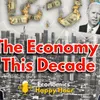
The 2020s have already delivered one of the strangest economic decades in modern history. We unpack how the pandemic reshaped work, inflation, housing, consumer behavior, and even the way economists think about recessions. We debate whether the pandemic or AI will ultimately define the decade, revisit the policy decisions that still shape the economy today, and talk through why everything from used cars to mortgage rates suddenly felt upside down. Along the way, we explore why the economy has seemed surprisingly resilient despite nonstop shocks, disruptions, and uncertainty.In this episode, we talk about:* Whether the pandemic or AI will be remembered as the defining economic event of the 2020s* Inflation, stimulus policies, tariffs, and the strange post-pandemic economy* How housing, work-from-home, and consumer habits permanently changed* Why the 2020s economy has felt unusually weird and unpredictableIf you liked this conversation, you might also enjoyThis Week’s Drinks 🍻Jadrian cracked open a Hardywood Pils, leftover from an end-of-semester cookout with his TAs. He almost grabbed the PBR x Grillo’s Pickle Beer, but decided to save that adventure for a future episode. Matt went with a Hammerhead IPA from Big Oyster Brewery, a West Coast-style IPA brewed with six hop varietals for an intense citrus and grapefruit character with notes of pine.Name That Stat 📊We originally planned to talk about the economics of higher education, so Jadrian brought in a stat on the number of graduate programs in the U.S., which has grown by roughly 69% since the early 2000s. But once we decided to launch our “economics by the decade” series, Matt pivoted to one of the defining economic indicators of the 2020s: the inflation rate that peaked in June 2022 at its highest level since the early 1980s.Show NotesWe’re kicking off a new series that looks back at the biggest economic stories of every decade, starting with the 2020s and working backward through history. We’re taking a shot at making sense of the economic chaos of the 2020s. Honestly, “chaos” might undersell it a little. It should be no surprise that we start with the pandemic, which instantly disrupted employment, supply chains, education, consumer habits, and everyday life. But twenty years from now, will we remember the pandemic as the biggest story, or will the introduction of generative AI ultimately eclipse it?Perhaps the most common theme of the episode is how weird the economy has behaved this decade. Historically, recessions, unemployment, inflation, and growth tended to move together in more predictable ways. The 2020s constantly break those expectations. One easy example: the NBER determined that the pandemic recession officially lasted only two months, even though the traditional shorthand definition of a recession involves two quarters, or six months, of decline. Of course, the disruption lasted much longer than two months, which allowed educators the chance to explain the ways economists define and measure different indicators.The 2020s also included large spikes in inflation without the kind of sustained unemployment that economists might typically expect. The decade saw regional bank collapses, sweeping tariffs, and repeated uncertainty, but markets often just kept chugging along. Even the stock market wasn’t immune to the weirdness. There were also some pretty big policy decisions this decade, not all of which have been consensus picks. A lot of people would argue that the earliest rounds of pandemic relief were necessary to prevent economic collapse, while later stimulus packages may have contributed to inflation once the economy had al
Podzilla Summary coming soon
Sign up to get notified when the full AI-powered summary is ready.
Free forever for up to 3 podcasts. No credit card required.
Listen to This Episode
More from Economics Happy Hour Podcast
The Economy by Decade: The 2000s and The Great Recession
The Economy by Decade: The 2000s (Part 1)

America at 250: What Made the U.S. an Economic Power?

The World Cup Is Making America Look Different
Get summaries like this every morning.
Free AI-powered recaps of Economics Happy Hour Podcast and your other favorite podcasts, delivered to your inbox.
Free forever for up to 3 podcasts. No credit card required.