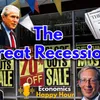
The Economy by Decade: The 2000s and The Great Recession
The 2000s were so important, we needed a Part 2 to tackle the Great Recession. We unpack how easy credit, soaring housing prices, risky lending, and the financial system combined to create the biggest economic crisis since the Great Depression. Along the way, we debate whether the government bailouts were the right call and talk about the long-term effects that still shape housing, lending, higher education, and personal finance today.In this episode, we talk about:* What caused the Great Recession and why there wasn’t one single culprit* The housing bubble, subprime mortgages, and why banks kept lending* Whether TARP and the bank bailouts were unpopular necessities or policy mistakes* How the recession permanently changed lending, mortgages, and borrowing* Why the effects of 2008 still show up today through demographics, higher education, and attitudes toward debtCheck out the first part of this conversation when we unpacked the rest of the 2000s:This Week’s Drinks 🍻We may be recording on the same day, but that doesn’t mean the drinks need to stay the same. Brian stuck with his cocktail tour of the decade by switching from a mojito to a Cosmopolitan. In contrast, Jadrian switched from his Pickle PBR to something a little more local: Richmond Lager from Hardywood Brewery. Matt stuck with his Summer Shred Hazy IPA from Ever Grain Brewing.Name That Stat 📊We stuck with the 2000s themes for our stats this week with data on the amount of value that was destroyed when Enron collapsed, the number of votes that decided the 2000 presidential election in Florida, and the number of banks that failed during 2008. The stats for this week’s episode help frame just how unusual the decade really was.Show NotesThe aughts were such an important decade that we had to tackle it in two parts. We previously looked at the economy right before it arrived at the edge of the cliff. This episode is about what happened after it went over. The Great Recession reshaped the economy for a long time: unemployment stayed elevated for years, the financial system nearly collapsed, and the recovery became a defining economic experience for an entire generation. If you haven’t listened to Part 1 yet, that’s the perfect place to start before jumping into this episode.We started our conversation by trying to figure out what actually caused the crisis. There’s no single bad decision. Instead, there were several forces that reinforced one another: historically low interest rates, rapidly rising home prices, increasingly risky mortgages, political pressure to expand homeownership, banks making loans they should have questioned more carefully, and the widespread belief that housing prices simply wouldn’t fall. With all of that we eventually saw falling home values, mortgage defaults, and failing financial institutions. But with all that happening, we can’t ignore the government’s response. One question we kept coming back to was whether programs like TARP were bad policy or simply the least bad option available. On one hand, bailing out banks that made poor decisions created a clear moral hazard problem and left many people wondering why financial institutions received help while ordinary homeowners struggled. On the other hand, the government could have allowed the financial system to collapse. With the benefit of hindsight, TARP may have been one of the most effective emergency economic policies despite being so unpopular at the time. We finished by thinking less about what happened in 2008 and more about the repercussions we are seeing today. Buying a home today involves far more documentation and scrutiny than it once did, reflecting the lessons lenders learned after the crash. The recession also caused <a target="_blank" href="https://www.pewresearch.org/social-trends/2010/04/06/us-birth-rate-decline-li
Podzilla Summary coming soon
Sign up to get notified when the full AI-powered summary is ready.
Free forever for up to 3 podcasts. No credit card required.
Listen to This Episode

Get summaries like this every morning.
Free AI-powered recaps of Economics Happy Hour Podcast and your other favorite podcasts, delivered to your inbox.
Free forever for up to 3 podcasts. No credit card required.