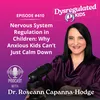
Nervous System Regulation in Children: Why Anxious Kids Can’t Just Calm Down | Regulation-First Parenting | E410
When anxiety hits, kids can’t just “calm down”—their body is in survival mode. Understanding nervous system regulation in children explains why this happens and what helps. Dr. Roseann Capanna-Hodge, expert in Regulation First Parenting™, guides you to calm the brain and restore emotional balance.Watching your child spiral over something “small” can leave you feeling confused, frustrated, and even helpless. You’re not alone—and it’s not bad parenting, it’s a dysregulated brain.In this episode on nervous system regulation in children, you’ll learn why anxious kids can’t just calm down—and what actually helps.Why does my anxious child overreact to small things?When your child melts down over a test, a schedule change, or even the “wrong” color cup, it’s easy to think they’re overreacting. But here’s the truth: anxiety isn’t a thinking problem—it’s a nervous system state.The brain senses danger, even when nothing seems “wrong”The body shifts into fight, flight, or freezeLogical thinking temporarily goes offlineThat’s why your child might say, “I know it’s silly, but I’m still scared.”Imagine this: A child who was totally fine the night before suddenly wakes up with a stomach ache, tears, and refuses school. Nothing changed—but their nervous system did.Why can’t my child just calm down when they’re anxious?This is one of the biggest parenting frustrations—and one of the biggest mindset shifts.Your child isn’t refusing to calm down. Their nervous system doesn’t have access to calm yet.Heart rate increases, breathing speeds up, muscles tenseThe thinking brain (prefrontal cortex) goes offlineYour child literally can’t reason or “just relax” in that momentLet that sink in. This is your aha moment.When we say, “Just calm down,” we’re asking the brain to do something it physically can’t do yet.When your child is dysregulated, it’s easy to feel helpless. The Regulation Rescue Kit gives you the scripts and strategies you need to stay grounded and in control. Become a Dysregulation Insider VIP at www.drroseann.com/newsletter and get your free kit today.What causes a child’s nervous system to become dysregulated?There’s rarely just one trigger—and that’s where parents get stuck. You’re looking for the reason, but it’s often a buildup.Think of it like a “stress cup.” When it overflows, behaviors show up.Common contributors include:Temperament or sensitivityADHD, autism, or neurodivergencePast stress or ongoing overwhelmSensory sensitivities or overstimulationSome kids are simply wired to notice threats faster. Their brain is trying to protect them—it’s just working overtime.How can I help my anxious child regulate instead of react?Here’s where the shift happens: We regulate first, connect second, then teach.Instead of leading with logic, start with the body.Try simple co-regulation scripts like:“I can see your body feels worried—let’s help it settle.”“Your brain is trying to protect you right now.”“Show me where you feel it in your body.”These small changes:Help your child feel safe and understoodBring the nervous system out of survival modeAllow the thinking brain to come back onlineThis is where real change begins.Want fast, effective tools to calm the brain? Check out Quick CALM—a simple way to support regulation at home.Is my child’s anxiety a sign of something more serious?Anxiety can show up in many ways—and yes, sometimes it overlaps with other challenges.You might notice:Endle
Podzilla Summary coming soon
Sign up to get notified when the full AI-powered summary is ready.
Free forever for up to 3 podcasts. No credit card required.
Listen to This Episode
More from Dysregulated Kids: Science-Backed Parenting Help for Behavior, Anxiety, ADHD and More
Stop Yelling and Punishing: What to Do Instead | Regulation First Parenting | E416
Why Bedtime Is a Battle for ADHD and Anxious Kids | Nervous System Regulation | E415
5 Phrases to Calm an Angry Child in Under a Minute | Co-Regulation Parenting | E414

Why Your Child Melts Down Over Small Things (And What It Means) | Emotional Dysregulation in Children | E413
Get summaries like this every morning.
Free AI-powered recaps of Dysregulated Kids: Science-Backed Parenting Help for Behavior, Anxiety, ADHD and More and your other favorite podcasts, delivered to your inbox.
Free forever for up to 3 podcasts. No credit card required.