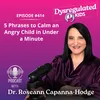
5 Phrases to Calm an Angry Child in Under a Minute | Co-Regulation Parenting | E414
When a child is in meltdown, 30 seconds matter most. The 5 Phrases to Calm an Angry Child in Under a Minute gives parents science-backed tools to calm without escalating the nervous system. Roseann Capanna-Hodge is an expert in Regulation First Parenting™ and emotional dysregulation in children.When your child is angry, those first few seconds can feel chaotic and overwhelming. Your heart races, your voice tightens, and suddenly nothing seems to work. But there is a way to shift the moment—starting with your nervous system and the words you choose.Let me share how to respond in ways that calm the nervous system instead of escalating it—and what parents can do right now.Why does my child explode when I try to calm them down?When your child is already overwhelmed, even calm words can feel like pressure to their nervous system.Anger is not defiance—it’s a full-body survival response where the brain moves into protection mode.The amygdala is in charge, not the thinking brainLogic shuts down when threat is perceivedYour child isn’t choosing the reaction—they’re stuck in itReal-life example: You say “calm down,” but your child hears “you’re not safe,” and escalates further.What should I say in the first 30 seconds of my child’s anger?Those first 30 seconds can either lower or raise the intensity of dysregulation.Here are simple, grounded phrases that signal safety and connection:“I see this is really hard right now.” → reduces threat“I’m going to stay calm with you.” → co-regulates the brain“You are safe, I’m here.” → signals safety to the body“Let’s take one small step.” → prevents overwhelm“We can solve this when your brain is calm.” → delays reasoning safelyReal-life example:Instead of arguing during a meltdown, you sit nearby and calmly say, “I’m here. We’ll figure this out together.”Yelling less and staying calm isn’t about being perfect—it’s about having the right tools.Join the Dysregulation Insider VIP list and get your FREE Regulation Rescue Kit, designed to help you handle oppositional behaviors without losing it.Download it now at www.drroseann.com/newsletterHow do I calm my nervous system when my child is melting down?Your nervous system sets the emotional tone in the room.When you regulate yourself first, you become your child’s anchor.Slow your breathing before speakingLower your voice instead of raising itFocus on being a stable presence, not a perfect parentTry tools from Quick CALM and the Regulated Child Summit to get step-by-step, science-backed strategies you can use in real moments of dysregulation.Why doesn’t reasoning work during emotional outbursts?Because your child’s brain is not online for reasoning in that moment.When dysregulated, the prefrontal cortex goes offline, meaning:Problem-solving is temporarily impossibleInstructions feel like pressureEmotions override logic🗣️ “When a child feels misunderstood, the brain no longer has to fight for validation when you give it validation.”— Dr. RoseannInstead of fixing behavior, focus on regulating the brain first. That’s where real change begins.TakeawayYour child isn’t giving you a hard time—they’re having a hard time. When you shift from correction to connection, everything changes.Calm is not forced; it’s created through safety, presence, and co-regulation. It’s gonna be OK.FAQsWhy does my child get angrier when I try to help?Because their nervous system is overwhelmed. Even helpful words can feel like pressure when they’re dysregulated.What is co-r
Podzilla Summary coming soon
Sign up to get notified when the full AI-powered summary is ready.
Free forever for up to 3 podcasts. No credit card required.
Listen to This Episode
More from Dysregulated Kids: Science-Backed Parenting Help for Behavior, Anxiety, ADHD and More

Stop Yelling and Punishing: What to Do Instead | Regulation First Parenting | E416
Why Bedtime Is a Battle for ADHD and Anxious Kids | Nervous System Regulation | E415

Why Your Child Melts Down Over Small Things (And What It Means) | Emotional Dysregulation in Children | E413

You’ve Tried Everything… So Why Is Your Child Still Struggling? | Regulation-First Parenting | E412
Get summaries like this every morning.
Free AI-powered recaps of Dysregulated Kids: Science-Backed Parenting Help for Behavior, Anxiety, ADHD and More and your other favorite podcasts, delivered to your inbox.
Free forever for up to 3 podcasts. No credit card required.