Free Daily Podcast Summary
Dementia Careblazers: Daily Summaries Delivered
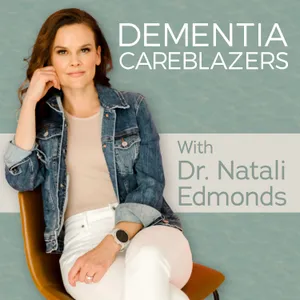
by Dr. Natali Edmonds
We prepare dementia caregivers for success. Say goodbye to the overwhelm & struggle and learn the real tips, strategies, and solutions that help make dementia caregiving easier. With board certified geropsychologist, Dr. Natali Edmonds
Latest Episodes
The most recent episodes — sign up to get AI-powered summaries of each one.
- 2 days ago22 min
6 Normal Habits That Make Dementia Behaviors Worse
Some of the habits that make dementia behaviors worse come from loving, kind caregivers doing exactly what works with everyone else in their lives. Correcting a mistake, explaining why the medication matters, or asking "do you remember who this is?" can quietly lead to more agitation, resistance, and mistrust. In this episode, I'm walking through six of these everyday habits, why they backfire when someone has dementia, and what you can try instead. You can be completely right and still end up losing the moment. These habits take time to break, and noticing them is where it starts. If you'd like to see this episode on video, you can hop on over to my YouTube channel here. 📘 My book, The Dementia Care Toolkit: Real Help for Challenging Behaviors and Caregiving Overwhelm, is available for preorder now: https://careblazers.com/toolkit Inside, you'll find practical strategies for difficult dementia behaviors, communication, caregiver overwhelm, guilt, grief, frustration, and more. → Learn about the Care Collective: https://tinyurl.com/podcast-cc ⏱ CHAPTERS 0:00 - Why everyday habits can backfire with dementia 2:05 - Habit 1: Correcting 3:55 - Habit 2: Reasoning 8:45 - Habit 3: Arguing 11:40 - Habit 4: Testing their memory 13:00 - Habit 5: Talking as if they aren't there 14:55 - Habit 6: Reminding them what they can't do 17:40 - One question to ask before you respond --- Hi, I'm Dr. Natali Edmonds, a board-certified geropsychologist specializing in dementia care. Whether your loved one has Alzheimer's, frontotemporal, Lewy body, vascular, or mixed dementia, we believe that to create a dementia-friendly world, we must first create a caregiver-friendly world. This content is for educational purposes only and is not a substitute for professional medical advice. Always consult with a healthcare provider for medical guidance.
- 1 weeks ago15 min
5 Strange Dementia Behaviors and Why They Happen
Some dementia behaviors can make absolutely no sense from the outside. It can look like your loved one is being lazy, stubborn, rude, in denial, or even lying to you. But there's often a brain-based reason for what you're seeing. In this episode, I break down 5 strange dementia behaviors, apathy, anosognosia, apraxia, disinhibition, and confabulation — and explain what may actually be happening in the brain when they occur. Because when you understand why a behavior is happening, it can completely change the way you see it. If you'd like to see this episode on video, you can hop on over to my YouTube channel here. And if your next question is, "Okay, but what do I DO when this happens?" I have two resources that can help: → Learn about the Care Collective: https://tinyurl.com/podcast-cc → My new book, The Dementia Care Toolkit is officially available for pre-order. ➡️ Preorder your copy here: https://careblazers.com/toolkit ⏱ CHAPTERS 0:00 - Why these behaviors are almost never a choice 1:31 - Apathy and the broken motivation switch 3:51 - Anosognosia and why they do not believe they have dementia 6:12 - Apraxia and why simple tasks stop working 8:26 - Disinhibition and what the frontal lobes control 10:11 - Confabulation and why it is not lying --- Hi, I'm Dr. Natali Edmonds, a board-certified geropsychologist specializing in dementia care. Whether your loved one has Alzheimer's, frontotemporal, Lewy body, vascular, or mixed dementia, we believe that to create a dementia-friendly world, we must first create a caregiver-friendly world. This content is for educational purposes only and is not a substitute for professional medical advice. Always consult with a healthcare provider for medical guidance.
- 2 weeks ago8 min
How to Help When Someone With Dementia Knows They're Struggling
When someone with dementia knows they're struggling, they may start doing less and less. They might get frustrated, say things like "I can't do anything right," or stop doing things they used to enjoy. In this episode, I'm talking about why this can happen and, more importantly, how you can help. I'll share some simple ways to support their confidence and adapt activities as their abilities change. If you'd like to see this episode on video, you can hop on over to my YouTube channel here. → Learn about the Care Collective: https://tinyurl.com/podcast-cc ⏱ CHAPTERS 0:00 - A Careblazer's question: is he losing motivation, or does he know he's struggling 1:23 - What anosognosia actually is, and why this is something different 3:10 - Practical ways to support someone who's aware they're struggling 3:42 - A real story: adapting a beloved hobby instead of giving it up 6:01 - What to watch for, and when to loop in the doctor → My new book, The Dementia Care Toolkit is officially available for pre-order. ➡️ Preorder your copy here: https://careblazers.com/toolkit → Get free weekly tools and tips in my newsletter, The Dementia Dose: https://tinyurl.com/dementiadose-podcast --- Hi, I'm Dr. Natali Edmonds, a board-certified geropsychologist specializing in dementia care. Whether your loved one has Alzheimer's, frontotemporal, Lewy body, vascular, or mixed dementia, we believe that to create a dementia-friendly world, we must first create a caregiver-friendly world. This content is for educational purposes only and is not a substitute for professional medical advice. Always consult with a healthcare provider for medical guidance.
- 3 weeks ago13 min
Is It Jealousy or Dementia? Why They Act Worse When You're Busy
Have you ever noticed your loved one with dementia is calm, nothing seems to be wrong, and then the moment you shift your attention to someone else they completely change? They get demanding, upset, anxious, or jealous that you are not there giving them attention. It can feel like they cannot stand not being the center of your attention, and understandably that leaves you feeling frustrated, resentful, and confused. It is not jealousy. It is not manipulation. In this episode I share two real life examples of this, explain what is happening in the brain that causes it, and walk you through what actually helps when your attention has to go somewhere else. If you'd like to see this episode on video, you can hop on over to my YouTube channel here. → Learn about the Care Collective: https://tinyurl.com/podcast-cc ⏱ CHAPTERS 0:00 - When your attention shifts and everything changes 1:16 - Two real life examples from Careblazers 2:52 - Why this is attachment distress, not jealousy 5:07 - Why it feels so personal, and a reframe that helps 5:54 - What actually helps when you have to step away → My new book, The Dementia Care Toolkit is officially available for pre-order. ➡️ Preorder your copy here: https://careblazers.com/toolkit → Get free weekly tools and tips in my newsletter, The Dementia Dose: https://tinyurl.com/dementiadose-podcast --- Hi, I'm Dr. Natali Edmonds, a board-certified geropsychologist specializing in dementia care. Whether your loved one has Alzheimer's, frontotemporal, Lewy body, vascular, or mixed dementia, we believe that to create a dementia-friendly world, we must first create a caregiver-friendly world. This content is for educational purposes only and is not a substitute for professional medical advice. Always consult with a healthcare provider for medical guidance.
- Aug 20, 20265 min
4 Places Dementia Caregivers Can Turn for Help
Caring for someone with dementia can feel overwhelming, especially when you're not sure where to turn for help. In this episode, I'm sharing several places dementia caregivers can go for support, guidance, and resources, plus one important step families often wait too long to think about. You do not have to wait until there's a crisis to start getting help. The Dementia Care Toolkit is officially available for pre-order. This book was written for the real-life moments of dementia caregiving, the moments when you're overwhelmed, unsure what to do, and need something practical to reach for. ➡️ Preorder Your Copy Here: https://careblazers.com/toolkit ⏱ CHAPTERS 0:00 - Two questions from a recent podcast interview 0:38 - Why you don't need to wait until you need help to ask for it 1:01 - Four places to turn for help after a dementia diagnosis 3:37 - What to do the very next day if your loved one was just diagnosed #dementia #dementiacaregiver #caregiverburnout #dementiacare --- Hi, I'm Dr. Natali Edmonds, a board-certified geropsychologist specializing in dementia care. Whether your loved one has Alzheimer's, frontotemporal, Lewy body, vascular, or mixed dementia, we believe that to create a dementia-friendly world, we must first create a caregiver-friendly world. This content is for educational purposes only and is not a substitute for professional medical advice. Always consult with a healthcare provider for medical guidance.
- Aug 13, 202610 min
Stop Trying to Make Someone With Dementia Happy All the Time
If you have taken the car keys, stepped in on the checkbook, or said no to something your loved one with dementia badly wanted, you already know what comes next. They are hurt. They are angry. And they are angry at you. I want you to hear this first. Their unhappiness is not a report card on your caregiving. This is one of the hardest parts of dementia caregiving, because it does not just feel hard. It feels like proof you are getting it wrong. And that is exactly what it is not. In this episode I explain why trying to keep your loved one happy all the time puts their safety at risk, what it costs you on the days you have nothing left to give, and the one response almost every Careblazer skips, because we are so busy looking for the dementia response when what we really need is the human response. The Dementia Care Toolkit is officially available for pre-order. This book was written for the real-life moments of dementia caregiving, the moments when you're overwhelmed, unsure what to do, and need something practical to reach for. ➡️ Preorder the Dementia Care Toolkit Here: https://careblazers.com/toolkit → Join the Care Collective: https://tinyurl.com/podcast-cc → Get free weekly tools and tips in my newsletter, The Dementia Dose: https://tinyurl.com/dementiadose-podcast ⏱ CHAPTERS 0:00 - Why them being upset with you does not mean you failed 1:27 - Reason one: the things you take away to keep them safe 3:36 - Reason two: what saying yes every time costs you 5:23 - Reason three: the human response we skip 8:03 - What it means when they are sad and you cannot fix it #dementia #dementiacaregiver #caregiverburnout #dementiacare --- Hi, I'm Dr. Natali Edmonds, a board-certified geropsychologist specializing in dementia care. Whether your loved one has Alzheimer's, frontotemporal, Lewy body, vascular, or mixed dementia, we believe that to create a dementia-friendly world, we must first create a caregiver-friendly world. This content is for educational purposes only and is not a substitute for professional medical advice. Always consult with a healthcare provider for medical guidance.
- Aug 7, 20268 min
3 Things Dementia Care Gets Completely Backwards
If you've ever felt like every appointment, every follow-up, and every ounce of attention goes to your loved one with dementia while nobody ever asks how you're doing, you're not imagining it. Dementia care as a system was built around the person with the diagnosis, not the person keeping them alive day after day. And it's not just that you get overlooked. Most of what we call dementia care is reactive, waiting for a crisis before it teaches you anything, and even the best behavior advice skips right over the grief you're carrying underneath it. In this episode I break down the three ways dementia care gets it completely backwards, and what actually changes the moment we stop waiting for things to get worse. The Dementia Care Toolkit is officially available for pre-order. ➡️ Preorder the Dementia Care Toolkit Here: https://careblazers.com/toolkit This book was written for the real-life moments of dementia caregiving, the moments when you're overwhelmed, unsure what to do, and need something practical to reach for. ⏱ CHAPTERS 0:00 - The 3 ways dementia care gets it backwards 1:00 - Backwards #1: all the focus goes to your loved one, not you 2:20 - Backwards #2: the system waits for a crisis instead of preventing one 4:44 - Backwards #3: behavior advice skips the grief underneath it 7:13 - What changes when we stop waiting → Join the Care Collective: https://tinyurl.com/podcast-cc → Get free weekly tools and tips in my newsletter, The Dementia Dose: https://tinyurl.com/dementiadose-podcast --- Hi, I'm Dr. Natali Edmonds, a board-certified geropsychologist specializing in dementia care. Whether your loved one has Alzheimer's, frontotemporal, Lewy body, vascular, or mixed dementia, we believe that to create a dementia-friendly world, we must first create a caregiver-friendly world. This content is for educational purposes only and is not a substitute for professional medical advice. Always consult with a healthcare provider for medical guidance.
- Jul 30, 202613 min
Memory Care Doesn't Make Dementia Caregiving Easier
You made the hardest decision of your life and moved your loved one with dementia into memory care. Then you waited for the relief you were promised. It never fully came. You still feel completely wiped out after visits, even good ones, and no one has explained why. Placement changes the physical work of caregiving, but it does not turn off your nervous system, your grief, or the recovery your body still needs. In this episode I break down the three real reasons your exhaustion continues after a memory care placement, and what to actually do about it. If you'd like to see this episode on video, you can hop on over to my YouTube channel here. The Dementia Care Toolkit is officially available for pre-order. This book was written for the real-life moments of dementia caregiving, the moments when you're overwhelmed, unsure what to do, and need something practical to reach for. ➡️ Preorder the Dementia Care Toolkit Here: https://careblazers.com/toolkit ⏱ CHAPTERS 0:00 - Why the exhaustion hits even after a good visit 1:32 - The misconception that memory care makes things easier 2:34 - Why your nervous system stays on high alert 5:05 - The grief of losing someone who is still alive 8:59 - Three ways to support your own recovery → Join the Care Collective: https://tinyurl.com/podcast-cc → Get free weekly tools and tips in my newsletter, The Dementia Dose: https://tinyurl.com/dementiadose-podcast --- Hi, I'm Dr. Natali Edmonds, a board-certified geropsychologist specializing in dementia care. Whether your loved one has Alzheimer's, frontotemporal, Lewy body, vascular, or mixed dementia, we believe that to create a dementia-friendly world, we must first create a caregiver-friendly world. This content is for educational purposes only and is not a substitute for professional medical advice. Always consult with a healthcare provider for medical guidance.
Get Dementia Careblazers summaries in your inbox
Free AI-powered daily recaps. Key takeaways, quotes, and mentions — in a 5-minute read.
Get Free Summaries →Free forever for up to 3 podcasts. No credit card required.
You Might Also Like
Listeners also like.
Change Your Brain Every Day
Dr. Daniel Amen and Tana Amen share science-based strategies to improve brain health and mental well-being.

De Facto Leaders
Pediatric therapist Dr. Karen Dudek-Brannan shares evidence-based strategies for educators and clinicians to support student growth and leadership.

Rooted in Wellness with Mona Sharma
A holistic nutritionist blends ancient wellness practices with modern science to address mind, body, and soul health.

Weight Loss for Busy Physicians | Helping Women Physicians Lose Weight for the Last Time
Helps women physicians lose weight by addressing stress eating, exhaustion, and time constraints in their demanding careers.

TED Health
Examines medical breakthroughs and science-backed habits that improve health through curated TED Talks.
Care and Feeding | Slate's parenting show
Parents discuss challenges and share advice on raising children from toddlers through teens.
Psychiatry & Psychotherapy Podcast
Explores psychiatry and psychotherapy through interviews with experts, trainees, and individuals sharing lived mental health experiences.

Peak Performance Life Podcast
Covers health, energy, and mental performance optimization through biohacking, nutrition, and lifestyle strategies.

unPAUSED with Dr. Mary Claire Haver
A board-certified OB-GYN hosts candid discussions with experts and leaders on women's health, identity, and empowerment in midlife.
Good Inside with Dr. Becky
A clinical psychologist provides practical guidance for handling common parenting challenges and improving parent-child relationships.
Navigating Narcissism with Dr. Ramani
A clinical psychologist examines narcissistic abuse, covering manipulation, gaslighting, and emotional recovery through expert and survivor discussions.

Feel Better, Live More with Dr Rangan Chatterjee
A doctor-hosted podcast offering practical health advice on eating, sleeping, moving, and relaxing from medical experts and real-life stories.
About Dementia Careblazers
We prepare dementia caregivers for success. Say goodbye to the overwhelm & struggle and learn the real tips, strategies, and solutions that help make dementia caregiving easier. With board certified geropsychologist, Dr. Natali Edmonds
Customized Recaps
AI-powered recaps with compact key takeaways, quotes, and insights.
Straight to Your Inbox
Get key takeaways from Dementia Careblazers in a 5-minute read.
Save Hours Every Week
Stay current on your favorite podcasts without falling behind.
Frequently Asked Questions
What is Podzilla's Dementia Careblazers daily summary?
It's a free AI-powered email that summarizes new episodes of Dementia Careblazers as soon as they're published. You get the key takeaways, notable quotes, and links & mentions — all in a quick read.
How does the Dementia Careblazers podcast summary work?
When a new episode drops, our AI transcribes and analyzes it, then generates a personalized summary tailored to your interests and profession. It's delivered to your inbox every morning.
Is this an official Dementia Careblazers product?
No. Podzilla is an independent service that summarizes publicly available podcast content. We're not affiliated with or endorsed by Dr. Natali Edmonds.
Can I get summaries of other podcasts too?
Absolutely! The free plan covers up to 3 podcasts. Upgrade to Pro for 15, or Premium for 50. Browse our full catalog at /podcasts.
How often does Dementia Careblazers release new episodes?
Dementia Careblazers publishes weekly. Our AI generates a summary within hours of each new episode.
What topics does Dementia Careblazers cover?
Dementia Careblazers covers topics including Science, Education, How To, Social Sciences. Our AI identifies the specific themes in each episode and highlights what matters most to you.
Start getting Dementia Careblazers summaries tomorrow morning.
Free forever for up to 3 podcasts. No credit card required.
Free forever for up to 3 podcasts. No credit card required.