Free Daily Podcast Summary
Connected and Capable: Daily Summaries Delivered
by Alisha Grogan
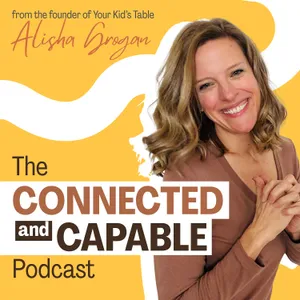
A podcast for parents of uniquely wired kids—kids with sensory needs, ADHD, big emotions, anxiety, or executive functioning challenges. Hosted by pediatric occupational therapist and mom Alisha Grogan, this podcast goes beyond behavior and quick fixes to uncover what’s really pulling the strings beneath the surface. You’ll learn how sensory processing, emotional regulation, executive functioning, and retained primitive reflexes are deeply connected—and how understanding these connections changes the way you support your child. Because your child is capable. And so are you.
Latest Episodes
The most recent episodes — sign up to get AI-powered summaries of each one.
- 3 weeks ago32 min
29. How to Help Your ADHD Teen Succeed in School--Without Nagging!
How much should I be helping... and when do I need to step back?Because reminding them about the homework, the test, the missing assignment, or the thing they swore they were going to remember can get exhausting.But simply backing off and expecting them to figure it all out on their own usually isn’t the answer either.In this episode, I’m sharing what this looks like in real life with my own teen with ADHD and the shift I’ve been making as both an occupational therapist and a parent.We’re talking about how to support ADHD teens in a way that builds the skills they’ll eventually need to manage school (and life!) more independently without constant reminders, battles, or nagging. We'll get real about planners too and if ADHD "should" use them. Plus, I’ll share what I’m doing right now to help him navigate a new school year, and why my goal isn’t to eliminate support, but to be really intentional about how and when I give it.If you’re worried about how your ADHD teen will eventually manage all of this without you, this episode will give you a different way to think about what you can start doing now.Resources mentioned in this episodeUnlocking ADHD Workshop: https://yourkidstable.com/adhd504 Playbook: https://yourkidstable.com/504-accomodations-for-adhd/ Time Stamps07:00 – When a Common ADHD Strategy Isn’t Working12:00 – How to Talk So Your ADHD Teen Opens Up15:00 – Support vs. Independence: Finding the Balance22:00 – Why ADHD Teens Need Rhythm + Routine25:00 – Preparing ADHD Teens for More IndependenceMORE RESOURCES FOR YOUReady for a simple plan to overcome the attention, sleep, sensory, and big emotion challenges? I'll show you how for uniquely wired kids 1-18 years old in just 2-5 minutes a day. Join me in The Connection Hive-- https://YourKidsTable.com/TCHLET'S CONNECT:Instagram: https://Instagram.com/YourkidstableFacebook: https://Facebook.com/YourkidstablePinterest: https://Pinterest.com/YourkidstableIf you enjoyed this episode, we'd be so grateful if you left us a review! It's a huge help in encouraging us and letting us know what parents with uniquely wired kids need the most.
- Aug 17, 202622 min
28. Are Big Meltdowns Causing Trauma for Kids with Autism? What we know…
A few months ago, I went through one of the hardest nervous system experiences of my life.As I worked through the weeks that followed, I couldn't stop thinking about the kids with autism I've worked with for over 20 years... and one question kept coming back to me.Could big meltdowns actually leave a child's nervous system stuck in a cycle that's much harder to escape than we realize?In this episode, I share my own experience, the emerging research that's starting to explore this idea, and why I think looking beyond behavior may completely change how we support autistic kids with frequent meltdowns. If your child seems to get caught in the same cycle over and over again, I hope this conversation gives you a new way to think about what's happening underneath the surface.Resources MentionedGet a seat in the new Beyond Behavior—Thriving with Autism Workshop: on Aug 19 (replay provided): https://yourkidstable.com/autism/ Studies mentioned:https://discovery.ucl.ac.uk/id/eprint/10209395/https://pubmed.ncbi.nlm.nih.gov/41868251/Key Timestamps:2:10 my first panic attach7:15 The connection to autism?12:00 A new way to think about meltdowns18:00 What the research is saying24:15 Where do we go from here?MORE RESOURCES FOR YOUReady for a simple plan to overcome the attention, sleep, sensory, and big emotion challenges? I'll show you how for uniquely wired kids 1-18 years old in just 2-5 minutes a day. Join me in The Connection Hive-- https://YourKidsTable.com/TCHLET'S CONNECT:Instagram: https://Instagram.com/YourkidstableFacebook: https://Facebook.com/YourkidstablePinterest: https://Pinterest.com/YourkidstableIf you enjoyed this episode, we'd be so grateful if you left us a review! It's a huge help in encouraging us and letting us know what parents with uniquely wired kids need the most.
- Aug 10, 202620 min
27. How to decide if you should accept or treat autistic challenges?
When should we embrace a child's differences... and when is it a sign they need more support?It's one of the hardest questions parents of autistic and neurodivergent kids face.In this episode, I'm sharing a simple 3-step framework I use as an occupational therapist to help sort through that question. We'll talk about stimming, aggression, sensory challenges, participation, and how to tell the difference between something that's simply different and something that's truly impacting your child's quality of life.If you've ever worried, "Am I pushing too much... or not enough?" This episode will give you clarity and confidence moving forward.Resources Mentioned:Get a seat in the new Beyond Behavior—Thriving with Autism Workshop: on Aug 19 (replay provided): https://yourkidstable.com/autism/Key Timestamps:2:48 Every child is different7:15 Starting with acceptance12:40 One important question17:35 A lesson from camp22:10 Moving forward with confidenceMORE RESOURCES FOR YOUReady for a simple plan to overcome the attention, sleep, sensory, and big emotion challenges? I'll show you how for uniquely wired kids 1-18 years old in just 2-5 minutes a day. Join me in The Connection Hive-- https://YourKidsTable.com/TCHLET'S CONNECT:Instagram: https://Instagram.com/YourkidstableFacebook: https://Facebook.com/YourkidstablePinterest: https://Pinterest.com/YourkidstableIf you enjoyed this episode, we'd be so grateful if you left us a review! It's a huge help in encouraging us and letting us know what parents with uniquely wired kids need the most.
- Aug 3, 202632 min
26. What I learned about Autism + Behavior (at Sensory Summer Camp)
This week at sensory summer camp, one moment completely changed the direction of my day... and reinforced something I think every parent of a neurodivergent child needs to hear.When a child melts down, refuses, runs away, or seems completely "noncompliant," what if we're asking the wrong question?In this episode, I'm sharing two real stories from camp that highlight what was happening underneath the behavior, the surprising sensory tool we reached for in the middle of a meltdown, and why shifting from "How do I stop this behavior?" to "What does my child need right now?" can change everything.If you've ever felt stuck in power struggles, wondered whether you're helping or making things worse, or just wished someone could explain what's really going on... this episode is for you.RESOURCES MENTIONED:Save your seat in the new Beyond Behavior–Thriving with Autism Workshop on Aug 19 (replay provided): https://yourkidstable.com/autism/ Fun and Function - Sign up for their newsletter and receive a coupon 10% here!KEY TIMESTAMPS:3:45 What was really under this meltdown11:15 A sensory tool that surprised me18:05 Looking beyond "bad behavior"23:40 What demand avoidance looked like at camp29:20 The question every parent should ask33:15 What's coming next in this series MORE RESOURCES FOR YOUReady for a simple plan to overcome the attention, sleep, sensory, and big emotion challenges? I'll show you how for uniquely wired kids 1-18 years old in just 2-5 minutes a day. Join me in The Connection Hive-- https://YourKidsTable.com/TCHLET'S CONNECT:Instagram: https://Instagram.com/YourkidstableFacebook: https://Facebook.com/YourkidstablePinterest: <a href="https://pinterest.com/Yourkidstable" rel="noopener noreferrer" target="_b
- Jun 22, 202627 min
25. The Picky Eater Approved Chicken Recipe You Need to Know!
What if one food could help your child feel safe enough to start expanding beyond the handful of foods they currently eat?In this final episode of our picky eating series, I'm sharing what I call a gateway food, specifically a recipe that helped my own son move from eating one specific brand of chicken nuggets to eventually eating grilled chicken, different proteins, and a much wider variety of foods.But this episode isn't really about chicken nuggets, although you'll learn exactly how to make them, because they are amazing effective and super tasty. The big takeaway is about understanding why certain foods feel safer to picky eaters, the simple characteristics that make kids more likely to try something new, and how to build bridges from foods your child already eats to foods they've never touched before.I'll also share why progress often looks very different than parents expect and how to spot the small wins that are actually moving your child forward.RESOURCES MENTIONEDGet a seat in the free picky eating workshopPicky Eater Approved Chicken Nugget RecipeKEY TIMESTAMPS2:55 What progress really looks like4:49 The gateway food6:38 Three things picky eaters need9:22 Building a bridge to new foods17:21 Giving kids the right choices24:47 When it doesn't work right awayMORE RESOURCES FOR YOUReady for a simple plan to overcome the attention, sleep, sensory, and big emotion challenges? I'll show you how for uniquely wired kids 1-18 years old in just 2-5 minutes a day. Join me in The Connection Hive-- https://YourKidsTable.com/TCHLET'S CONNECT:Instagram: https://Instagram.com/YourkidstableFacebook: https://Facebook.com/YourkidstablePinterest: https://Pinterest.com/YourkidstableIf you enjoyed this episode, we'd be so grateful if you left us a review! It's a huge help in encouraging us and letting us know what parents with uniquely wired kids need the most.
- Jun 15, 202628 min
24. Five Reasons Kids Refuse to Eat
In this episode, we're digging into one of the most important factors for helping extreme picky eaters: they're struggling because something deeper is getting in the way.There's 5 big reasons kids refuse to eat and it's not because of you're parenting or that they're just difficult. Learn how to identify these signs yourself and how to start looking at your child's eating through a different lens and why identifying the "why" behind picky eating can completely change your next steps.If you've ever felt frustrated, confused, or wondered why nothing seems to be working, this episode will help you connect some important dots and give you a clearer path forward.RESOURCES MENTIONEDGet a seat in the free picky eating workshopConstipation strategies article KEY TIMESTAMPS:00:00 Welcome and picky eating mission02:03 Previous episode and workshop recap09:57 Oral motor skill struggles11:53 The snowball picky eating15:50 Physical causes to check20:35 Anxiety behind food refusal24:53 Next steps for families27:34 Gateway food next episode teaserMORE RESOURCES FOR YOUReady for a simple plan to overcome the attention, sleep, sensory, and big emotion challenges? I'll show you how for uniquely wired kids 1-18 years old in just 2-5 minutes a day. Join me in The Connection Hive-- https://YourKidsTable.com/TCHLET'S CONNECT:Instagram: https://Instagram.com/YourkidstableFacebook: https://Facebook.com/YourkidstablePinterest: https://Pinterest.com/YourkidstableIf you enjoyed this episode, we'd be so grateful if you left us a review! It's a huge help in encouraging us and letting us know what parents with uniquely wired kids need the most.
- Jun 8, 202639 min
23. How My Kid Went From Super Picky Eater to Foodie: My 5 Step Plan
In this first episode of our picky eating series, I'm sharing the story of how my son went from gagging at the sight of food to becoming a kid that loves a wide variety of foods. A reality that wouldn't have happened if we had just waited for him to grow out of it. You'll hear the mistakes I see parents make over and over again (through no fault of their own), and the 5-step framework that guided us from surviving mealtimes to actually enjoying them.If you've ever wondered what's really behind picky eating, or how to help your kid's eating improve, this episode is for you! RESOURCES MENTIONED:Free Picky Eating WorkshopKEY TIMESTAMPS:4:31 The child who changed my career8:24 When my own son stopped eating14:42 Step 1: The biggest mindset shift16:38 Step 2: Why routines matter18:30 Step 3: What's underneath picky eating20:09 Steps 4 & 5: Building progress that lastsMORE RESOURCES FOR YOUReady for a simple plan to overcome the attention, sleep, sensory, and big emotion challenges? I'll show you how for uniquely wired kids 1-18 years old in just 2-5 minutes a day. Join me in The Connection Hive-- https://YourKidsTable.com/TCHLET'S CONNECT:Instagram: https://Instagram.com/YourkidstableFacebook: https://Facebook.com/YourkidstablePinterest: https://Pinterest.com/YourkidstableIf you enjoyed this episode, we'd be so grateful if you left us a review! It's a huge help in encouraging us and letting us know what parents with uniquely wired kids need the most.
- Jun 1, 202630 min
22. 7 Quick Sensory Activities to Habit Stack for Regulating Kids
If you’ve ever felt like sensory strategies sound helpful in theory… but impossible to actually fit into real life, this episode is for you.We’re talking about small, realistic ways to build regulation into the moments that are already happening throughout your day using quick sensory “doses” that can help with focus, emotional regulation, transitions, and big behaviors.You’ll also hear:Why sensory strategies don’t have to be complicated to workThe idea of “habit stacking” and how parents are using it in everyday lifeHow movement, deep pressure, vibration, and even hydration can impact the nervous systemWays to help sensory seekers and easily overwhelmed kids differentlyPractical ideas you can start using immediately at home, in the car, during homework, transitions, and moreIf your child seems dysregulated often, struggles with transitions, or you’re just trying to make daily life feel calmer and more manageable, this episode will leave you with simple ideas that actually feel doable.LINKS AND RESOURCES MENTIONED:Join Fun and Function Giveaway (receive 10% off)Grab the Free Sensory ToolkitKEY TIMESTAMPS:04:39 – Habit stacking sensory tools06:59 – Weighted input & crawling13:33 – Vibration & fidgets18:25 – Movement for regulation25:08 – Why water helps regulateMORE RESOURCES FOR YOUReady for a simple plan to overcome the attention, sleep, sensory, and big emotion challenges? I'll show you how for uniquely wired kids 1-18 years old in just 2-5 minutes a day. Join me in The Connection Hive-- https://YourKidsTable.com/TCHLET'S CONNECT:Instagram: https://Instagram.com/YourkidstableFacebook: https://Facebook.com/YourkidstablePinterest: https://Pinterest.com/YourkidstableIf you enjoyed this episode, we'd be so grateful if you left us a review! It's a huge help in encouraging us and letting us know what parents with uniquely wired kids need the most.
About Connected and Capable
A podcast for parents of uniquely wired kids—kids with sensory needs, ADHD, big emotions, anxiety, or executive functioning challenges. Hosted by pediatric occupational therapist and mom Alisha Grogan, this podcast goes beyond behavior and quick fixes to uncover what’s really pulling the strings beneath the surface. You’ll learn how sensory processing, emotional regulation, executive functioning, and retained primitive reflexes are deeply connected—and how understanding these connections changes the way you support your child. Because your child is capable. And so are you.
Customized Recaps
AI-powered recaps with compact key takeaways, quotes, and insights.
Straight to Your Inbox
Get key takeaways from Connected and Capable in a 5-minute read.
Save Hours Every Week
Stay current on your favorite podcasts without falling behind.
Frequently Asked Questions
What is Podzilla's Connected and Capable daily summary?
It's a free AI-powered email that summarizes new episodes of Connected and Capable as soon as they're published. You get the key takeaways, notable quotes, and links & mentions — all in a quick read.
How does the Connected and Capable podcast summary work?
When a new episode drops, our AI transcribes and analyzes it, then generates a personalized summary tailored to your interests and profession. It's delivered to your inbox every morning.
Is this an official Connected and Capable product?
No. Podzilla is an independent service that summarizes publicly available podcast content. We're not affiliated with or endorsed by Alisha Grogan.
Can I get summaries of other podcasts too?
Absolutely! The free plan covers up to 3 podcasts. Upgrade to Pro for 15, or Premium for 50. Browse our full catalog at /podcasts.
How often does Connected and Capable release new episodes?
Connected and Capable publishes weekly. Our AI generates a summary within hours of each new episode.
What topics does Connected and Capable cover?
Connected and Capable covers topics including Parenting, Kids & Family, Family. Our AI identifies the specific themes in each episode and highlights what matters most to you.
Start getting Connected and Capable summaries tomorrow morning.
Free forever for up to 3 podcasts. No credit card required.
Free forever for up to 3 podcasts. No credit card required.