Free Daily Podcast Summary
Communication Breakdown: Daily Summaries Delivered
by OCR Network
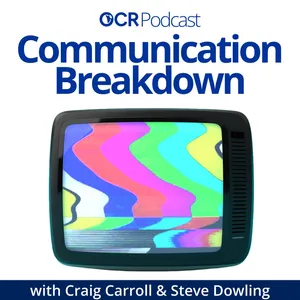
Communication Breakdown is a postgame show for PR pros. In each episode, hosts Craig Carroll (Founder of the Observatory on Corporate Reputation, Editor of the SAGE Encyclopedia of Corporate Reputation, Lecturer at Rice University’s Jesse H. Jones Graduate School of Business) and Steve Dowling (former head of communications at OpenAI and Apple) discuss the strategies and tactics companies are using in high-visibility crises and PR initiatives, giving listeners unique insight into how key decisions are made. The podcast offers two unique perspectives on communications theory and practice, drawing on Craig’s research and teaching on reputation at USC Annenberg, UNC Chapel Hill, and universities worldwide, and Steve’s two decades of experience as a comms leader at some of the world’s most influential companies. Whether you’re a PR professional, marketing executive, or just curious about how companies make key communications decisions, you’ll find these discussions insightful and valuable.
Latest Episodes
The most recent episodes — sign up to get AI-powered summaries of each one.
- 3 days ago31 min
You Ought Not Be In Pictures
In this episode of Communication Breakdown, Steve Dowling and Craig Carroll examine what happens when Hollywood turns corporate leaders into central characters. With new productions focused on Mark Zuckerberg, Sam Altman, and Elon Musk, they explore how dramatizations and documentaries can reshape public understanding of companies long after the original events occurred. The discussion goes beyond media strategy to examine governance, founder dependence, institutional accountability, and why organizations need their own credible record before someone else writes it for them.TakeawaysCompanies that become inseparable from their founders risk having their corporate reputation rise and fall with a single individual.Declining to participate in a film or documentary does not remove an organization from the story. It simply transfers control of representation to someone else.Organizations should distinguish between countering a narrative and producing new evidence that demonstrates institutional accountability.Topics MentionedCorporate reputation, founder branding, executive communications, narrative governance, corporate storytelling, documentaries, dramatizations, crisis communications, governance, institutional accountability, AI-generated media, synthetic proxies, reputation management, media strategy, narrative controlCompanies MentionedMeta, Facebook, The Wall Street Journal, OpenAI, ChatGPT, Tesla, SpaceX, Enron, Theranos, ColossusEpisode Hashtags#Meta #OpenAI #ChatGPT #Facebook #Tesla #SpaceX #CorporateCommunications #PublicRelations #CorporateReputation #ExecutiveCommunications #CrisisCommunications #ReputationManagement #NarrativeGovernance #Leadership #MediaStrategy #ArtificialIntelligence #Documentary #Storytelling #ShawnPNeal #Advocast #OCRNetworkCommunication Breakdown is a production of the Observatory on Corporate Reputation.Hosted by Craig Carroll and Steve Dowling.Produced in partnership with Advocast Leadership Advisory and Shawn P Neal.For questions, feedback, or episode suggestions, reach out at podcasts@ocrnetwork.com
- 1 weeks ago29 min
Episode 100
In this 100th episode of Communication Breakdown, Steve Dowling and Craig Carroll revisit the major forces that have shaped corporate communications over the past two years. They examine how political pressure drove companies to reconsider diversity commitments, how narrative arbitrage allowed outside actors to seize control of corporate stories, and why unrestrained executives increasingly create their own reputation crises. The episode closes with a practical look at how calibration, evidence, and restraint help organizations maintain authority when stakeholder deference can no longer be assumed.TakeawaysCompanies acting from strength can explain why they made a decision, what they intend to preserve, and which boundaries they will maintain.Political momentum, online intensity, and election results should not be mistaken for broad, durable stakeholder consensus.Unexplained changes create narrative gaps that activists, critics, and political actors can exploit for attention and influence.Topics Mentionedcorporate communications, corporate reputation, diversity commitments, DEI, political pressure, stakeholder expectations, fear versus strength, organizational values, narrative authorship, narrative arbitrage, crisis communication, social media, executive visibility, CEO reputation risk, executive containment, authenticity, governance, restraint, calibration, institutional authority, evidence, transparencyCompanies MentionedFord Motor, Costco, Target, Apple, Delta Air Lines, Meta, ABC, WNBA, Cracker Barrel, NFL, Tesla, Palantir, The New York Times, CNBC, Starbucks, Toyota, eBay, GameStopEpisode Hashtags#FordMotor #Costco #Target #Apple #DeltaAirLines #Meta #ABC #WNBA #CrackerBarrel #NFL #Tesla #Palantir #NewYorkTimes #CNBC #Starbucks #Toyota #eBay #GameStop #CorporateCommunications #PublicRelations #CorporateReputation #CrisisCommunication #DEI #LeadershipCommunication #ExecutiveReputation #NarrativeArbitrage #StakeholderTrust #ReputationManagement #CorporateGovernance #ShawnPNeal #AdvoCast #OCRNetworkCommunication Breakdown is a production of the Observatory on Corporate Reputation.Hosted by Craig Carroll and Steve Dowling.Produced in partnership with Advocast Leadership Advisory and Shawn P Neal.For questions, feedback, or episode suggestions, reach out at podcasts@ocrnetwork.com
- 2 weeks ago36 min
Long-time listeners, first-time callers
In this special listener-driven episode of Communication Breakdown, Steve Dowling and Craig Carroll answer questions from communications leaders and longtime supporters of the podcast. The conversation covers corporate silence, credible storytelling, misinformation, CEO transitions, professional development, artificial intelligence, and how the hosts select the stories they analyze each week.Guest CallersHannah WongDominic CarrAbby HayesFarzana BaduelKim SampleMarcia DawkinsKeith BermanTraci KleinDavid GallagherTopics Mentionedcorporate storytelling, warranted communication, organizational behavior, corporate apologies, strategic silence, narrative control, communications measurement, strategic subtraction, misinformation, disinformation, media scrutiny, corporate credibility, public-interest communication, US public relations, UK public relations, communications careers, mentorship, curiosity, artificial intelligence, creative judgment, CEO succession, leadership transitions, stakeholder confidence, internal communications, story selection, corporate reputationCompanies MentionedOpenAI, United Airlines, American Airlines, Starbucks, Amazon, Home Depot, BBC, Apple, Cracker Barrel, TikTok, Twitter, Reese’s, Sky NewsEpisode Hashtags#OpenAI #UnitedAirlines #AmericanAirlines #Starbucks #Amazon #HomeDepot #BBC #Apple #CrackerBarrel #TikTok #Twitter #Reeses #SkyNews #CorporateCommunications #PublicRelations #CorporateReputation #StrategicCommunications #LeadershipCommunication #StakeholderTrust #Misinformation #Disinformation #MediaRelations #CEOSuccession #ArtificialIntelligence #InternalCommunications #ShawnPNeal #AdvoCast #OCRNetworkCommunication Breakdown is a production of the Observatory on Corporate Reputation.Hosted by Craig Carroll and Steve Dowling.Produced in partnership with Advocast Leadership Advisory and Shawn P Neal.For questions, feedback, or episode suggestions, reach out at podcasts@ocrnetwork.com
- 3 weeks ago31 min
Return on Mission
In this episode of Communication Breakdown, Steve Dowling and Craig Carroll explore a different way to measure the value of corporate communications, public affairs, and stakeholder engagement. Building on Dell’s use of “return on mission,” Craig applies the concept to corporate affairs and asks whether communications work makes an organization more capable of accomplishing its strategic goals. The conversation examines transaction costs, coordination costs, attention, confusion, crisis prevention, and other outcomes that traditional ROI metrics often miss. For communications leaders under pressure to demonstrate value, return on mission offers a way to connect their work directly to organizational performance.TakeawaysReturn on mission measures whether corporate affairs makes an organization more capable of accomplishing its strategy, goals, and obligations.Measures such as media impressions and share of voice capture attention, but they do not necessarily show whether communications helped the organization accomplish its objectives.Prevention can be a legitimate outcome when communicators identify a credible risk, intervene before escalation, and document how their actions changed the trajectory.Topics Mentionedreturn on mission, return on investment, corporate affairs measurement, public relations measurement, public affairs, stakeholder engagement, attention economy, non-market strategy, transaction costs, coordination costs, delay costs, attention costs, crisis communications, contradiction costs, confusion costs, strategic allocation of attention, executive attention, prevention as an outcome, corporate agency, after-action reviews, communications measurement, leading indicators, lagging indicators, stakeholder relationships, organizational friction, communications effectivenessCompanies MentionedDell, GoogleEpisode Hashtags#Dell #Google #ReturnOnMission #CorporateCommunications #CorporateAffairs #PublicRelations #PublicAffairs #CommunicationsStrategy #CommunicationsMeasurement #ReputationManagement #StakeholderEngagement #CrisisCommunications #ExecutiveCommunication #StrategicCommunications #OrganizationalPerformance #Leadership #ReputationStrategy #ShawnPNeal #AdvoCast #OCRNetworkCommunication Breakdown is a production of the Observatory on Corporate Reputation.Hosted by Craig Carroll and Steve Dowling.Produced in partnership with Advocast Leadership Advisory and Shawn P Neal.For questions, feedback, or episode suggestions, reach out at podcasts@ocrnetwork.com
- Aug 20, 202628 min
Fixing Flock’s Blind Spot
In this episode of Communication Breakdown, hosts Steve Dowling and Craig Carroll examine Flock Safety’s attempt to reset its reputation amid growing criticism of its automated license plate reader network. They assess the company’s new safeguards, CEO Garrett Langley’s media tour, and Flock’s effort to reposition itself from a surveillance provider to the industry’s leading watchdog. Steve and Craig explore the difference between controlling a story and completing it, particularly when a company acknowledges harm without clearly defining its own responsibility. The discussion offers communications and governance leaders a timely case study in accountability, independent oversight, media preparation, and the limits of a policy announcement without operational proof.TakeawaysOperational changes must become more credible than the communications announcing them.Companies that build infrastructure at scale assume responsibility for its foreseeable operating conditions, even when customers commit the misconduct.An apology can express empathy while avoiding accountability if it never identifies the company’s own agency.Topics MentionedAutomated license plate readers, mass surveillance, police misconduct, data privacy, crisis communication, corporate accountability, systemic responsibility, product governance, audit logs, independent verification, data retention, facial recognition, drone technology, stakeholder trust, media framing, narrative control, apology strategy, activist engagement, media training, regulatory standards, permission to operate, reputation managementCompanies MentionedFlock Safety, HBO, The Washington Post, Bloomberg News, CBS News, CNN, Lowe’s, InvestigateTVEpisode Hashtags#FlockSafety #HBO #WashingtonPost #BloombergNews #CBSNews #CNN #Lowes #InvestigateTV #MassSurveillance #DataPrivacy #LicensePlateReaders #PoliceAccountability #CorporateAccountability #CorporateGovernance #CrisisCommunication #PublicRelations #CorporateCommunications #ReputationManagement #MediaRelations #MediaTraining #StakeholderTrust #ProductGovernance #IndependentOversight #NarrativeControl #ShawnPNeal #Advocast #OCRNetworkCommunication Breakdown is a production of the Observatory on Corporate Reputation.Hosted by Craig Carroll and Steve Dowling.Produced in partnership with Advocast Leadership Advisory and Shawn P Neal.For questions, feedback, or episode suggestions, reach out at podcasts@ocrnetwork.com
- Aug 13, 202633 min
Manifesto Mania!
In this episode of Communication Breakdown, hosts Steve Dowling and Craig Carroll examine what happens when powerful executives go direct in an effort to reshape public perception. Meta CEO Mark Zuckerberg uses a sweeping AI manifesto to argue for open access, personal empowerment, and a widely distributed AI future, while David Ellison takes to The New York Times to defend the Paramount-Warner deal and make the case that he can be trusted with CNN. Steve and Craig explore the widening gaps between executive claims, institutional conduct, and the evidence audiences use to decide what they believe. The discussion offers a timely lesson for communicators: executives can secure attention and frame an argument, but credibility ultimately depends on whether their actions warrant their claims.TakeawaysMeta’s AI manifesto illustrates the credibility risk created when an organization’s promises about the future conflict with its institutional position, history, and current behavior.Meta’s public promises about AI-driven empowerment collide with employee questions about how productivity gains will actually be distributed.David Ellison’s assurances about editorial independence expose a gap between a claim and its warrant. Personal intentions offer less credibility than governance structures that constrain an owner’s ability to intervene.Topics Mentionedexecutive communications, corporate reputation, artificial intelligence, AI manifestos, open-source AI, open-weight models, executive credibility, trust, personal AI agents, mediatization, AI safety, cybersecurity, AI productivity, employee communications, data centers, job displacement, stakeholder risk, internal and external alignment, executive op-eds, mergers and acquisitions, antitrust, media relations, editorial independence, corporate governance, narrative control, claim and warrant, evidence asymmetry, newsroom governance, legacy media, borrowed legitimacy, stakeholder scrutinyCompanies MentionedAxios, Meta, Facebook, WhatsApp, Instagram, OpenAI, Anthropic, TechCrunch, Harris Poll, Hugging Face, Business Insider, Amazon, Paramount Skydance, Warner Brothers, The New York Times, CNN, CBS, The Wall Street Journal, CNBC, Status, 60 Minutes, The Washington Post, TwitterEpisode Hashtags#Meta #Facebook #WhatsApp #Instagram #OpenAI #Anthropic #Axios #TechCrunch #HuggingFace #BusinessInsider #Amazon #ParamountSkydance #WarnerBrothers #NewYorkTimes #CNN #CBS #WallStreetJournal #CNBC #WashingtonPost #Twitter #ArtificialIntelligence #AI #ExecutiveCommunications #CorporateCommunications #PublicRelations #CorporateReputation #Leadership #CrisisCommunications #MediaRelations #StakeholderTrust #CorporateGovernance #InternalCommunications #EditorialIndependence #NarrativeStrategy #ExecutiveCredibility #ShawnPNeal #AdvoCast #OCRNetworkCommunication Breakdown is a production of the Observatory on Corporate Reputation.Hosted by Craig Carroll and Steve Dowling.Produced in partnership with Advocast Leadership Advisory and Shawn P Neal.For questions, feedback, or episode suggestions, reach out at podcasts@ocrnetwork.com
- Aug 6, 202633 min
Full Court Press
In this episode of Communication Breakdown, Steve Dowling and Craig Carroll examine how the WNBA has become the latest battleground in America's broader cultural debate after Indiana Fever player Sophie Cunningham's comments about transgender athletes ignited national controversy. Rather than debating the underlying political issue, the hosts focus on the league's communications challenge, exploring how outside groups can redirect public attention and force organizations into conversations they did not initiate. They introduce concepts like "narrative arbitrage," attention management, and governance infrastructure, offering a thoughtful framework for how organizations can maintain focus when external controversies threaten to redefine their identity.TakeawaysSilence is not always inaction. Strategic restraint can prevent organizations from amplifying controversies beyond their proper scope.Public goodwill creates stakeholder expectations, making it critical to clarify the difference between organizational values and organizational policy.Leaders can lower the temperature of contentious debates by reframing where discussions belong Topics MentionedWNBA, Sophie Cunningham, Caitlin Clark, transgender athletes, sports communications, corporate reputation, stakeholder expectations, narrative arbitrage, governance, crisis communications, organizational boundaries, public trust, culture wars, attention management, leadership communication, framing, media strategyCompanies MentionedWNBA, Indiana Fever, ESPN, White House, NCAA, Seattle Storm, Minnesota Lynx, SiriusXMEpisode Hashtags#WNBA #IndianaFever #ESPN #WhiteHouse #NCAA #SeattleStorm #MinnesotaLynx #SiriusXM #CorporateCommunications #PublicRelations #CorporateReputation #CrisisCommunication #Leadership #StakeholderManagement #NarrativeStrategy #SportsBusiness #MediaRelations #ReputationManagement #StrategicCommunications #ShawnPNeal #AdvoCast #OCRNetworkCommunication Breakdown is a production of the Observatory on Corporate Reputation.Hosted by Craig Carroll and Steve Dowling.Produced in partnership with Advocast Leadership Advisory and Shawn P Neal.For questions, feedback, or episode suggestions, reach out at podcasts@ocrnetwork.com
- Jul 30, 202633 min
Off the Menu
In this episode of Communication Breakdown, Steve Dowling and Craig Carroll examine two very different corporate communications challenges. First, they explore why Cracker Barrel's business appeared to be recovering while CEO Julie Masino's leadership did not, unpacking the difference between repairing operational performance and repairing executive credibility. They then turn to Taco Bell's response to the largest Cyclospora outbreak in U.S. history, contrasting its measured crisis response with Taylor Farms' increasingly defensive communications strategy. Along the way, they introduce concepts like return on mission, attention cost, category contamination, and the difference between operational containment and communicative containment, offering practical lessons for communications leaders navigating reputation under pressure.TakeawaysA company's operational recovery does not automatically restore confidence in the executive associated with the original crisis.Crisis communications should evolve beyond apology into a credible recovery narrative that demonstrates learning, progress, and continued leadership.Operational containment protects the business, but communicative containment helps restore public confidence and reduce uncertainty.Topics MentionedCorporate reputation, CEO credibility, executive communications, crisis communications, return on mission, return on investment, operational containment, communicative containment, category contamination, food safety, product recalls, corporate governance, customer trust, recovery narratives, stakeholder communications, media strategy, board governance, leadership visibilityCompanies MentionedCracker Barrel, Taco Bell, CNN, Glenn Beck, CCO Dispatch, Taylor Farms, FDA, McDonald'sEpisode Hashtags#CrackerBarrel #TacoBell #TaylorFarms #McDonalds #CorporateCommunications #PublicRelations #CrisisCommunications #CorporateReputation #ExecutiveCommunications #Leadership #CEO #FoodSafety #ProductRecall #StakeholderTrust #BrandReputation #CorporateGovernance #IssuesManagement #RiskCommunication #ShawnPNeal #AdvoCast #OCRNetworkCommunication Breakdown is a production of the Observatory on Corporate Reputation.Hosted by Craig Carroll and Steve Dowling.Produced in partnership with Advocast Leadership Advisory and Shawn P Neal.For questions, feedback, or episode suggestions, reach out at podcasts@ocrnetwork.com
Get Communication Breakdown summaries in your inbox
Free AI-powered daily recaps. Key takeaways, quotes, and mentions — in a 5-minute read.
Get Free Summaries →Free forever for up to 3 podcasts. No credit card required.
You Might Also Like
Listeners also like.

When It Hits the Fan
A former newspaper editor and a veteran crisis PR expert analyze high-profile public relations disasters and reveal how they were managed.

Corporate Gossip
Two siblings dissect corporate scandals and boardroom drama with a mix of financial insight and gossip.
The Press Box
A roundtable discussion of major media stories with a focus on sports, politics, and cultural news.
Think Fast Talk Smart: Communication Techniques
Practical communication strategies from a Stanford lecturer to improve clarity, confidence, and impact in everyday professional situations.
Brian Breaks Character
A spiritual guide for creatives seeking purpose and abundance through conversations with artists, activists, and unconventional thinkers.

Cold Call
Harvard Business School faculty analyze real-world business case studies to explore key management and leadership lessons.
The Curiosity Shop with Brené Brown and Adam Grant
Brené Brown and Adam Grant explore boldness amid uncertainty through research, debate, and dialogue in a six-episode series.

Cortex
Explores the workflows, tools, and habits creative professionals use to get their work done.
Monday Morning Podcast
Bill Burr discusses relationship advice, sports, and the Illuminati in comedic rants.
So Bad It's Good with Ryan Bailey
A daily pop culture podcast dissecting entertainment’s best and worst moments, from TV highlights to Hollywood scandals and feuds.
Right About Now - Legendary Business Advice
Real talk from business founders and entrepreneurs about building companies, lessons learned, and what actually works in real-world ventures.

Breaking Points with Krystal and Saagar
Political analysis and interviews challenging mainstream narratives and holding power to account.
About Communication Breakdown
Communication Breakdown is a postgame show for PR pros. In each episode, hosts Craig Carroll (Founder of the Observatory on Corporate Reputation, Editor of the SAGE Encyclopedia of Corporate Reputation, Lecturer at Rice University’s Jesse H. Jones Graduate School of Business) and Steve Dowling (former head of communications at OpenAI and Apple) discuss the strategies and tactics companies are using in high-visibility crises and PR initiatives, giving listeners unique insight into how key decisions are made. The podcast offers two unique perspectives on communications theory and practice, drawing on Craig’s research and teaching on reputation at USC Annenberg, UNC Chapel Hill, and universities worldwide, and Steve’s two decades of experience as a comms leader at some of the world’s most influential companies. Whether you’re a PR professional, marketing executive, or just curious about how companies make key communications decisions, you’ll find these discussions insightful and valuable.
Customized Recaps
AI-powered recaps with compact key takeaways, quotes, and insights.
Straight to Your Inbox
Get key takeaways from Communication Breakdown in a 5-minute read.
Save Hours Every Week
Stay current on your favorite podcasts without falling behind.
Frequently Asked Questions
What is Podzilla's Communication Breakdown daily summary?
It's a free AI-powered email that summarizes new episodes of Communication Breakdown as soon as they're published. You get the key takeaways, notable quotes, and links & mentions — all in a quick read.
How does the Communication Breakdown podcast summary work?
When a new episode drops, our AI transcribes and analyzes it, then generates a personalized summary tailored to your interests and profession. It's delivered to your inbox every morning.
Is this an official Communication Breakdown product?
No. Podzilla is an independent service that summarizes publicly available podcast content. We're not affiliated with or endorsed by OCR Network.
Can I get summaries of other podcasts too?
Absolutely! The free plan covers up to 3 podcasts. Upgrade to Pro for 15, or Premium for 50. Browse our full catalog at /podcasts.
How often does Communication Breakdown release new episodes?
Communication Breakdown publishes weekly. Our AI generates a summary within hours of each new episode.
What topics does Communication Breakdown cover?
Communication Breakdown covers topics including News, Business, Marketing, Management. Our AI identifies the specific themes in each episode and highlights what matters most to you.
Start getting Communication Breakdown summaries tomorrow morning.
Free forever for up to 3 podcasts. No credit card required.
Free forever for up to 3 podcasts. No credit card required.