Free Daily Podcast Summary
Classroom Narratives: Healing in Education: Daily Summaries Delivered
by Joseph Weisler
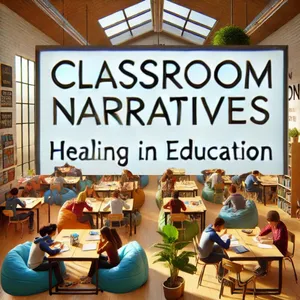
The Classroom Narratives: Healing in Education podcast is a platform dedicated to amplifying the voices of educators, students, and mental health professionals to explore the intersections of trauma, survival, resilience, and transformation in education. Through compelling interviews and personal stories, the podcast serves as a bridge between academic leaders, pre-service teachers, students, and those passionate about educational reform. Our mission is to foster critical conversations that lead to actionable change, promote trauma-informed education, and support educators in their pursuit of meaningful, impactful careers.
Latest Episodes
The most recent episodes — sign up to get AI-powered summaries of each one.
- 4 days ago13 min
Teaching with the HEART and SOUL: Going BEYOND the HEART
📝 Episodic SynopsisIn this concluding episode of the HEART series, Dr. Joey Weisler reflects on an unexpected conversation with a college student that affirmed everything the HEART framework was designed to accomplish.After weeks of sitting outside the classroom door, afraid to enter, one student finally found the courage to come inside. What followed became a reminder that meaningful teaching isn't measured solely by content delivered, but by whether students believe they belong in the learning community.Looking back across each pillar of HEART, Joey reflects on what happens when intentional classroom design, meaningful engagement, purposeful awareness, resilience, and truth converge to help students feel seen—not just as learners, but as people.🔗 Key TakeawaysBelonging precedes participation.Students often carry invisible fears into our classrooms.Compassion and rigor strengthen one another.The greatest impact of teaching is often invisible.Every HEART practice points toward one goal: helping students feel seen.📌 HEART SOLO SERIES SEGMENTS:💛 Teaching with HEART and SOUL: "The Look" That Taught Me to Care, Not Carry💛 Teaching with HEART and SOUL: The HABITS That Evolved Community Beyond Compliance💛 Teaching with HEART and SOUL: ENGAGEMENT Beyond a Right Answer💛 Teaching with HEART and SOUL: AWARENESS Beyond "Why Does This Matter?"💛 Teaching with HEART and SOUL: RESILIENCE Beyond "I Can't"💛 Teaching with HEART and SOUL: TRUTH Beyond a Story
- 1 weeks ago49 min
Beyond the Hurdle: Building Resilience Through Identity, Failure, and the Courage to Keep Going with Dr. Vonetta Kalieta
📝 Episode SynopsisWhat if the greatest obstacle standing between us and success isn't failure—but our expectation that success should come easily?In this episode of Classroom Narratives, Dr. Joey Weisler welcomes psychologist, former counselor educator, and sports performance consultant Dr. Vonetta Kalieta for a powerful conversation about resilience, identity, perfectionism, and the psychology of high performers. Drawing from decades of experience working with athletes, students, and educators, Dr. Kalieta explains why true excellence is never built through shortcuts—it is built through consistency, setbacks, and learning to keep moving forward even when life refuses to cooperate.Together, they explore how social media has distorted our understanding of perfection, why failure is an essential part of learning, what happens when our identity becomes tied to a single role, and how educators can create classrooms where students feel supported without removing the productive struggle that growth requires. Along the way, they challenge common misconceptions about resilience, redefine what mental wellness really means, and remind us that sometimes getting stuck isn't failure—it's exactly where transformation begins.Whether you're an educator, coach, student, parent, or anyone navigating life's inevitable hurdles, this conversation offers a refreshing reminder that success isn't about never falling—it's about choosing to keep going.🔗 Links and Resources 📌 About Dr. Voneetta Kalieta 👉 Meet the Abrams Psychological Services Team.... 📌 CLASSROOM NARRATIVES SEGMENT: Adjust the Flame: Exploring Anger and Emotional Intelligence in Schools with Dr. Mitch Abrams 📌 CLASSROOM NARRATIVES SEGMENT: "The Pie Just Gets Bigger”: Parenting, Identity, and Emotional Survival in Schools with Dr. Julie Davelman
- 2 weeks ago16 min
Teaching with HEART and SOUL: TRUTH Beyond a Story
📝 Episode SynopsisIn the final installment of the HEART series, Dr. Joey Weisler explores the Truth pillar and asks what may be the most important question of all:What do students do with everything they've learned?Beginning with a classroom tradition in which students read Joey's own screenplay about the aftermath of the Parkland tragedy, this episode examines how storytelling can become a bridge between lived experience and meaningful learning—not through disclosure for its own sake, but through responsible reflection and purposeful communication.Through examples spanning English, mathematics, science, engineering, economics, and beyond, Joey argues that every discipline offers students opportunities to discover truths about themselves, their communities, and the world around them. The final pillar of HEART reminds educators that while content teaches knowledge, stories help students decide what that knowledge means.🔗 Show NotesIn This EpisodeWhy Joey assigns his own screenplay during the first week of class.The purpose of asking, "What did you think about this work?" instead of testing plot recall.Why stories exist to create meaning—not simply to be decoded.Modeling vulnerability without turning classrooms into confessional spaces.The difference between trauma disclosure and purposeful storytelling.Helping students shape difficult experiences responsibly through language.Why every discipline contains opportunities for meaningful storytelling.Revisiting Your Voice, Your Change as an example of truth through authentic expression.Helping students find pieces of a curriculum that resonate personally.Concluding the HEART framework through the power of student voice.👉 Key TakeawaysStories become powerful when they create meaning.Teachers model reflection—not performance.Truth is cultivated through thoughtful communication.Every subject offers opportunities for personal connection.Students don't simply learn content—they discover voices worth sharing.Show Links and Resources📌 CLASSROOM NARRATIVES SEGMENT: Voices of Resilience: Paula Reed on Healing Through Education After Columbine📌 HEART SOLO SERIES SEGMENTS:💛 Teaching with HEART and SOUL: "The Look" That Taught Me to Care, Not Carry💛 Teaching with HEART and SOUL: The HABITS That Evolved Community Beyond Compliance💛 Teaching with HEART and SOUL: ENGAGEMENT Beyond a Right Answer💛 Teaching with HEART and SOUL: AWARENESS Beyond "Why Does This Matter?"💛 Teaching with HEART and SOUL: RESILIENCE Beyond "I Can't"
- 3 weeks ago46 min
Teaching By Day: The Boundaries that Sustain Great Teachers with Yvette Dixon Ledford
📝 Episode SynopsisFor generations, education has celebrated the teacher who arrives first, stays last, answers emails at midnight, and sacrifices everything in the name of serving students. But what if those habits aren't signs of dedication at all?In this episode, Dr. Joey Weisler speaks with educator, speaker, and author Dr. Yvette Dixon-Ledford, author of Teacher By Day: A No-Guilt Guide to Boundaries, Balance, and Bliss, to challenge one of education's most dangerous assumptions: that caring more must always mean doing more, and often beyond contractual hours.Together, they explore teacher burnout, professional boundaries, emotional labor, school culture, and the subtle ways educators begin tying their worth to exhaustion. From "teacher tired" to after-hours expectations, grading overload, difficult student situations, administrator relationships, and redefining success beyond standardized test scores, this conversation offers practical strategies for building a sustainable career without sacrificing compassion.Dr. Ledford offers ways for educators to love their job while hold onto a healthy professional identity. 👉 Show NotesIn this episode, we discuss:Why "teacher tired" has become normalized—and why it shouldn't be.The hidden cost of equating availability with professional value.How healthy boundaries actually make teachers more effective for students.Practical ways to reduce burnout without becoming disconnected or uncaring.Why quality almost always outweighs quantity in classroom design.The emotional challenge of supporting students while protecting your own well-being.Building relationships with administrators that make honest conversations possible.Using the "village" approach to share responsibility for students in crisis.Moving beyond standardized test scores as the primary measure of success.Redefining professional fulfillment through sustainable teaching instead of self-sacrifice.Why rest is not selfish—but essential for longevity in education.💭 Memorable ideas from the conversation"We are professionals, not possessions."Teacher exhaustion should not become a badge of honor.Boundaries don't reduce compassion—they protect it.Great teaching isn't measured by how late you stay at school.Sustainable teachers create sustainable classrooms.The goal isn't simply surviving education—it's continuing to love teaching years from now.🔗 Links and Resources 📌 Dr. Ledford's personal website 📌 BOOK: Teacher By Day: A No-Guilt Guide to Boundaries, Balance, and Bliss📌 Instagram handle: @dr.yvetteledford
- Aug 19, 202617 min
Teaching with HEART and SOUL: RESILIENCE Beyond "I Can't"
📝 Episode SynopsisIn the fifth installment of the HEART series, Dr. Joey Weisler explores the Resilience pillar and reframes one of education's greatest misconceptions: that struggle signals failure.Through stories ranging from a classroom disagreement in college literature to a powerful eighth-grade "No Puedo" ceremony that continues to shape his teaching today, Joey argues that emotion is not the opposite of learning—it is often evidence that learning is taking place.This episode examines how educators can respond when students encounter discomfort, resistance, frustration, or failure without attempting to eliminate those emotions altogether. Instead, resilience is presented as the process of helping students move through those emotions with purpose, support, and practical strategies that transform "I can't" into "Let's try another way."👉 Key TakeawaysEmotion is evidence that learning is being internalized.Resistance often signals that students need support, not less challenge.Grace and rigor can coexist.Revision communicates possibility.Resilience is not avoiding difficult emotions—it's learning what to do with them.Show Links and Resources📌 CLASSROOM NARRATIVES SEGMENT: Making Moments Matter: Weisler Alumni (Pt. I) — Mandy Lanier & Ryan Romero on Student Voice, Creativity, and Authentic Classrooms📌 HEART SOLO SERIES SEGMENTS:💛 Teaching with HEART and SOUL: "The Look" That Taught Me to Care, Not Carry💛 Teaching with HEART and SOUL: The HABITS That Evolved Community Beyond Compliance💛 Teaching with HEART and SOUL: ENGAGEMENT Beyond a Right Answer💛 Teaching with HEART and SOUL: AWARENESS Beyond "Why Does This Matter?"
- Aug 12, 20261h 0m
Leading with Culture: Building Schools Students and Teachers Want to Attend with Shaun Hurtado
📝 Episode SynopsisWhat makes students genuinely want to come to school?In this episode of Classroom Narratives, Dr. Joey Weisler sits down with principal, speaker, and author Shaun Hurtado to explore how school culture is created—not through slogans or assemblies, but through thousands of intentional interactions between students, teachers, and leaders.Together they discuss why every student deserves at least one trusted adult, how administrators can lead through visibility instead of isolation, and why authentic relationships are among the strongest forms of prevention available in today's schools. Shaun shares practical leadership strategies from his Leading with Culture framework, including his powerful "No Dot Student" exercise, daily leadership habits, and the importance of creating schools where both educators and students feel genuinely seen.The conversation also examines teacher wellbeing, leadership empathy, safe spaces, student voice, and the responsibility every adult carries in shaping school climate. Whether you're a classroom teacher, administrator, counselor, or educational leader, this episode offers practical ideas for building cultures where people don't simply attend school—they belong.💭 Memorable Takeaways:💡 "Every data point has a heartbeat."💡 "It only takes one trusted adult for a student to feel connected to school."💡 "Culture is never finished—it's something we build every single day."💡 "Everybody has an effect on culture."🔗 Links and Resources📌 Shaun Hurtado personal website📌Leading With Culture: Creating Schools That All Students Want To Attend📌 Leading With Culture-75 Leadership and Culture🎧 CLASSROOM NARRATIVES PODCAST SEGMENT: When Presence Becomes Prevention: School Safety, Trauma, and Educator Voice with Abbey Clements🎧CLASSROOM NARRATIVES PODCAST SEGMENT: More Than a Title: Leadership Through Service and Presence (Part I with Jeremy Brooks)*Special thanks to Jeremy Brooks https://www.theedtalk.com/ for the connection to Principal Hurtado!
- Aug 5, 202621 min
Teaching with HEART and SOUL: AWARENESS Beyond "Why Does This Matter?"
📝 Episode SynopsisIn the fourth installment of the HEART series, Dr. Joey Weisler explores the Awareness pillar and asks one of education's most important questions: Why does this matter?Reflecting on a first-year teaching assignment that left both him and his students uninspired, Joey introduces a different vision for learning—one where curiosity replaces compliance and students move beyond simply completing assignments to creating meaningful work that reflects their own interests, values, and purpose.Through the framework of Recognition, Expression, and Solution, this episode explores how educators can help students identify what they care about, transform those interests into authentic learning experiences, and create work that extends beyond the classroom. Whether you're teaching elementary school, secondary education, or higher education, this conversation invites you to rethink how awareness transforms learning into action.Key TakeawaysAwareness begins with curiosity.Students become invested when they discover personal meaning.Learning becomes memorable when students create something that extends beyond the classroom.Design learning transforms assignments into contributions.Authenticity invites authenticity.Show Links and Resources📌 CLASSROOM NARRATIVES SEGMENT: A Conversation With Dr. Adam Wolfsdorf (Pt I): Teaching in the Riptide: Subversion, Power, and the Moments That Redefine the Classroom📌 CLASSROOM NARRATIVES SEGMENT: A Conversation With Dr. Adam Wolfsdorf (Pt II): Teaching in the Riptide: Trauma, Authority, and the Ethics of Response in the Classroom📌 CLASSROOM NARRATIVES SEGMENT: Invitation Over Compliance: Design Thinking in Classrooms with Dr. Fred Estes📌 HEART SOLO SERIES SEGMENTS:💛 Teaching with HEART and SOUL: "The Look" That Taught Me to Care, Not Carry💛 Teaching with HEART and SOUL: The HABITS That Evolved Community Beyond Compliance💛 Teaching with HEART and SOUL: ENGAGEMENT Beyond a Right Answer
- Jul 29, 202636 min
Beyond the Plate: Helping Students Build Healthy Relationships with Food, Body, and Mind with Lauren Dorman
📝 Episode SynopsisFor decades, health education has focused on what students should eat. But what if the bigger question is how students think about food, their bodies, and themselves?In this episode of Classroom Narratives, Dr. Joey Weisler sits down with registered dietitian, nutrition therapist, and author Lauren Dorman to explore the emotional side of nutrition and why lasting health begins with self-compassion—not self-criticism. Drawing from more than twenty years of clinical experience, Lauren shares how social media, diet culture, body image, and shame are shaping today's students, and why schools must move beyond calorie counting and weight-focused messaging.Together, they discuss Lauren's STRONG Student Shift framework, the neuroscience behind healthy habits, the connection between nutrition, sleep, mindset, and emotional regulation, and how educators and families can help young people become the CEOs of their own minds & bodies. Rather than promoting perfection, Lauren offers a refreshing vision of sustainable wellness built on curiosity, flexibility, and small daily choices that support lifelong wellbeing.👉 Show NotesIn this episode, you'll learn:Why traditional nutrition education often overlooks the emotional and psychological factors behind healthy behaviors.How social media and diet culture have contributed to rising concerns surrounding body image, food anxiety, and disordered eating among young people.Lauren's STRONG Student Shift framework and how each element helps students build sustainable habits from the inside out.Why vision, purpose, and identity are stronger motivators than rules or willpower.The importance of teaching media literacy so students can recognize misleading nutrition and wellness messaging online.How respecting—not perfecting—the body creates healthier long-term habits.The connection between nutrition, sleep, focus, emotional regulation, and academic performance.Why restrictive food rules often create guilt and shame instead of healthy relationships with eating.How educators and families can encourage flexible, balanced approaches to food rather than all-or-nothing thinking.Why nourishment extends far beyond food to include the ways we think, cope, connect, move, & rest.Practical strategies schools can implement to foster healthier, more resilient students through compassionate health education.🔗 Guest ResourcesLauren Dorman, RD: Personal website ('schools' tab)IG: dont_diet_dietitianNine to Nourish: The Nine Ingredients to Refuel Your Relationship with Food, Body, and MindSnack PlateSTRONG student shift
Get Classroom Narratives: Healing in Education summaries in your inbox
Free AI-powered daily recaps. Key takeaways, quotes, and mentions — in a 5-minute read.
Get Free Summaries →Free forever for up to 3 podcasts. No credit card required.
You Might Also Like
Listeners also like.

Cultivating H.E.R. Space: Uplifting Conversations for the Black Woman
Black women discuss healing, empowerment, and resilience through honest weekly talks on health, relationships, and personal growth.

The One You Feed | Personal Growth, Emotional Resilience & Purpose
Insightful conversations with leading thinkers on personal growth, emotional resilience, and living with purpose.

Unlocking Us with Brené Brown
Explores human connection through conversations on vulnerability, courage, and emotion with researchers, thinkers, and audiences.

Habits and Hustle
Explores the daily habits and personal routines of successful entrepreneurs and thought leaders through candid interviews.

Run Your Story Podcast
Runners and walkers share their personal stories, memories, and advice about the sport.

Your Thoughts Your Reality
A podcast exploring how veterans can overcome psychological challenges like fear and self-doubt through neuroencoding science.

Education Research Reading Room
Conversations with global education experts exploring how learning works, from classroom practices to academic research.

Point of Relation with Thomas Huebl
Explores collective healing through conversations at the intersection of science, mysticism, and shared intelligence.
Good Inside with Dr. Becky
A clinical psychologist provides practical guidance for handling common parenting challenges and improving parent-child relationships.

The Daily Motivation
A daily podcast delivering motivational insights from experts and thought leaders to help listeners stay inspired and driven.
Good Life Project
Explores meaningful living through conversations with experts in science, culture, and the arts.
Your Virtual Upline Podcast
A podcast for online leaders redefining success through a belief-driven, identity-led growth method that prioritizes peace over burnout.
About Classroom Narratives: Healing in Education
The Classroom Narratives: Healing in Education podcast is a platform dedicated to amplifying the voices of educators, students, and mental health professionals to explore the intersections of trauma, survival, resilience, and transformation in education. Through compelling interviews and personal stories, the podcast serves as a bridge between academic leaders, pre-service teachers, students, and those passionate about educational reform. Our mission is to foster critical conversations that lead to actionable change, promote trauma-informed education, and support educators in their pursuit of meaningful, impactful careers.
Customized Recaps
AI-powered recaps with compact key takeaways, quotes, and insights.
Straight to Your Inbox
Get key takeaways from Classroom Narratives: Healing in Education in a 5-minute read.
Save Hours Every Week
Stay current on your favorite podcasts without falling behind.
Frequently Asked Questions
What is Podzilla's Classroom Narratives: Healing in Education daily summary?
It's a free AI-powered email that summarizes new episodes of Classroom Narratives: Healing in Education as soon as they're published. You get the key takeaways, notable quotes, and links & mentions — all in a quick read.
How does the Classroom Narratives: Healing in Education podcast summary work?
When a new episode drops, our AI transcribes and analyzes it, then generates a personalized summary tailored to your interests and profession. It's delivered to your inbox every morning.
Is this an official Classroom Narratives: Healing in Education product?
No. Podzilla is an independent service that summarizes publicly available podcast content. We're not affiliated with or endorsed by Joseph Weisler.
Can I get summaries of other podcasts too?
Absolutely! The free plan covers up to 3 podcasts. Upgrade to Pro for 15, or Premium for 50. Browse our full catalog at /podcasts.
How often does Classroom Narratives: Healing in Education release new episodes?
Classroom Narratives: Healing in Education publishes weekly. Our AI generates a summary within hours of each new episode.
What topics does Classroom Narratives: Healing in Education cover?
Classroom Narratives: Healing in Education covers topics including Education, Culture, Journals, Society & Culture, Personal Journals. Our AI identifies the specific themes in each episode and highlights what matters most to you.
Start getting Classroom Narratives: Healing in Education summaries tomorrow morning.
Free forever for up to 3 podcasts. No credit card required.
Free forever for up to 3 podcasts. No credit card required.