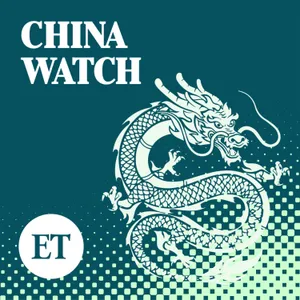
Free Daily Podcast Summary
China Watch: Daily Summaries Delivered
by The Epoch Times
“China Watch” is a weekly deep dive that pulls back the curtains on one of the world's most enigmatic powers. Join Epoch Times contributor Terri Wu as she deciphers where China is headed next and how its politics, technology, and business affect Americans.
Latest Episodes
The most recent episodes — sign up to get AI-powered summaries of each one.
- 1 weeks ago23 min
What China’s Big Leadership Meeting Tells Us About the CCP’s Future
Before the Chinese Communist Party’s (CCP) fifth plenum, a closed-door meeting of its roughly 200 top officials, the Asia Society Policy Institute studied decades of past meetings to forecast the outcome. Several of its key calls missed the mark. In our last episode, guest Alex Liao made his own forecast, and much of what happened fit his read.The difference was the method. Alex wasn’t counting precedents. He was reading how the party behaves: what it does when it’s afraid, how it fights internally, and how it signals through what it leaves unsaid.Precedent only works when the rules hold. They don’t, right now, inside the CCP.In this episode, our experts read the tea leaves of the just-finished meeting and what it signals about where the party is headed.Views expressed in this episode are opinions of the host and guests and do not necessarily reflect the views of The Epoch Times.—Terri Wu is a Washington-based freelance reporter for The Epoch Times covering education and China-related issues. Send tips to terri.wu@epochtimes.com.Show your support for The Epoch Times and independent journalism by leaving a 5-star review of this show on your podcast platform or visit www.RateThisPodcast.com/chinawatch
- 2 weeks ago32 min
Succession—the CCP Edition
Days after Xi Jinping’s state visit to Washington, the Wall Street Journal reported that he needed unusual rest breaks at the White House. Now, the Chinese Communist Party’s top leadership is meeting for its Fifth Plenum, from Oct. 26–29, and the question of who comes after Xi is out in the open.China expert Alex Liao explains why he believes the leak about Xi’s health came from Beijing, how Xi came to rule more like a Ming emperor than a modern party leader, and why China’s military has gone silent since Xi moved against General Zhang Youxia.Mike Sun, who spent decades advising Americans doing business in China, describes how Xi broke the rules that once kept elite politics stable, and why his successor may have to do the same just to survive.Also in this episode: why Beijing ordered 25 of its 40 golf courses to close, according to documents shared with China Watch; what to watch for when the plenum ends; and who could be next in line, from Premier Li Qiang to the “deposed crown prince” Hu Chunhua.Views expressed in this episode are opinions of the host and guests and do not necessarily reflect the views of The Epoch Times.—Terri Wu is a Washington-based freelance reporter for The Epoch Times covering education and China-related issues. Send tips to terri.wu@epochtimes.com.Show your support for Epoch Times and independent journalism by leaving a 5-star review of this show on your podcast platform or visit www.RateThisPodcast.com/chinawatch
- 3 weeks ago1h 0m
Japan’s Red Line on Taiwan, and Why Its China Trade Boom May Not Last, ft. Stephen Nagy
Chinese leader Xi Jinping, U.S. President Donald Trump, and Japanese Prime Minister Sanae Takaichi are expected to be in Shenzhen in November for the APEC summit. How does Tokyo view meetings between Trump and Xi, and where does Taiwan fit?Stephen Nagy, a professor at International Christian University in Tokyo and senior fellow at the Macdonald-Laurier Institute, explains why Japan sees Taiwan as the linchpin of its security, what Takaichi’s remarks on Taiwan did and didn’t say, and how Tokyo draws its own red line, separate from that of Beijing.He also explains why Japan’s long practice of keeping politics and economics separate has broken down, why Japanese companies are diversifying rather than decoupling, and why he expects today’s China–Japan trade boom to fade.We also discuss what Beijing still needs from Japan, why Nagy thinks Canada’s middle-power pitch landed poorly in East Asia, and the one thing Americans most often get wrong about Japan.Views expressed in this episode are opinions of the host and guests and do not necessarily reflect the views of The Epoch Times.—Terri Wu is a Washington-based freelance reporter for The Epoch Times covering education and China-related issues. Send tips to terri.wu@epochtimes.com.Show your support for Epoch Times and independent journalism by leaving a 5-star review of this show on your podcast platform or visit www.RateThisPodcast.com/chinawatch
- 4 weeks ago18 min
China’s Banks Built the Boom. Now, They’re Hiding the Bust.
In 2025, China eliminated 670 small rural banks—nearly one in five—as they were facing elevated financial risks. Most weren’t shut down; they were folded into larger banks. It was consolidation of an unprecedented scale.But the risks haven’t gone away. They’re now concentrated in fewer, larger banks, often tied to local governments that are themselves deep in debt.And the problem isn’t limited to rural lenders. Across China’s banking system, the same issues appear: layers of debt stacked on debt, shadow banking, and bad loans classified as healthy.Chinese banks powered the country’s economic boom, but they also absorbed much of its strain. That pressure has to be released somehow. Doing so without triggering a shock may be one of the regime’s biggest challenges.Views expressed in this episode are opinions of the host and guests and do not necessarily reflect the views of The Epoch Times.—Terri Wu is a Washington-based freelance reporter for The Epoch Times covering education and China-related issues. Send tips to terri.wu@epochtimes.com.Show your support for Epoch Times and independent journalism by leaving a 5-star review of this show on your podcast platform or visit www.RateThisPodcast.com/chinawatch
- Oct 5, 202651 min
China's Rare Earth Control Is Fading—How We'll Know When It's Over
China's control over rare earths is already fading, but only industry insiders seem to know it, says Christopher Ecclestone, mining strategist at the financial advisory firm Hallgarten & Company.He suggests that within three years, the West could have more rare earths than it needs, and China could lose its grip on the market.The key to China's power, he says, is control over prices, or at least the perception of it. So what will it take for the revealing moment—when Beijing squeezes the market again, and nothing happens?Join Terri and Chris for a lively discussion.Views expressed in this episode are opinions of the host and guests and do not necessarily reflect the views of The Epoch Times.—Terri Wu is a Washington-based freelance reporter for The Epoch Times covering education and China-related issues. Send tips to terri.wu@epochtimes.com.Show your support for The Epoch Times and independent journalism by leaving a 5-star review of this show on your podcast platform or visit www.RateThisPodcast.com/chinawatch
- Sep 28, 202622 min
Spy Hunting During Xi’s Visit to Washington—Terri Wu Style
Beijing waited until 48 hours before takeoff to confirm Xi Jinping's trip to Washington. Why so late?China expert June G. Liao has a theory. She thinks Xi used the visit as leverage to "seal the deal" on Zhang Youxia, the Chinese general who was once Xi’s second-in-command. The same day that Beijing confirmed the trip, the Politburo expelled Zhang from the Party and the military.Xi also brought his own welcoming crowd to Washington. Protesters showed up too, and so did people Terri believes were CCP informants. At a rally at the Navy Memorial, she chased off wave after wave of them.What she saw in action was the CCP's "thousand grains of sand" approach to gathering intelligence. An FBI analyst first described the pattern in the 1980s.Views expressed in this episode are opinions of the host and guests and do not necessarily reflect the views of The Epoch Times.—Terri Wu is a Washington-based freelance reporter for The Epoch Times covering education and China-related issues. Send tips to terri.wu@epochtimes.com.Show your support for Epoch Times and independent journalism by leaving a 5-star review of this show on your podcast platform or visit www.RateThisPodcast.com/chinawatch
- Sep 21, 202615 min
Drained Gift Cards: Inside the Fraud DHS Says Funds Fentanyl and Human Trafficking
Gift cards are a great thing to receive, until you realize the card has no money on it! Did your friend make a mistake, or is something more sinister going on?Unfortunately, it’s often the latter. That’s this week’s topic, and Terri dives into how organized crime in China is stealing money from gift cards before they can be used.We’re not talking just hundreds of dollars—we’re talking more than $1 billion in reported losses, and counting.Join Terri this week as she opens up how gift cards are vulnerable to theft, and how the Chinese regime is selectively solving the problem, not in favor of the West.Views expressed in this episode are opinions of the host and guests and do not necessarily reflect the views of The Epoch Times.—Terri Wu is a Washington-based freelance reporter for The Epoch Times covering education and China-related issues. Send tips to terri.wu@epochtimes.com.Show your support for The Epoch Times and independent journalism by leaving a 5-star review of this show on your podcast platform or visit www.RateThisPodcast.com/chinawatch
- Sep 14, 202623 min
Back to Mao: China's Playbook for Taking What's Yours
China has updated its laws, in what looks like a move to gear up for war. The threshold for a “national threat” is lower than ever.And one of the major targets is private ownership. This time, American businesses are on the front line.The same thing happened in the 1950s, when U.S. claims of assets lost in China totaled $197 million—smaller than today’s business footprint.Listen to this week’s episode to find out what’s now considered a national threat to the Chinese regime.Host Terri Wu analyzes the latest change in China’s National Defense Mobilization Law and previous law updates, and why Mao’s playbook for seizing private property is shaping up in China in plain sight.Views expressed in this episode are opinions of the host and guests and do not necessarily reflect the views of The Epoch Times.—Terri Wu is a Washington-based freelance reporter for The Epoch Times covering education and China-related issues. Send tips to terri.wu@epochtimes.com.Show your support for Epoch Times and independent journalism by leaving a 5-star review of this show on your podcast platform or visit www.RateThisPodcast.com/chinawatch
Get China Watch summaries in your inbox
Free AI-powered daily recaps. Key takeaways, quotes, and mentions — in a 5-minute read.
Get Free Summaries →Free forever for up to 3 podcasts. No credit card required.
You Might Also Like
Listeners also like.
Pekingology
A deep dive into Chinese politics, the Communist Party’s operations, and the global implications of China’s domestic and foreign policies.

Interesting Times
Explores global shifts and emerging trends through interviews and analysis on the evolving world order.

The Opinions
Analysis and commentary on current news events, released twice weekly.

Wall Street Week
Wall Street Week explores global capitalism stories, hosted by David Westin in New York.

The Jacob Shapiro Podcast
Geopolitical analyst Jacob Shapiro explores global events and their impacts on markets, politics, and resources.

Peak Prosperity
Explores economic, energy, environmental, and geopolitical systems to offer clarity beyond mainstream narratives.

Asia Specific
BBC World Service

The Powers That Be: Daily
Daily insights into power dynamics in American finance, politics, tech, and entertainment from journalists with insider perspectives.
The Chinatown Sting
A decades-old undercover drug bust in Manhattan’s Chinatown unravels through firsthand accounts from those involved.

American Power
A geopolitical podcast examining the hidden systems—military, energy, and politics—driving global conflicts and decisions.

State of Play
Geopolitical analysis with CSIS experts on shifting global power and international relations.

The Capitol Forum
A podcast exploring policy debates, antitrust issues, and corporate investigations shaping American markets and power.
About China Watch
“China Watch” is a weekly deep dive that pulls back the curtains on one of the world's most enigmatic powers. Join Epoch Times contributor Terri Wu as she deciphers where China is headed next and how its politics, technology, and business affect Americans.
Customized Recaps
AI-powered recaps with compact key takeaways, quotes, and insights.
Straight to Your Inbox
Get key takeaways from China Watch in a 5-minute read.
Save Hours Every Week
Stay current on your favorite podcasts without falling behind.
Frequently Asked Questions
What is Podzilla's China Watch daily summary?
It's a free AI-powered email that summarizes new episodes of China Watch as soon as they're published. You get the key takeaways, notable quotes, and links & mentions — all in a quick read.
How does the China Watch podcast summary work?
When a new episode drops, our AI transcribes and analyzes it, then generates a personalized summary tailored to your interests and profession. It's delivered to your inbox every morning.
Is this an official China Watch product?
No. Podzilla is an independent service that summarizes publicly available podcast content. We're not affiliated with or endorsed by The Epoch Times.
Can I get summaries of other podcasts too?
Absolutely! The free plan covers up to 3 podcasts, any in the catalog. Basic raises that to 15, Pro to 40 and Max to 100. Browse our full catalog at /podcasts.
What topics does China Watch cover?
China Watch covers topics including News, Business, Politics. Our AI identifies the specific themes in each episode and highlights what matters most to you.
Start getting China Watch summaries tomorrow morning.
Free forever for up to 3 podcasts. No credit card required.
Free forever for up to 3 podcasts. No credit card required.