Free Daily Podcast Summary
Bitcoin Takeover Podcast: Daily Summaries Delivered
by Vlad Costea
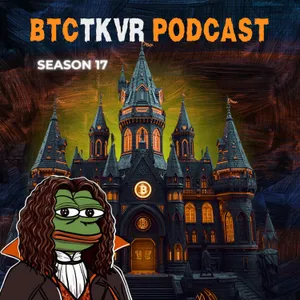
Bitcoin Takeover is the oral history of Bitcoin, told by the people who made it and those still fighting over what it becomes. Host Vlad Costea has recorded long, unscripted conversations with the builders, pioneers, heretics, and occasional villains of the Bitcoin world. The man who ran Mt. Gox explains how the coins actually disappeared. A founder under federal indictment makes his case. Satoshi's first collaborator remembers what 2009 was really like. And the researchers behind zero knowledge proofs, covenants, sidechains, and the Lightning Network argue about what comes next. Past guests include Vitalik Buterin, Phil Zimmermann, Zooko, Adam Back, Mark Karpelès, Roger Ver, Martti Malmi, Charlie Shrem, and hundreds of developers, entrepreneurs, and troublemakers whose work shaped the world's first decentralized money. This is not a show about price predictions or recycled talking points. It is about the technology, the history, the scandals, and the ideas that will decide Bitcoin's future. Seven years and 350+ episodes, with one rule that never changed: the guest did something notable, and the host did the reading. Time to learn!
Latest Episodes
The most recent episodes — sign up to get AI-powered summaries of each one.
- 4 days ago2h 38m
S17 E43: Mike Belshe on BitGo, Quantum & Clarity
BitGo CEO Mike Belshe returns after 20 months to discuss the Clarity Act, BitGo's IPO and retail launch, quantum-resistant wallets, AI code auditing, and what changed since we last spoke in S16 E1. Time stamps: 0:00 - Intro 0:54 - Welcome to S17 E43: Mike Belshe Returns 1:26 - The White House Visit & the Clarity Act Vote 2:35 - Why Wall Street Needs the Clarity Act 4:43 - Martin Gruenberg, Operation Chokepoint & the Vulnerability Window 7:00 - Does Clarity Affect Bitcoin Payments? 7:18 - The Three Camps Inside Every Bank 09:12 - Will the Next Administration Rug Pull Crypto? 10:15 - Executive Orders vs. Legislation 11:08 - Larry Fink: "Everything Is Going to Be Tokenized" 13:30 - Market Structure as Infrastructure Robustness 15:42 - MiCA, the War on Cash & the Bitcoin ATM Ban 18:48 - The Cake Wallet Contest 20:17 - BitGo Today: Custody AND Self-Custody 22:00 - The Marble Pillars Lesson: How Banks Earned Trust 23:58 - Why BitGo Is Free for Individuals 25:13 - Coldcard & the Single Point of Failure Problem 26:19 - Two-of-Three Multi-Sig vs. Single-Key Cold Storage 27:38 - Bybit's Blind Signing Hack 29:47 - Random Number Generators & Why Every AI Says 17 32:42 - AI Code Auditing at BitGo 34:11 - The Frontier Model Business Model Is Broken 36:16 - AI Vlad & Seasons 18-21 in Parallel 39:18 - Regulators vs. Borderless Money 42:38 - The $3 Random Number Experiment 47:21 - Sponsors: Layer 2 Labs & Braiins Hash Power 54:27 - BitGo's Fork Policy: Replay Protection & the Three Criteria 58:41 - Why Two Bitcoin Forks in 2025? 1:00:53 - Belshe on Forks: Technical Merit vs. Politics 1:04:47 - Satoshi's Blueprint or Final Solution? 1:08:00 - Forks as Scaling the Idea of Bitcoin 1:10:03 - Satoshi's Unanticipated Centralization Vectors 1:13:16 - Clearing the Record: BitGo & the New York Agreement 1:17:46 - The Block Size Counterfactual 1:19:34 - Tether on Omni: A Technical Correction 1:23:56 - Liquid's Hack as Sidechain Vindication 1:27:11 - The Fee Subsidy Problem & Tail Emission 1:32:01 - Fixed Supply as Bitcoin's Fundamental Promise 1:37:03 - Miner Subscriptions & Marathon's Slipstream 1:38:48 - Fungibility, Privacy & the Regulatory Threat 1:41:34 - Zcash Shielded Adoption: 4.5 Million ZEC 1:43:12 - BitGo's Shielded Zcash Implementation 1:45:00 - Executive Order 6102 & California's Wealth Tax 1:48:16 - The K-Shaped Economy & Borrowing Against Assets 1:53:41 - Do Forks Inflate the Coin Supply? 1:58:28 - The Payments Expectation vs. Protocol Reality 2:04:24 - Stablecoins, Iran & Tether's Freeze Function 2:08:00 - Jameson Lopp, Casa & the New York Agreement Myth 2:12:15 - Ethereum, Solana & the Trade-off Landscape 2:14:30 - The BIP 39 Seed Phrase Experiment: Quen's Answer 2:15:19 - The Winning Number: 91 2:15:31 - The Religion Question 2:17:13 - SideShift Ad Read 2:18:10 - Quantum: The Perception Threat 2:21:38 - BitGo's Quantum-Resistant Wallet Architecture 2:24:07 - The Unspent Selection Mechanism Explained 2:27:03 - Satoshi's Coins & the Freeze Debate 2:28:11 - WBTC as Bitcoin's Largest Scaling Layer 2:28:25 - The Anthropic 100 BTC Bounty 2:32:06 - Open Source AI & the Arms Race 2:34:05 - Will Clarity Pass Today? 2:36:51 - BitGo Wants Competition 2:37:18 - Satoshi vs. Hamilton & Goodbye
- 1 weeks ago4h 0m
S17 E42: Bob Summerwill on Ethereum Classic & Bitcoin's Fork Season
Ethereum Classic veteran Bob Summerwill retells the DAO hack from inside the Foundation, explains why forks are features, and shares advice for Paul Sztorc's ecash launch, plus FIFA stories and lost ETH. Time stamps: 00:47 - Welcome to S17 E42: Fork Season Begins 01:26 - Bob Summerwill & the DAO Hack Origin Story 03:11 - Slock.it, Smart Locks & the First DAO 07:03 - Child DAOs and the "Risk-Free" Pitch 10:04 - Bob's Reservations: Legal Liability & Randos Voting With Money 13:27 - The Reentrancy Bug: 14% of the Supply Drained 16:14 - Code Is Law vs. Bailout: The Great Schism 19:42 - Hoskinson's "Two Ethereums From the Start" 26:25 - "Can You Guys Please Stop Trading?" 26:44 - The Irregular State Transition (It Was Not a Rollback) 30:10 - The Hacker Threatens Legal Action 34:08 - The Vote & Activation Day 37:22 - Ethereum Classic: The First Minority Chain to Survive 41:34 - Forking Is Part of Nakamoto Consensus 42:19 - Sal, Donald McIntyre & the Cypherpunks of ETC 43:22 - Barry Silbert, Grayscale & the ETC Cooperative 46:26 - The Weird Roommate Theory of Forks 50:00 - Why Ethereum Classic Didn't Win 56:17 - Bitcoin Cash, Dormant Coins & Grassroots Adoption 57:35 - Vlad's "Many Bitcoins" Theory & the Accidental 21 Million 01:00:13 - Voluntary Consensus & the Little Dictators 01:04:37 - The Blake Fork (BIP 110) & the Node Democracy LARP 01:07:01 - Paul Sztorc's Ecash: The Maximalist Hard Fork 01:09:47 - BitVM, Rollups & Bitcoin's Missing Layer Twos 01:13:17 - Connection Trouble & the Speed of Light 01:14:03 - Sponsors: SideShift, Ecash, Orange Rock, Braiins, Cake Wallet 01:18:18 - Giveaway Reveal: The Number Is 96 01:19:28 - Why the Best Technology Doesn't Win 01:22:50 - Tether on Tron: The Joke That Worked 01:26:07 - Tron's Plagiarized Whitepaper & the Web 4 Roadmap 01:29:04 - NEO, EOS, NEM & the $4 Billion ICO 01:33:41 - Ultrasound Money & the EIP-1559 Burn 01:37:18 - The Prague Photographer's Lament 01:40:08 - Bob's Origin Story: Gold Bugs & the Alex Jones Phase 01:44:53 - El Salvador's Quiet Bitcoin Regression 01:48:07 - Meeting Bitcoin in a Pub (February 2014) 01:54:44 - Bitcoin 2.0: BitShares, Counterparty, Mastercoin, NXT 01:57:48 - Toronto, TD Securities & Joining the Ethereum Foundation 02:02:06 - Michael Ruppert's Collapse & Choosing to Build 02:06:24 - Self-Driving Cars & Assassination Markets 02:10:02 - Does Ecash Feel Like Early Ethereum? 02:13:53 - Will Bitcoin Ever Fork Again? 02:19:24 - WBTC: Ethereum Is Bitcoin's Biggest Sidechain 02:21:48 - The Self-Custody Industrial Complex 02:23:52 - Zcash, Monero & Tachyon 02:27:38 - "Everything Is an Experiment" 02:30:46 - The Block Size Wars Counterfactual 02:35:52 - Ethereum PoW: Anatomy of a Cash Grab 02:41:26 - ETC Labs, DFG & the Sabotage of ETC Dev 02:45:27 - Could ETC Have Flipped ETH? 02:49:07 - Bob's Advice for Paul Sztorc 02:55:50 - The EA Years: Psygnosis, Wipeout & Harry Potter 03:01:56 - "None of Us Play FIFA": Confronting the Chairman 03:12:22 - Fixing FIFA: The Seven-Year Turnaround 03:21:02 - FIFA Nostalgia & Vlad's Prodigy Brother 03:24:12 - The Notorious Wii U Tweet 03:26:37 - Professional Chaos Agent? Proof of Work Summit Stories 03:32:24 - Charlie Shrem's Time Zone & Nick Spanos Ghosting 03:35:51 - Advice to 2015 Bob: The Lost ETH Fortune 03:38:00 - Remembering Donald McIntyre 03:41:06 - The Nick Szabo Interview That Almost Happened 03:43:38 - Vitalik, Autism & Genius 03:47:08 - Early Days of Ethereum & the Ethereum Time Machine 03:58:36 - "You Got to Try" & Where to Follow Bob 03:59:22 - Outro & Sponsors
- 1 weeks ago1h 35m
S1 E3 Remaster: Zack Voell on Bitcoin & Politics
The January 2019 Zack Voell crossover (he was hosting The Coin Pod) is now remastered: featuring opt-in money, gridlock as a feature, FDR's gold grab, Russia rumors & dating as a Bitcoiner in NYC. The audio has been enhanced too! Time stamps: 0:00 - Intro 0:46 - Remaster Notes: This Show Was Almost Called "Bitcoin & Politics" 2:12 - Sponsor Shoutout: Helen's Pizza in Jersey City 3:30 - The Crossover Episode Zack Never Published 4:41 - The Original Recording: January 2019 5:42 - Bitcoin as a Tool of International Affairs 7:49 - Bitcoin Obituaries, Silk Road Curiosity & Getting Rekt 11:39 - The Opt-In Economy: Voting With Your Money 13:26 - "You Only Ever Experience One Bear Market: Your First" 16:54 - The US Dollar's Outlaw Origins 17:55 - Colonial Currency Disasters & Tobacco Money 20:27 - Thirty Years of Failed Internet Money 21:51 - Gridlock Is a Feature: Congress & Nakamoto Consensus 22:37 - Bitcoin: A Very American Invention 24:47 - Why Americans Seem to Own the Narrative 27:18 - The White Paper's American Pedigree 30:44 - Could Bitcoin Have Come Out of China or Russia? 31:35 - Liberty Arbitrage & the Two Foundational Freedoms 35:15 - FDR's Gold Confiscation 37:43 - Jefferson, Madison & the Hard Money Founders 39:10 - Voltaire's Zero & the Fiat Inertia 43:08 - Rousseau, Property & Money as a Token of Trust 48:02 - Rational Ignorance: The Questions We Never Ask 50:55 - The Bitcoin Crash Course & Why Money Creates Community 55:36 - The Bitcoin Noob Moniker 58:52 - Dating as a Bitcoiner in New York City 1:02:58 - "But That's Not Real Money" 1:04:15 - Paying Your Half of the Date in Bitcoin (2017 Edition) 1:09:48 - The Russia Bitcoin Reserve Rumor 1:13:48 - Bernie Madoff Is Not Satoshi Nakamoto 1:17:19 - Who Adopts First: The Unbanked or the Privileged? 1:20:18 - Deplatforming, Gab, Patreon & Money as Speech 1:23:07 - The Four Freedoms of Money 1:26:05 - The Inconvenience of Freedom 1:29:20 - Your Own Single Point of Failure 1:31:09 - If You're Glad, Then I'm Vlad
- 2 weeks ago1h 23m
S17 E41: Vik Sharma on Radar, Arbiter & Vibe Coding the Future of Cake Wallet
Vik Sharma is best known as the CEO of Cake Wallet. But lately, he's built two new projects: a Signal fork with BTC tipping called Radar, and a perpetual trading app named Arbiter. In this episode, he explains how the AI revolution speeds up development. Time stamps: 0:00 - Intro 1:18 - Vik Sharma Returns: Two New Products in Seven Months 1:41 - Radar: A Signal Fork with Bitcoin Lightning Built In 3:18 - How Radar Works: Signal Servers, Monthly Donations & Linked Devices 5:21 - Why Signal Over Telegram 6:36 - Why Lightning Over Monero 8:19 - Stablecoins for Normies: The Venmo-ification of Bitcoin 10:33 - Spark, Breez SDK & the Stablecoin Question 11:55 - The Nvidia Spark Cluster: Going All In on Local AI 15:25 - Why Local Models Beat Cloud Subscriptions for Security Work 17:03 - Guardrails: When Claude Refuses to Audit Your Own App 18:33 - Dinner with the Trump Administration: America's AI Regulation Mistake 20:45 - Italy's ChatGPT Ban & the Fear of Falling Behind 22:44 - The $100 Cake Wallet Contest 23:15 - Does Cake Wallet Use AI for Coding? 25:16 - Arbiter: A Vibe-Coded Hyperliquid Trading App 27:44 - $5 Million Traded, TestFlight & the Mac Desktop Build 30:13 - Linux Requests & the Orange Rock Comparison 31:17 - Gasless USDC: Circle CCTP & Frictionless Onboarding 35:10 - Can This UX Work on Private Chains? Zano, Aztec, Tari & Beam 37:44 - The $10,000 Red Team Donation & Cake's Audit Results 39:34 - The Coldcard RNG Flaw & the "Someone Is Looking at the Code" Fallacy 43:14 - Passphrases: The Simplest Security Upgrade 43:58 - The Bitcoin Forks: Luke Dash Jr's Blake2 & the Ecash Hard Fork 44:51 - Open-Mindedness: The Original Bitcoiner Virtue 46:44 - Wownero, MoneroV & Why Cake Dropped It 49:22 - The Winning Number Is 27 (and Nobody Picked It) 51:04 - The Privacy Narrative: Why Monero & Zcash Are Pumping 55:07 - "Bitcoin Maximalism Is Almost Anti-Bitcoin" 57:52 - NEAR Intents, Maya & Spending Shielded Zcash 59:53 - How to Try Arbiter Today 1:01:45 - What's Next: Desktop Apps, Multisig & Back to Self-Custody Basics 1:04:26 - Still Bullish on Lightning 1:04:39 - The Gatekeeper Question: How Cake Decides Which Coins to List 1:09:07 - Dash Adopting Orchard While Zcash Moves to Ironwood 1:10:56 - The Maintenance Burden: Why Exodus Dropped Monero 1:12:25 - Zcash Voting, Sapling Addresses & Passphrase Support 1:16:03 - Seth's Role & the Foundation Devices Connection 1:17:01 - Two Million Downloads & the Privacy Tipping Point 1:19:08 - Bitcoin Amsterdam & Conference Plans 1:21:14 - Sponsors & Goodbye
- 3 weeks ago1h 23m
S17 E40: Richard Werner & Amir Taaki on Economics, CBDCs & Cypherpunk Tech
Prof. Richard Werner is one of the best known economists in the world. Amir Taaki is one of the most famous cryptographers and cypherpunks of his generation. Together, they join forces to defeat centra planning & stop the rise of CBDCs. Time stamps: 0:00 - Intro: A Crossover Panel at Mallorca Blockchain Days 2:02 - Werner's Paradigm: Why Mainstream Economics Is Charlatanism 5:52 - David Ricardo, Karl Marx & the Single Central Bank Dream 7:02 - Scientific Economics: The German Historical School & East Asia 9:25 - The Subsidiarity Principle: Lessons from the Prussian Army 12:46 - Decentralization in Money: 25,000 Local Banks 15:10 - Europe in Decline: Germany's Negative Growth & Rising Controls 17:20 - Germany Is Not Sovereign: The Occupation Statutes Theory 20:45 - The Undemocratic EU: A Soviet-Style Rubber Stamp Parliament 21:58 - Article 146: Germany's Path to a Real Constitution 24:39 - Direct Democracy via Technology: Why Do We Need Representatives? 26:00 - Amir Asks: What Does the Ideal Society Look Like? 27:13 - Switzerland's Referendum Culture as the Model 29:30 - The Scarcity Lie: Every Country Can Have 15% Growth 32:15 - Disaggregated Credit: Productive vs. Non-Productive 33:24 - Why One Currency? Medieval Bonds & Local Money 35:36 - The Wörgl Experiment: Full Employment in the Great Depression 38:04 - Tally Sticks: The Original Public/Private Key Money 40:10 - Local Credit as a Social Force Under Community Control 43:09 - Sea Power vs Land Power: The Bank of England's Origins 47:07 - 1688: The Foreign Invasion Nobody Talks About 49:49 - Belt & Road, Iran, and the Real Target: China 51:47 - Sponsors: Cake Wallet, LayerTwo Labs, Orange Rock, Braiins, SideShift 54:22 - The Year in Privacy: FHE, Obfuscation & the Zcash Hack 56:35 - The Year in Economics: Chat Control & the Digital Prison 57:46 - CBDC Explained: The Umpire Who Wants to Play 59:04 - How a Banking Crisis Ushers in the Soviet System 1:01:07 - Q&A: How Can Politicians Create Growth? 1:06:31 - Q&A: Why Did the Soviet Union Collapse So Suddenly? 1:12:05 - The $100 Cake Wallet Prize Vote 1:13:07 - Closing Question: What Do You Think of Bitcoin Today? 1:14:07 - Amir on Bitcoin: No Leadership, Proletariat Vibes & Trump Dependency 1:17:05 - Werner: Bitcoin Works as an Asset, Fails as Money 1:18:18 - Bitcoin, Geopolitics & Iran Charging Shipping Fees in BTC 1:20:32 - Gold, Cash & the War on Alternatives 1:22:51 - Closing
- 3 weeks ago1h 50m
S1 E2 Remastered: John Carvalho on Bitcoin Politics
Recorded in January 2019 and published alongside the rest of the Bitcoin Takeover Podcast Season 1 episodes in February 2019, this interview with John Carvalho is one of the show's early hits and a statement that this initiative is able to feature unique insights from popular bitcoiners. The remastered version features enhanced audio, with some extra EQ and compression. Special thanks to Helen's Pizza for sponsoring this initiative! Time stamps: 0:00 - Intro: Why This Episode Matters 4:16 - Welcome: John Carvalho, the Bitcoin Error Log 5:17 - Bitcoin Politics and the Early Days 6:39 - The Bitcoin Foundation: Ego Platform or Useful Body? 8:53 - First Contact: Silk Road, Forums and IRC 11:40 - Buying Bitcoin in 2012: Mt. Gox, Dwolla and BitInstant 13:20 - The Foundation's Founders and Its Failures 15:45 - The Rebranding Effort and Why It Failed Again 17:04 - The Impossibility of Organizing Benevolent Bitcoin 20:04 - Bitcoin Core, Communication and the Leaderless Project 23:50 - No Official Narrative: Bitcoin's Many Stories 25:49 - Consensus as the Lowest Common Denominator 28:01 - Should Everything Be on a Blockchain? 28:58 - Surviving Market Cycles: Everyone Who Sold Was Wrong 32:46 - Bitcoins Want to Be Free: The Lord of the Rings Theory 34:05 - Roger Ver Attacks Andreas Antonopoulos 37:08 - How Big Is Bitcoin Really? The Coinbase Illusion 40:52 - Media Conglomerates and Hidden Concentration 42:13 - Decentralization Theater and arewedecentralizedyet.com 42:47 - Refusing BitPay and Political Spending 44:46 - Censorship Resistance as Bitcoin's Core Purpose 46:46 - Debunking "Swiss Bank Account in Your Pocket" 48:26 - What Caused the 2017 Bull Run? 51:31 - Stocks as Stores of Value and What Bitcoin Will Cure 53:44 - No College Degree: Comic Books, Punk Rock and Design 56:19 - Massachusetts [Redacted]: Growing Up Arguing 57:21 - Preparing for the Roger Ver Interview 58:32 - The Bcash Moment: Triggered, Not Scripted 1:00:46 - Roger's Debate Tactics: Zoom In, Zoom Out 1:04:36 - Skepticism as a Survival Skill 1:05:32 - Blockstream: Great Developers, Unclear Business Model 1:09:28 - r/btc Conspiracies and the AXA Myth 1:13:48 - Roger's War Chest and the Cost of Fighting Markets 1:18:17 - Will Roger Ever Come Back to Bitcoin? 1:20:40 - Pepe Politics and the Attention Economy 1:22:11 - The Evolution of Bitcoin and the Lightning Generation 1:23:06 - Bitrefill, Gift Cards and the Circular Economy 1:26:09 - Steemit Critique: Gamify, Don't Scam 1:27:16 - Brave, BAT and the Nonsense of Paid Attention 1:30:52 - Hitchcock's Bladder Rule and Final Questions 1:31:55 - Hyperbitcoinization: Hype, Greed and Small Wins 1:35:17 - Nation States Secretly Accumulating Bitcoin? 1:36:29 - Bitcoin and the Shift in Global Power 1:39:32 - Merchant Adoption and the Tax Man Problem 1:42:06 - Bitcoin in 10 Years: Disruption Incoming 1:43:43 - Bitcoin Is a Consensus Ponzi (and So Is All Money) 1:44:26 - The Cantillon Effect and Inflationary Money 1:47:59 - Closing: A Bitcoin Every Thousand Years
- 3 weeks ago2h 11m
S1 E1 Remastered: Donald McIntyre on Bitcoin, The Teachings of Tim May & Nick Szabo, and the History of Money
Donald Hugh McIntyre passed in 2025, but is remembered as one of the most insightful polymaths... while his blog Etherplan lives on. The episode came out in the first week of February 2019, ran two hours, and set the genetic code for Bitcoin Takeover podcast. Time stamps: 00:02:45 – Introduction: who is Donald McIntyre 00:04:49 – Was Bitcoin inevitable? 00:06:29 – 10,000 years of top-down structures vs 3.5 million years of evolution 00:08:27 – Cypherpunks: Chaum, Tim May, Nick Szabo 00:09:43 – The ancient desire for unconfiscatable money 00:11:55 – Bitcoin as a bottom-up system 00:12:39 – Living in a dual world: banks vs private keys 00:15:02 – Trusted third parties are security holes 00:16:40 – Nick Szabo's social scalability explained 00:18:27 – Why banking excludes: the unbanked in the US and Latin America 00:20:14 – Privacy, intelligence agencies & the false sense of security 00:21:13 – Is Bitcoin enough to make people demand decentralization? 00:23:23 – Asia's interest in Ethereum Classic & immutability 00:24:51 – Mt. Gox, breaches & untrustworthy third parties 00:25:57 – Not your keys, not your coins 00:27:28 – JP Morgan's building & the marketing of strength 00:28:45 – The instant gratification bribe 00:29:58 – The tradeoff: security means inefficiency 00:31:27 – The high performance fallacy 00:32:26 – Decentralization theater & scammers 00:33:48 – Hyperbitcoinization: elites first or the people who need it? 00:36:26 – The jet set analogy: how technologies bootstrap 00:40:54 – The Lindy effect 00:41:47 – The geeks got in before the bankers 00:43:25 – The token as intrinsic to the protocol 00:46:27 – Bitcoin as a biological invention 00:47:02 – How Nick Szabo thinks (and why he went to law school) 00:48:38 – Shelling Out: the origins of money 00:51:20 – The 150-person brain & money as a bridge between strangers 00:52:39 – Dawkins & reciprocal altruism 00:53:52 – Stone tools, subjective value & the first trade 00:56:15 – Reading Szabo 30 times: one article = six months of university 01:00:52 – Lomekwi, Oldowan & Acheulean: Donald's stone tool theory 01:03:42 – Stashes of hand axes as prehistoric vaults 01:04:58 – Is money millions of years old? 01:07:51 – Darwin, Dawkins & John Maynard Smith 01:08:31 – The logic of animal conflict 01:10:53 – Territory, asymmetry & conflict minimization 01:12:08 – Money as a conflict minimization device 01:12:36 – Bitcoin's game theory & the Byzantine generals problem 01:15:32 – Chimpanzees, bipedalism & why our brains grew 01:17:19 – Bitcoin carnivores 01:17:40 – Szabo & Satoshi: the Newton-Leibniz parallel 01:19:23 – Satoshi's credits: bit gold, RPOW, Hashcash, b-money 01:19:59 – The mystery of Wei Dai 01:20:54 – Remembering Tim May 01:21:53 – The JW Weatherman interview & the CoinDesk piece 01:23:40 – Tim May as the father figure who was never satisfied 01:24:39 – Why not David Chaum? The Elixxir disappointment 01:26:35 – Never underestimate the elders 01:28:08 – What the cypherpunks built: Tor, WikiLeaks, BitTorrent 01:30:17 – Napster, Megaupload & the raid in New Zealand 01:30:30 – Cryptography as a wall: violence made useless 01:34:10 – The shifting Ethereum narrative 01:35:27 – World computer: a marketing confession 01:38:11 – The spectrum from marketers to scammers 01:39:59 – The DAO fork fight & leaving for Ethereum Classic 01:40:44 – What Ethereum Classic adds to Bitcoin 01:41:17 – Liquid & RSK: glorified trusted third parties 01:41:57 – Turing completeness on the base layer 01:43:48 – The future: four or five networks 01:44:26 – ETC's monetary policy: 210 to 230 million 01:46:19 – The 51% attack that happened that week 01:47:48 – 220,000 ETC, 15 double spends & 5,000 confirmations 01:49:15 – The $5,000 ETC thesis 01:50:37 – What happens when Ethereum moves to proof of stake 01:51:37 – ProgPoW, the issuance cut & doing everything wrong 01:52:16 – The Nick Johnson poll on reversing double spends 01:52:54 – The Parity bailout & the precedent of the DAO 01:54:53 – Bitcoin: soft forks, Schnorr & the SHA-256 exception 01:57:09 – Governments will never voluntarily give up fiat 01:59:14 – Donald's criticisms of Bitcoin 02:00:02 – The 21 million cap as a political decision 02:01:13 – The miner lobby scenario, 40 years from now 02:02:09 – Merge mining, drivechains & the super miners 02:02:14 – Miners as the future Google and Apple 02:04:46 – Paul Sztorc, Truth Coin & the guest suggestion 02:05:40 – "Do you think I have a chance with Nick Szabo?" 02:06:31 – The selfish joy of podcasting 02:09:51 – Enlightening, a Lightning pun & goodbye
- 4 weeks ago3h 39m
S17 E39: Kurt Wuckert Jr. on BSV & Big Block Bitcoin
Kurt Wuckert Jr. is best known for his work at Gorilla Pool and CoinGeek. In this interview, he explains why BSV formed from BCH, what are the biggest differences between the two versions of big block Bitcoin, and why he believes he found Satoshi Nakamoto. 00:49 – The Cake Wallet contest explained 01:22 – Who is Kurt Wuckert Jr? Print shop, 2012, and the making of a big blocker 02:07 – The OP_RETURN reduction that killed his tokenization project 03:28 – The Hodlonaut photo controversy in Oslo: Kurt's side of the story 07:02 – Vlad on the fallout: friendship, slander, and psychological damage 09:21 – The handshake Hodlonaut refused, and Kurt's public apology 12:03 – The irony: Hodlonaut now sounds like a 2016 big blocker 13:53 – Dan Kaminsky's 2011 gigabyte block slides 15:46 – Andrew DeSantis, world computer ideas before Vitalik 17:13 – Why Mike Hearn was Kurt's first big block influence 19:14 – BIP 101, 102, 103: when block size was not controversial 22:46 – Gavin's 8 GB by 2036 plan and Jeff Garzik's modest 2 MB 25:23 – Lightning, Liquid, and the migration of activity to other chains 29:03 – Vlad's Raspberry Pi Lightning node confession 30:42 – Jack Dorsey and the lightning bank thesis 32:19 – BTC's share of market cap vs its share of transactions 32:42 – Tether on Tron and the Tetheral Reserve 35:39 – IShowSpeed in Nigeria: USDT accepted, Visa declined 37:36 – Chat question: what if Michael Saylor called to pivot to BSV? 40:24 – Saylor's anti-development tweets and the perfectionism trap 41:37 – SPV debates and engineering for perfection 44:24 – Why Bitcoin Core devs do not stack 47:01 – The 2018 inflation bug disclosed by a BCH developer 48:23 – The DDoS attacks on Bitcoin XT nodes 48:58 – The Resolution of the Bitcoin Experiment and the Mike Hearn wish 51:18 – The merchant adoption Bitcoin lost 52:24 – WBTC's 120,000 BTC vs Lightning's 5,000 53:09 – Sponsors: Braiins, Cake Wallet, SideShift, OrangeRock, Ecash 59:38 – Kurt on drivechains and Paul Sztorc 1:03:36 – The BCH/BSV split: what actually happened in November 2018 1:08:08 – Rolling checkpoints and the night of the fork 1:11:46 – Where Kurt was when the chain split 1:16:47 – Kurt's coin strategy: the Satoshi index of unsplit UTXOs 1:21:10 – The Binance delisting wave and Paolo Ardoino's defense 1:24:17 – Who invests and builds in BSV: Calvin Ayre, Tokenovate, Gorilla Pool 1:31:41 – Kurt's presentation to one of the world's biggest banks 1:33:05 – What BSV can do that BCH cannot 1:37:04 – Satoshi's disabled opcodes and the 2010 value overflow bug 1:39:16 – The poker client and marketplace in Bitcoin v0.1 1:41:48 – BCH's ABLA, CashTokens, and the governance difference 1:47:39 – The Monero codebase stored on BSV 1:48:05 – The DAR and Blacklist Manager hard forks 1:51:03 – CZ's aborted Binance rollback 1:55:33 – The white paper's immutability clause vs DAR 2:03:55 – Vlad's dormant-coins nightmare scenario 2:08:33 – The Craig Wright verdict as proof the system works 2:11:56 – Does Kurt still think Craig Wright is Satoshi? 2:15:36 – Dave Kleiman, the Drive Wipe Fallacy, and the Satoshi writing style 2:23:28 – The key slices, Uyen Nguyen, and the missing thumb drives 2:27:50 – Vlad's counter: the California IP address 2:32:00 – Bitcoin as an American project 2:35:32 – Hodlonaut replies mid-show 2:36:29 – If Craig is Satoshi, why sue the developers? 2:44:57 – The Arnhem 2017 speech 2:50:56 – Craig's neurodivergence and the villain arc 2:59:23 – The Gavin Andresen signing ceremony 3:04:58 – The rental Lamborghini and the pattern of bending truth 3:12:31 – Ryan X Charles and the post-COPA denunciations 3:14:04 – Can BSV exist without Craig Wright? 3:19:24 – BitVM: Craig's Turing completeness claim vindicated 3:20:44 – The giveaway reveal: the number is 40 3:22:24 – Would Kurt work on anything else if BSV died? 3:24:46 – Monero, fungibility, and the historian job offer 3:26:43 – OPL.dev, Bitcoin Schema, Sigma Identity 3:29:01 – The Smashing Pumpkins truce 3:32:00 – The Epstein money vindication 3:35:12 – Kurt's plugs: Gorilla Pool, kurtwuckertjr.com, bopen.ai 3:36:12 – Vlad's promise: this episode goes on the BSV blockchain 3:38:00 – The Mike Hearn introduction request 3:38:15 – Outro and sponsor thanks
Get Bitcoin Takeover Podcast summaries in your inbox
Free AI-powered daily recaps. Key takeaways, quotes, and mentions — in a 5-minute read.
Get Free Summaries →Free forever for up to 3 podcasts. No credit card required.
You Might Also Like
Listeners also like.

BTC Sessions
Weekly Bitcoin news and panel discussions with global contributors exploring why they remain bullish on the cryptocurrency.

The Wolf Of All Streets
Bitcoin, crypto markets, and financial trends analyzed through expert interviews and macroeconomic insights.
What Bitcoin Did
What Bitcoin Did explores Bitcoin's impact on money, freedom, and the future of finance.

TFTC: A Bitcoin Podcast
A Bitcoin podcast hosted by Marty Bent featuring discussions with notable figures in the space.

Founder's Story
Real founders share raw stories of building, scaling, and leading companies, revealing the grit and purpose behind entrepreneurial success.
What Future with Joshua Topolsky
Explores modern culture through reflective monologues and eclectic conversations with thinkers, experts, and outliers.

All-In with Chamath, Jason, Sacks & Friedberg
Four tech investors discuss technology, markets, politics, and poker with candid, in-depth analysis.

Elke in Cryptoland
A journalist explores the world of cryptocurrency by investigating the ten key figures who shaped the industry.

TBPN
A daily live tech talk show featuring interviews with major figures in Silicon Valley and the tech industry.
The Coin Bureau Podcast: Crypto Without the Hype
Exploring cryptocurrency topics with educational insights and balanced analysis, free from hype and speculation.
Invest Like the Best with Patrick O'Shaughnessy
Interviews with top investors and business leaders reveal strategies and insights for smarter investing and decision-making.
TechSurge: Deep Tech Podcast
Explores emerging technologies, startup challenges, and investment trends through interviews with tech leaders, founders, and investors.
About Bitcoin Takeover Podcast
Bitcoin Takeover is the oral history of Bitcoin, told by the people who made it and those still fighting over what it becomes. Host Vlad Costea has recorded long, unscripted conversations with the builders, pioneers, heretics, and occasional villains of the Bitcoin world. The man who ran Mt. Gox explains how the coins actually disappeared. A founder under federal indictment makes his case. Satoshi's first collaborator remembers what 2009 was really like. And the researchers behind zero knowledge proofs, covenants, sidechains, and the Lightning Network argue about what comes next. Past guests include Vitalik Buterin, Phil Zimmermann, Zooko, Adam Back, Mark Karpelès, Roger Ver, Martti Malmi, Charlie Shrem, and hundreds of developers, entrepreneurs, and troublemakers whose work shaped the world's first decentralized money. This is not a show about price predictions or recycled talking points. It is about the technology, the history, the scandals, and the ideas that will decide Bitcoin's future. Seven years and 350+ episodes, with one rule that never changed: the guest did something notable, and the host did the reading. Time to learn!
Customized Recaps
AI-powered recaps with compact key takeaways, quotes, and insights.
Straight to Your Inbox
Get key takeaways from Bitcoin Takeover Podcast in a 5-minute read.
Save Hours Every Week
Stay current on your favorite podcasts without falling behind.
Frequently Asked Questions
What is Podzilla's Bitcoin Takeover Podcast daily summary?
It's a free AI-powered email that summarizes new episodes of Bitcoin Takeover Podcast as soon as they're published. You get the key takeaways, notable quotes, and links & mentions — all in a quick read.
How does the Bitcoin Takeover Podcast podcast summary work?
When a new episode drops, our AI transcribes and analyzes it, then generates a personalized summary tailored to your interests and profession. It's delivered to your inbox every morning.
Is this an official Bitcoin Takeover Podcast product?
No. Podzilla is an independent service that summarizes publicly available podcast content. We're not affiliated with or endorsed by Vlad Costea.
Can I get summaries of other podcasts too?
Absolutely! The free plan covers up to 3 podcasts. Upgrade to Pro for 15, or Premium for 50. Browse our full catalog at /podcasts.
How often does Bitcoin Takeover Podcast release new episodes?
Bitcoin Takeover Podcast publishes 2x weekly. Our AI generates a summary within hours of each new episode.
What topics does Bitcoin Takeover Podcast cover?
Bitcoin Takeover Podcast covers topics including Science, Technology, Business, Investing. Our AI identifies the specific themes in each episode and highlights what matters most to you.
Start getting Bitcoin Takeover Podcast summaries tomorrow morning.
Free forever for up to 3 podcasts. No credit card required.
Free forever for up to 3 podcasts. No credit card required.