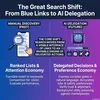
The Evolution of Digital Search: From Blue Links to Delegated Decision-Making
Digital search is transitioning from a human-centered discovery process based on links and keywords to an agent-mediated system of delegated decision-making. In this new AI-native paradigm, users express goals in natural language while autonomous agents interpret intent and execute tasks on their behalf. This shift moves the internet from an attention economy, where firms compete for clicks, toward a preference economy focused on satisfying specific user desires. Because search results are becoming hidden beneath the surface of agentic interactions, the authors emphasize the need for transparent and competitive system designs. The research highlights grand challenges regarding how to maintain market efficiency, ensure agent alignment with user goals, and verify the trustworthiness of automated choices. Ultimately, the future of the internet depends on creating open frameworks that prevent power concentration and foster fair competition within these emerging digital marketplaces.
Podzilla Summary coming soon
Sign up to get notified when the full AI-powered summary is ready.
Free forever for up to 3 podcasts. No credit card required.
Listen to This Episode
More from Best AI papers explained
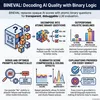
Ask, Don’t Judge: Binary Questions for Interpretable LLM Evaluation and Self-Improvement
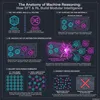
From Reasoning Traces to Reusable Modules: Understanding Compositional Generalization in Language Model Reasoning
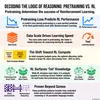
Understanding Reasoning from Pretraining to Post-Training
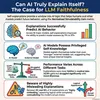
A Positive Case for Faithfulness: LLM Self-Explanations Help Predict Model Behavior
Get summaries like this every morning.
Free AI-powered recaps of Best AI papers explained and your other favorite podcasts, delivered to your inbox.
Free forever for up to 3 podcasts. No credit card required.